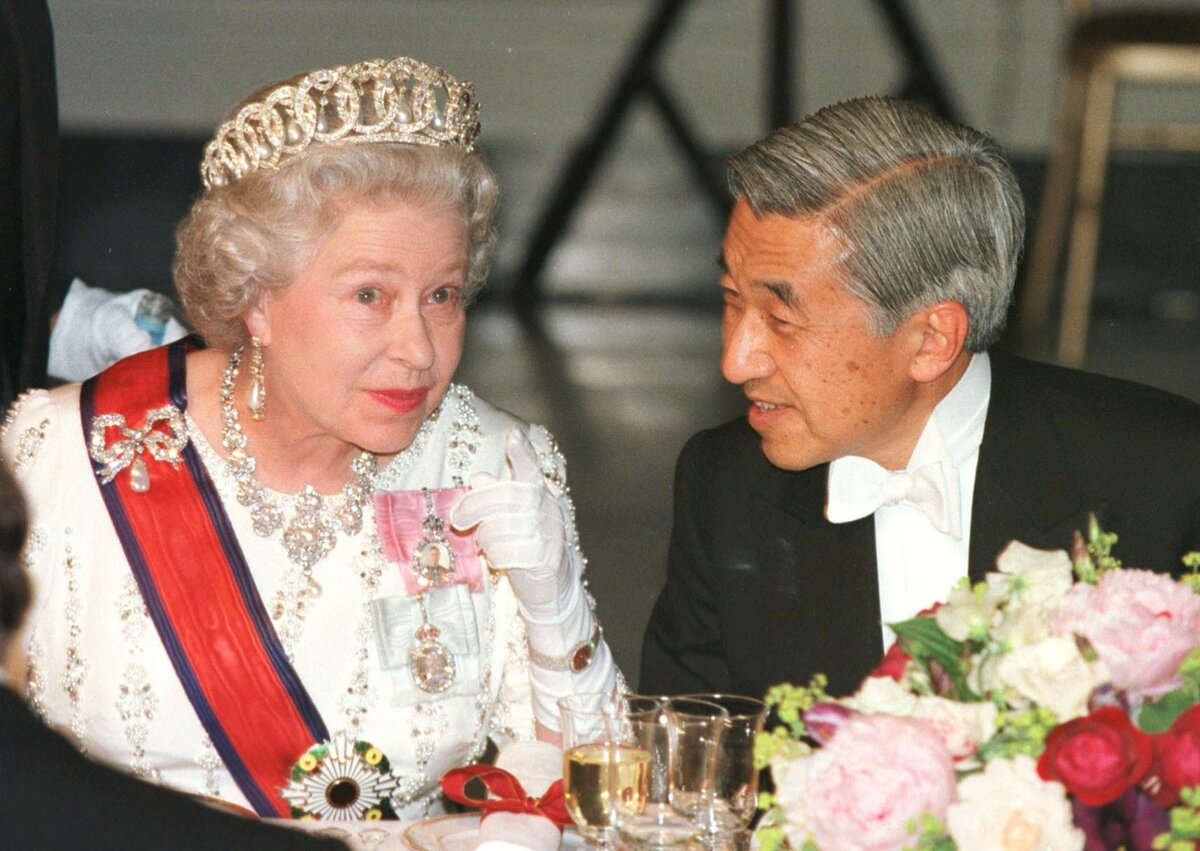
LONDON – Britain viewed Emperor Akihito’s first state visit to Britain in 1998 as “conciliatory” despite fierce protests by former Far East prisoners of war, according to documents drafted by then-British Ambassador to Japan David Wright.
He noted the emperor handled the demonstrations, which the ambassador claimed “embodied elements of xenophobia and racism,” with “great dignity.”
Wright said he was surprised by the booing and obscenities which greeted the emperor as he travelled around London in what became the first visit by a Japanese monarch to Britain in 27 years, the documents recently released by the National Archives revealed.
Commenting on the May visit, Wright said it “revealed the divide in our bilateral ties which separates distant pain from the promise and prosperity which now dominate them,” while noting in a summary that it enhanced “Royal-Imperial ties.”
As the emperor and Queen Elizabeth rode along in their carriage, former Far East POWs turned their back on Emperor Akihito, booing and shouting, “Go home.” A Japanese flag was also burnt.
The files show the Japanese royals were warned the POWs would turn their backs on them. The former soldiers, who were captured by Japan during World War II and were forced to labor in its prison camps, were campaigning for a meaningful apology from the Japanese government and substantial compensation.
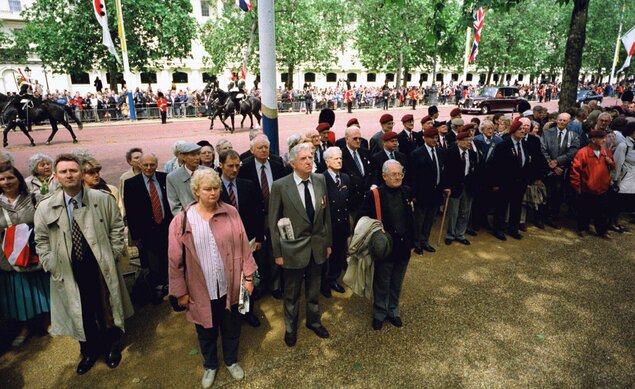
File photo shows former Far East prisoners of war turning their backs on the parade of Emperor Akihito and Empress Michiko in London in May 1998. (Kyodo)
Recalling the obscenities screamed at the emperor, Wright wrote, “That was certainly insulting to the queen, as well as to her state guest. It reflected badly on the U.K. and on current standards of behavior.”
He continued, “Throughout it all, the emperor conducted himself with great dignity. He had been told what to expect. He did not (not) ignore the protesters. He did not flee for the safety of the entrance halls or cars. Indeed he lingered.
“His purpose, though unrecognized by protesters, was to indicate acknowledgement and understanding for their sentiments. All their staff emphasized to me the personal sympathy which their majesties feel.”
Wright disclosed some former POWs expressed their shame at the protests and offered the empress a bouquet of flowers by way of an apology.
At the state banquet, Emperor Akihito conveyed his “deep sorrow and pain” to the British people over suffering inflicted during the war. Wright acknowledged this was as far as the emperor could go given political constraints.
Regarding Empress Michiko, he noted there was no sign of her “fabled weariness,” adding she was “relaxed and charming. She valued the informality and genuineness of human contact — in little evidence in her daily life across the moat from this embassy.”
Despite the controversy, the ambassador said the royal couple “enjoyed themselves.”