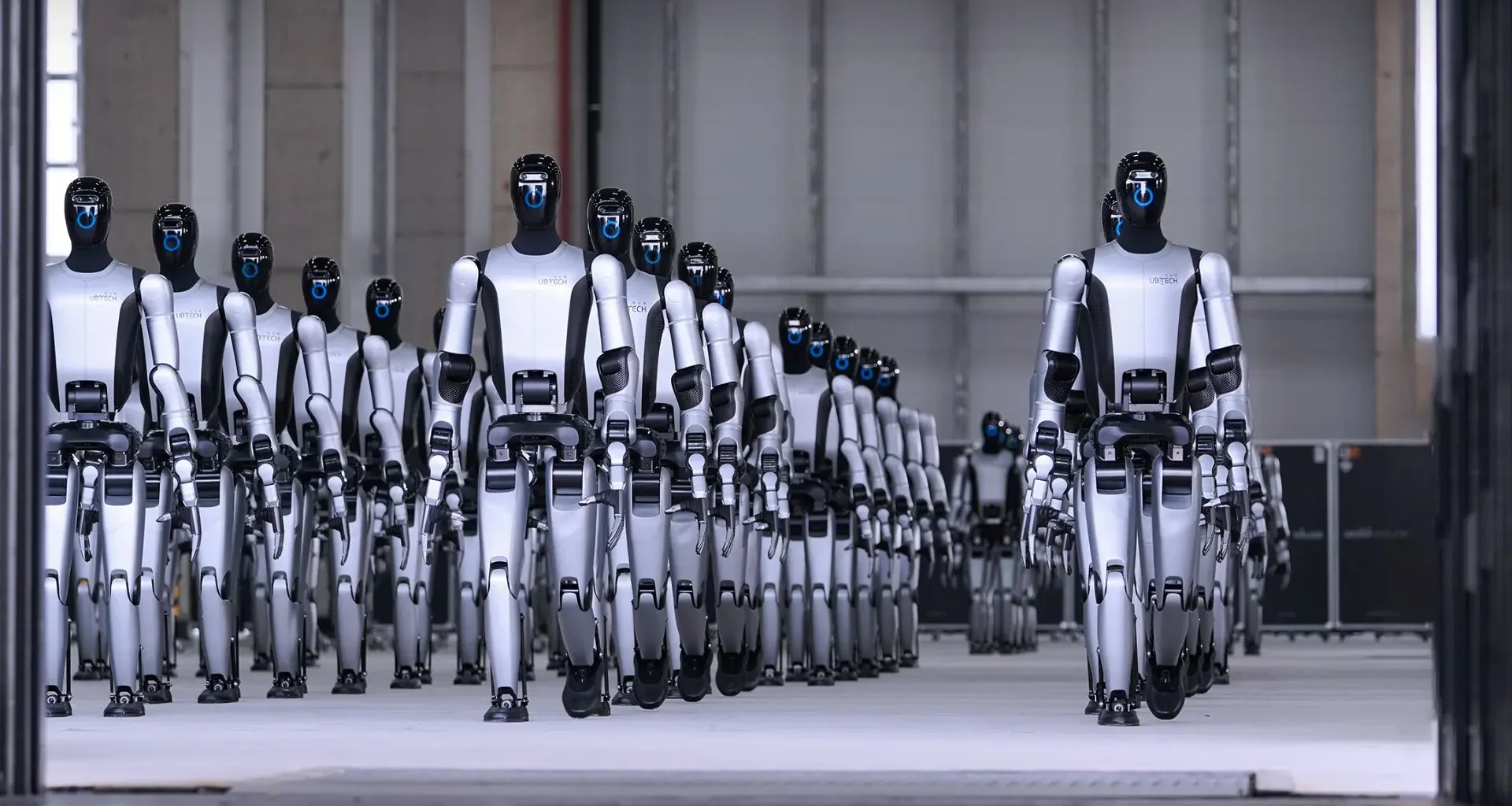
Whenever we think about border security, the one thing that comes to mind is a man or a woman in a full-on badge uniform. It is a field where its infrastructure and surveillance system are defined by human presence. However, in recent years, this field has found itself evolving with innovations in modern technologies. And China is leading this race.
An emerging security system of an autonomous robot-army
The world has embraced the idea of artificial intelligence and robotic systems, and this is across various industries. Many of these machines have found use in public, manufacturing, and medical applications. However, in recent years, the conversation has moved beyond single-use machines and towards decision-making machines.
This trend has continued to grow with the rise of artificial intelligence. Robots are now capable of handling tasks that require pattern recognition, navigation, and perception. These tasks are generally required of human personnel within any industry. But now, various countries are moving towards incorporating this technology into security systems, especially China.
China has always been at the edge of technological advancement. And in their innovation, they are developing a system of robots that could change the scale and operational capabilities of border security systems. Compared to traditional systems that require constant human oversight and logistics, machines could seamlessly outperform without any signs of fatigue.
A new era: The Chinese government deploys rollouts of Humanoid security systems
This innovation is led by China’s UBTech Robotics. The company has recently secured a contract of 264 million yuan, approximately US$37 million, to deploy humanoid robots across the borders of Guangxi. This agreement to deploy industrial-based robots was signed with a humanoid center in Frabgchenggabg, a city close to Vietnam.
For the deployment, Walker S2, a model launched by UBTech in July, would be used. The Walker S2 robot is recognized as the world’s first humanoid capable of tasks such as navigation, perception, and even replacing its own batteries, like this groundbreaking AI-powered innovation by Google. The program would employ a fleet of these robots across the border checkpoints to guide travelers and support patrol operations.
Although these humanoids are not yet for deployment till December, China is proposing to use the robots to perform routine surveillance procedures. This deal reflects the effort from the Chinese government to fully commercialize AI. So far, the robotics industry continues to receive backing from its government to incorporate these machines into other daily applications.
A development poised to move beyond traditional border patrol duties
Since China’s UBTech announced its plans, the Chinese government has started looking into many other sectors. If the humanoids are capable of muscle systems and autonomous decisions, they could expand into other industries. This includes the manufacturing of copper and steel or security systems in concerts and events.
How humanoid robots could enhance public and national security
While China braces for this new development, experts have shared potential abilities for the humanoids in the near future. They propose that these machines would take on more surveillance roles. But most importantly, they hope the technology can explore and monitor regions that are beyond human reach or comprehension.
As the technology continues to improve, these robots will soon be able to take on additional tasks like environmental inspections or emergency response systems. However, it is important to note that the goal isn’t to replace human personnel in this field. But instead, it is to reduce risk and limitations associated with and improve overall efficiency.
The introduction of humanoids across the borders of Vietnam isn’t an alarming development so far. It is barely a sign of innovation within the security frontier of China. As UBTech continues to mature its technology, these robots may indeed begin to take on more reliable routine tasks, just like this first AI army, heading to space.
Disclaimer: Our coverage of events affecting companies is purely informative and descriptive. Under no circumstances does it seek to promote an opinion or create a trend, nor can it be taken as investment advice or a recommendation of any kind.