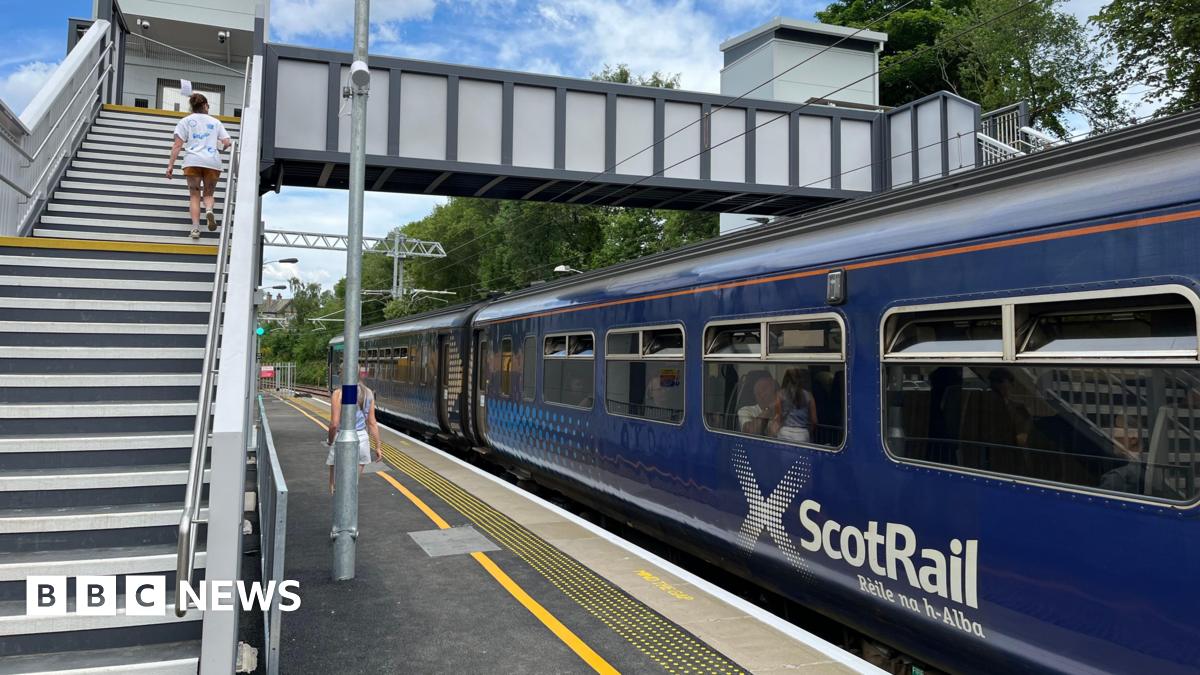
The East Kilbride line is one of the busiest commuter train services in Scotland, running from one of Scotland’s largest towns to Glasgow city centre via the East Renfrewshire suburbs of Busby, Clarkston, Giffnock and Thornliebank.
Upgrading the line to operate electric trains has been planned for years, with Network Rail, which is responsible for rail infrastructure, claiming that by removing diesel trains “the project will help to deliver substantial environmental benefits”.
It said: “Reducing carbon emissions will not only improve rail’s green credentials but will make the air cleaner and play a vital part in building a strong, green economy for the future.”
The rail line was closed completely for four months at the start of the year to allow the upgrade work to be carried out.
It involved new footbridges at Busby, Clarkston and Giffnock stations, lowered track under four other bridges and new stations at Hairmyres and East Kilbride.
Residents in Thornliebank experienced months of diversions as the main road was closed to upgrade the rail bridge.
However, when the line finally opens to electric trains on Sunday, one in four services operating on the new line will still be diesel.
ScotRail, which runs train services, said new four-carriage class 380 electric trains will replace the four-carriage class 156 diesel trains which currently operate on the route.
However, the six-carriage class 156 diesel trains, which operate at rush hour, will continue to run in their existing format.
It added that customers on the East Kilbride line will benefit from additional evening services, delivering a broadly half-hour service Monday to Saturday.
A ScotRail spokesman said there was a finite number of trains within its fleet – and operating all East Kilbride services as electric trains would be at the detriment of other routes.
He said ScotRail was in the process of procurement for a new fleet of suburban trains that will serve routes including East Kilbride.