
It’s been called ‘the perfect definition of ultra-processed food’.
Steffan Rhys Deputy Content Hub Director
16:29, 08 Dec 2025Updated 16:51, 08 Dec 2025
 A popular health influencer has named what he considers to be the ‘number one most dangerous food in the world’
The “number one most dangerous food in the world” has been named by a “health educator” with a huge worldwide following. But it’s not alcohol, table sugar or fried food. The food has been called “the perfect definition of ultra-processed food” yet it’s something we not only eat ourselves every day but also feed to our children. And what’s more, we do it believing it to be healthy.
But Eric Berg says it is in fact “a sugar bomb with another bigger sugar bomb” which causes a “massive fructose overload” which your liver then struggles to deal with.
“The number one most dangerous food in the world is not fast food,” says Berg. “It’s not even table sugar, or seed oils or fried food or even alcohol.
“Many people think this meal is actually healthy and it’s been normalised because so many people do it, including myself growing up. But it destroys your liver faster than anything else I know. This common breakfast meal is basically a sugar bomb with another bigger sugar bomb. You get this massive fructose overload. And it’s pasteurised or cooked so there’s going to be no nutrients in it. In fact, the vitamin C is added because heat kills vitamin C.
“But the type of vitamin C they’re using is made from corn starch and sulphuric acid, it’s synthetic ascorbic acid. Tonnes of sugar, tonnes of hidden industrial starch, artificial flavouring, artificial colouring, zero protein so you’re not going to be satisfied when you consume it. It’s the perfect definition of ultra-processed foods: ingredients that have been so altered it no longer resembles its original structure.
“Now your liver has to deal with all that. It has to convert it into fat, creating a fatty liver. The most dangerous meal that you can eat is cereal and orange juice.”
Eric Berg has 14.2 million YouTube subscribers and 2.1 million TikTok followers. As he states on his website, he is not a a medical doctor but is, in fact, a certified chiropractor. He says he is a “globally recognised health educator known for his work in nutritional science”. He began with a private clinical practice before shifting his focus to public health education. He has since published more than 6,000 videos on subjects including liver health, fasting and fat metabolism which are watched over 200 million views per month.
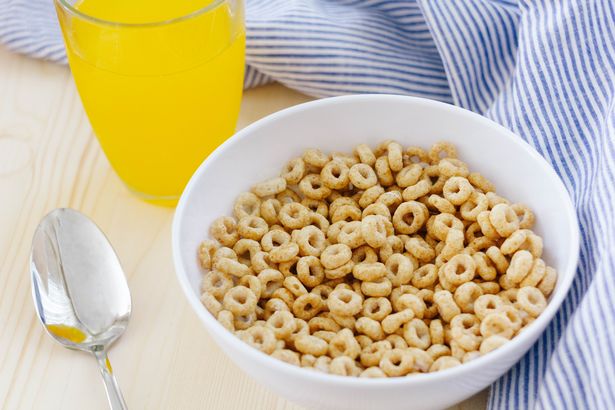 Eric Berg claims cereal and orange juice is the ‘most dangerous’ food you can eat
However, not all scientists would agree with many of his claims. For example, Berg’s claims regarding cereals and fruit juice not being good for our health are broadly supported by other leading scientists and nutritionists, though they have not gone as far as describing them as the “number one most dangerous food in the world”. Dr Federica Amati, for example, the chief nutritionist at science and nutrition firm Zoe, has described breakfast cereals as “a bit of a shocker” and said it is “very unlikely that your child will be satiated and actually have enough nutrition from that bowl”. She also warned that breakfast cereal “should not be your breakfast every day”.
Berg is also a particular advocate for the keto diet and intermittent fasting, the latter of which is a concept widely supported by leading scientists, including Professor Tim Spector and longevity expert Dr Valter Longo.
However, while Berg mentioned “seed oils” in his video, suggesting that they too should be considered a dangerous food alongside alcohol, this is categorically rejected by other scientists. Professor Sarah Berry of the department of nutritional sciences at King’s College London, who is also the chief scientist at Zoe, has rejected outright the concept that seed oils are bad for our health and says: “The most surprising thing I’ve learned about seed oils is how much nutri-nonsense there is out there about seed oils.”
Dr Diana Girnita, a rheumatologist, has described some of Berg’s claims as “mixing some scientific facts with unrelated explanations, oversimplified concepts and personal theories, creating a confusion mix that will be very hard to entangle for someone without medical background”.
As always, you should treat extreme claims about food and health with caution. While there is broad agreement among scientists that many of the most common and popular cereals, especially those aimed at children, are detrimental to our health, it is difficult to say that one is the “most dangerous”. Only two foods are known to be direct causes of cancer and most foods can be enjoyed in moderation.
Is cereal bad for you?
In the UK, cereals are often fortified, meaning they have certain vitamins and minerals added to them. However, they can also be high in sugar, salt and saturated fats. Prof Berry told the BBC that “generally speaking, fortified cereals can make a useful contribution to some of the vitamins and minerals that, in the UK, some of us are deficient in”.
But she added: “However, you have to balance this out against the fact that there are many cereals that are high in sugar, low in fibre, and have a high glycaemic index, which means they aren’t going to keep you full for long.”
Dr Amati advised against cereals with enticing descriptions like “golden honey nut”, “crunchy”, or “crisp” and instead recommended opting for plainer options. She said: “So things like Weetabix, like Shredded Wheat, things like Bran Flakes.”