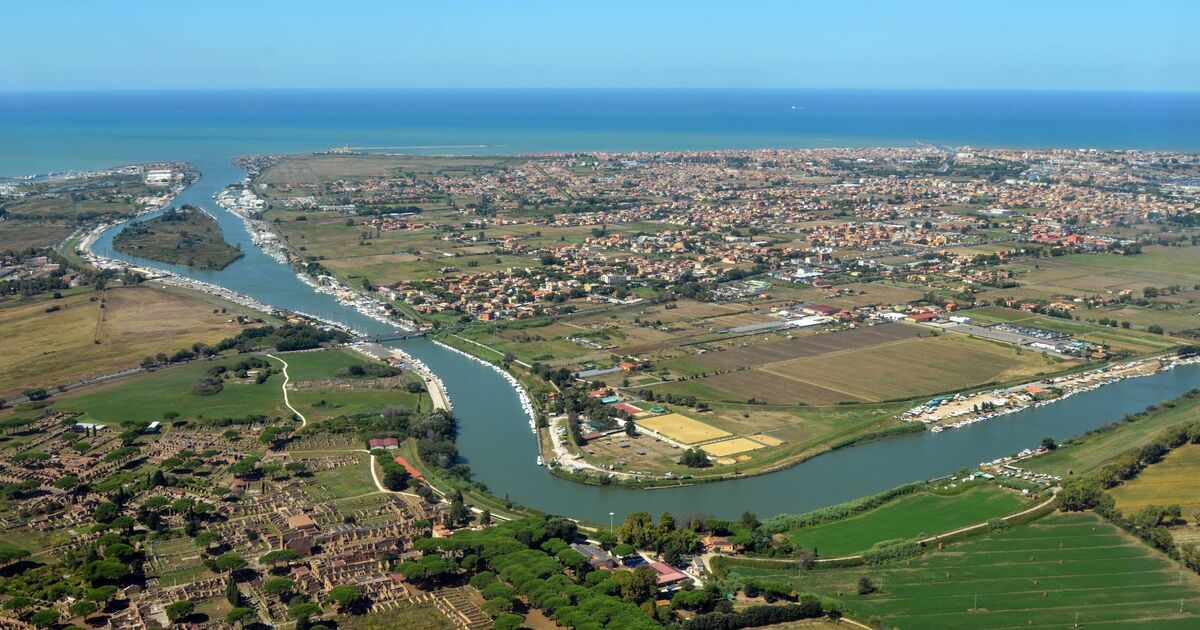
Brits have been urged not to visit a ‘magical’ European seaside town that faces being concreted over.
Isola Sacra, or Sacred Island, is a coastal spot about 20 miles from Rome that is famous for its extensive Roman Necropolis dating from the 1st to 6th centuries AD, featuring unique tomb structures resembling houses. It’s a small place, with around 15,000 residents. However, its location close to Rome Fiumicino Airport, as well as access to a pretty strip of coastline, has made it a popular spot with tourists.
Hotels have popped up in the area and now a huge port is to be built. Known as Fiumicino Waterfront, it will include berths for approximately 1,000 small boats and a pier for mega cruise ships that will tower to 70 metres high and 350 metres long, capable of carrying up to 6,000 passengers.
The proposals were greenlit in November, prompting fury from campaigners and earning Isola Sacra a place on Fodor’s 2026 No List. The No List was created to highlight destinations where tourism is placing unsustainable pressures on the land and local communities. Its purpose is to give “a gentle nudge to ease up on a spot for now–not forever–and give a rest to any location that clearly needs a breather.”
Long-time residents of Isola Sacra have formed Tavoli del Porto, a committee working to safeguard the area. “Only together can we stop these projects that threaten to destroy a delicate ecosystem of dunes, wetlands, agricultural land, unique vegetation, and terrestrial and marine animal species,” the activists told local press in November.
The council has argued that the project includes measures for the protection of marine biodiversity and complies with regulations, Fodor’s reports. But campaigners argue that the work will destroy the feel of the town and the local habitat. They warn that three million cubic metres of sand would need to be extracted to create a deep channel allowing access for ships.
“Just 300 metres from the port construction sites lies a protected natural area. Environmental experts say its flora and fauna would be devastated. Large swathes of the coastline will also be cemented over,” Fodor’s writes.
Anna Longo, president of Italia Nostra Litorale Romano, added: “The scenario that looms appears apocalyptic: the coast will be overturned by piers and docks, hotels, and new commercial buildings.”
Barbara Bonanni, a local resident and Fiumicino city councillor, told local press: “For us, [the coastline] is a place that still holds its magic.”
Another major concern is whether the town will be able to cope with the number of visitors arriving once the port is operational. Huge cruise ships, delivering thousands of passengers at a time, can put great pressure on local infrastructure, swamping towns while offering little cash injection as most eat onboard.
David Di Bianco, spokesperson for the Port Working Group, told Roma Today: “They call this development, but it’s just another step toward the destruction of our sea.”
In a statement, Fiumicino Waterfront CEO Galliano Di Marco, said: “With a total investment of approximately 600 million euros. The project is destined to become one of the most innovative and sustainable tourism infrastructures in the Mediterranean, and tangible proof that infrastructure development and urban regeneration can successfully go hand in hand, fostering the economic and social growth of the community.”