Posted on December 8, 2025
Posted by John Scalzi

There have always been “director’s cuts” and “extended cuts” of films, particularly in the era of the DVD and Blu-Ray, when a film’s distributor could slap in a few scenes that were cut out of the theatrical because the movie would be too long, or too laggy, or both, herald it as an “Unrated Director’s Cut” and eke out a few more bucks from the movie’s fans. Most of the time, this additional material did not change the course of the film in any substantive way — even the extended cuts of The Lord of the Rings trilogy mostly only added detail, with only one significant deviation between cuts that I can think of (that being the final disposition of Saruman).
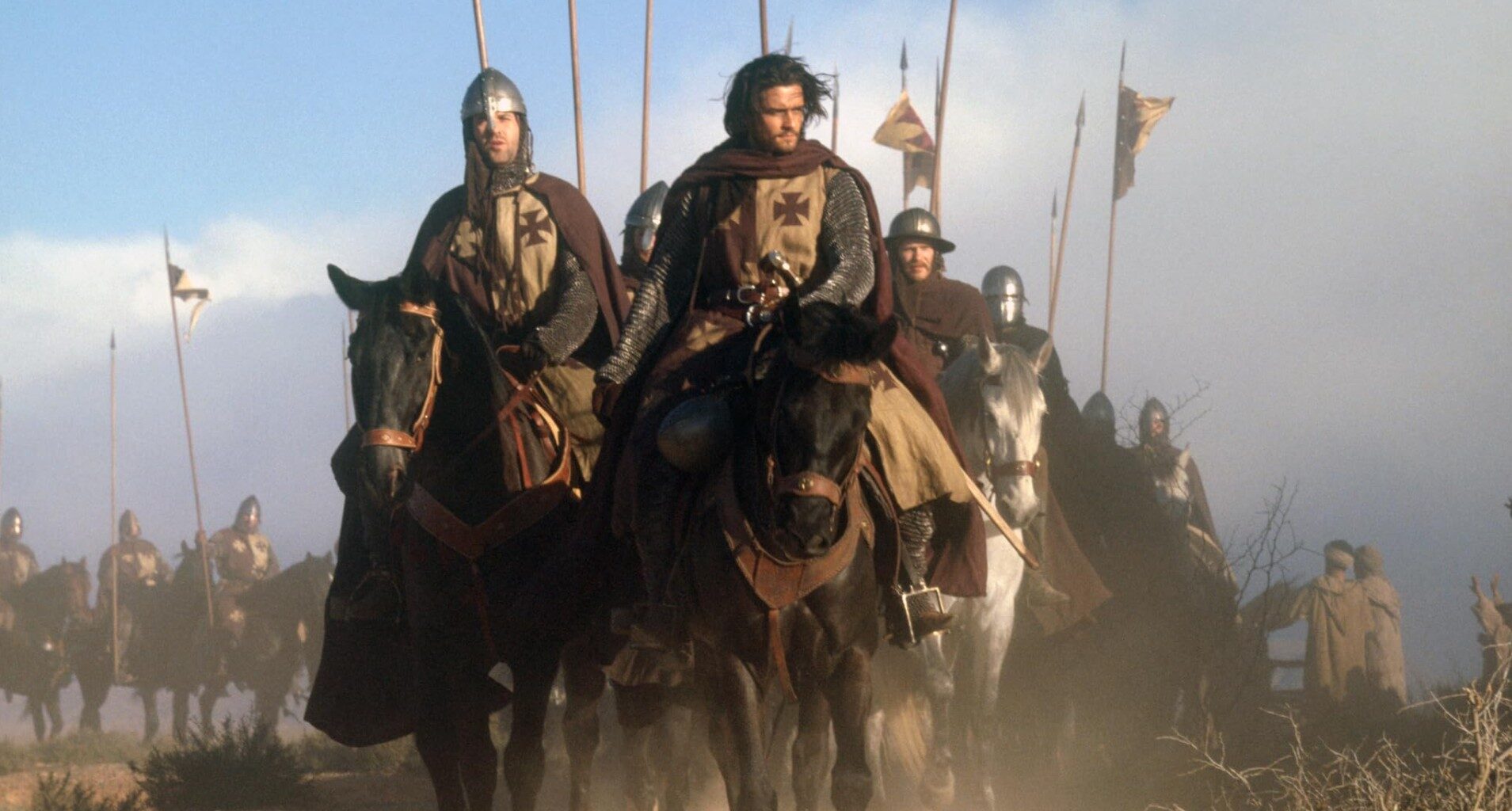
Then there is The Kingdom of Heaven. The changes between the theatrical release, out in May of 2005, and the Director’s Cut, released on DVD in December of that year, are significant enough that in many ways they are different movies. The backstory of the hero is significantly changed, as is his relationship to characters shown early in the film; previously unknown children show up to play significant roles in the plot; and the final disposition of at least one major character in the film is entirely changed. Ridley Scott, who directed the film, called the extended version “the one that should have been released.”
So why wasn’t it? Well, because the extended version was three hours and ten minutes long, and in 2005, really only two filmmakers not relegated to arthouse status could get away with three hour films. One was Peter Jackson, whose non-extended The Return of the King clocked in at three hours and twenty minutes, and the other was Jim Cameron, who spent three hours and fifteen minutes sinking the Titanic. Everyone else, even Ridley Scott, needed their films shorter, preferably not longer than two hours, thirty minutes. The theatrical cut of The Kingdom of Heaven? Two hours, twenty-four minutes. Scott, no stranger to “director’s cuts,” (see the multiple extended versions of Blade Runner that are out in the world), waited for the home video release for the longer cut.
Most cineastes, fans of the film and apparently Ridley Scott himself will tell you that the extended cut of this film is the one to see, but today I am going to file a modified minority report. I think the theatrical release is perfectly good — and indeed in some places better than the extended version — and it’s the version that I end up rewatching, not the lauded longer version.
In both versions of this tale, the following is true: A French blacksmith named Balian (Orlando Bloom, trying to make the transition to serious actor after his franchise hits) is grieving the death of his wife when a noble named Godfrey shows up, declares himself Balian’s father, and bids him join his entourage as they journey to the Holy Land, which is, momentarily at least, between crusades. Balian passes, but then, one significant crime later, he’s on his way.
In the Holy Land, Balian quickly finds favor with the Jerusalem’s Christian king Baldwin, who is managing a tenuous peace with Saladin, his Muslim counterpart; he also quickly befriends Sibylla (Eva Green), Baldwin’s sister. Sibylla’s husband Guy dislikes Balian, which is not great because Baldwin is dying and Guy will be king soon, and when he is king, he’s going to pick a fight with Saladin. Devotees of history will know how this went for him, and it goes similarly in the movie. Suddenly it falls to Balian to defend Jerusalem from Saladin’s forces.
Now, going all the way back to my days as a professional film critic (now — lord — 35 years ago), I’ve always warned people never to confuse cinematic historical dramas with what actually happened in history, even when, as is the case here, an actual historic event (the Siege of Jerusalem) is being portrayed. Given the choice of historical accuracy and engaging drama, filmmakers will go for drama every single time.
This is absolutely the case here; in both versions of The Kingdom of Heaven, the very broad strokes of history are (generally) correct, but almost all the details are fictional as hell. The extended cut does not gain any substantial accuracy for being longer; indeed it takes a couple of opportunities to be even more historically incorrect because it’s interesting for the story. Balian did exist! He did defend Jerusalem! Everything else you should consider as being subject to artistic license.
With that noted, the drama portion is solid — the story of Balian, from humble beginnings to defense of Jerusalem, is engaging, and Orlando Bloom is on point personifying him. 2005 was still an era where people were trying to make Bloom happen as a leading man, a thing that didn’t get much traction outside of him being an elf or a pirate. I don’t think that’s Bloom’s fault, and definitely not here. He’s working as hard as he can to sell it, and he’s holding his own against folks like Liam Neeson, Jeremy Irons, David Thewlis and Edward Norton. If there’s any flaw in the character, it’s one noted by other characters in the film: He’s possibly too good (in a moral sense) for the world he’s in. But that’s the fault of the writers, not Bloom.
Where the film really shines for me, however, is the overall political milieu of the film. Surprise: the Holy Land has been a place of contention for millennia, a fact that (to put it mildly) continues to this day. The Kingdom of Heaven doesn’t shy away from the complexity of having a single place desired and claimed by, and fought over, both the Christians and Muslims. There are lots of places where the film could have easily tipped over into jingoism — this was the early 2000s, when the US’s 9/11 scars were still fresh, and we, a nominally-secular but de facto Christian country, had boots on the ground in Muslim nations — and bluntly it might have been substantially more successful financially if it had been.
Scott and screenwriter William Monaghan didn’t take that route, instead showing (among other things) the Muslim leader Saladin (Ghassan Massoud) as a man of integrity and moral force, keeping the hotheads in his own host in line, and showing respect and even kindness, first to King Baldwin, and then to Balian. The Christians in the film run the gamut, from honorable to despicable, and all of their range is given context in the story. Again, the story should not be seen as accurate history. But as an examination of how the high ideals of religion can run aground in the ambition of base humans, it has some striking moments.
Add to this the fact that Ridley Scott has a knack for visuals that has been near-unparalleled for more than 50 years, and you have a film that is a joy to look at.
To come back to the issue of the theatrical release vs the extended cut, here’s my thought on that: the extended cut is better for understanding the wider story Scott and Monaghan were trying to capture, but the theatrical cut is better paced and presented, and is a more engaging cinematic experience. “More” isn’t always better; often it’s just more. I’ve seen the extended cut and, having seen it and internalized the bits that aren’t in the shorter version, I can keep them in the ledger of my awareness while I’m enjoying the version of the film that actually, you know, moves at a compelling pace.
This is caveated with the acknowledgement that I saw the theatrical version first, liked it perfectly well, and then saw the extended version; it’s possible that if I had seen the extended version first I might prefer it more. But honestly I don’t know if I would have. Bluntly, I want my movies to feel like movies, not like a slightly-compacted miniseries.
That said, both versions are worth seeing, even if only one is going to be on my repeat-viewing list. I appreciate Ridley Scott making a handsome movie about a complicated plot of land, no less so now than in the time the film is set, and not pretending that, either then or now, there is anything easy or simple about the struggles there. I don’t think this film will convert anyone who wants to argue otherwise. But I’m glad Scott made the attempt.
— JS
Like this:
Like Loading…
← The December Comfort Watches 2025, Day Seven: Moana