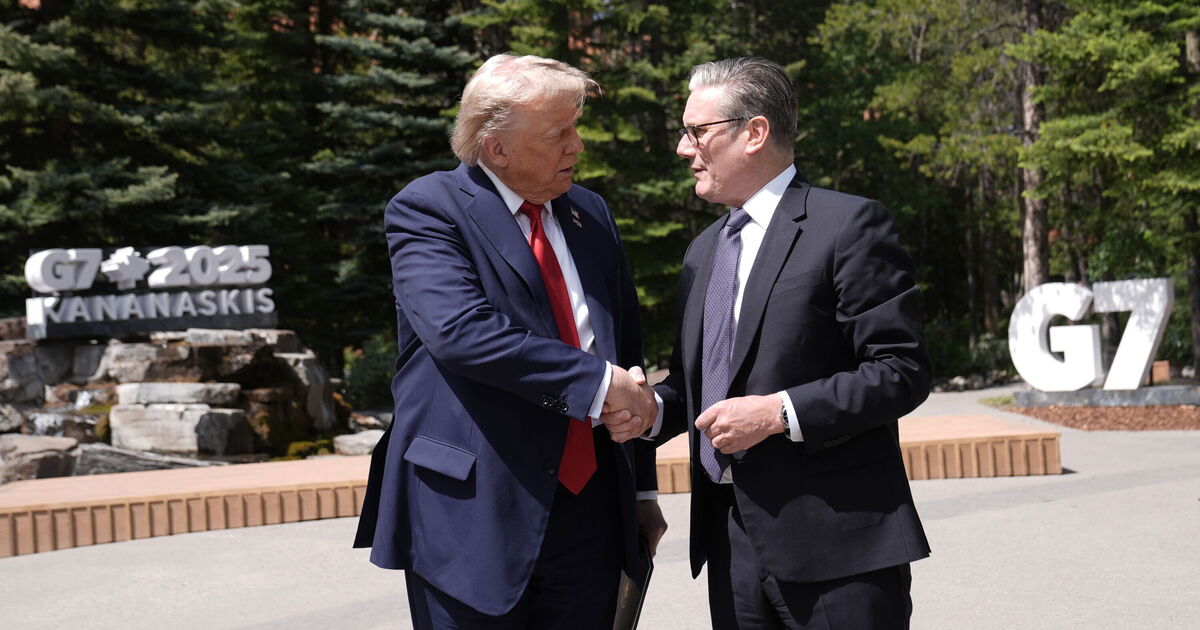
Keir Starmer could be set to backtrack on defence spending pledges, just months after promising Donald Trump that Britain would spend more. Labour refrained from committing to defence spending increases in their manifesto, pledging simply to spend more when economic conditions allowed.
Donald Trump’s re-election and continued assault on NATO members’ pitiful contributions saw the PM pledge to increase spending to 2.5% of GDP by 2027. This was backed up with a pledge to hit 3% in the next parliament. In June, following pressure from the US administration, Starmer joined NATO allies in committing to spending 3.5% of GDP by 2035, with an additional 1.5% on defence-related infrastructure.
With a raft of pledges, you would be forgiven for believing that the Ministry of Defence (MOD) would be awash with cash, but according to insiders, the department is braced for real-term cuts to its expenditure.
Rachel Reeves’s Budget did little to suggest that defence stands out as a priority for the Government, with no new announcements, despite the level of threat posed by Russia.
Whilst billions of pounds were invested in adding to the already mammoth welfare bill, there was little to say on defence.
Defence officials warned in the lead-up to the Budget that the likelihood of further defence pledges was minimal, given the announcements of recent months.
But other figures within the defence sector have warned that proposed increases to spending will just about cover existing commitments, leaving no capital or resource spending to invest in additional capabilities.
A senior executive at a leading UK defence manufacturer told the Daily Express that pledges do little to inspire the confidence required in the industry.
He said: “We have the ability to ramp up production but we need concrete orders in the book to do so.
“You can’t expect industry to invest capital upfront in projects which don’t ultimately come to fruition.”
Another defence source told POLITICO: “Right now, in 2025, there isn’t any new money, and they [the MoD] were already underwater on their commitments.”
Last week, a former military chief warned that spending over the next decade “must be planned and signalled now” after Reeves was “largely silent” on military spending, in the Budget.
Lord Craig of Radley argued “credibility rests on not just words but firm resources being allocated” and warned armed forces could not be built up overnight.
He said in the Lords: “Credibility rests on not just words but firm resources being allocated.
“Armed forces cannot be built up overnight. Long-term planning and certainties are necessary.
“If Treasury ministers signal hesitation, or worse, indifference, while our Prime Minister signals resolve, that sends a mixed message to allies, to those who challenge us and to our armed forces themselves.”
He added: “To treat defence as a residual claim on the public purse is to invert the priorities that safeguard our national interests. Will the Treasury now share the Prime Minister’s strategic vision? Will the Treasury accept that increasing defence expenditure for the next decade must be planned and signalled now, not judged later by the elegance of some inflexible fiscal rules or by changeable, maybe dodgy, forecasts?”
A Government spokesperson said: “The Government is delivering on the Strategic Defence Review as a deliverable and affordable plan for Defence to meet the challenges, threats and opportunities of the twenty-first century. It is backed by the largest sustained increase in defence spending since the end of the Cold War – hitting 2.6% of GDP by 2027 with an ambition for 3% when fiscal and economic conditions allow in the next Parliament.
“We are working flat out to finalise the Defence Investment Plan, which will deliver the best kit and technology into the hands of our frontline forces at speed and, importantly, invest in and grow the UK economy.”