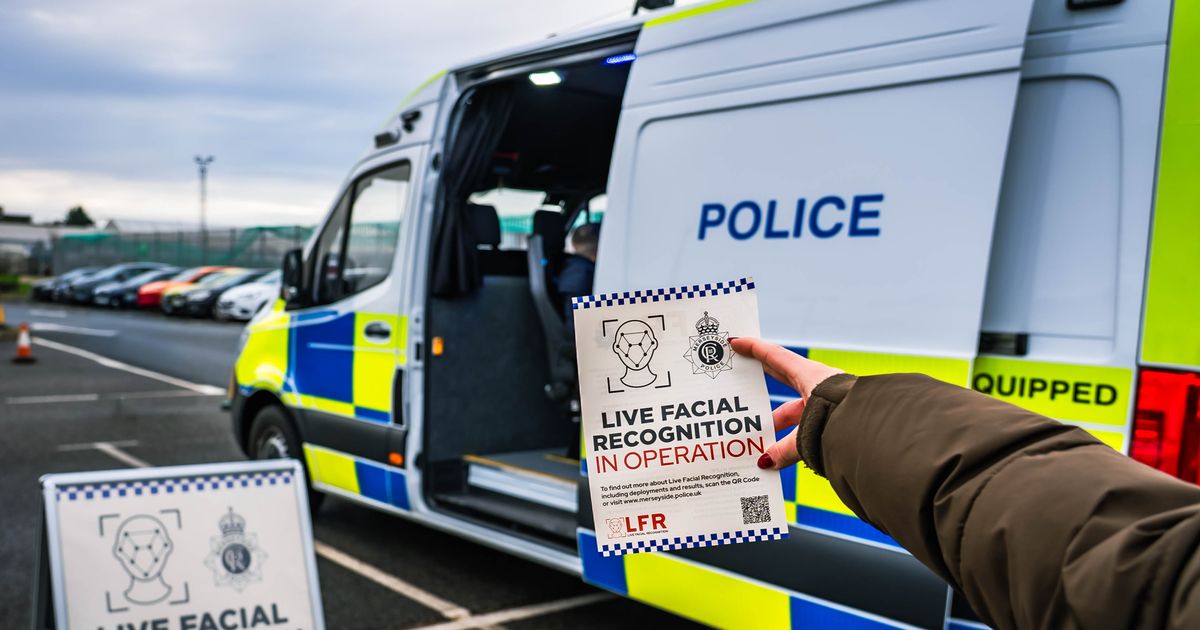
“This is not mass surveillance. Anyone not included on a watchlist cannot be identified” Merseyside Police plans to roll out Live Facial Recognition(Image: Merseyside Police)
Merseyside Police will track down a watchlist of wanted people by rolling out facial recognition technology. The force will deploy the new Live Facial Recognition (LFR) technology in Liverpool city centre on Monday, December 15 as part of its “commitment to keeping our communities safe and bringing offenders to justice.”
The technology works by comparing faces captured on a live camera feed against a secure watchlist of people wanted for serious offences, subject to court orders or who pose a risk to the public or to themselves. When the system identifies a possible match, a police officer will compare the image on screen with the person in view and decide whether to speak to them.
The force said this decision will always be made by an officer, not the technology. A spokesperson added: “If you are not on a watchlist we will never store your biometric data from passing through the LFR zone of recognition. It is immediately and automatically deleted, ensuring privacy is protected.”
Watchlist images are deleted within 24 hours after each day of deployment and CCTV footage is deleted within 21 days, which is the same as standard public cameras.
Merseyside Police Assistant Chief Constable Jennifer Wilson, who leads on Matrix and force operations, said: “Live Facial Recognition is a vital tool that will help us quickly identify and apprehend those who pose the greatest risk to our communities.
“We’re committed to using the best technology to keep people safe, prevent crime, and protect the most vulnerable. LFR allows us to locate high-harm offenders swiftly and effectively.
“LFR is a great example of our officers using technology to work smarter, strengthening the way we deliver neighbourhood policing across Merseyside.
“We welcome members of the public to visit the highly visible vans when they’re in operation, see how the technology works, and speak with officers about the safeguards in place.”
Facial recognition has been used by forces including the Metropolitan Police and South Wales Police to find wanted suspects and vulnerable people, as well as monitoring live events, since 2017. But human rights groups have raised concerns the technology is too invasive and may have racial biases.
Concerns were raised by groups including Liberty and Big Brother Watch ahead of this year’s Notting Hill Carnival in London, with a joint letter accusing the technology of being a “mass surveillance tool,” alleging it could be “less accurate for women and people of colour”.
Merseyside Police’s ACC Wilson added: “We recognise that facial recognition technology raises important questions about privacy, and we are committed to addressing those concerns openly and responsibly.
“This is not mass surveillance. Anyone not included on a watchlist cannot be identified. This technology is focused solely on preventing and detecting crime and protecting the most vulnerable in our communities.
“Before this technology is deployed in the community, strict checks are in place to ensure its use is both necessary and proportionate.
“LFR has already proven successful in other police forces, and we’re building on their experience to ensure it delivers the same positive results here in Merseyside.”
Merseyside Police said all its LFR deployments will be clearly signposted and details of where they are will be published ahead of time. The introduction of LFC coincides with the force’s Winter of Action operation, which is targeting crime and ensuring high streets are safe and welcoming throughout the festive period.