
The strain was recently found in someone who had travelled to Asia
Bethan Finighan and Carrington Walker GAU Writer
11:13, 09 Dec 2025Updated 11:23, 09 Dec 2025
 The UK Health Security Agency has identified a new strain of a potentially ‘severe’ virus(Image: Marina Demidiuk via Getty Images)
Health experts fear that the discovery of the latest strain of the mpox virus is ‘precisely what experts in the field feared would happen’. The new ‘hybrid’ strain was confirmed in an individual who had recently travelled back to England from Asia, according to the UK Health Security Agency (UKHSA).
Officials at the agency added that the World Health Organisation (WHO) has been alerted to the finding after the strain was shown to be ‘recombinant’ after testing, meaning it contains genetic material from two different mpox clades that are currently spreading across the globe.
Mpox, previously known as monkeypox, is a viral infection caused by a virus that belongs to the same family as smallpox. The infection is most commonly found in parts of central and east Africa, but a widespread outbreak in 2022 caused cases to spike worldwide.
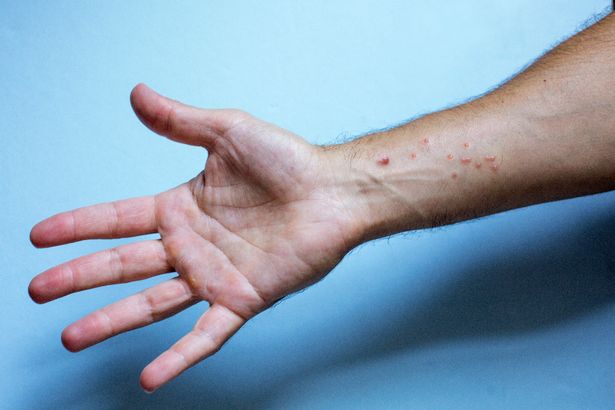 A rash is a characteristic symptom of mpox(Image: Getty)
Mpox surveillance has increased since the spread of the clade Ib variant, which was declared a global health emergency by the WHO in August 2024.
Dr Boghuma Titanji, assistant professor of medicine at Emory University in Atlanta, Georgia, contends that the new strain found to contain elements of both clade I and clade II mpox is “precisely what experts in the field feared would happen if the virus continued to spread globally without a decisive response to stop it”.
Mpox is part of a family of viruses well known for their ability to ‘recombine to generate new variants’, Dr Titanji adds.
“The key concern now is whether events like this will alter the virus’s transmissibility or virulence,” she added. “There are also implications for how well existing testing platforms can identify these emerging recombinant strains.
“The more mpox circulation we permit, the more opportunities the virus has to recombine and adapt, further entrenching mpox virus as a human pathogen that is not going away.”
The UKHSA said it is now assessing the significance of this finding and whether the new strain could behave differently.
 A new strain of mpox has been found in the UK as officials warn those eligible to get vaccinated(Image: Getty Images)
“Our genomic testing has enabled us to detect this new mpox strain. It’s normal for viruses to evolve, and further analysis will help us understand more about how mpox is changing,” said Dr Katy Sinka, the head of sexually transmitted infections at UKHSA.
“Although mpox infection is mild for many, it can be severe. Getting vaccinated is a proven effective way to protect yourself against severe disease, so please make sure to get the jab if you are eligible.
“It is important to remain alert to the risks from this unpleasant illness. Anyone who thinks they may have mpox should contact NHS 111 for advice on what to do.”
Common symptoms of mpox include a skin rash or pus-filled lesions, which can last 2 to 4 weeks. It can also cause fever, headaches, muscle aches, back pain, low energy and swollen lymph nodes.
The UK has a routine mpox vaccination programme in place for eligible groups, including those who have multiple sexual partners, have group sex, and visit sex-on-premises venues.
Studies have shown the vaccine is around 75-80 per cent effective in protecting against mpox, the UKHSA said.