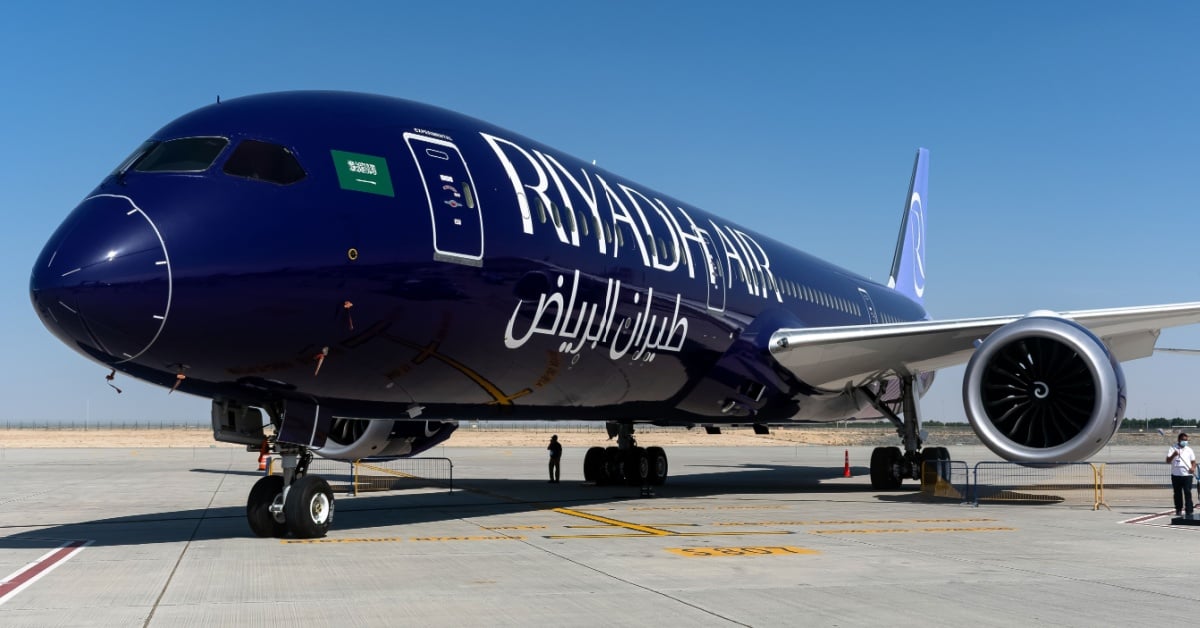
IBM and Riyadh Air have upgraded their contracted agreement, meaning the Saudi operation will not be the world’s first digitally native airline, but will instead be the first AI native operator.
Riyadh Air first drafted in Big Blue as its consulting partner two years ago, at which point the firm was styling itself a “digitally native airline.” IBM was tasked with creating its digital and tech strategy. That deal was extended to cover passenger services back in early 2024.
The veteran tech firm and the startup revealed the “AI native” moniker today, talking up how IBM-built “AI powered operations [will] create agility across the business and unify employee and guest experiences, setting a new benchmark for innovation in the aviation industry.”
These will be built, using IBM Consulting brain power, on watsonx Orchestrate, “bringing together 59 workstreams and more than 60 partners, including Adobe, Apple, FLYR, and Microsoft.”
The collaboration promises a “personalized digital workplace powered by AI agents,” which will “give employees a single, chat-first entry point to HR.” The airline plans to double its workforce over the next year.
Watsonx will also underpin an “AI-based concierge experience for employees that is trustworthy, proactive, contextually aware, and proposes next best actions for each persona interacting with guests.”
This will allow tailored services, such as “prompting staff to offer fast-track services to customers running late,” which is frankly one of the more useful applications of AI that we’ve heard about.
In a statement, Adam Boukadida, Riyadh Air chief financial officer, said: “With IBM, we’ve stripped out 50 years of legacy in a single stroke. Riyadh Air isn’t just built for today; it’s built for the future and creating a pathway for many airlines to follow in the years to come.”
This is true up to a point. But however smooth its own workflows, they will still be hostage to the creaking infrastructure keeping other airports and airlines going.
That’s before we even consider the impact of strikes, shortages of air traffic control staff, or the pervasive threat of lavatory problems. Or indeed holdups on actually getting hold of planes.
Riyadh Air’s scheduled passenger services were originally envisioned for earlier this year. However, manufacturing issues at Boeing meant this has now been pushed back to 2026.
In the meantime, “ghost” services are operating between London and Riyadh, with more than 100 destinations planned by 2030.
Never mind, we can expect plenty of announcements by other vendors looking to be associated with what promises to be a particularly luxurious ride – except for one sector. As a Saudi-based operator, it will be an alcohol-free service.
Riyadh is hardly terra incognita to IBM. The firm has been working with Riyadh Airports Company for years. ®