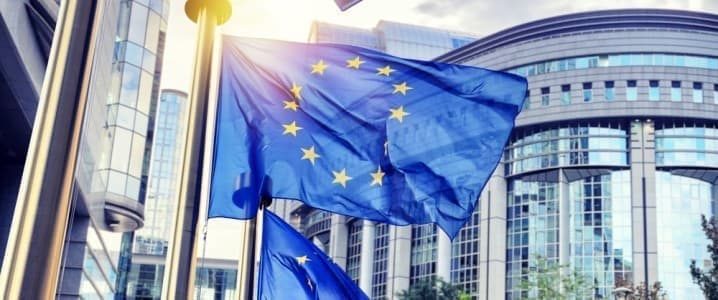
The European Union (E.U.) of 27 member countries will “never go back to our dangerous dependence on Russia”, said Dan Jørgensen, European Commissioner (E.C.) for Energy last week. “We will never go back to volatile supplies and market manipulation, and we will never go back to energy blackmail and economic exposure,” he added. This followed the full agreement on 3 December of the E.U.’s ‘REPowerEU Roadmap’, which E.C. President Ursula von der Leyen highlighted as enabling the continent to: “Enter the era of Europe’s full energy independence from Russia [as] Today, we are stopping these imports permanently.” She underlined: “By depleting [Russian President Vladimir] Putin’s war chest, we stand in solidarity with Ukraine and set our sights on new energy partnerships and opportunities for the sector.”
The agreement contains deadlines with serious implications for Russia’s economy. Most important of all are the bans on E.U. gas imports from Russia, which long provided huge income for the country and gave it great political leverage over Europe. All liquefied natural gas (LNG) imports will end by 31 December 2026 and pipeline gas will cease by 30 September 2027. For short-term contracts concluded before 17 June 2025, the prohibition on Russian LNG applies from 25 April 2026 and for pipeline gas from 17 June 2026. For long-term LNG contracts concluded before 17 June 2025, the ban applies from 1 January 2027, in line with the 19th sanctions package. Pipeline gas imports under long-term contracts will only be allowed until 30 September 2027.
Strong safeguards against circumvention are included. Provisions to enhance the transparency, monitoring, and traceability of Russian gas within E.U. markets will support the implementation of the import ban. During the transition period, prior authorisation will require detailed information to ensure imports are limited to volumes based on historical contracts. To prevent Russian gas from entering through other countries, importers must provide information on the country of production. These anti-circumvention measures will be run in tandem with the E.U. Agency for the Cooperation of Energy Regulators, the European Public Prosecutor’s Office, and the European Anti-Fraud Office. The same procedures will apply to E.U. imports of Russian oil – all of which will end by 2027.
Related: Rosneft Oil Cargo Wanders for Weeks as Sanctions Mount
This marks a remarkable turnaround from the situation in the early aftermath of Russia’s 24 February 2022 invasion of Ukraine. It was obvious to the U.S. and Great Britain that Moscow’s ability to fight the war over the long term would depend on its ability to finance it, and that a key source of this was revenue from Europe’s imports of gas and oil. Moreover, Washington and London believed that the E.U.’s unwillingness to impose meaningful sanctions on Russia when it invaded independent sovereign country Georgia in 2008 was instrumental in encouraging it to invade Ukraine in 2014 and annex its Crimea region, as fully analysed in my latest book on the new global oil market order. And they believed the E.U.’s failure to act again at this point in any meaningful way against Moscow at that point was instrumental in encouraging the full-blow invasion of Ukraine in 2022.
Consequently, the U.S. and Great Britain knew they would need the support of Germany – the E.U.’s de facto economic and political leader. However, Germany had built much of its economic might since 1999 from cheap and abundant Russia energy supplies and from the effective devaluation of the mighty deutschmark to the softer euro. Germany had also long been opposed to what it regarded as interference from the U.S. in its affairs, exacerbated by Edward Snowden’s revelations in 2013 of Washington spying on Germany. After that, Berlin had been at the forefront of several E.U. initiatives designed to circumvent the mainly US-led sanctions on Iran before 2018, specifically during the phase of heightened sanctions from 2011/2012. Shortly after the U.S. announcement of its withdrawal from the ‘nuclear deal’ deal in May 2018, Germany had been instrumental in influencing the E.U. to impose its ‘Blocking Statute’ that made it illegal for E.U. companies to follow US sanctions on Iran.
At around the same time, Germany’s then-Foreign Minister, Sigmar Gabriel, warned: “We also have to tell the Americans that their behaviour on the Iran issue will drive us Europeans into a common position with Russia and China against the USA.” Shortly after that, Germany was a key mover in the E.U.’s introduction of a special purpose vehicle – the ‘Instrument in Support of Trade Exchanges’ – that would act as a clearing house for payments made between Iran and E.U. companies. It was little wonder, then, that Berlin’s primary concern after Russia’s 2022 Ukraine invasion was to ensure that it – and other E.U. countries – could meet the 31 March 2022 demand from President Putin that required E.U. buyers to pay in roubles for Russian gas via a new currency conversion mechanism or risk having supplies suspended. It was only after the U.S. managed to secure alternative interim supplies of gas that Germany was gradually brought onto the side of increasing sanctions on Russia, as also detailed in full in my latest book on the new global oil market order.
Despite this early reticence to sanction Russia for its move westwards into Europe – which Washington and London believe is the prelude to the full ‘reunification’ of Russia’s former Soviet empire, as President Putin has alluded to – the E.U. has significantly stepped up its sanctions pressure on Russia in recent months, in line with the U.S. At the beginning of the Ukraine War, the E.U. was paying Russia over €12 billion a month for fossil fuel imports, according to E.U. data. This is now down to €1.5 billion. Its 19th sanctions package formally adopted on 23 October included additional measures targeting Russia’s shadow fleet of vessels used to evade current restrictions. And for the first time, the E.U. also targeted Russia’s crucial LNG sector. It also mirrored the U.S.’s earlier direct sanctions on Russia’s number one and number two oil firms – Rosneft and Lukoil. Between them, the two companies export approximately 3.1 million barrels of oil per day, which the West sees as vital to Russia’s ability to keep funding its war in Ukraine. Targeting Russia’s top two oil firms was a huge step up from what the previous sets of sanctions that encompassed lower-tier firms such as Gazpromneft and Surgutneftegas, which were in turn part of Washington’s gradual ‘tightening of the screws’ on Putin.
These latest sanctions from the E.U. in tandem with the U.S. have not only hit Russia’s finances harder than before, but they have also significantly diminished its ability to project power across the Middle East, which is seen by Washington and London as the crucial geopolitical region for energy supplies in future conflicts with Russia and China. Specifically, Lukoil almost immediately announced its withdrawal from Iraq’s huge West Qurna 2 oil field and Block 10 assets, marking a major turning point in the West’s fightback against increasingly aggressive Russia and Chinese moves against the allies in the country. Moreover, Lukoil’s exit from the major Iraq oil and gas sites opens new opportunities for Western firms to extend influence across Iraq. Rosneft then followed suit, announcing the downsizing of its operations in Iraq’s strategically crucial Kurdistan region, as also fully analysed in my latest book on the new global oil market order. The Russian oil giant reduced its stake in the Kurdistan Pipeline Company from the 60% it acquired in 2017 to 49%. The KPC is the key operator of the feeder pipeline network within the Iraqi Kurdistan region which connects oil fields (such as Taq Taq and Tawke) to the border metering station at Fishkhabur. At Fishkhabur, the pipeline links up with the main Iraq-Turkey Pipeline system.
The E.U.’s latest sanctions against Russia also now include the targeting of entities connected to its key superpower supporter, China, which also remains a major buyer of its energy. The 19th package of sanctions against Russia stated that: “We propose further measures on Chinese actors supporting Russia’s military industry.” It added: “These new sanctions will also squeeze Russia’s access to technologies including AI [artificial intelligence] and geospatial data, as well as critical resources that feed weapons production […] This includes those received from foreign suppliers including China [and India].” E.C. President von der Leyen also stated in the accompanying press conference to the Package announcement that: “We target refineries, oil traders, petrochemical companies in third countries, including China.” At the same time, E.U. foreign policy head Kaja Kallas, posted on social media that: “We’re adding more chemicals, metal components, salts, and ores to our export bans and tighter export controls on entities from Russia as well as China [and India].” As a senior source in the E.U.’s security complex exclusively told OilPrice.com last week: “We and Washington said we’d keep tightening the screws on Putin and that’s what we’ve done.”
More Top Reads From Oilprice.com