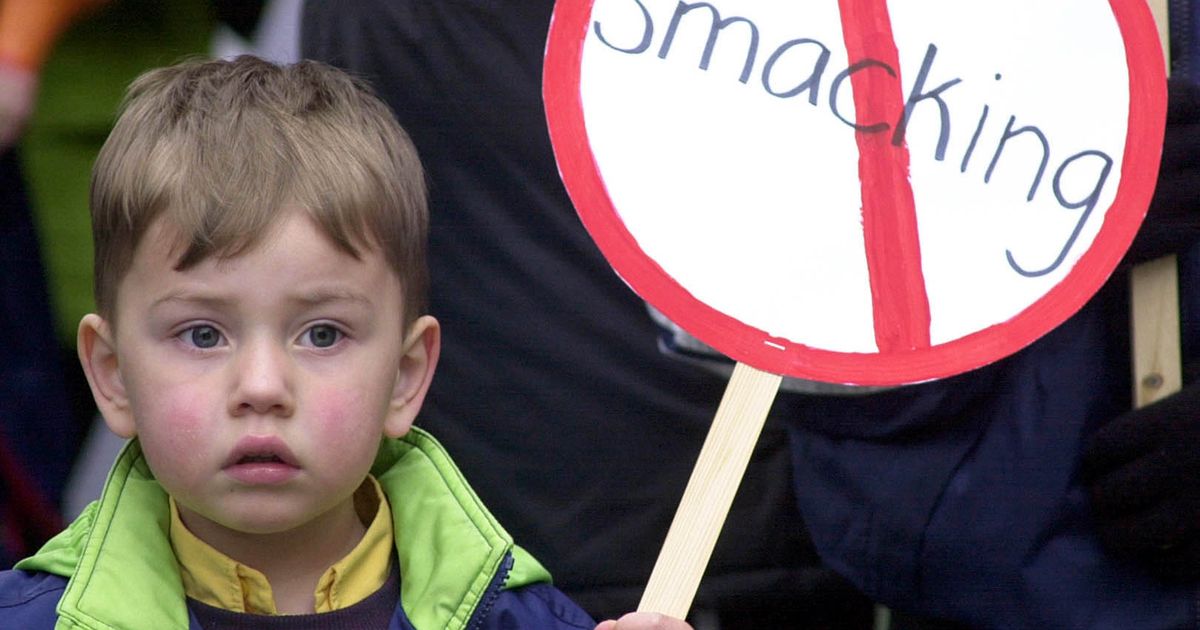
Hundreds of parents have been diverted from court onto education courses, campaigners found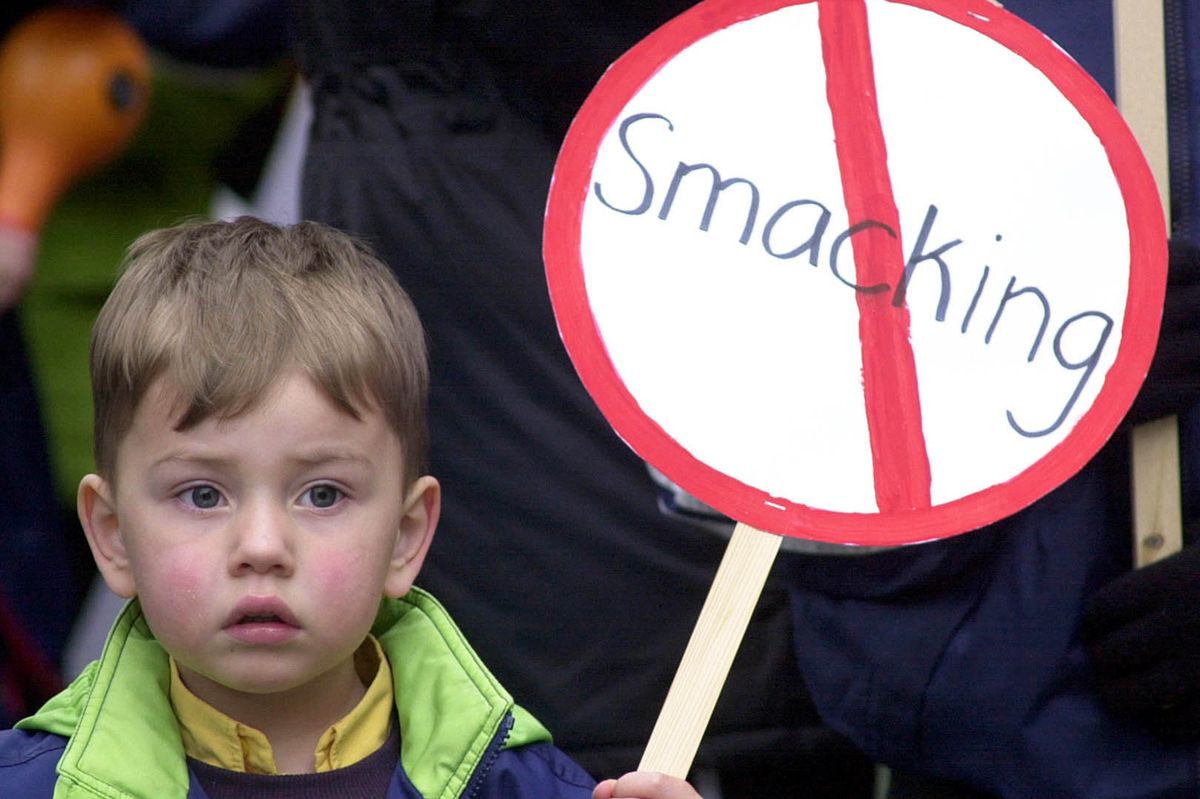 Smacking children was banned in Wales from March 2022(Image: PA)
The number of parents in Wales taken to court since the smacking ban came into force three years ago has been revealed. In March 2022, the Children (Abolition of Defence of Reasonable Punishment) Act 2020 came into force in Wales which made all physical punishment of children illegal by removing the common law defence of “reasonable punishment” for parents and carers.
Data from the Welsh Government, released as a result of a report into the law by campaigners, said court action was taken as a last resort in “fewer than five” cases since 2022. We have asked for clarification for the exact number.
A review of the law has been expected from the Welsh Government, and campaigners say they have instead compiled their own report based on data they could obtain from public bodies. The Welsh Government says its review document will come out next week.
Be Reasonable, a campaign group which opposed the law being introduced, says that since the Children (Abolition of Defence of Reasonable Punishment) Act 2020 came into force in March 2022:
- Hundreds of parents have faced criminal sanctions
- Thousands of families have been subjected to social services investigations
- Millions of pounds worth of social workers’ time has been diverted
- Despite being legally obliged to monitor implementation, the Welsh Government has failed to collect adequate data from local authorities.
In response, the Welsh Government said criminal sanctions doesn’t necessarily equate to prosecution, but can include being diverted to an education scheme, offering professional support and practical advice to encourage positive behaviour from children.
In the first year, the campaigners found 130 referrals were made to the diversion scheme. In the second year, 125 referrals were made, and in the third year, the figure was 110. Though these do not represent cases against parents prosecuted in courts.
The Be Reasonable campaign estimates that the ban could now be costing social services a further £1.64 million annually on additional assessments. The estimated cost of implementing the law in the first five years could be around double the £7.9 million the Welsh Government forecasted, with many other costs still unknown.
However, the report says that data collection is inconsistent with few councils, health boards or police forces reported being asked to contribute systematically to the review.
The report says in the year before the act came into force, social services recorded 3,245 contacts where physical punishment of children was a factor.
In approximately half of these (1,635 cases) it was the only factor.
In the first year after implementation (2022-23), there were 4,855 contacts, an increase of 50%. Just under half (2,257) involved physical punishment as the only factor.
This translated into 3,168 assessments, an increase of 95%.
In the second year (2023–24), contacts rose again to 5,628, a 16% increase and 73% higher than before the law change. The report says: “Even allowing for under-reporting and local variation in recording, these figures appear to demonstrate a clear upward trajectory.”
Simon Calvert, spokesman for the Be Reasonable campaign said: “This new report is a stark reminder that ill-thought-through virtue-signalling laws can have very real and very negative consequences for innocent people, including children in need of help.
“We have tried to estimate the cost to the public purse, but the chaotic state of Welsh Government data collection makes that extremely difficult. Still, the numbers we have been able to estimate are pretty shocking, especially at a time of tightened budgets and tax rises.
“The public sector is under enormous pressure, yet thousands of hours and millions of pounds are now being wasted on needless investigations into families where there is nothing wrong. This is a high price to pay for legislating political correctness. Social services staff should be free to focus on protecting children who are genuinely at risk.”
The campaign’s analysis says if parents are prosecuted or face alternative “reeducation” methods, it can impact employment prospects and overseas travel.
Mr Calvert said: “We warned that parents would be criminalised under this law. Despite repeated assurances to the contrary, after the ban became law the Government announced that parents suspected of smacking should be reported to the police or social services.
“Just three years on, hundreds of parents have been put through a criminal justice ‘diversionary’ scheme. As part of this process, parents may be required to ‘admit’ to ‘assaulting’ their own child, despite having only done what would previously have been deemed ‘reasonable’. This could cost them their job, and their ability to provide for their families.” For our free daily briefing on the biggest issues facing the nation, sign up to the Wales Matters newsletter here
The Welsh Government says: “The legislation we introduced gives every child in Wales equal protection from assault – a fundamental right that should never depend on age.
“It prioritises helping families – offering tailored parenting support as an alternative to prosecution with the aim of strengthening family relationships.
“Our three-year post implementation review is set to be published next week.”