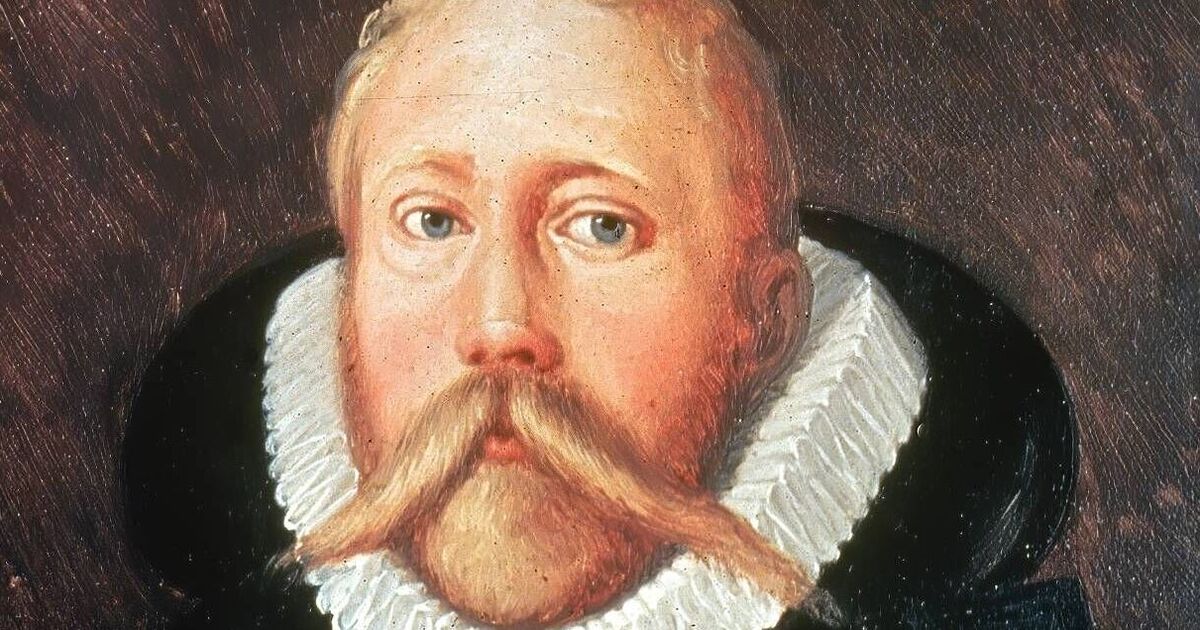
A renowned astronomer met a gruesome end when his bladder ruptured during an extravagant banquet, preventing him from urinating and causing him excruciating pain.
Tycho Brahe, celebrated for mapping the stars with unparalleled accuracy long before the invention of the telescope, was dining in October 1601 at the court of Emperor Rudolf II in Prague. Eyewitness accounts suggest that his famously rigid table etiquette prevented him from leaving the feast for a “natural break.”
Hours later, he was writhing in pain, his bladder unable to empty.
Upon returning home, Brahe endured days of severe discomfort. His assistants reported him becoming feverish and delirious, unable to urinate – a condition now believed to have been either a burst bladder or a serious urological infection.
His final hours were spent pleading that his life had not been wasted, urging his student Johannes Kepler to preserve his astronomical work, reports the Mirror.
Rumours quickly circulated around Prague. Some suggested he had been poisoned, while others pointed to the exotic medicines he consumed.
In 2010 and 2012, scientists exhumed Brahe’s body to put an end to the speculation. The findings were conclusive – there were no lethal levels of mercury in his remains, debunking poisoning theories and supporting the widely accepted account of fatal bladder or kidney failure.
His extensive celestial observations – the most precise ever recorded prior to the telescope era – were handed down to Kepler, who utilised them to discover the principles governing planetary movement.
His brilliance was equally matched by his quirks – Brahe suffered the loss of his nasal bridge in a sword fight following an intoxicated dispute with his cousin regarding mathematical superiority.
He subsequently fashioned prosthetic replacements from various metals, including brass and silver, affixing them with adhesive.
Within his fortress, he allegedly maintained an elk which died after consuming excessive beer and tumbling down a staircase. Following the excavation of his remains, researchers discovered that Brahe was corpulent and had eaten considerably more meat and fish than his contemporaries.
They also uncovered evidence of skeletal modifications consistent with diffuse idiopathic skeletal hyperostosis (DISH), a condition that can merge multiple vertebrae, according to Forbes.
The research team said: “Whereas it is most likely that DISH represented only a minor inconvenience for Tycho Brahe and did not have any relevant impact on his daily life and health status, some co-morbidities of the condition, if present, could have been life-threatening and may have played some role in the sudden illness he suffered at the end of his life.”