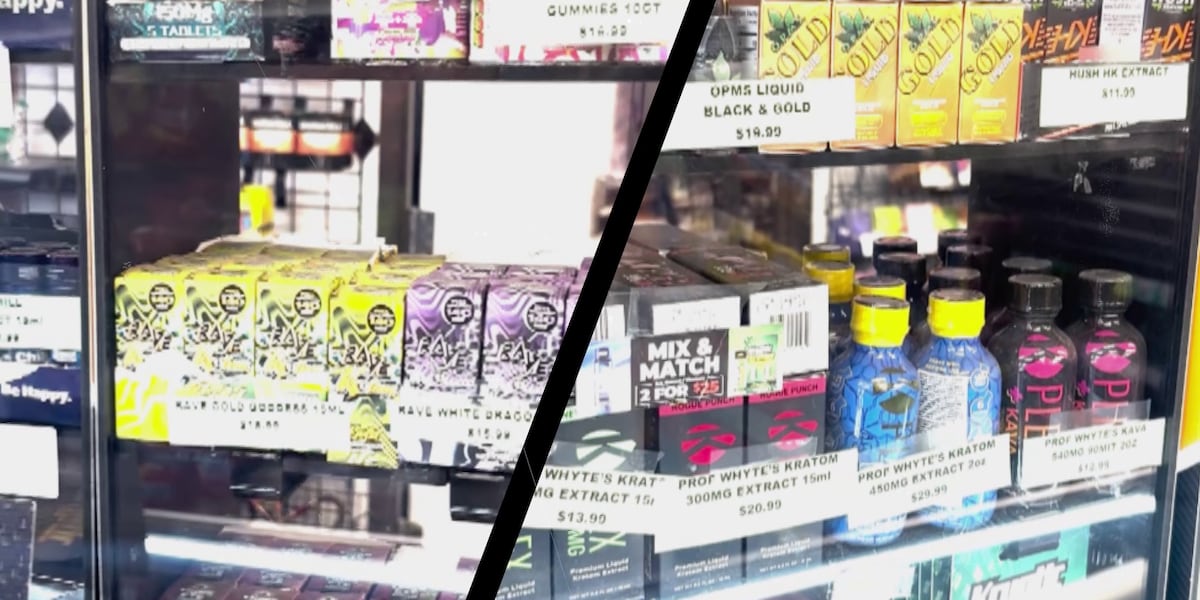
PHOENIX (AZFamily) — The state’s chief legal officer is warning Arizonans about what she calls “dangerous products” being sold in stores.
Attorney General Kris Mayes says the items are being marketed as kratom or “all-natural” supplements but actually contain highly concentrated synthetic substances. The products are sold in various gas stations, smoke shops and convenience stores.
“These products are really dangerous and basically act like synthetic opioids, and I have already heard from parents whose kids have become addicted to these products sold over the counter across the state,” Attorney General Mayes said. “The Legislature passed the Arizona Kratom Consumer Protection Act to keep dangerous products off the shelves and out of kids’ hands. Companies that ignore this law and push these drugs into Arizona communities are harming public health and safety.”
Under Arizona’s Kratom Consumer Protection Act, retailers cannot do any of the following:
- Sell kratom products that are adulterated with dangerous non-kratom substances.
- Sell kratom products contaminated with poisonous or harmful non-kratom substances, including controlled substances.
- Sell any kratom product containing a level of 7-hydroxymitragynine greater than 2% of the alkaloid composition of the product.
- Sell any kratom product that contains synthetic alkaloids, including synthetic mitragynine, synthetic 7-hydroxymitragynine or other synthetically derived compounds of the kratom plant.
- Sell any kratom product that does not list on its label the amount of mitragynine and 7-hydroxymitragynine contained in the product.
- Sell kratom products to anyone under 18 years old.
Mayes said her office is looking into reported cases of stores selling these products to minors. She added that the state’s kratom law is difficult to enforce and needs to be more strict.
“In its current form, Arizona’s kratom law asks prosecutors to clear a high-bar just to prove a misdemeanor,” said Attorney General Mayes. “Most law enforcement agencies simply don’t have the labs, experts, or budget to do that on a routine basis.”
Mayes said she plans to work with legislators to improve the law and increase penalties for offenders when the next session gets underway in January. She gave some advice to consumers in the meantime:
- Be skeptical of products sold in gas stations, convenience stores or online that promise quick fixes for pain, anxiety, focus or energy – especially if they are labeled as kratom or “7-OH”
- Avoid products that:
- Come in brightly colored candies or gummies aimed at teens and young adults.
- Use vague or misleading labels (for example: “all natural,” “dietary supplement” or “kratom blend”) without clear ingredient information and alkaloid content.
- Boast “extra strength,” “ultra” or “max” effects without disclosing how much 7-OH or other active ingredients they contain.
Anyone who experiences an adverse reaction when using kratom or 7-OH products should seek medical attention right away. Poison control can be reached at 1-800-222-1222.
See a spelling or grammatical error in our story? Please click here to report it.
Do you have a photo or video of a breaking news story? Send it to us here with a brief description.
Copyright 2025 KTVK/KPHO. All rights reserved.