
Liverpool tackled its 1980s heroin epidemic but a new crisis is taking hold, fuelled by criminal gangs, misinformation and social media
10:41, 10 Dec 2025Updated 10:42, 10 Dec 2025
 Young people in Liverpool like Megan Taylor are seeing their lives turned upside down because of ketamine
Megan Taylor remembers with painful clarity the very first time she tried ketamine. She was 18 years old and had been drinking with friends when one of them offered her a hit of the drug. She initially refused, but as the night wore on she became tempted and asked for a bump.
Megan immediately enjoyed the dissociative effects of the drug, particularly as a young person struggling with autism and ADHD, but she had absolutely no inkling of the dark and dangerous road she had just stepped on to.
Now 22, Megan, from Walton, says she was completely unaware of the potential health impacts of ketamine when she began using it in social settings and never imagined that she would become addicted and see her entire future put at risk.
“I was actually always against drugs, I had never really associated with anyone who took them,” she explains. “But I think with my ongoing struggles with autism and ADHD, I was kind of looking for an escape and alcohol wasn’t doing it, so that’s why I tried it.”
What started as a social habit quickly turned into something much more isolating.
Megan’s ketamine intake went from making a gram bag last around four days and only taking it once a month to eventually taking the drug each day and at times consuming two full grams in just 12 hours.
For the uninitiated, ketamine is a dissociative anaesthetic that can have hallucinogenic effects. It was created as a medical anaesthetic in the 1960s and has been used heavily in both veterinary and human medicine ever since.
Its use as a party drug grew in the 1980s and 90s in particular, particularly in rave and club scenes. But the use of ketamine – which is still currently a Class B drug – has exploded far beyond rave culture in recent years, with a deeply worrying rise amongst young people – including some children.
And for many of those young people, the serious and potentially permanent health risks – including debilitating bladder damage – that are associated with the drug are not well known when they begin taking it. This was certainly the case for Megan.
As she began consuming the drug more frequently, Megan started to notice she was getting severe pains in her chest and abdomen. She didn’t realise it at the time, but these were the result of so-called ‘K-cramps.’
This is where prolonged ketamine usage can lead to excruciating pain that feels like a severe internal squeezing as the drug causes damage to the urinary tract, the liver or the gastrointestinal system.
 Ketamine is growing in popularity in Liverpool and other big cities (Image: GM Trends)
What is really difficult is that for users like Megan, the way they try to alleviate the pain is to take more of the drug, furthering the descent into addiction.
“After I started getting the pains, I started taking it much more regularly, because it was the ket that was taking the pain away,” she recalls.
After a few more months of this increased usage, Megan received the first harrowing signs of the damage the drug was doing to her bladder.
“I thought I had a water infection at first and the doctor agreed and gave me antibiotics, but they didn’t do anything,” she explains.
“And then I started to see bits of jelly coming out in my wee. I didn’t know at the time, but I was weeing out the lining of my bladder.”
Chronic ketamine use can destroy the lining of the bladder, leaving people with terrible urinary issues. There have been reports of young adults forced to wear nappies because of the incontinence they are suffering.
For Megan, by the time she realised the damage she had done to herself, she was too far into addiction and couldn’t pull herself out of the spiral.
Describing the pain she was in at the time, she says: “It is like someone getting a knife, putting it directly into your bladder and then turning it, with scorching hot water pouring in at the same time.”
She also lost a huge amount of weight, dropping to just four stone. “Everything was spiralling,” she says. “I had drug dealers coming to my door demanding £600 I owed them and saying they would snap me like a twig because I was so skinny.”
As harrowing as it is, Megan’s story is far from a rare one in Liverpool at present. Ketamine’s wide availability, low price point – as little as £30 per gram – and its new fashionable status on social media, accompanied by a raft of misinformation, has seen a worrying rise in its use among young people in big cities like this one.
A report to Liverpool Council’s Health and Well Being Board in September confirmed that the city is seeing a “concerning rise in the use of ketamine among teenagers and young adults.”
Looking at those now accessing treatment for ketamine use and addiction, the report makes clear that this is still a small percentage of the total drug treatment population in the city, but it is the direction of travel that is causing most concern for health bosses, with a significant uptick in the last two years.
For the year between October 2022 and September 2023, out of 316 young people under 18 in Liverpool who were accessing drug services, 20 (6.3%) cited ketamine as one of their main substances. For the subsequent year, this percentage rose to 7.5%.
The report states that the trajectory appears to be increasing, with those aged between 14 and 15 the largest cohort of young people seeking support for ketamine use.
And the anecdotal evidence is even more concerning.
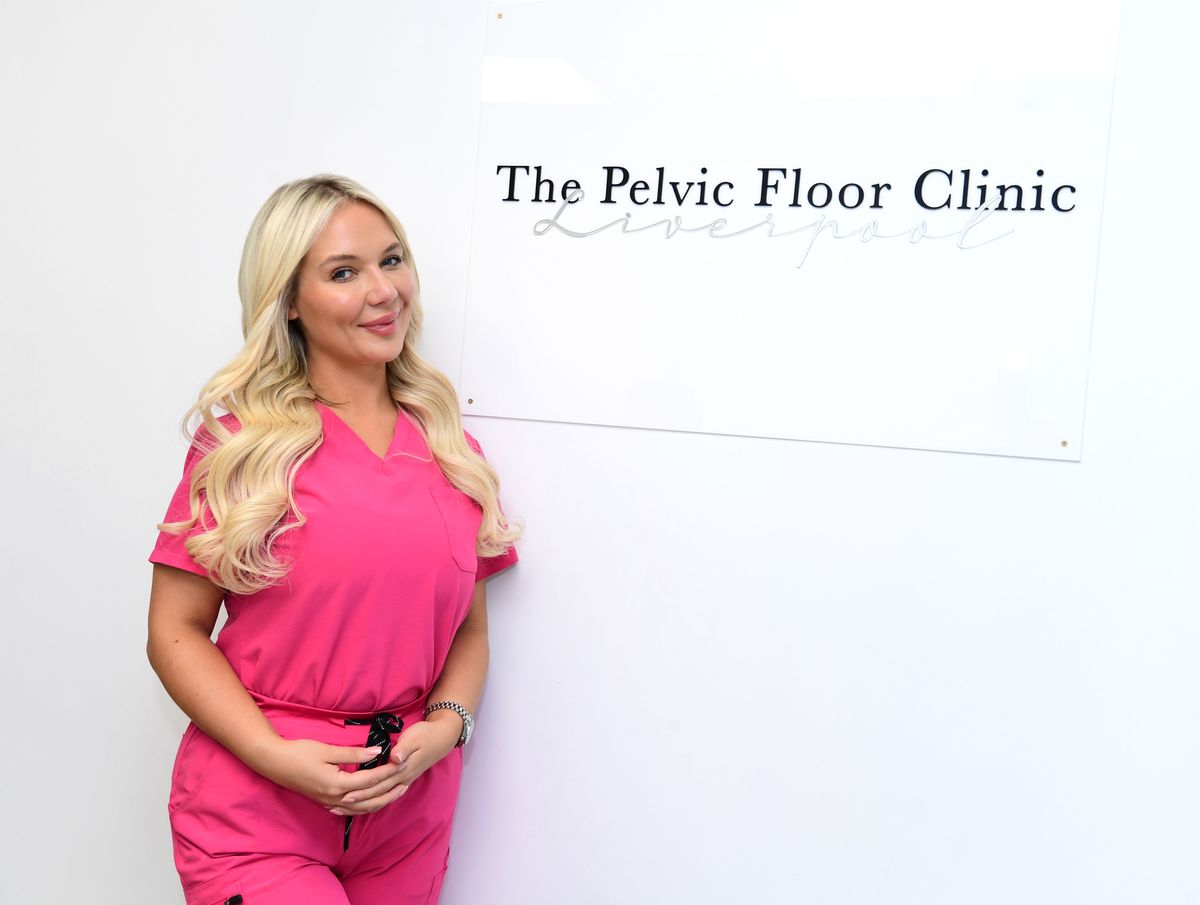 Paige Loraine has been shocked by the number of reports of people badly affected by ketamine
When Paige Loraine launched her Pelvic Floor Clinic in Liverpool City Centre in March 2024, she envisioned the majority of her interactions with potential clients would be women, either post-natal or those going through the menopause – who needed help and advice regarding their pelvic floor.
But just a few months into running her business, Paige, from Wirral, said she started getting messages from scores of young people and their parents, deeply worried about the impact ketamine use was having on their bodies and asking for guidance.
“It was either worried parents or young lads who were ringing up or messaging me, asking about their bladders,” explains Paige.
“I didn’t really know too much about it at the time, so it really took me back how many people were getting in touch.”
“I was hearing about young adults forced to wear nappies because the ketamine had stripped their bladder lining away. People were telling me they were in excruciating pain,” she recalls.
As she is not a doctor, Paige would direct the enquiries to medical professionals, but thinks she may be able to help people in the longer term with her pelvic treatments as they recover from the impacts of the drug use. She believes there needs to be much more education to highlight the risks of ketamine for young people in the city.
“This is affecting people from all walks of life, it could be anyone’s kid. I thought it was just a party drug but young people are taking it every day. I think we need to go into schools and talk about this stuff.”
Going into schools is certainly one element of a comprehensive ketamine action plan that is now being drawn up by Liverpool’s Director of Public Health Matt Ashton and his team, who are keen to try and get ahead of this emerging crisis.
The plan is being formed after Liverpool Labour councillor Lynnie Hinnigan brought a motion to a full council meeting earlier this year, where she stated that ketamine was “stealing the futures” of young people in the city and called for a multi-agency plan to tackle the problem.
One of the challenges, Professor Ashton says, is how to communicate with a largely very young cohort, who may not want to hear the truth.
“One of the challenges we have is how we speak to people in these cohorts, most young people aren’t going to listen to the director of public health, so we need to think about how we reach these people”, he explains from his office in Liverpool’s Cunard Building.
“We have had loads of stigma with things like heroin and opiates use and we desperately don’t want to go into that space.
“We have to understand that there are reasons why people take up these kinds of things and our job is to help people to understand the risks and the harm they can do to their health and to try and provide alternatives from starting that stuff in the first place and routes out.”
The plan – include training up public health youth workers and teaching school staff to spot the signs of young people with ketamine issues – from heavy sniffing to frequent toilet trips.
Crucially there is now also a dedicated ketamine team installed within River, the city council’s integrated drug and alcohol support service.
Meanwhile, Alder Hey Children’s Hospital this year opened the first dedicated NHS ketamine clinic for children and young people who are suffering complications from the use of the drug.
For Professor Ashton – who chairs the city’s combatting drugs partnership – speed is of the essence because of the damage ketamine can do, particularly to the increasingly young people who are taking it.
“Anybody using ketamine is risking harm to their health but if you have young people aged 12, 13, 14, who are in that developmental stage of life, then the risk is high,” he explains.
He adds: “We have recognised that there is an emerging and increasing issue here in the city and so we are being very proactive in our attempts to get ahead of this, which is very similar to what Liverpool did in the 1980s with heroin.”
As mentioned, ketamine is not a new drug, either in medical or recreational terms – but what has changed in recent decades is how available it is and who is taking it.
Harry Sumnall is a professor in substance abuse at Liverpool John Moores University, he says he personally first became aware of ketamine when he was at university in Manchester in the 1990s.
He explains: “Back then it tended to be associated with the free party scene, not the mainstream club culture. You would see it at summer festivals or in the hard house scene, it was very niche.
“Looking back at the scientific research back then, you would only really encounter non-medical mentions of ketamine use either from reports from Hong Kong and China, where they have had a long-standing issue, or if it was mis-sold as ecstasy tablets, but that was a small level of use.”
 Liverpool public health director Matt Ashton(Image: Julian Hamilton/Daily Mirror)
But from the 2000s onwards, the usage of ketamine began to expand. This was partly due to demand and trends, but Professor Sumnall says it was in large part due to the activities of the criminal gangs bringing it in.
“Organised crime groups and those importing ketamine into the UK were better able to develop direct links with pharmaceutical companies, particularly in China, but India as well,” explains Professor Sumnall.
“We are talking about small producers, who to a certain extent are producing ketamine for the legitimate market, but perhaps a lot of that is being diverted. There are also so-called ‘grey market suppliers’ where there might be a certain level of illicit production.
“This really took off in the early and mid 2000s, so ketamine became more readily available and because it was considered a lower-risk drug in terms of international trafficking and crime, it was relatively underprioritized in terms of global reinforcement. So the risks of being involved in that trade were lower than say cocaine, ecstasy or heroin.”
These factors – and the fact that ketamine is being produced by drug companies in huge quantities – help to bring down the street cost, meaning it is much more affordable than other drugs.
“Young people tell us today that ketamine’s affordability is part of what makes it attractive to them,” adds Professor Sumnall.
The drugs expert says ketamine is not being manufactured here in the UK where risks are a lot higher in terms of law enforcement. A lot is coming into the UK through small packages in the post at a lower level. But he says there is also now bulk importation into countries like Germany, the Netherlands and Belgium that is then being distributed into the UK.
Evidence of the increasing amount of ketamine being imported into the UK – and Merseyside specifically – came in the story of Paul Farrelly, who was stopped on the East Lancs Road in September while transporting a remarkable £17m worth of the drug. The 46-year-old was sentenced to more than five years in prison after 35 25kg sacks were found in his vehicle.
“That kind of amount wouldn’t usually be direct importation from China or India, it is usually coming via transit from European countries, where ketamine is less of a priority for law enforcement,” adds Professor Sumnall.
The demand behind these huge quantities of ketamine flowing into Liverpool and other major cities is increasingly and concerningly being driven by young people. Professor Sumnall says this is for a number of reasons.
“So it is relatively cheap, you can get a gram of ketamine for £20-30 or much cheaper with bulk discounts locally, which makes it easy to share with friendship groups,” he explains.
“For those young people who have the contacts, it is relatively easy to get. The rise of social media, whether that is things like Whatsapp groups, signal or whatever, that has transformed the drugs market.
 Megan Taylor (right) with her mum Angela
“Ketamine is also a relatively short acting drug, so not only is it affordable, its effects last a few hours, which means that you can have a relatively small amount over a night out and you won’t get the same sort of comedown or hangover effects of other drugs.”
These were certainly some of the qualities that attracted Megan Taylor to ketamine. Before things took a dark turn in her life.
Thankfully, Megan found help through Liverpool’s Lifeboat Community Hub, a dedicated safe space for recovery in Kirkdale, which now offers specific ketamine support groups.
Where to get help or advice about drugs
Your GP is a good place to start. They can discuss your problems with you and get you into treatment.
They may offer you treatment at the practice or refer you to your local drug service.
If you’re not comfortable talking to your GP, you can approach your local drug treatment service yourself.
Visit the Frank website to find local drug treatment services.
If you’re having trouble finding the right sort of help, call the Frank drugs helpline on 0300 123 6600. They can talk you through all your options.
It was through this service that Megan completed a detox programme in July of this year – and she hasn’t touched ketamine since.
“If it wasn’t for the Lifeboat I would still be taking it now,” She says. “But now I feel amazing, I am back to the person I was before I ever touched it. My bladder is healing, I don’t get the pains anymore and I am not in pain when I wee. I am playing footy again and slowly getting my life back.
“My bladder will never go back to what it was, it will get better but it is a slow process. I need to just accept what I have done, I can’t change that now.”
She says its not only the physical impact of her drug use that needs to recover, there are also scars left on those who witnessed her descent into addiction.
She adds: “I used to have my mum sobbing thinking I was going to die. It is horrendous knowing what I have put everyone around me through.”
So what would her advice now be to a young person thinking of experimenting with ketamine?
“I would tell young people to research what it is and find out the damage it will do to their body.
“Once you pick that first bag up you will keep going back and you could be the one who is incontinent, crying in pain, asking for help because you are stuck in the cycle.”