– Advertisement –
When Richard Slaney talks about Lightroom, he doesn’t talk about technology, prestige, or even the huge names involved. He talks about intimacy.
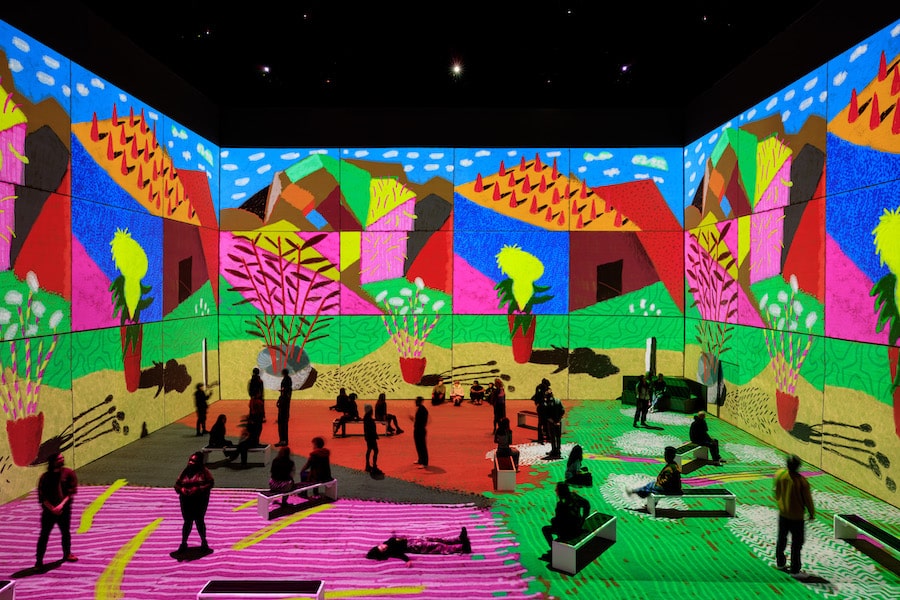
Which is an odd word, perhaps, for a format that towers 11 metres high, wraps 360 degrees around its audience, flooding the vast Warehouse space at Aviva Studios, the landmark home of Factory International, with visuals so engulfing they feel almost cinematic.
Why you should immerse yourself in the world of Lightroom
But for Richard, producer, CEO of Lightroom, and the executive mind behind three major immersive shows landing in Manchester this winter, intimacy is the secret ingredient.
“Lightroom gives you the perspective of someone who really knows their subject,” he explained. “And they’re not only narrating something we wrote, but they’re talking directly to you. It’s huge and immersive and dramatic, but somehow still feels like someone is sitting on your shoulder, telling you about something they love.”
This winter, Aviva Studios becomes Lightroom’s second home as three blockbuster experiences arrive in the city: David Hockney: Bigger & Closer (not smaller & further away), VOGUE: Inventing the Runway, and The Moonwalkers: A Journey with Tom Hanks. Together, they form what feels like a sort of residency, a chance for audiences to step inside the imaginations of three very different creative worlds, guided by the people who know them most intimately.
And if Slaney has his way, these won’t just be shows people attend. They’ll be shows people feel.
Tom Hanks and Moonwalkers
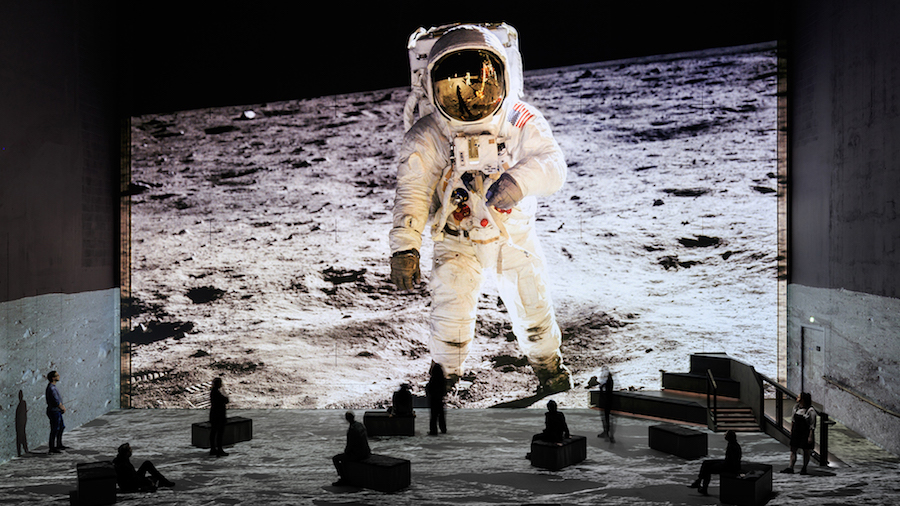
The story of Moonwalkers begins, improbably, with a chance encounter. The week the Hockney show opened at Lightroom in London, David Hockney himself arrived with a small group of friends. Among them: Tom Hanks. No biggie.
VOGUE: Inventing the Runway
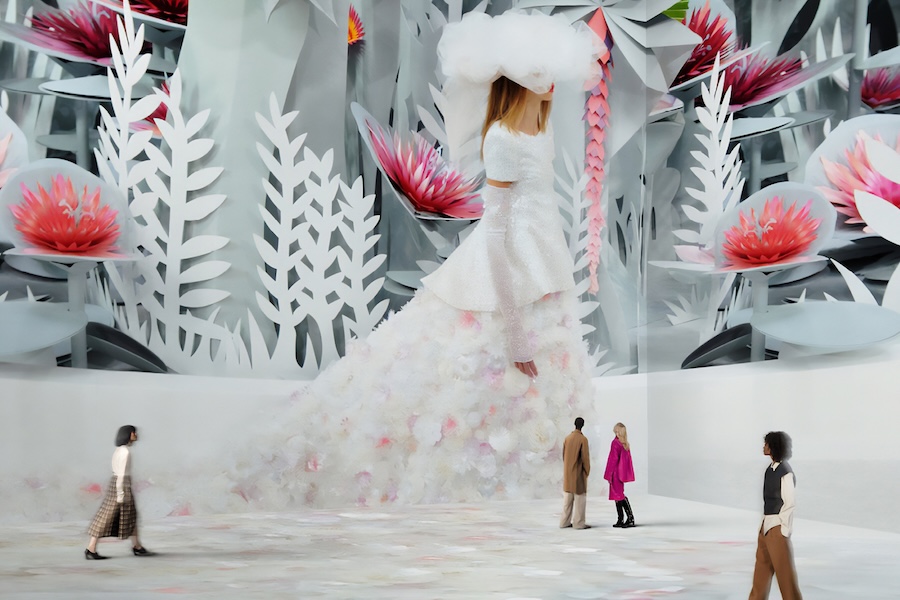
If Moonwalkers takes you to the moon, VOGUE: Inventing the Runway takes you somewhere arguably just as inaccessible: the front row of high fashion.
And again, the story begins with David Hockney.
“Anna Wintour came as a guest of David,” Slaney said, laughing at the coincidence. “There’s actually a whole section in Hockney’s show about a Vogue issue he contributed to in the early ’80s, so she wanted to see how we handled his work.”
What struck Wintour wasn’t just the art, but the format.
“She’s incredibly funny, incredibly warm, and unbelievably decisive,” Slaney said. “And she immediately focused us in on the idea of a show about the history of runway shows. Not fashion in general, runway. Because she understood that’s a world the public rarely gets to see.”
This is where Lightroom comes into its own. Runway shows are famously closed environments, exclusive, highly pressurised, and invite only. But with projection and scale, Lightroom can place the audience inside spaces normally reserved for celebrities and editors.
“Fashion shows are becoming more public through livestreams and social media, but the truth is, very few people get to feel what it’s like to be there,” Slaney said. “We’re not trying to recreate a fashion show, but to reveal what they mean, how they evolved, why certain shows changed the culture, why others set the tone for a decade.”
Wintour and the wider Vogue team, Slaney said, were remarkably open.
“They’ve been to every show for decades. They know this world more intimately than anyone. And that’s what people will get: an insider’s perspective. The sense that Vogue is taking you by the hand and saying: Come with us. Let us show you something you’ve never seen before.”
David Hockney returns: bigger, closer, and even more personal
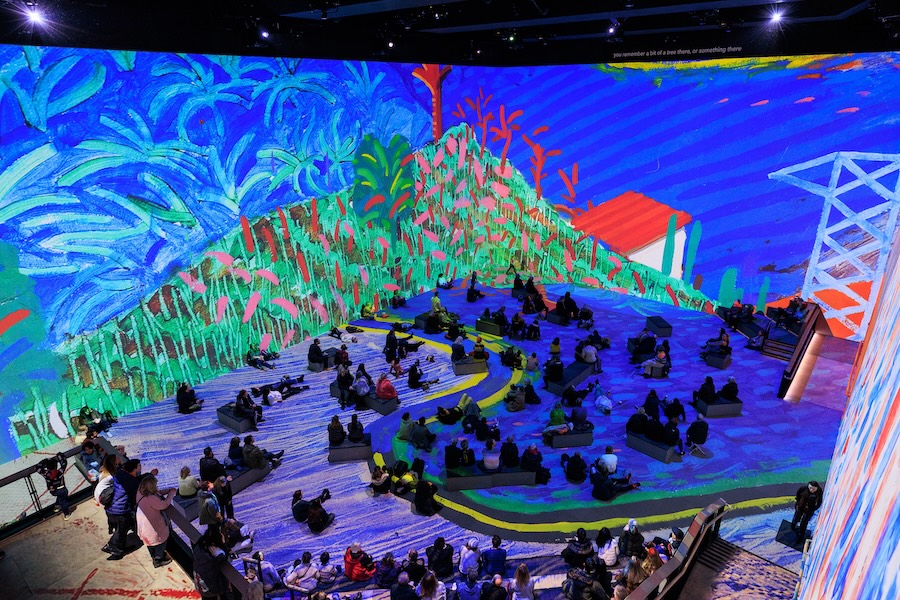 Bigger & Closer (not smaller & further away)
The trilogy of shows is anchored by the return of Lightroom’s original blockbuster: David Hockney: Bigger & Closer (not smaller & further away).
If Moonwalkers is emotional, and Vogue is glamorous, Hockney’s show is pure creative generosity. It feels like being invited into the artist’s studio, or even taking a front row in his mind.
“Hockney guides you through his philosophy, his life, his work, in his own voice,” Slaney said. “He shows you how he sees the world. And inside Lightroom, you’re not looking at his work, you’re inside it.”
The result is a show that works equally well for people who’ve known Hockney for decades and people who have never seen his paintings before.
“Some people ask, ‘Why not just go see real Hockneys in a gallery?’” Slaney said. “And the answer is: you absolutely should. Within an hour of Manchester, there are incredible Hockney works you can see for real. But this is a gateway, a way in. It’s not either-or. It’s both.” Hockney’s enthusiasm for the format helped define Lightroom’s identity.
“It’s intimate, open, but informal,” Slaney said. “You can talk to the person next to you. You can take photos. Kids can point at the walls and ask questions. It’s not rigid or hushed. And yet it’s still deeply thoughtful.”
A format built for families, friends, and anyone curious about… anything
Slaney is firm that Lightroom isn’t about dumbing anything down, it’s about opening things up.
“It’s accessible without losing any depth,” he said. “You can sit and absorb it quietly, or you can go with your kids and talk the whole way through. You’re not going to get shushed.” Multi-generational groups, he said, are the true heart of the audience.
You’ll get a grandparent, a parent, and a child all experiencing something together, all taking different things from it. And that’s really special.”
There are also access performances: including with BSL and audio description – as well as ‘After Dark’ adults-only slots programmed in the evenings for those who want to unwind and absorb every last detail.
And this year, with three shows running side by side, he expects people to pick the ones they feel drawn to, but also hopes some may venture outside their usual interests.
“It’s okay to like the moon, and fashion, and David Hockney, and dinosaurs,” he smiled.
“Lightroom is meant to be plural. You don’t have to pick a niche. You’re allowed to explore.”
Aviva Studios is also offering BSL and audio-described screenings, ‘After Dark’ adults-only slots programmed in the evenings for those who want to unwind and absorb every last detail, and the return of their popular dog-friendly slots for David Hockney and VOGUE: Inventing the Runway, allowing dog owners to enjoy the experiences with their furry friends.
The technology disappears, and that’s the point
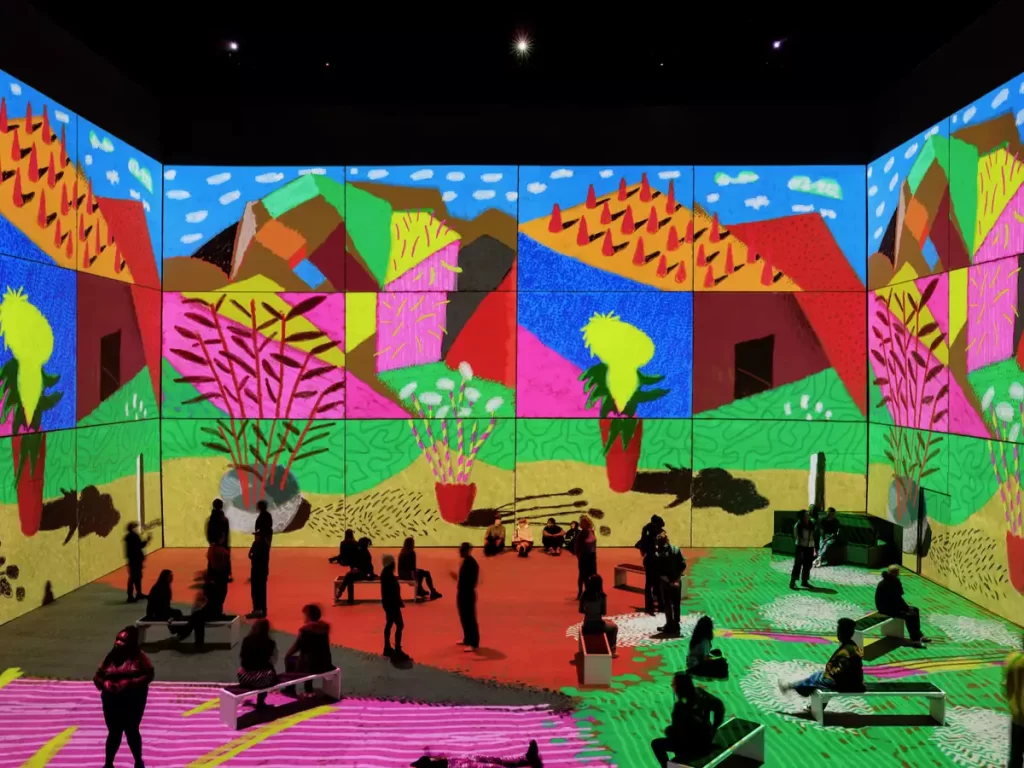
All this intimacy depends on technology that most venues could only dream of. Giant-volume projection. Precision-calibrated sound. Vast seamless walls of imagery.
But Slaney insists: the tech is not the star.
“It’s the most important, and least important, part of the experience,” he said. “It has to work flawlessly so that people forget it exists. If they’re thinking about the projection, we’ve failed. We want them thinking about the story.”
Still, the moment he steps into Aviva Studios, even after years of building shows inside Lightroom, he sometimes catches himself stopping and staring.
“Eleven-metre-high imagery wrapping entirely around you… it just doesn’t get old. It’s a huge space, and it still feels magical.”
So why should people come to Lightroom?
“How often,” he said, “do you get a show where the best person in the world on a subject takes you by the hand and says, “let me show you why I love this?”
Moonwalkers gives you Tom Hanks, sharing the moment the world changed. Vogue gives you Anna Wintour and the Vogue team, guiding you through a world most will never enter. Hockney gives you David himself, explaining not just what he creates, but why.
“It’s like the intimacy of a great podcast,” Slaney said, “combined with the scale of an IMAX film. That’s the magic.”
Or, as he puts it more simply: “These shows unlock something. They illuminate things we thought we understood, and show them to us differently.”
This winter, at Aviva Studios, you can step into three extraordinary worlds. And they’re ready to welcome you: bigger, closer, and brighter than ever.
– Advertisement –