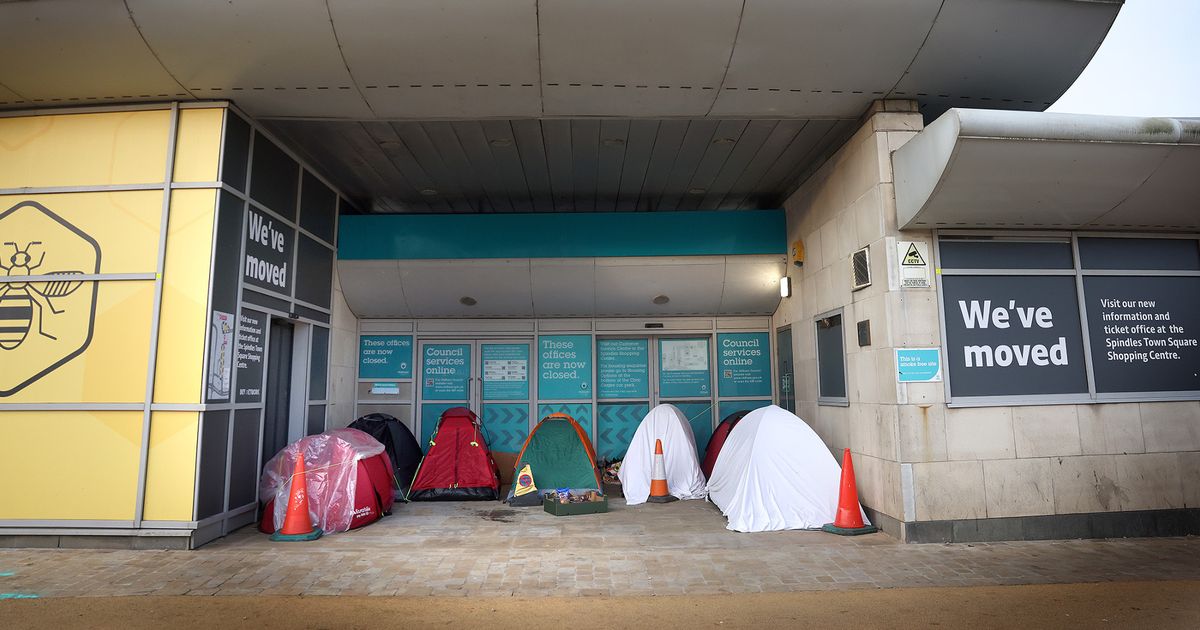
The number of people currently homeless across the north west could more than fill the Co-Op Live arena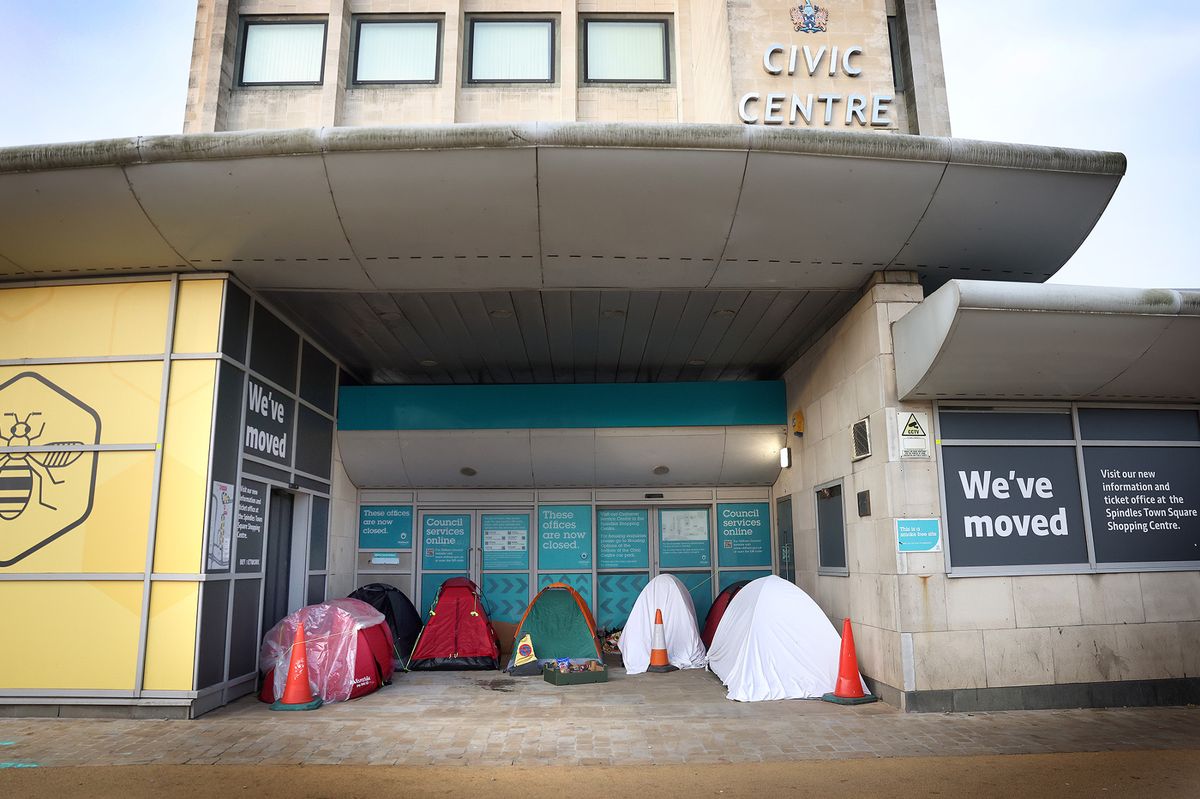 The Government has announced a new national plan in a bid to tackle the crisis(Image: Manchester Evening News)
New data has revealed the number of homeless people across Greater Manchester and the north west, and will be spending Christmas on the streets. Recent analysis by housing and homelessness support charity Shelter has found that one in 308 people across the north west are homeless, with 25,132 people, including over 11,000 children, currently without a permanent home. T
This is an increase on 15 per cent in the last year. The stark figures come as the government launches its new £3.5bn plan to end the homelessness crisis.
The National Plan to End Homelessness has promised to half the number of long-term rough sleepers over the next five years as well as more households to prevent people from becoming homeless.
In its long-awaited strategy to tackle the ‘profound challenge’ of homelessness, ministers have set out how they will use the £3.5 billion of investment, including through efforts to help those on the streets and to stop others falling into crisis.
New data provided by Shelter through Freedom of Information requests has shown which areas of Greater Manchester are hardest hit by homelessness. Manchester is the highest – with 9,589 people rendered homeless – 4,678 of whom are children. This means that one in every 61 people are homeless. This is followed by Salford, with a rate of 2,327 people as of 2025.
Homelessness across Greater Manchester by borough
- Manchester – 9,589 (one in every 61 people)
- Salford – 2,327 (one in every 126 people)
- Oldham – 1,347 (One in every 187 people)
- Tameside – 1,088 (one in every 220 people)
- Rochdale – 804 (one in every 293 people)
- Bury – 646 (one in every 308 people)
- Trafford – 692 (one in every 348 people)
- Bolton – 609 (one in every 509 people)
- Wigan – 596 (one in every 579 people)
- Stockport – 571 (one in every 532 people)
With a total of 25,132 people homeless across the north west of England, data showed this could more than fill Manchester’s Co-op Live venue; the biggest arena in the UK. Research revealed that there are also at least 4,667 people sleeping rough across England on any given night, a 20 per cent increase since 2024.
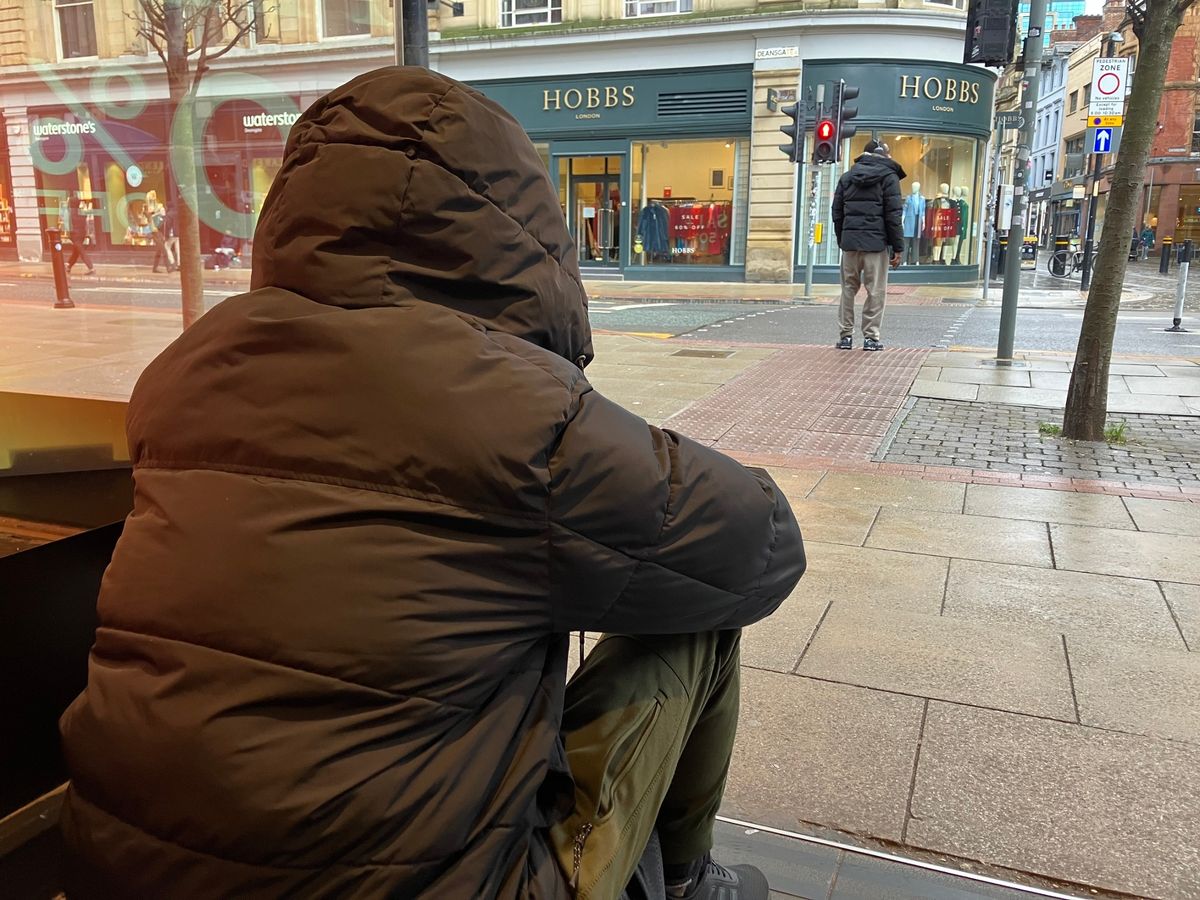 There is a 15 per cent increase on the number of homeless people across the north west compared to last year(Image: Manchester Evening News)
According to Shelter, the shortage of social homes, unaffordable private rents and the freeze on housing benefit are pushing more people into homelessness and trapping them there. The charity said it had combined official homelessness figures with responses to Freedom of Information requests to local authorities.
Over 90 per cent of the people recorded as homeless, including 84,240 families, are in temporary accommodation, which is only intended for short-term use. The charity’s research shows households have spent an average of nearly three years so far in temporary accommodation while attempting to access a stable home.
John Ryan, Manchester Strategic Lead at Shelter, said: “It’s unthinkable that as winter sets in, over 25,000 people across the North West are homeless. People sleeping rough on the streets in all weathers are the tip of the iceberg – there are also thousands of families stuck in temporary accommodation with nowhere to turn.
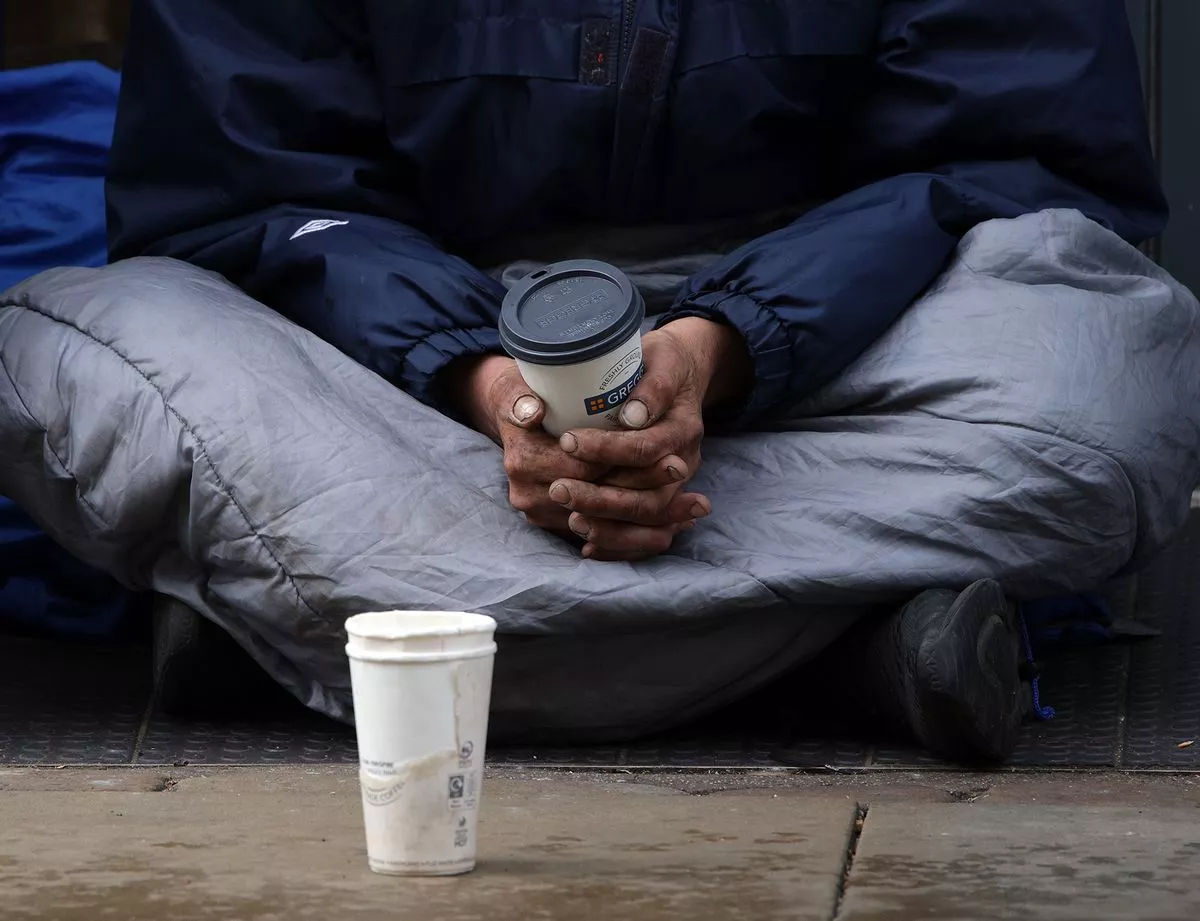 Housing charities welcomed aspects of the strategy but insisted more needs to be done(Image: Sean Hansford | Manchester Evening News)
“Private rents have climbed far beyond what ordinary working families can afford, and with so few social homes built over recent decades, there’s simply nowhere for people to go. We’re seeing more and more people coming through our doors in Manchester in desperate situations.
“Until the government delivers a new generation of social homes and unfreezes housing benefit, Shelter is here to ensure no one faces homelessness alone. But we need your help. Your donations allow us to fight alongside anyone facing homelessness, providing direct support while campaigning for lasting change. The public can join us in this fight by donating to our urgent appeal today.”
As part of a focus on prevention, the Government’s strategy – entitled the national plan to end homelessness – includes a target to halve the number of ex-prisoners who become homeless on their first night out of jail and ensuring that no eligible person is discharged to the street after a hospital stay. These measures are aimed at ensuring no-one becomes homeless on leaving a public institution, the Ministry of Housing, Communities and Local Government said.
They will come into effect through a new ‘duty to collaborate’, as part of a law requiring public bodies to work together to prevent homelessness, the department said. The plan also refers to a pledge announced in last week’s child poverty strategy to end the unlawful use of bed and breakfast accommodation for families.
The three pledges – to halve the number of long-term rough sleepers, end the unlawful use of B&Bs for families and prevent more households from becoming homeless in the first place – are all to be achieved by the end of this Parliament in 2029/30.
 There are over 9,000 people without a home in Manchester, according to new data(Image: Manchester Evening News)
Housing Secretary Steve Reed said homelessness is “one of the most profound challenges we face as a society” and that the strategy had been “shaped by the voices of those who’ve lived through homelessness and the frontline workers who fight tirelessly to prevent it”.
He added: “Through our new strategy we can build a future where homelessness is rare, brief, and not repeated. With record investment, new duties on public services, and a relentless focus on accountability, we will turn ambition into reality.”
The plan includes the launch of a new £124 million supported housing scheme which the department said will take more than 2,500 people across England off the streets and into more stable housing, as well as a £15 million programme aimed at helping councils develop ‘fresh solutions’ to prevent rough sleeping.
A further £37m of funding is aimed at increasing support and improving services from the voluntary, community and faith sectors which the Government said are often ‘at the frontline of this crisis’. The department also said that £950 million funding to local authorities will help boost the supply of good-quality temporary homes while £30 million will go towards preventing poor quality emergency accommodation being used.
Dr Laura Neilson, Chief Executive, Shared Health Foundation, said: “It is heartening to see that ministers have heard the plight of the record number of children and families who are homeless. Alongside the child poverty strategy this strategy is ambitious in reducing the impact of homelessness on families.
“We urge the government to continue to show brave leadership and look forward to working together to go faster and beyond what is outlined today. Homelessness should be rare, brief and non recurring and is not detrimental to the life chances o children and young people”.
Homelessness minister Alison McGovern added: “By working together including government, local leaders, charities, and communities, we can stop homelessness before it happens and ensure that when people do fall into crisis, support is swift and effective.
“The prize is big. Right now, taxpayers are paying the price of failure, with temporary accommodation costs skyrocketing. And the next generation of British young people can’t succeed without the space they need. This strategy sets us on a better path – to save money and change lives.”