
Over the next century, Victoria and Albert’s affinity for tartan precipitated what scholars refer to as a “Balmorization” of fashion and home design. Plaids and checks belonging to the Campbell, MacKenzie, and Douglass clans popped up in coats, gowns, and children’s garments while tartan became a mainstay of British and American interiors. As twentieth century textile designers Anni Albers, Mary Storr, and Dan Cooper sought to create affordable tartan fabrics and wallpaper, Dutch architect and Benedictine monk Hans van der Laan elevated tartan as an exemplar of “spatial superposition,” as reflected in his design of the St. Benedictsburg Abbey at Vaals between 1968 and in 1986. In 1991, Ralph Lauren became the most famous name associated with tartan interiors when he launched his own line of tartan fabrics, china, mirrors, napkins rings, and mahogany furniture. For Lauren, “tartan is not just a fabric,” reported The New York Times of the new collection. “It is a way of life.”
While the timelessness of tartan ensures that it will never go out of style, it’s clear that it is resonating with people more than it has in years. Following Dior’s inventive line of reinterpreted tartans, tweeds, and knits debuted at Scotland’s Drummond Castle last June, Celine, Valentino, Ferragamo, Chloe, Loro Piana, and Bottega Veneta have all embraced tartan as part of a broader “countryside style”—an aesthetic that we are seeing be echoed by brands like Hill House Home and Boden, which just launched its playful “Tartan Time” collection this fall.
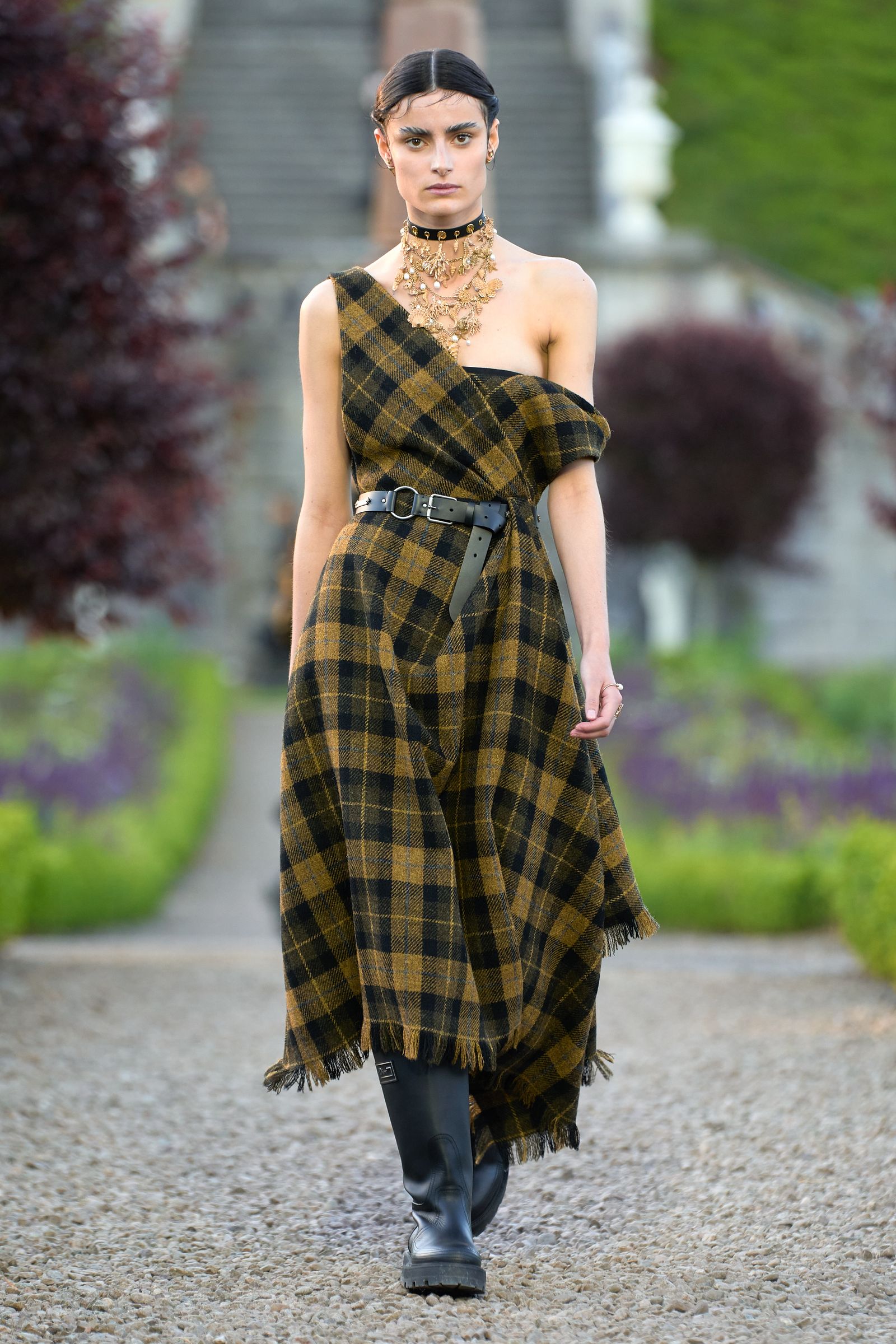
Tartan at Dior’s Scottish 2025 cruise collection.
Photo: Alessandro Lucioni / Gorunway.com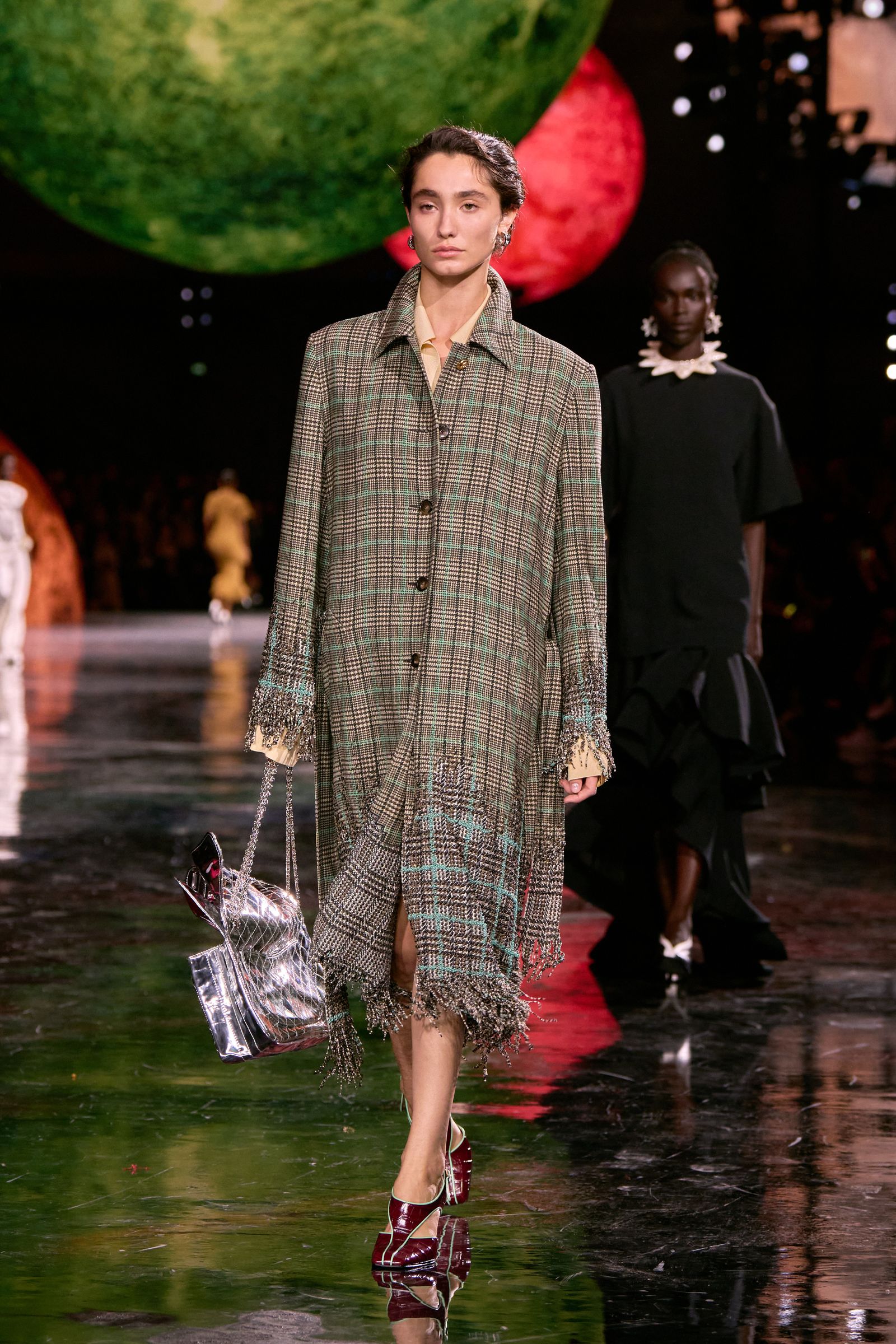
Degraded tartans at Matthieu Blazy’s Chanel spring 2026 runway debut.
Photo: Isidore Montag / Gorunway.com
At the same time, tartans, tweeds, and checks have started to permeate home design. “The inevitable crossover from fashion to interiors is not surprising,” says interior designer Stephanie Hunt, who encourages her clients to “dress like you decorate, and vice versa.” Out is the minimalist, modern farmhouse style, she says, and in is the layered, colorful, and print-heavy, making tartan a no-brainer.
Of course, designers have always loved working with tartan, regardless of whether it is “in” or not. Many designers I spoke for this story say they appreciate the cloth’s durability, especially for clients with pets or young families. “Because of the pattern and the repeat and the multiple colors, you’re going to hide stains and wear and tear,” explains designer Katie Davis of Houston, Texas.