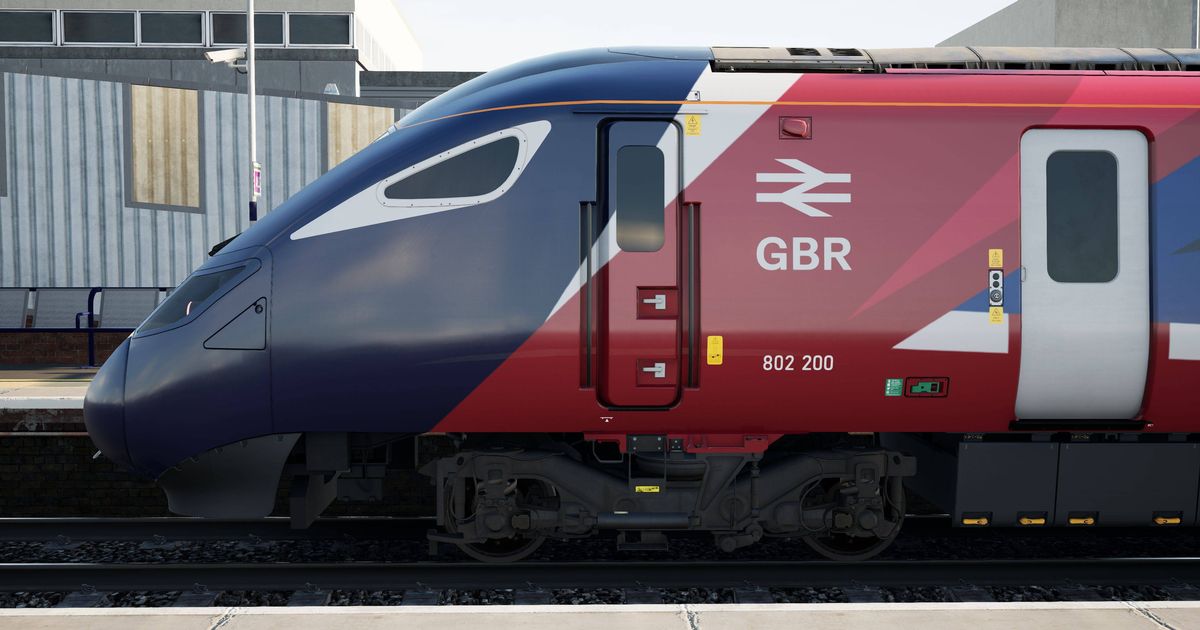
Both Plaid Cymru and the Liberal Democrats said as its stands they cannot support the Railways Bill Plaid Cymru and the Liberal Democrats said they cannot support the legislation as its stands and that the only way to address rail underfunding in Wales is for it to be devolved(Image: Department for Transport)
Plaid Cymru and the Liberal Democrats have criticised Westminster legislation for a planned new body overseeing rail infrastructure and rail services for failing to give an effective voice to the interest of rail in Wales. The Railways Bill, which has had its second reading in the House of Commons, will see the creation of state-owned Great British Railways, which was a manifesto pledge of the Westminster Labour government.
But both parties said they cannot support the legislation as its stands and that the only way to address rail underfunding in Wales is for it to be devolved. Plaid Cymru’s transport spokesperson in Westminster, Ann Davies, said that while the bill may simplify rail operations in England, it fails to address Wales’ lack of control over its own rail infrastructure and the billions in funding the nation loses as a result.
She added: “This bill makes sense for England. However, it does not work for Wales. It fails to address our lack of control over the Welsh rail track, where two governments manage different parts of what should be a single network. This split makes planning railways in the best interests of the people of Wales almost impossible.
“We can see this in the broken promise to electrify the south Wales mainline beyond Cardiff, or even to start work on the equivalent line in the north. Scotland, by contrast, controls its rail network and sets its own strategy, giving Scottish ministers real influence over Great British Railways. Under this bill Welsh ministers can only ask to be consulted – Wales does not want consultation, we deserve control.
“This government is following the old adage: ‘For Wales, see England.’ It is a travesty that a nation which built the first steam locomotive, supplied the steel and coal that powered the UK’s railways, is the only nation in Great Britain without control of its own network. Plaid Cymru is clear: Welsh rail should be in Welsh hands. It is time to devolve rail to Wales.”
As rail projects are deemed jointly England and Wales, for any increase in Department of Transport spending, which is mainly driven by rail enhancement projects, Wales’ comparable figure – which sets the level of the Barnett consequential to the Welsh Government – is only 33.5%, while for Scotland and Northern Ireland it is close to 100% (95.6%).
With £40bn of rail projects identified in England up to 2040, which include further investment in HS2 from London to Birmingham, the low comparable figure will see Wales, over the long-term, losing out on billions of pounds, compared to the far more favourable comparable figures for Scotland and Northern Ireland.
The current allocation for rail enhancement projects in Wales up to 2030 is £455m, following the chancellor’s spending review back in June. That includes £90m for project development. It also includes money already committed to upgrade the relief lines on the south Wales mainline at around £50m, as well as around a £70m contribution to the upgrading of Cardiff train station (a £140m project).
A project to increase the number of trains able to run between Wrexham and Merseyside, at Padeswood sidings in Flintshire, will consume around £30m of the pot. The £455m also includes a £48m one-off payment to the Welsh Government for the South Wales Metro, although it will be for ministers to decide how and where that will be spent.
The five planned Burns stations between Cardiff and the Severn Tunnel, recommended by the Lord Burns Commission set up by the Cardiff administration to improve public transport after its decision not to proceed with a £1bn M4 relief road, would each have an estimated cost of around £70m (although less for Magor). If you then throw in the required rail corridor investment for Parkway – which was recommended by the Burns Commission – then the current settlement is nowhere near enough.
Transport for Wales operates the Wales and Borders network after the Welsh Government initiated the operator of last resort mechanism to bring it under government control during the pandemic. A long-term franchise had been awarded by Welsh Government body Transport for Wales to joint venture KeolisAmey. A key part of the rail network, the core valley lines into Cardiff, is effectively devolved and under the control of Transport for Wales. However, there hasn’t been a positive change in the comparable figure to recognise this.
Professor Mark Barry of Cardiff University, who has submitted evidence on the legislation, said: “The bill is in reality limited to requiring the UK Government and DfT ministers to consult Wales (we have had 30 years of that to little effect). However, without substantive statutory underpinning, this is just empty and leaves Wales short-changed and without sufficient levers to fund and implement its own transport policy.
“Whereas Scottish ministers can prepare their own version of a long-term rail strategy (LTRS) and produce a statutory high level output (HLOS) specification for Network Rail (as they have since rail powers were devolved to Scotland in 2005), Welsh ministers can ‘have a chat’ with the London transport minister to request he/she considers Wales’s requirements in an ‘England and Wales’ LTRS and HLOS.”
Welsh Liberal Democrat MP for Brecon, Radnor and Cwm Tawe, David Chadwick said that the Welsh Liberal Democrats will not support the UK Government’s Railways Bill, warning that as it stands the legislation “entrenches the neglect Wales has faced for decades”.
The party argues that the bill hands even greater control over Welsh railways to Whitehall while denying Wales the powers already held by Scotland. The bill provides no new investment guarantees for Wales, no power for Welsh ministers to direct Great British Railways, and no mechanism to correct historic under funding.
Research released this week by the Welsh Liberal Democrats shows that Wales is set to lose another £1bn as Northern Powerhouse Rail is designated an “England and Wales” project, bringing total lost rail funds through UK Government accounting decisions to around £6bn. The party is calling for full devolution of rail powers to Wales, including control over infrastructure, strategy and funding, to bring Wales in line with Scotland.
Ms Chadwick said: “This Bill fails Wales. It centralises power in Whitehall, ignores decades of underinvestment, and leaves rural communities like mine at the back of the queue yet again. Scotland gets real control over its railways, Wales gets nothing. Not a single new power. Not a single guarantee of fair investment. Wales deserves equality, not second-class status. That’s why we won’t support this Bill in its current form.”