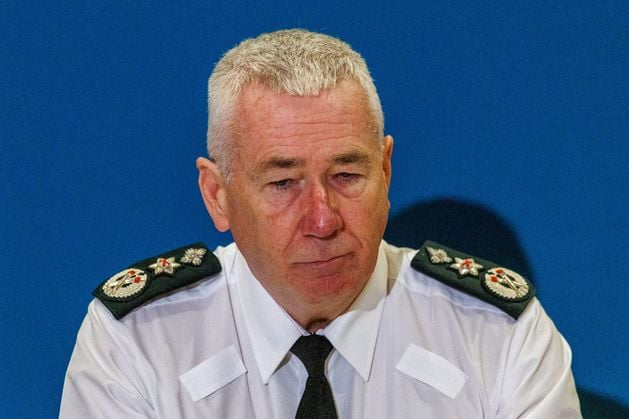
Speaking at today’s Policing Board meeting, Mr Boutcher was pressed by SDLP MLA Colin McGrath on whether the findings of Operation Kenova, which investigated the actions of IRA informer Freddie Scappaticci, known as Stakeknife, and further references in reports, such as the McCullough report, which investigated surveillance of NI journalists, demonstrated the need for “a root-and-branch review” of MI5’s conduct and its current memorandum of understanding with the PSNI.
Mr McGrath cited Operation Kenova’s conclusions that MI5 had attempted to restrict investigators and “conceal the truth of IRA crimes it knew about”, and that the agency repeatedly downplayed its role in handling the agent known as Stakeknife.
Asked if such revelations demanded major reform, Mr Boutcher, who previously headed up the Kenova investigation, said the central issue lay in “cultural” differences within the organisation.
“I think this is about cultural issues, MI5 are doing so much work to keep society safe, and I know they’re driven by values and ethics,” he said.
“But in Northern Ireland, there is what I describe as a blind spot, and it’s due to, on one side of the Troubles, the security forces who, by the way, invariably in my experience on Kenova, acted outstandingly.
“But where things happened that should not have happened, they should not be covered up. They should not be hidden from view.”
He added that any “well-functioning democracy” would ensure such issues were surfaced so society could learn from them.
The Chief Constable emphasised that he held the agency in high regard, stressing his long-standing relationship with Director General Sir Ken McCallum.
“Personally, I want to point out that MI5 are a remarkable organisation, (McCallum) is an outstanding individual and leader,” he said.
However, Mr Boutcher acknowledged that the Kenova report and recent legislative changes meant agencies must now reassess how they handle historical cases, adding that government and security bodies “need to digest” the findings.
“I’m involved in conversations to try and change how some of these approaches are taken, and I’m hoping that we will be in a better and more confident place moving forward,” he said.
He defended the principle of public interest immunity and the neither-confirm-nor-deny (NCND) policy, describing himself as its “hugest advocate”, because it protects lives and operational methods. But he warned that the policy must be applied “intelligently and proportionately”.
“It should never be applied where it is done so to hide wrongdoing,” he said.
Mr Boutcher added that he could not expand further, but reiterated that legacy processes were evolving and that institutions must confront uncomfortable truths rather than obscure them.
Elsewhere in the meeting, the Chief Constable also addressed the case of a serving police officer charged in connection with the alleged theft of ammunition from the PSNI training college at Steeple, Antrim and described the officer charged as “devious”.
Asked about how such offences could occur undetected, and whether the force’s audit processes were sufficiently robust, speaking generally, Mr Boutcher said even the most comprehensive systems cannot fully prevent misconduct.
“You can never, sometimes, take account of what some of your staff will do, whatever measures you put in, if they’re devious enough,” he said.
He added that he had asked Chief Constable Simon Chesterman, the National Police Chiefs’ Council Lead for Armed Policing, to carry out a full review, with terms of reference to be shared with the Policing Board and Department of Justice.
It comes after the PSNI confirmed that a 63-year-old officer has been charged with multiple firearms-related offences, including theft of ammunition, possession of prohibited ammunition, possession in suspicious circumstances, and possessing ammunition without a certificate.
He has also been charged with taking a vehicle without consent and making or supplying articles for use in fraud.
Board members also questioned firearm licensing rules after reports that an individual held multiple weapons.
Assistant Chief Constable Melanie Jones clarified that while firearms dealers are subject to limits, there is no statutory cap on how many weapons a private licence holder may own, provided they meet the “fit and proper person” test and have a good reason for each firearm.
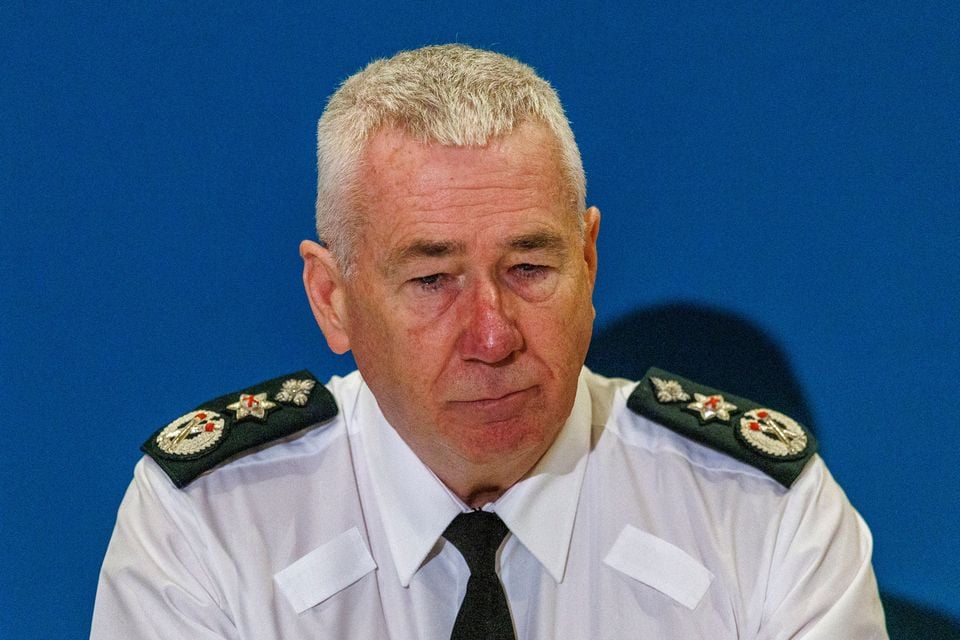
Police Service of Northern Ireland (PSNI) Chief Constable Jon Boutcher. Liam McBurney/PA
Dean Stephen Forde on the Black Santa Appeal 2025
In a wider update on security trends, Assistant Chief Constable Davy Beck told the meeting that 2025 is the first year since records began in which there have been no security-related deaths in Northern Ireland.
Paramilitary assaults are at their lowest level in more than 40 years, while shootings are at their lowest in around 17 years.
However, he cautioned that the threat level for Northern Ireland-related terrorism remains “substantial”, meaning an attack is likely, and said coercive control, intimidation and organised crime linked to paramilitary groups continue to impact communities.