
In Northern Ireland, flu cases have increased across all groups and confirmed cases have risen from 988 to 1,227, while hospital admissions went from 264 to 346.
Updated figures from the Public Health Agency in Northern Ireland said that to date this season, nearly 500,000 vaccines have been administered here.
Across the UK, hospital admissions for flu are currently up 56% compared with the same week last year, and the UK Health Security Agency have predicted that next week, some 8,000 patients in England could be in hospital with the virus.
Despite a surging number of cases, experts have warned there is no peak in sight.
In Northern Ireland, a call for vaccine take-up has been issued following the “concerning” sharp increase in flu cases — with the Stormont Health Minister Mike Nesbitt reinforcing the message.
Dr Joanne McClean, Director of Public Health at the PHA in Northern Ireland, said: “Vaccination remains the best way to protect yourself and others and we’re pleased that nearly half a million people have already come forward to take up the offer of the seasonal influenza vaccine.
“However, with Christmas fast approaching and the additional mixing that comes over the festive season, including visiting older and vulnerable relatives, we are encouraging eligible people to make arrangements to get vaccinated without delay.”
But what exactly is the new H3N2 strain, and what makes it so dangerous?
What are the symptoms, and what are the best ways of avoiding catching it? Here, we tell you everything you need to know.
What is the new strain?
H3N2 is a ‘drifted’ influenza strain which is currently the most dominant strain, according to the UK Health Security Agency (UKHSA).
Also known as ‘subclade K’, it is more contagious than past years’ variants, and experts say it has mutated in a way that it no longer closely resembles the version used in this year’s flu jab.
The H3N2 subtype is one of three main viruses that cause seasonal flu, and the letters and numbers in its name refer to the virus’s surface proteins, haemagglutinin (H) and neuraminidase (N).
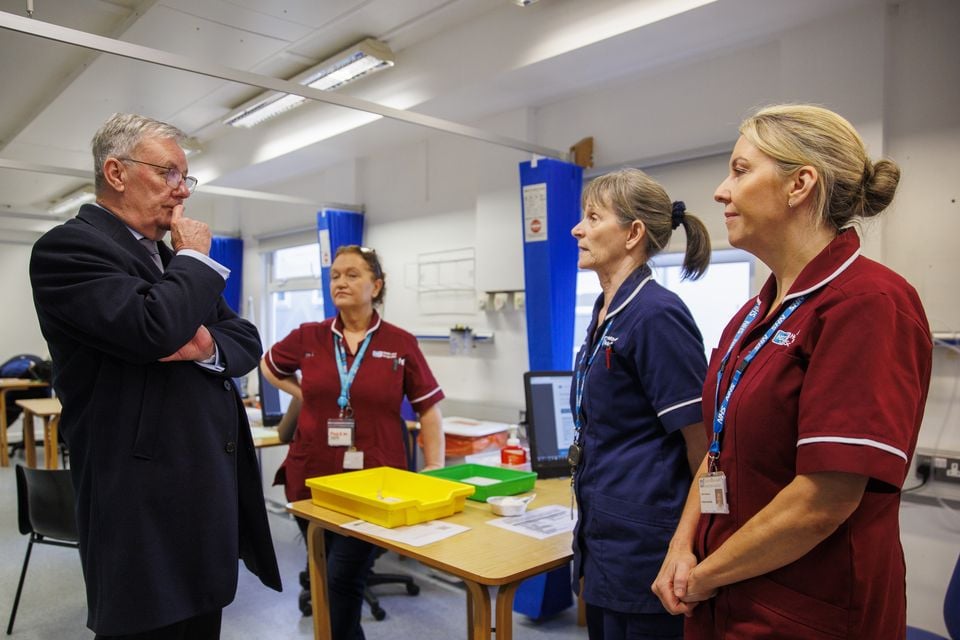
Health Minister Mike Nesbitt with vaccinators Lorraine, Oriel and Claire at the Ulster Hospital Vaccination Centre in Belfast (Liam McBurney/PA)
What are the symptoms?
H3N2 still presents with similar symptoms to seasonal flu, such as a fever, cough, muscle aches, fatigue, and vomiting and diarrhoea.
People most at risk for developing complications include young children, older adults, pregnant women and those with chronic underlying medical conditions, such as asthma, heart disease and weakened immune systems.
If otherwise well, there is no need to see a GP or attend A&E — but watch out for red flags like difficulty breathing, chest pain or severe dehydration.
What to do if you think you have the flu?
The NHS suggests rest, keeping warm, drinking plenty of fluids and taking paracetamol or ibuprofen to help with fever, aches and pains. Pharmacists can also advise on remedies.
The health service stresses that people should call NHS 111 or seek an urgent GP appointment if they are over 65, pregnant, worried about their child’s symptoms, have long-term medical conditions, have a weakened immune system or if symptoms do not improve after seven days.

Flu cases have spiked in recent weeks (Credit: Getty)
Should I wear a mask?
Health bosses are unanimous in saying the most effective way to protect yourself this flu season is to get the flu vaccine.
Experts say that the jab is safe, widely available in pharmacies and inexpensive — with millions across the country eligible for a free one. It is thought to achieve maximum protection for an individual after 10-14 days.
Dr Thomas Waite, deputy chief medical officer, said: “Flu can be an unpleasant infection for many and life-threatening for some; vaccination is the best form of defence.
“Early data from the UKHSA shows this year’s vaccine is continuing to provide good protection against flu variants circulating this year. The flu season has started early this year. Now is the time to get vaccinated if you are eligible.”
Bosses are also encouraging people to wear a face mask outside if they feel unwell.
Daniel Elkeles, chief executive of NHS Providers, strongly encouraged people who have a cough or who are sneezing to put on a face covering in public places, including on public transport.
You can also protect yourself by regularly handwashing, avoiding close contact with ill people or crowded indoor gatherings, and keeping your home well-ventilated.
Who is eligible for vaccines?
According to the PHA: Eligible school children — the majority of school children from primary one to year 12 should receive the nasal vaccine in school. If an eligible child misses the offer of vaccination in school, parents/guardians can make arrangements with their GP to get it.
Pre-school children — parents should contact their GP practice to book an appointment for their child to get the nasal vaccine.
Eligible adults — vaccination is available via community pharmacy or trust clinics. Please make yourself aware of your local pharmacy’s arrangements, as some will take bookings while others will accept walk-ins. Details of trust walk-in clinics happening this coming week can be found at www.nidirect.gov.uk/wintervaccines
How have hospitals been impacted?
Northern Ireland’s hospitals have been increasingly busy this winter.
As of 12pm today, there were 820 people waiting in Northern Ireland’s Emergency Departments — it’s not known how many are flu-related.
Updated figures show there are currently just under 400 hospital admissions in Northern Ireland due to flu.
Across England last week, 1,717 patients were admitted to hospitals each day with the infection.
Hospitals are advising people to be cautious when visiting hospitals, with the following guide for what to do:
Stay Home if you Feel Unwell: If you are experiencing symptoms of a cold, a high temperature, a sore throat, a runny nose, or diarrhoea and vomiting, do not visit hospital sites. Resting at home not only speeds your recovery but also helps prevent the spread of illness to vulnerable patients.
Clean your Hands: Hand hygiene is crucial in breaking the chain of infection. Use the hand sanitiser provided at the entrances to all wards and clinical areas, both when entering and leaving.
Please wear a face mask: In wards and clinical areas, it will be helpful to wear a mask or face covering to protect yourself and others. This is a temporary and practical step, and masks are just one measure to reduce the spread at this time.

Updated figures from the Public Health Agency in Northern Ireland said to date this season nearly 500,000 vaccines have been administered here. (Alamy/PA)
News Catch Up – Thursday 11 December
Are there any school closures?
There have been reports of schools across the UK closing due to outbreaks, with St Martin’s school in Caerphilly, South Wales, forced to lockdown after 250 pupils and staff fell ill.
There are not yet any reports of any schools in Northern Ireland closing.
In Londonderry, a school principal said the seriousness of a flu outbreak, combined with other illnesses, meant he considered closing part of his school.
Brian Guthrie, principal of Ebrington Primary School in Londonderry, said the drop in staff numbers meant he was extremely close to unsafe staff-to-pupil ratios, at which point he would have been forced into a part-closure on health and safety grounds.
The worst of the outbreak struck at the end of November, he explained: “On the Tuesday, it was 68% of pupils in attendance and on Wednesday, it was only 63% in attendance and on Thursday, it was 72% in attendance.
“So on the Tuesday and Wednesday we were talking about 160 to 170 pupils off on those two days and also 15 to 16 staff off as well.”
Play-based learning amongst Primary 1 and 2 pupils means that sickness spread rapidly in those classrooms.
Dr William Welfare, UKHSA’s director of health protection, said that while outbreaks of flu in schools are not uncommon, closures are rare.
How can I prevent the spread?
‘Catch it. Bin it. Kill it’ — carry tissues and use them to catch coughs or sneezes, then bin the tissue;
Wash your hands — regularly wash your hands throughout the day and hands should always be washed before eating or drinking and after using the toilet;
Rest up — know when to stay home to stop the spread. If you have a high temperature stay home until you feel better or if you have diarrhoea and/or vomiting, you should stay home for at least 48 hours after the last episode;
Speak to your pharmacist about over-the-counter remedies and remember antibiotics don’t work on viruses.