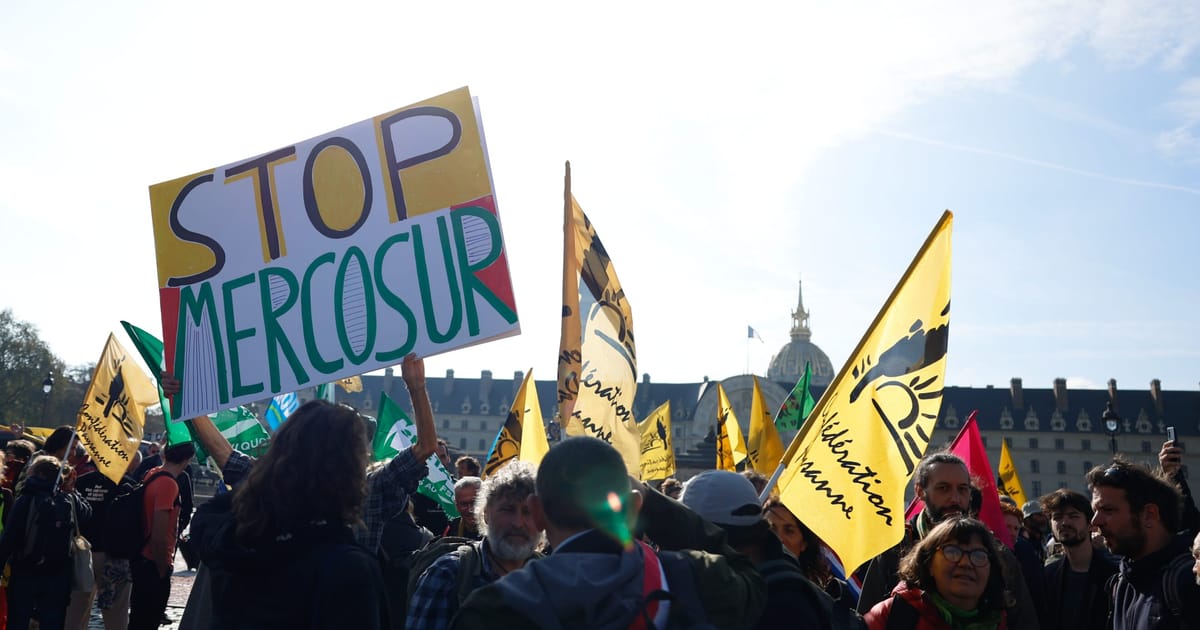
That could leave the Danish presidency of the Council short of the supermajority needed to get the deal over the line. Under EU rules this would require the support of a “qualified” majority of EU member countries — meaning 15 of the bloc’s 27 member countries representing 65 percent of its population.
The French government reiterated on Thursday that it wasn’t satisfied with the agreement and that its final decision will depend on the progress made toward its demands.
“France is a big agricultural power, we defend our agricultural interests very firmly in these negotiations … We continue working on this agreement, which is not acceptable as it stands on the day I am speaking to you,” Foreign Ministry spokesperson Pascal Confavreux told POLITICO.
Confavreux declined to say when asked whether France was pushing to delay the vote to January.
A senior EU diplomat warned that the long-awaited trade deal — which has been a quarter century in the making and would create a common market of over 700 million people — would not survive another delay.
“If [von der Leyen] does not sign it, if we do not allow her to sign it on the 20th, it’s dead,” said the diplomat, who was granted anonymity to discuss the sensitive matter. “And then we really need to think about whether that’s where we want to be in the world.”