12
Dec 2025
European Union (EU) officials expanded the Entry/Exit System (EES) across more border points this week as countries continue their phased rollout across the Schengen Area.
The move aims to shift travelers to digital checks before the system becomes fully mandatory in 2026.
Border leaders set tone
The EES-ETIAS Advisory Group met online on December 2–3, bringing together Member States, Associated Countries, the European Commission, Frontex, and eu-LISA.
The goal of the meeting was to review how far the EES has progressed since its phased rollout began.
According to the meeting update, the group used the session to assess national activation plans, share operational information, and clarify next steps toward the 2026 shift in border procedures.
The Commission and eu-LISA described the system’s early operations as stable and aligned with expectations for a gradual, controlled expansion.
Border changes take shape
As countries move through their rollout plans, EES is becoming active at more airports, seaports, and land crossings. The European Commission said that Member States are steadily increasing registrations as each site comes online.
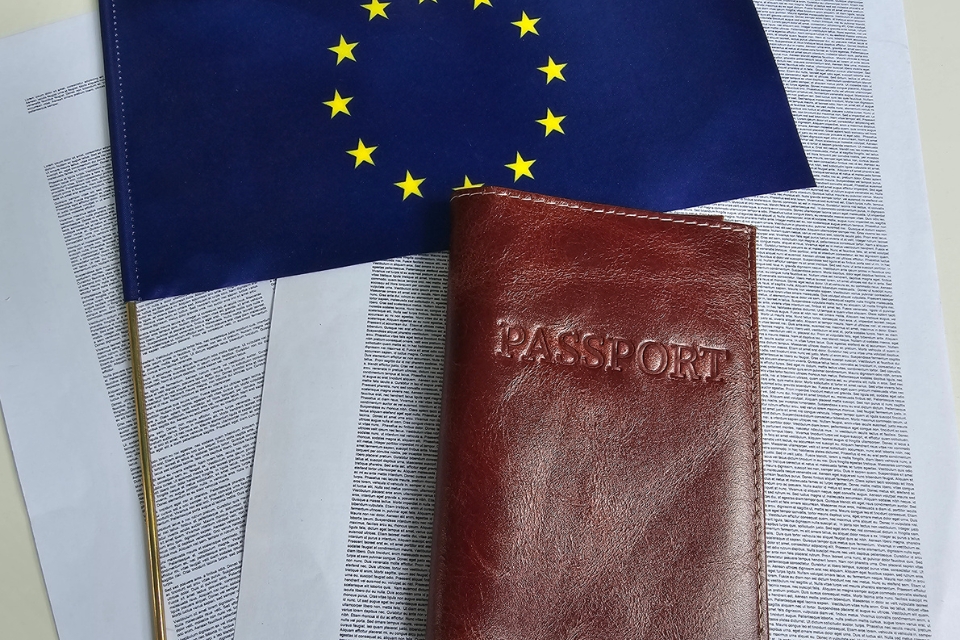
Passport stamping remains in place at border points where EES has not yet started, keeping records complete during the transition.
The Commission reported that the phased activation approach supports stable operations, giving border teams room to adjust workflows as the system expands.
eu-LISA stated that reinforced central monitoring and daily coordination with national authorities help keep procedures consistent from one country to the next.
The rollout window allows up to 180 days for countries to activate all air, sea, and land border points. This flexibility lets authorities sequence their deployments in ways that match staffing, infrastructure, and local traffic patterns.

(Image courtesy of SummerParadive via iStock)
What travelers will notice soon
As more sites activate EES, travelers will shift from stamped passports to digital entry and exit records. Border officers at active sites will register biometric data and record entries electronically.
Procedures may differ across the region during the rollout since activation timing varies by Member State.
Where EES is not yet active, border guards continue stamping passports to maintain accurate travel histories. This mixed environment will remain until each country completes its activation plan.
Officials emphasized that travelers may experience different procedures depending on their departure or arrival point. Some airports activated EES early, while others are introducing it gradually.
Carriers prepare for new duties
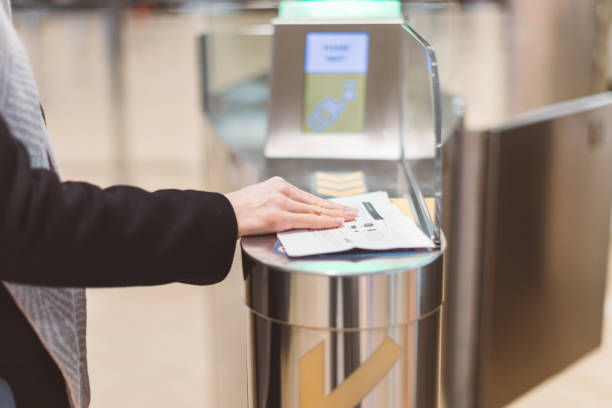
Airlines, ferry operators, and coach companies will soon take on verification responsibilities tied to EES. Carriers must confirm whether short-stay visa holders have already used their permitted number of entries.
This responsibility begins in April 2026, after the progressive rollout phase ends.
To support this shift, eu-LISA developed tools for pre-departure checks, including a system-to-system interface, a web portal, and a mobile app. These tools become available for optional use on January 9, 2026.
Carriers were encouraged to start training early to avoid delays once the verification requirement becomes mandatory.
The Carrier Onboarding and Support Tool serves as the communication hub for operators, offering technical updates, instructions, and related materials.
Carriers are expected to complete training on the web portal and mobile app and report their training status to eu-LISA’s onboarding team.
Frontex also updated its multilingual EES/ETIAS FAQ to include new guidance about the progressive rollout and revised examples for sea travel scenarios.

(Image courtesy of Immo Wegmann via Unsplash)
Different countries, different paces
Member States’ activation strategies differ by design. Some countries introduced EES at all external border points at once, while others are activating sites one by one or by travel mode.
The Commission noted that this flexibility helps countries manage operational demands during deployment.
Border guards continue stamping passports at non-active sites to avoid confusion and maintain complete records. According to eu-LISA, the gradual approach allows officers to learn procedures and refine workflows before expanding activation to busier locations.
The agency said that daily coordination with national authorities helps identify operational needs early, such as equipment adjustments or additional support requests.
Preparing for ETIAS
While EES expands, work on the European Travel Information and Authorization System (ETIAS) is accelerating.
According to eu-LISA, ETIAS remains a major EU priority heading into 2026. The compliance testing campaign was redesigned as a continuous activity running until March 2026.
Twenty-one Member States and agencies have already completed part of the required scenarios. End-to-end business testing is expected to begin in December with support from Frontex.
Member States also reached agreement on workflows that will guide screening steps under the ETIAS framework. eu-LISA is developing several tools to support the system, including an AI-based chatbot meant to improve user access to information.
The ETIAS Data Protection Impact Assessment is undergoing its final update with input from both eu-LISA and Frontex.
(Image courtesy of Alina Rosanova via iStock)
Carriers shift toward digital checks
Carriers will adopt new verification workflows as EES becomes standard across the region. The Carrier Interface will be optional at first, then mandatory once the rollout ends.
Carrier training is a central part of the transition, and eu-LISA said early preparation reduces the risk of bottlenecks once enforcement begins.
Frontex expanded its FAQ to address more sea-travel scenarios, as maritime operators often face different schedules and route patterns. These updates give operators clearer guidance on how to manage their verification duties.
A region working in sync
The EES-ETIAS Advisory Group plays a key role in coordinating border changes across the EU. The group reviews progress, updates procedures, and supports shared planning among Member States and agencies.
The Commission said that this coordination ensures that the transition remains orderly even as activation varies by country.
eu-LISA stated that it will continue supporting national teams with technical, operational, and governance services, including on-site assistance when needed.

(Image courtesy of GordonBellPhotography via iStock)
End of roadmap
Europe’s border agencies have confirmed that the rollout of the EES is progressing as planned, setting the stage for the wider shift to digital checks.
The Advisory Group’s review reinforced that countries are moving toward the same goal and keeping operations steady during the transition.
These changes will shape how people enter and leave the Schengen Area over the coming year. Member States and EU agencies will now focus on completing activation and preparing for the 2026 deadlines.
The next steps will show how smoothly the region can move into its updated border system.