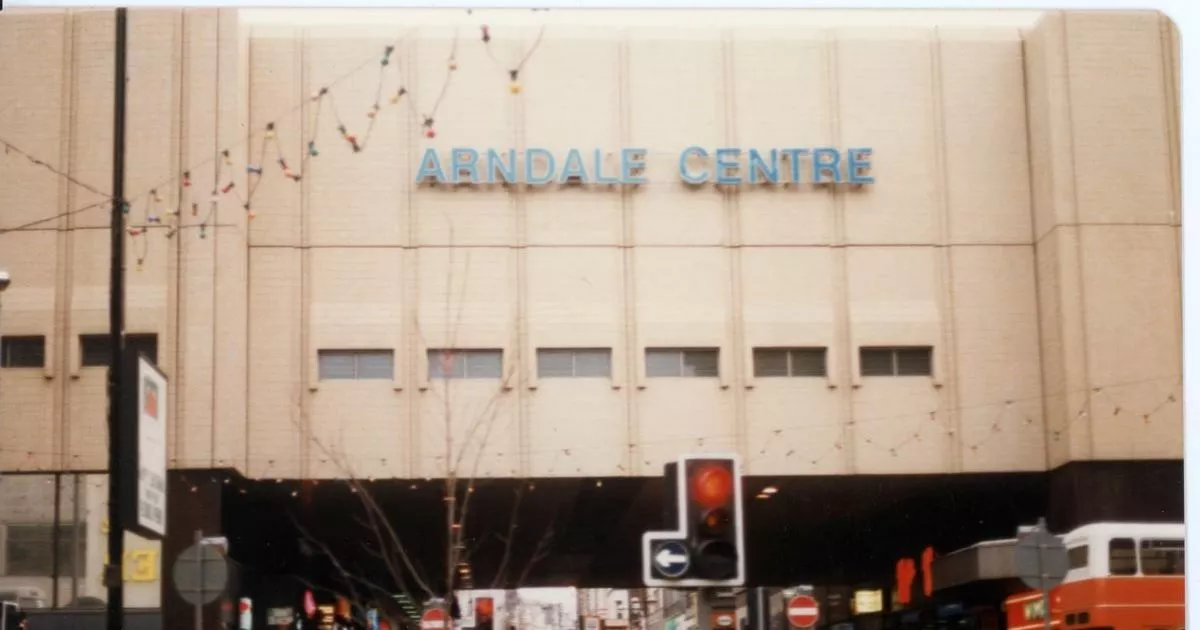
It’s been more than five decades since work first started on the city centre shopping mecca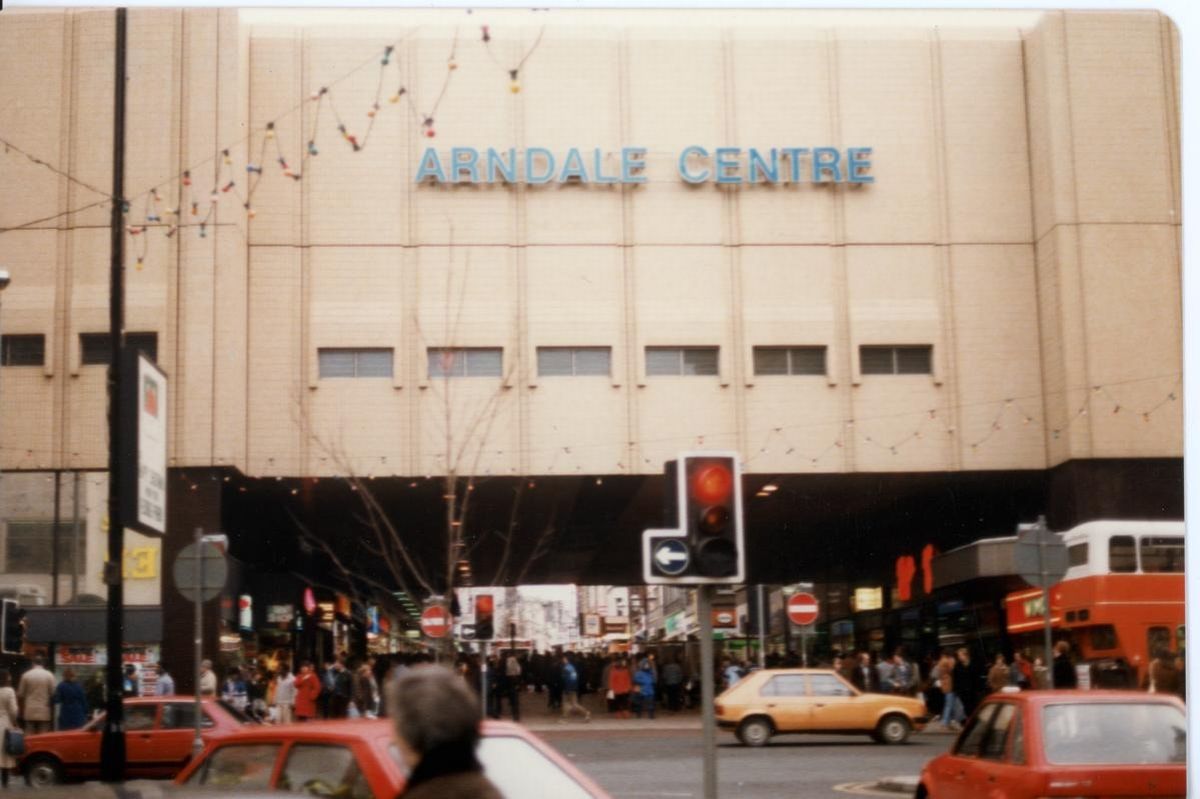 Manchester Arndale Archive pictures(Image: Manchester Libraries)
It’s an institution in Manchester city centre. The Arndale shopping centre has been a fixture of the city for five decades.
Situated off Market Street, with entrances off Exchange Square, Shudehill and High Street, the central hub has a fascinating history. Over the years, it has had many faces, and has changed and adapted almost as much as the city it stands in.
Not just a major mall, it once even had houses on the roof and a bus station beneath. It’s been developed and modernised since work first began in the early ’70s, also hosting a bustling indoor market, shops that have come and gone, and was the most-affected part of Manchester following the IRA bomb in 1996.
Join the Manchester Evening News WhatsApp group HERE
The shopping centre, built between 1971 and 1979, remains one of the biggest the UK with an estimated 40 million visitors every year. Although officially opening some 45 years ago, parts of the mall first opened in 1975 and 1976.
Construction began on the original site some 54 years ago as part of a major development by Town and City Properties. Manchester was traditionally the dominant retail centre of the region, and nearby Market Street was the main bustling shopping street from around 1850.
An opportunity for the city centre mall and desire to construct modern shopping facilities was a primary focus among councils in major UK cities. Plans were drawn for a huge ‘revolutionary retail space’ in the heart of Manchester.
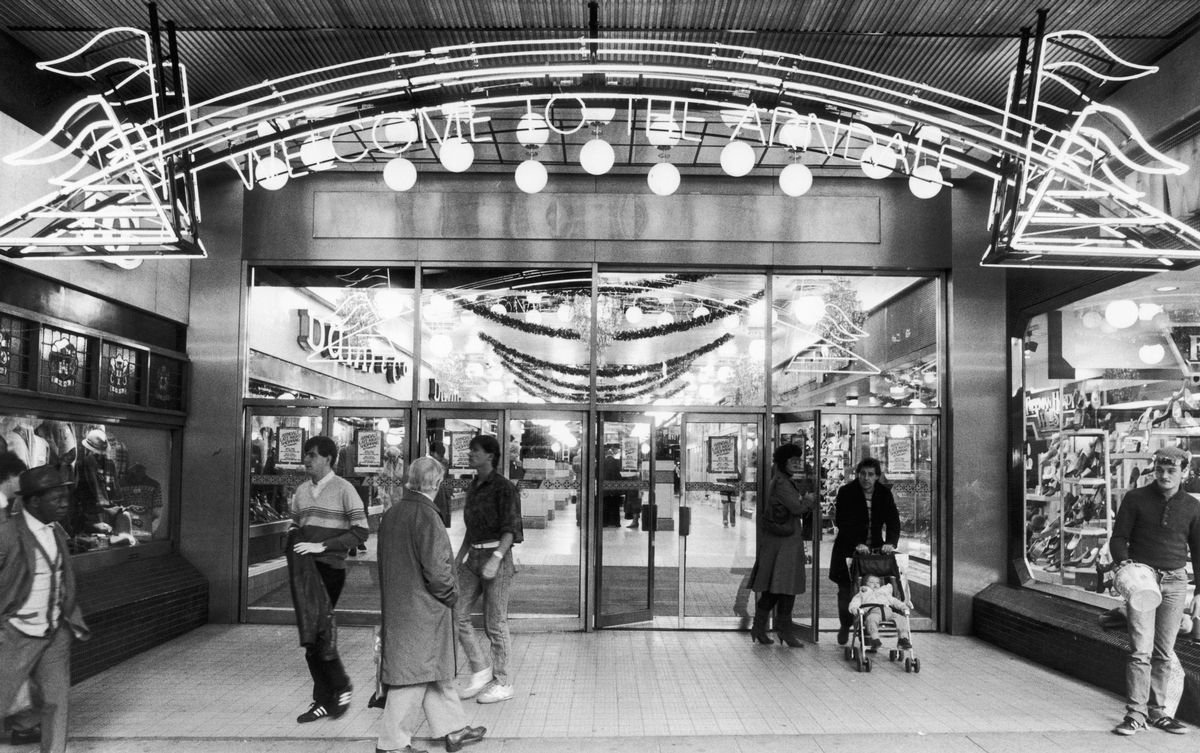 The Market Street entrance to the Arndale Centre in 1984
The project was years in the making. It was identified a decade earlier, along with the Prudential Assurance Company and Manchester Corporation that the area was crying out for redevelopment.
View our gallery below:
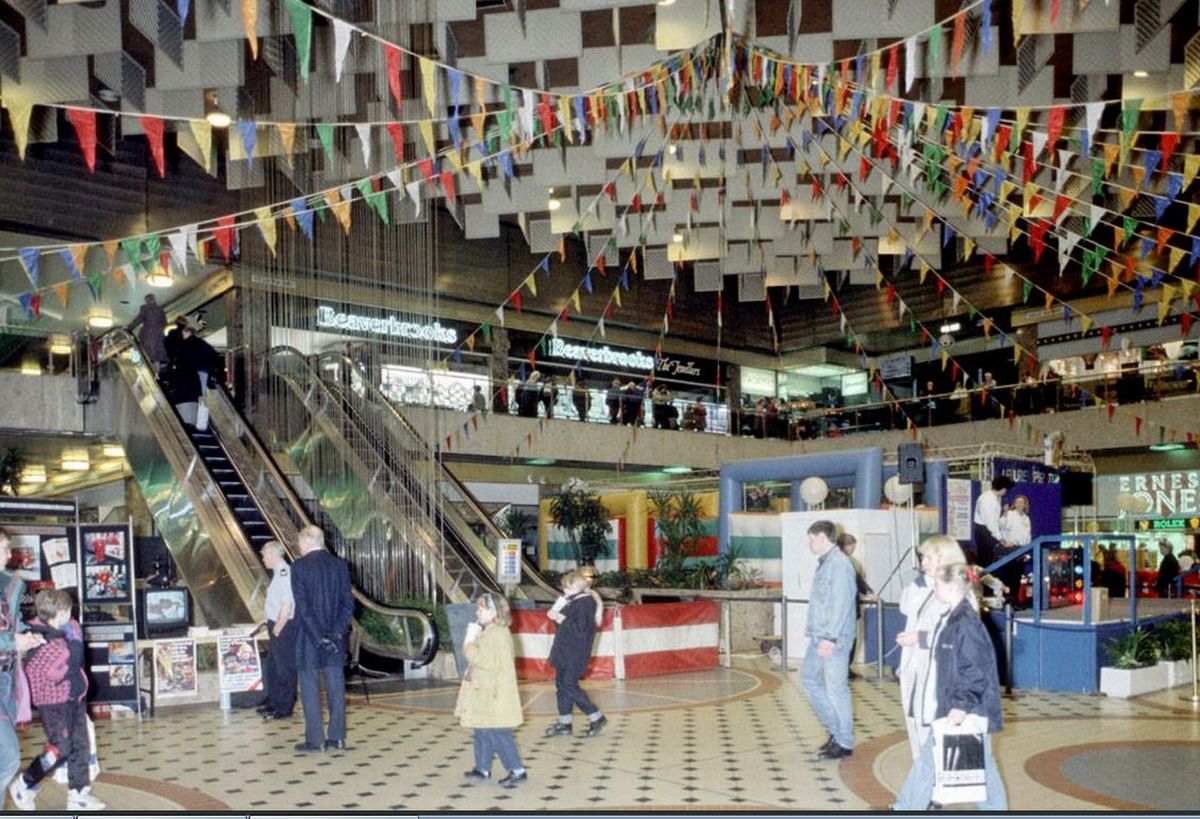 The Arndale Centre after opening in 1979.(Image: Manchester Evening News.)READ MORE: In pictures: 50 years of Manchester Arndale
The first phase of the Arndale centre opened in 1975, followed later by the huge Arndale Tower and 60 shops the year after. There was an official ceremony attended by HRH Princess Royal in 1979 to mark the full opening of the centre. It originally contained 210 shops and 200 market stalls.
The bridge over Market Street and the northern mall opened years later, in October 1977, with the market hall, Boots and the bridge to the Shambles, over Corporation Street, completing in 1978 along with the bus station which opened the following year.
This bus station was part of the £100m construction of the Arndale centre and replaced several smaller, on-street stations in and around the city centre. The bus station later became Manchester’s busiest, handling 30,000 passengers and 1,500 bus movements per day.
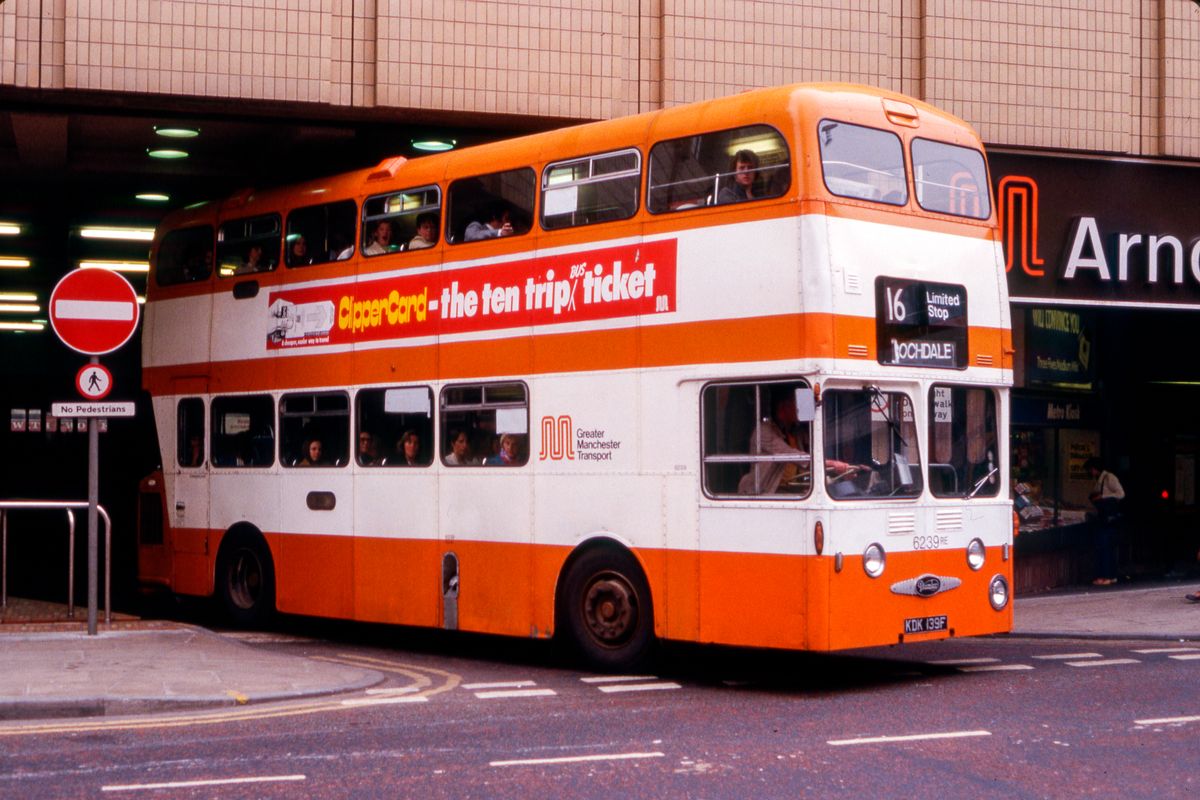 The former Arndale bus station in Manchester (Image: Museum of Transport, Greater Manchester)
A little-known housing estate also existed on top of the shopping centre. Cromford Court, named after a Victorian backstreet that was demolished to make way for the shopping mecca, opened in 1981 as the council was actively trying to encourage people to move to the city.
At the time, only around 1,000 people actually lived in the heart of Manchester. The flats had their own direct access and were inhabited between 1981 until 2003, when the community came to an end, some seven years after the IRA bomb that led to the shopping centre needing to be almost entirely rebuilt.
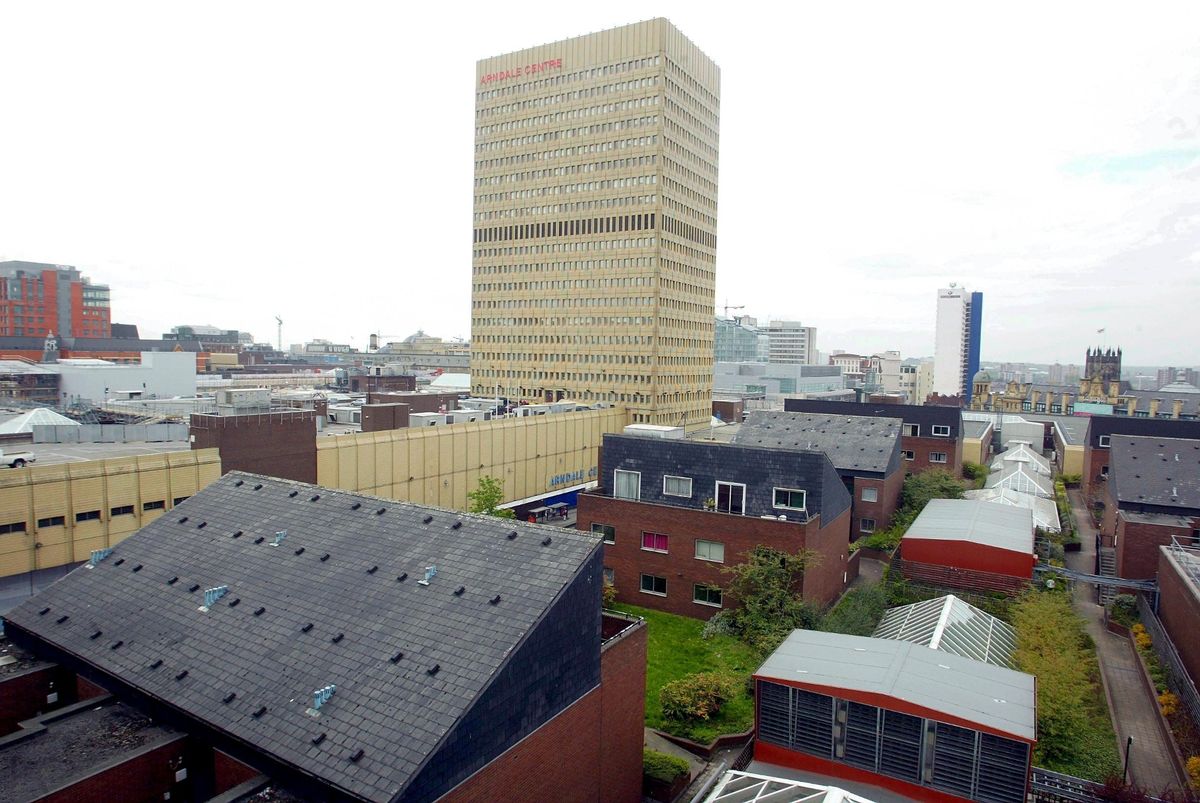 Cromford court on top of the Manchester Arndale centre(Image: Manchester Evening News)
Also in the early ’80s, Market Street was pedestrianised, allowing for a safer and more inclusive shopping experience, as well as easier access to the Arndale centre. The heart of Manchester city centre was undergoing major and almost constant regeneration as popularity grew and shoppers descended in their thousands.
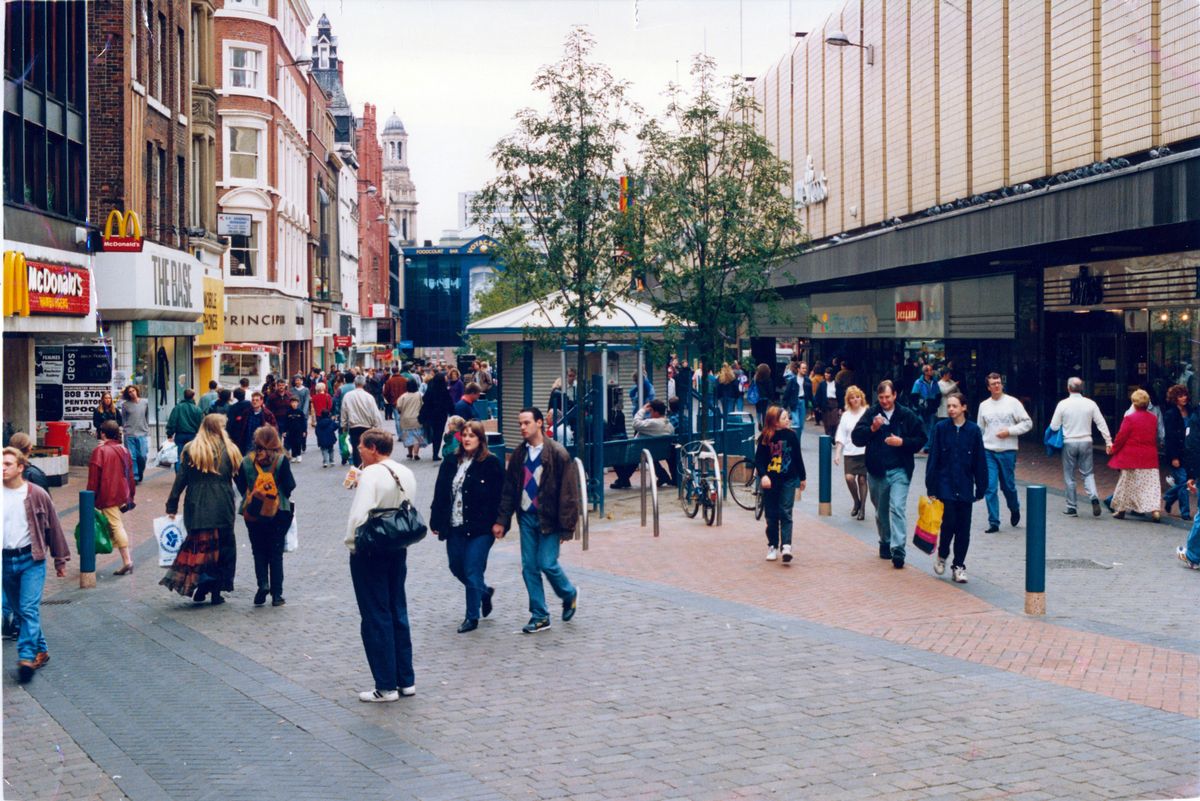 A pedestrianised Market Street in 1994(Image: Mirrorpix)
The centre was fully let with shops by the early 1990s, and at the time, was estimated to be being visited by 750,000 people every week. Many are still on site today, such as Greggs, H Samuel and Beaverbrooks.
But the expansions continued at pace. In ’91, the new £9m food court, known then as Voyagers, opened, including the famous escalator walkway that leads to the centre of Market Street.
Other refurbishments around that time included the introduction of the huge Warner Brothers Store complete with cartoon character models , including the Tasmanian Devil and Bugs Bunny statue towering above the entrance.
On the morning of June 15 in 1996, the city became a target for terrorists when the IRA bomb struck. A van was parked up containing the ticking bomb on Corporation Street, between the Manchester Arndale and Marks and Spencer store, which was denoted after around 80,000 people were evacuated from the city centre.
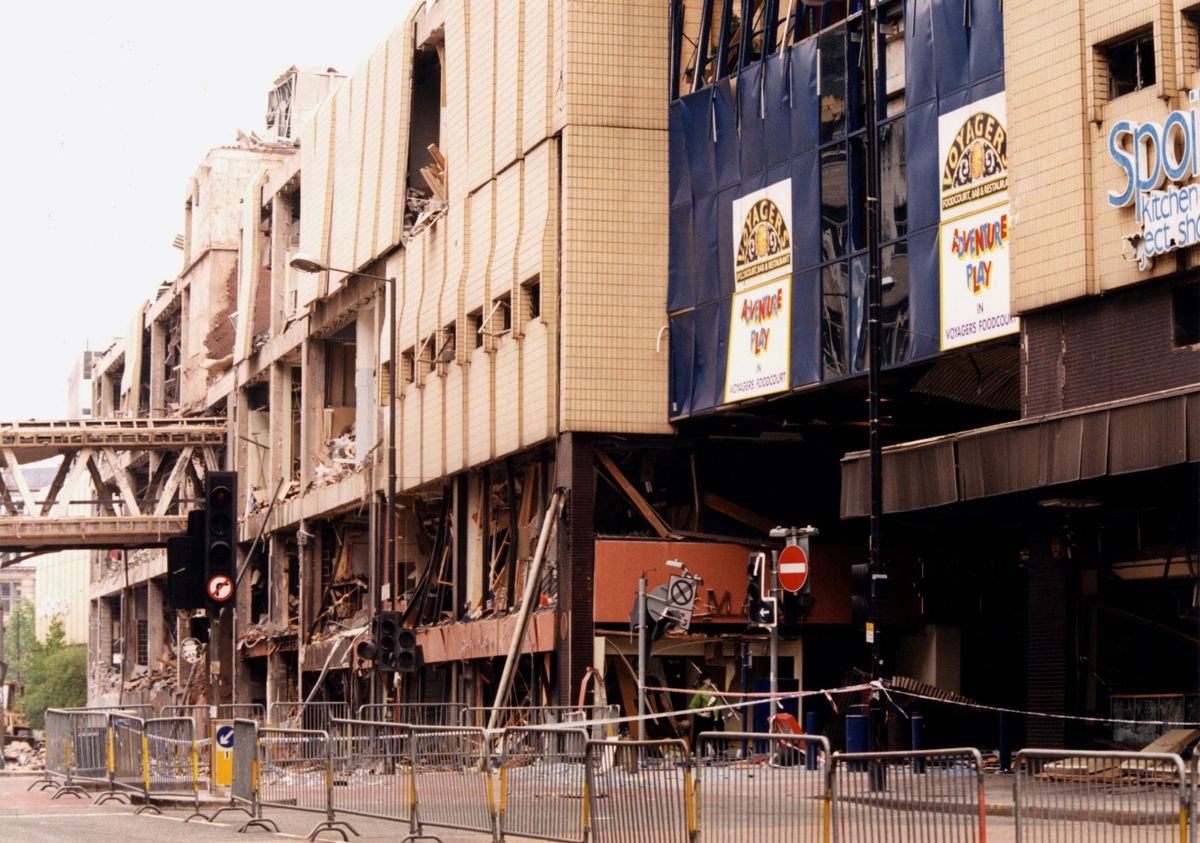 Damage caused by the IRA bomb (Image: Mirrorpix)
Nobody was killed in the blast, but over 200 were injured with a total of 1200 properties on 43 streets also affected. Marks and Spencer’s and the adjacent Longridge House were condemned as unsafe within days, and were demolished, as the Arndale’s frontage on Corporation Street and the footbridge were structurally damaged in the explosion.
Construction and repairs began in 1997, with the southern half of the centre extensively repaired, rebuilt and refurbished. The northern half was patched up before the bus station was eventually replaced by Shudehill Interchange some years later in 2006.
Marks and Spencer also reopened in a separate building, which was linked to the main Arndale mall on the first floor by a glass footbridge along with the adjoining branch of Selfridges.
In Autumn of 2003, at the final stage of rebuilding, the half of the centre north of Cannon Street was closed and demolished. Over the next three years it was completely rebuilt and extended adding an additional 600,000 square feet of retail space and the introduction of new stores
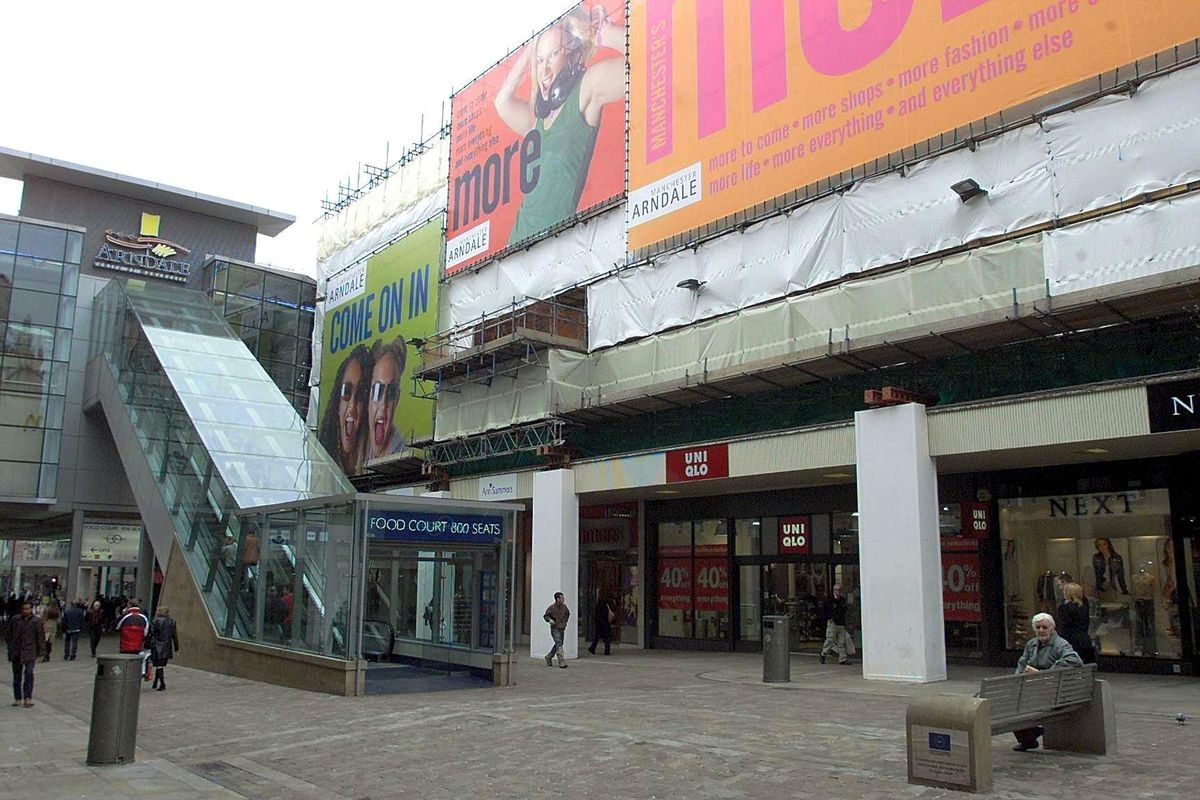 Development of the Arndale as seen from Market Street in 2003(Image: Manchester Evening News)
Development continued, as the first face of the northern extension, known as Exchange Court, opened its doors in October 2005. This was followed by the second phase, known as New Cannon Street, in April 2006. Some of the centre’s biggest flagship stores were opened, including Topshop and Next.
The final phase, the Wintergarden section of the mall, was then completed in October 2006, which welcomed a new Waterstones and Superdry store, as well as a new single-level unit for the market.
Over the years, more retail stores have opened and closed their doors, with the interior of the centre more recently modernised and refurbished. In 2017, the redevelopment of Halle Square began, with plans for a new food and drink-driven space, with the first tenants originally being Wolf Street Food, a new Archies and Barburitto, opening the following year.
A number of things have vanished over time, from the Early Learning Centre and the wooden rhino inside the Arndale as well as the flats on top of the site, Cromford Court and the Arndale bus station.
Today, the largest plots are for King Pins, an indoor bowling centre, modern JD and Sports Direct which spans two floors, Next and B&M.