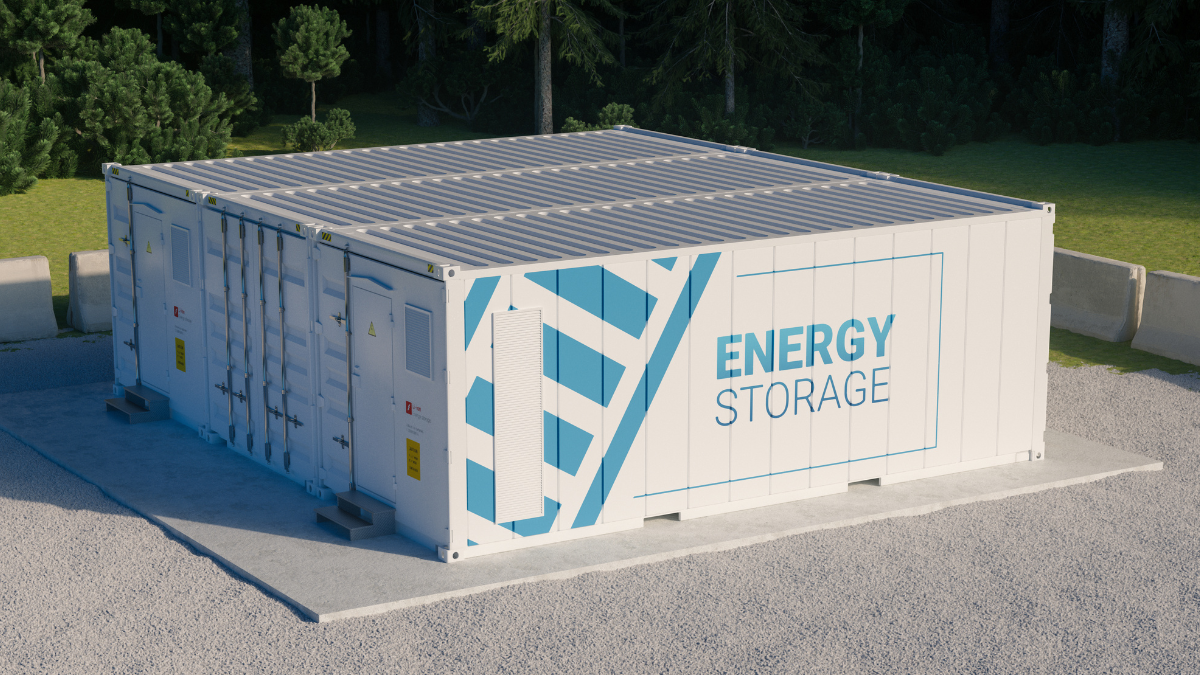
 Representational image. Credit: Canva
Europe’s battery energy storage system (BESS) market has evolved into a highly attractive investment destination, with deployments reaching 11 GW in 2024 and expected to rise 45% year-over-year to 16 GW in 2025, according to new analysis from Wood Mackenzie. The research projects a 9% compound annual growth rate (CAGR) over the next decade, with total installations reaching 35 GW by 2034.
Earlier in the decade, limited domestic opportunities pushed early-stage UK developers to markets such as Australia and North America’s CAISO and ERCOT. Today, Europe’s expanding market landscape is drawing sustained developer and investor interest.

Germany Leads European Deployment but Faces Revenue Headwinds
Within Europe, Germany has emerged as the fastest-growing market across utility-scale, commercial and industrial (C&I), and residential segments. The country is on track to deploy more than 3.5 GW of BESS capacity in 2024, a figure expected to double to 7 GW by 2034. Over the next ten years, Germany is forecast to add 18 GW of utility-scale storage and 8 GW in the C&I sector.
However, Wood Mackenzie warns that despite strong fundamentals, Germany’s revenue prospects will decline over the coming decade. Surging competition is expected to depress price volatility—the key driver of storage profitability. Frequency response markets, a major revenue source for German BESS assets, remain shallow and are rapidly approaching saturation.
Grid connection demand has also intensified sharply. Connection requests for BESS in Germany have surged from 300 GW at the start of the year to over 500 GW, indicating significant challenges for grid operators as the country navigates a major capacity crunch. With nuclear power fully phased out and 29 GW of coal capacity scheduled to retire by 2030, the system is under pressure to secure flexible capacity as new gas builds lag behind expectations.
Market Volatility Expected to Decline as Deployment Scales Up
Wood Mackenzie’s hybrid modelling—which integrates machine learning, deterministic fundamentals, and stochastic techniques using revenue optimisation inputs from cQuant.io—shows a long-term decline in market volatility and value.
According to the analysis, multiple factors contribute to this trend:
- Ancillary service revenues shrink as competition increases and markets saturate.
- BESS assets compete at peak and trough price intervals, flattening spreads.
- Day-ahead and intraday prices face pressure from growing market participation.
- Rapid BESS deployment eventually cannibalises the very price fluctuations that support project economics.
Need for Advanced Optimisation Strategies
Rory McCarthy, VP and Head of Power and Renewables Consulting EMEA at Wood Mackenzie, noted that the German market stands “at a critical juncture where strong fundamentals meet increasing competitive pressures that will cannibalise price fluctuations over time.”
He emphasised that robust project valuations will require revenue modelling across full probability ranges—from P1 to P99—and advanced optimisation strategies to outperform average market returns.
As Europe’s BESS sector enters a new phase of maturity, the central question for investors is how to secure long-term profitability in an environment where scale itself may diminish the volatility that storage projects depend on.
Like this:
Like Loading…
Related
Discover more from SolarQuarter
Subscribe to get the latest posts sent to your email.