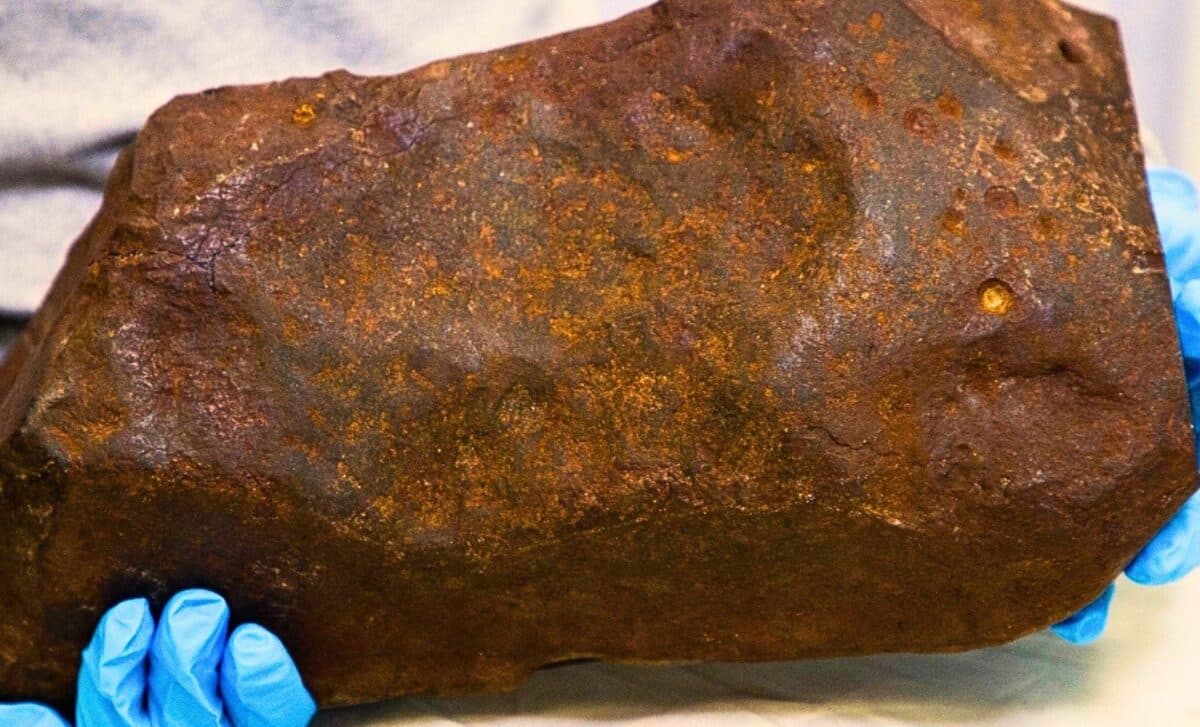
In the rugged goldfields of southeastern Australia, a local prospector spent years trying to crack open a mysterious, rust-colored rock. He was convinced it held gold. The object was unusually heavy, strangely smooth, and completely unbreakable.
His tools—saws, drills, acid, even a sledgehammer—were useless against it. No matter what he tried, the rock wouldn’t budge. That’s when he finally brought it to the Melbourne Museum, hoping for answers.
What experts uncovered was not gold, but a rare and ancient meteorite that predates Earth itself. Now known as the Maryborough meteorite, the 17-kilogram object is one of the oldest and most scientifically significant finds ever made in the region.
The Meteorite That Defied a Sledgehammer
The discovery happened in 2015, near Maryborough Regional Park, about 160 kilometers northwest of Melbourne. This region was once a hotspot during Australia’s 19th-century gold rush, making it a natural destination for amateur prospectors.
David Hole, the man who found the object, tried to open it at home, convinced it held a nugget. The rock’s reddish tint and unusually dense weight matched the region’s gold-bearing geology. But no matter what method he used, it wouldn’t crack.
The object eventually ended up in the hands of Melbourne Museum geologists Dermot Henry and Bill Birch. Both had spent decades analyzing mineral samples and suspected immediately that this was something extraterrestrial.
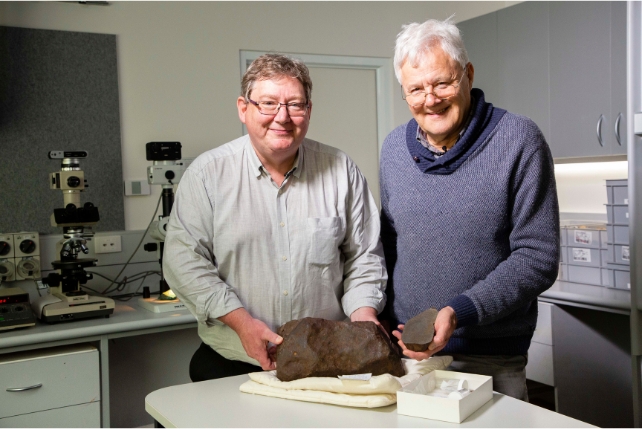 Dermot Henry and Melbourne Museum geologist Bill Birch with the Maryborough meteorite. Credit: Museums Victoria
“It had this sculpted, dimpled look to it,” Henry said in an interview with The Sydney Morning Herald. “That’s formed when they come through the atmosphere; they are melting on the outside, and the atmosphere sculpts them.”
After cutting a small slice from the rock with a diamond saw, the team confirmed its identity as an H5 ordinary chondrite—a type of stony meteorite with a high iron content and visible chondrules, small molten droplets formed at the dawn of the solar system.
One of Victoria’s Rarest Space Rocks
The meteorite was named Maryborough, after the town closest to the discovery site. It weighs 17 kilograms (37.5 pounds) and is now part of the Museums Victoria collection.
Chondrites like this one are valuable because they contain original material from the early solar nebula, before planets like Earth had formed. These rocks provide key information about the chemical composition of the early solar system, and some even contain prebiotic molecules such as amino acids.
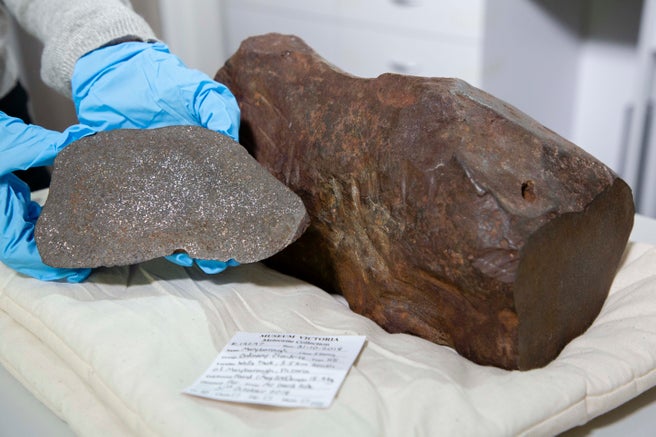 The Maryborough meteorite, with a slab cut from the mass. Credit: Museums Victoria
Only 17 meteorites have ever been officially documented in Victoria, a state that has produced thousands of gold nuggets. This one is the second-largest chondritic mass ever found in the region, following a 55-kilogram meteorite discovered in 2003.
“Looking at the chain of events, it’s quite… astronomical it being discovered at all,” Henry noted in a 2019 report by ScienceAlert.
The detailed scientific description of the Maryborough meteorite was published in the Proceedings of the Royal Society of Victoria, where the research team outlined its mineral composition, thermal history, and broader implications for meteoritic science.
From Asteroid Belt to Australian Soil
Chondrites like the Maryborough specimen likely originate from the asteroid belt between Mars and Jupiter, a zone filled with ancient debris from the solar system’s formation. Occasionally, collisions between asteroids eject fragments into space, sending them on long journeys that can end with impact on Earth.
Carbon dating suggests that the Maryborough meteorite arrived on Earth between 100 and 1,000 years ago. Several meteor sightings recorded in the area between 1889 and 1951 could potentially be linked to its fall. While pinpointing its exact fall date remains uncertain, its excellent preservation makes it especially valuable for analysis.
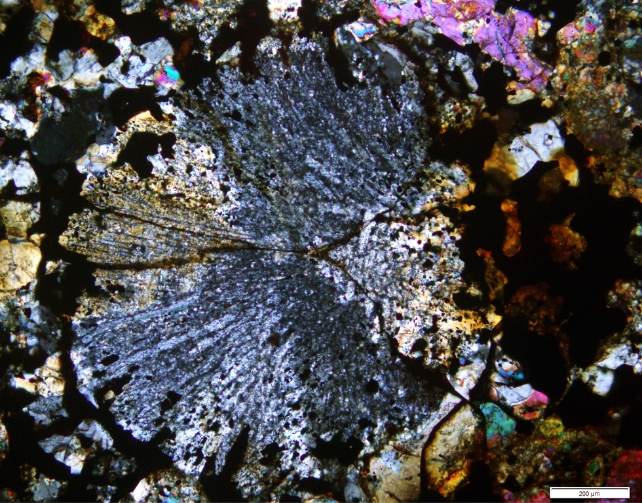 Radial pyroxene chondrule formed in the Maryborough meteorite. Credit: Birch et al., PRSV, 2019
When opened, the rock revealed a pattern of metallic mineral droplets, known as chondrules, embedded throughout its surface. These features are not only visually striking but are also among the earliest solid materials to form in the solar system—more than 4.6 billion years ago.
Meteorites of this kind are widely regarded as natural archives, preserving details about the birth of planets and the complex chemical evolution that led to life-supporting environments.
Science in Your Backyard
Despite the spectacular nature of the find, the Maryborough meteorite sat unrecognized for years—another example of how easily extraterrestrial rocks are overlooked.
Meteorites are more common than most people think, but distinguishing them from terrestrial rocks can be difficult. They often resemble rusty lumps of iron or ordinary stones. Only specialized analysis can confirm their origin.
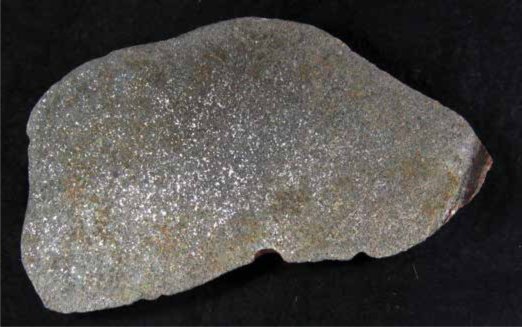 A slab cut from the Maryborough meteorite. Credit: Birch et al., PRSV, 2019
“Most people wouldn’t pick it up, or if they did, they’d toss it away,” Henry said in the 2019 ScienceAlert article. His experience includes thousands of meteorite evaluations, yet only two had ever turned out to be authentic. The Maryborough meteorite is one of them.
Similar finds have remained unidentified for decades. In one case, a meteorite in the U.S. served as a doorstop for over 80 years before it was properly identified and added to a scientific collection.
Now displayed at Museums Victoria, the Maryborough meteorite continues to attract both public curiosity and scientific interest. Researchers studying its structure and chemistry are gaining insights into planetary processes that occurred long before Earth was formed.