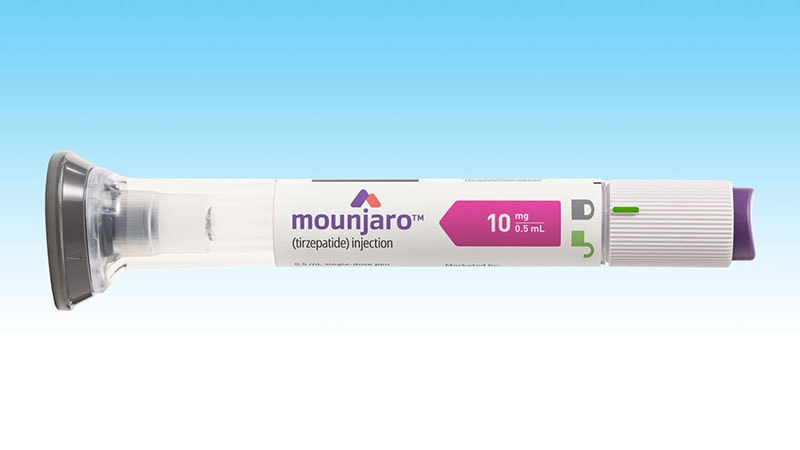
The European Medicines Agency (EMA) has approved an extension to the licensed indications for Mounjaro (tirzepatide, Eli Lilly Nederland B.V.) to enable its use for the treatment of type 2 diabetes that is not satisfactorily controlled in children and adolescents aged 10 year and older.
The drug is currently indicated together with diet and physical activity in adults to treat type 2 diabetes that is not satisfactorily controlled. It can be used as monotherapy in patients who cannot take metformin or as an add-on to other diabetes medicines.
It is also currently indicated for individuals who are obese (BMI of ≥ 30) or overweight (BMI between 27 and 30) and have at least one weight-related health problem. This covers comorbid conditions such as hypertension, dyslipidemia, obstructive sleep apnea, cardiovascular disease, prediabetes, or type 2 diabetes mellitus. Tirzepatide acts to help people lose weight and keep it under control.
Extension to Children
The EMA’s Committee for Medicinal Products for Human Use (CHMP) said that it was recommending the change to extend tirzepatide’s use to children in conjunction with a reduced-calorie diet and increased physical activity for weight management.
Tirzepatide is a prescription-only medicine that acts as both a GLP-1 agonist and a glucose-dependent insulinotropic polypeptide agonist. This dual action enhances insulin secretion, reduces blood sugar levels, regulates appetite, slows gastric emptying, and regulates fat metabolism.
The drug is available in prefilled pens as a solution for injection. It is injected subcutaneously once weekly into the abdomen, upper arm, or thigh.
Long Term Glucose Control
Five main studies involving more than 6000 adults with type 2 diabetes previously showed that tirzepatide is effective at controlling blood glucose, as demonstrated by reductions in A1c, a measure of long-term control. These studies showed A1c reductions of between 2.1 and 2.6 percentage points after 40-52 weeks when added to existing treatments and/or lifestyle measures. In comparison, the placebo groups registered A1c reductions between 0 and 0.9 percentage points, while those on comparative treatments had reductions of 1.3 to 1.9 percentage points.
More broadly for weight management, studies on more than 2500 adults with obesity or overweight and at least one weight-related comorbidity had shown tirzepatide in varying doses combined with diet and physical activity for 72 weeks reduced weight by at least 15% on average. In comparison, those on placebo had an average weight loss of just 3%. The CHMP previously commented that more than 85% of people taking tirzepatide were able to reduce their weight by at least 5%, compared with 35% of those given placebo. Weight loss was mainly due to loss of fat mass and occurred along with improvements in other measures such as hypertension and hyperlipidemia.
Similar Safety Profile to Adults
In a phase 3 trial of tirzepatide in children and adolescents with type 2 diabetes, results published in The Lancet in October showed that the drug met the primary and all key secondary endpoints at 30 weeks, and showed sustained improvement in glycemic control and continued BMI reduction through the study’s 52-week extension. A1c was reduced by an average of 2.23% in the tirzepatide group vs an increase of 0.05% in the placebo group. The safety and tolerability profile of the drug in children was generally consistent with previous adult studies.
In adult studies, the most common side effects of tirzepatide have been gastrointestinal, including nausea, diarrhea, constipation, and vomiting.
The full indication for tirzepatide is now: for the treatment of adults, adolescents, and children aged 10 years and older with insufficiently controlled type 2 diabetes mellitus as an adjunct to diet and exercise; as monotherapy when metformin is considered inappropriate due to intolerance or contraindications; or in addition to other medicinal products for the treatment of diabetes.
Detailed recommendations for the use of this product will be described in the updated summary of product characteristics, which will be published on the EMA website in all official European Union languages after a decision on this change to the marketing authorization has been granted by the European Commission.