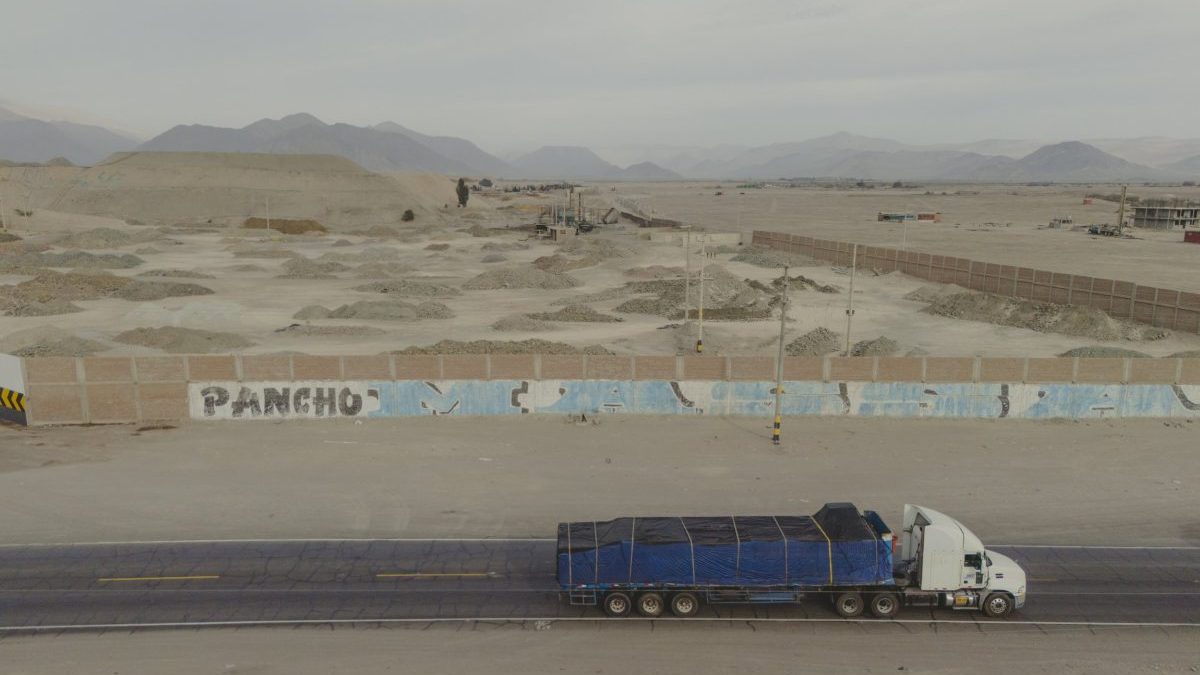
Communities in Chile and Peru tell The i Paper that demand for critical minerals is damaging their environment
Demand for electric vehicles and renewables is driving a massive expansion of mining in Latin America, threatening communities, water supply and biodiversity.
The UK’s demand for copper is expected to almost double by 2035, while demand for lithium will increase by 1,100 per cent, according to a new strategy published by the UK Government.
Communities based in Peru and Chile told The i Paper mining for these minerals is destroying the environment and impacting their health.
The demand is largely driven by the manufacturing of electric vehicles (EVs) and green tech, such as solar panels and wind turbines.
However, campaigners in Latin America and the UK raised concerns that mining was being “greenwashed” as the British Government is refusing to disclose how much of these “critical minerals” are being used by the defence industry.
UK demand for critical minerals soars
The UK Government has published a new Critical Minerals Strategy outlining the resources the country will need over the next decade to supply the country’s “growth” sectors, including clean energy, technology and defence.
A list of 23 “growth” minerals has been published, demand for which is expected to increase dramatically over the next 10 years.
This includes copper, annual demand for which is expected to double by 2035, with the UK predicted to consume 3.6 million tonnes over the next decade.
More than half (57 per cent) will be consumed by the clean energy sector and nine per cent will be used by EVs, according to the Government. Almost a quarter (24 per cent) will be used by “other advanced manufacturing,” a category that includes defence.
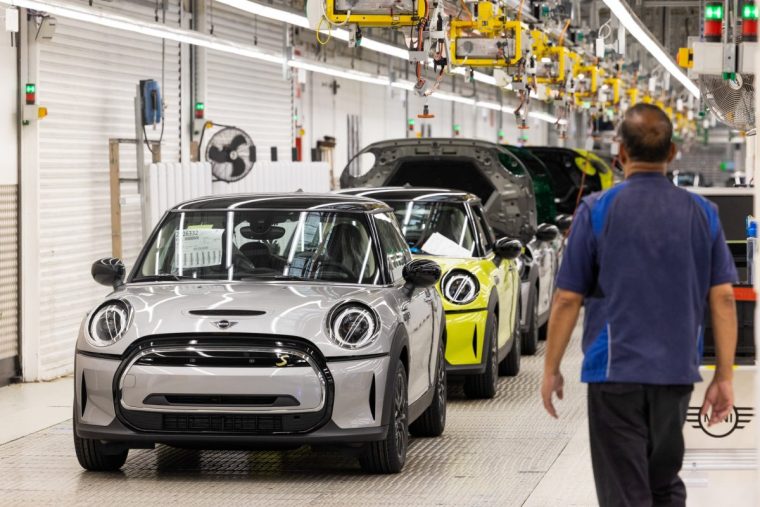 The manufacture of electric vehicles is causing a surge in demand for lithium and copper (Photo: Chris Ratcliffe/Bloomberg via Getty Images)
Meanwhile, demand for lithium is expected to increase by 1,100 per cent by 2035, with the UK predicted to consume 339,200 tonnes over the next decade
The vast majority (91 per cent) of this demand will come from EVs.
The UK is part of a global scramble to secure the critical minerals needed for the clean energy transition.
While the Government is making efforts to ramp up domestic production of these minerals, for example by the creation of a new lithium mine in Cornwall, the vast majority will be imported from other countries.
‘It’s causing great pressure on the Global South’
The expansion of mining activities is sounding alarm bells among communities in Latin America countries who say their environment is being destroyed in the name of the green transition.
Peru, the world’s third largest copper producer, is witnessing a massive expansion of mining activities, including the development of a new copper mine in the Moquegua region, which is majority-owned by British company Anglo American.
The mine, which started operations in 2022, has attracted fierce local opposition, not least for the decision to reroute the River Asana, the main source of drinking water for the region.
Anglo American claims the river is being protected from the mining activity, but locals have complained of lower farming yields. Concerns have also been raised about water contamination, with a number of studies showning how mining communities in Peru suffer from health problems associated with heavy-metal poisoning.
“We have serious concerns about the growing demand for critical minerals in the Global North,” Jaime Borda, executive secretary of Red Muqui, a Peruvian group campaigning against mining, told The i Paper.
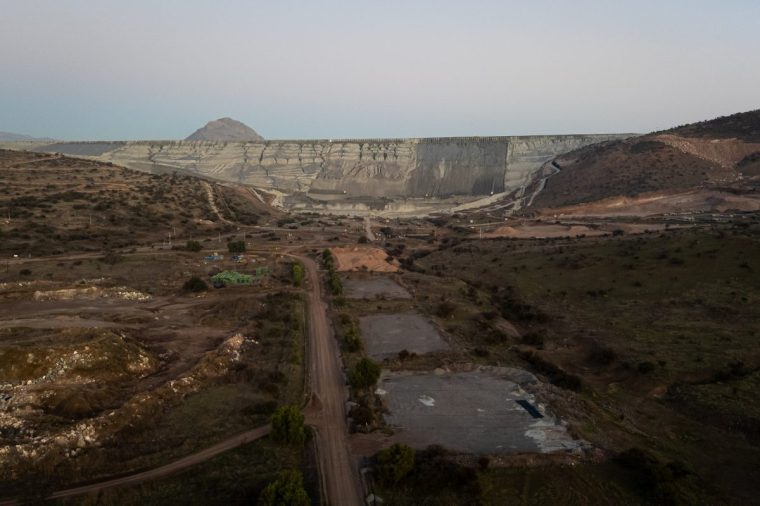 A mine in Chile, part of the ‘lithium triangle’ in Latin America (Photo: Nicole Kramm)
“It’s causing great pressure on the Global South and the territories where these critical minerals are. This means more pressure from the extractive industries and more impact on the health of the people who live there.”
Across the border in Chile, environmental groups are sounding the alarm about the impact of the growing demand for lithium.
Together Chile, Argentina and Bolivia, often referred to as the “lithium triangle” hold 75 per cent of the world’s lithium supply beneath their salt flats.
The region is one of the driest places on earth, a problem exacerbated by the water-intensive process of lithium mining.
Cristóbal Rodriguez from campaign group Modatima Chile said the communities surrounding the mines “have been impacted in many different ways”, the “most obvious” of which is access to water, with some rivers and lakes disappearing completely.
‘UK must pay attention to rights of community groups’
A group of individuals impacted by mining in Peru travelled to the UK last week to call on the Government to do more to protect them from environmental abuses.
They want the UK to bring in a due diligence law, similar to the Supply Chain Due Diligence Act recently introduced in Germany, that would allow them to bring cases against UK mining companies accused of wrongdoing.
Borda said such a law would be a “powerful tool” for people in Latin America to make their voices heard against large multi-national corporations.
“We’re not saying we shouldn’t be doing this mining, but we’re saying we should be doing it in a very different way and there should be more attention paid to the rights of the people that live there,” said Lucy Brill from the Catholic international development charity Cafod, which is supporting the Peruvian communities.
Concerns over ‘greenwashing’
Meanwhile, campaign groups in the UK say the Government must look at ways to curb the demand for critical minerals in order to alleviate the pressures of mining on the environment.
“These increases in mineral demands are not inevitable,” said Jake Simms from the London Mining Network.
He pointed to research carried out in the US that found demand for lithium could be reduced by as much as 92 per cent by 2050 through three policies: decreasing car dependency, limiting the size of EV batteries, and maximising lithium recycling.
Simms also raised concerns that mining was being “greenwashed”. He argued that the need for minerals for to meet net-zero targets was being used to justify increased mining for other industries, such as defence.
“The green transition is being used by the mining industry and by states in the Global North to push for huge unprecedented increases in mineral mining,” he said.
While the UK’s Critical Minerals Strategy included estimates of how much mineral demand would be used for EVs and renewables, it did not include the estimates for defence, instead grouping this under “other advanced manufacturing”.
A Government spokesperson said: “We’re committed to rooting out exploitative environmental practices in supply chains of businesses operating in the UK.
“That’s why we’re working with partners including Peru and Chile as part of our Critical Minerals Strategy to promote proper environmental standards, and we have launched a review in our Trade Strategy to examine if further measures are needed.”