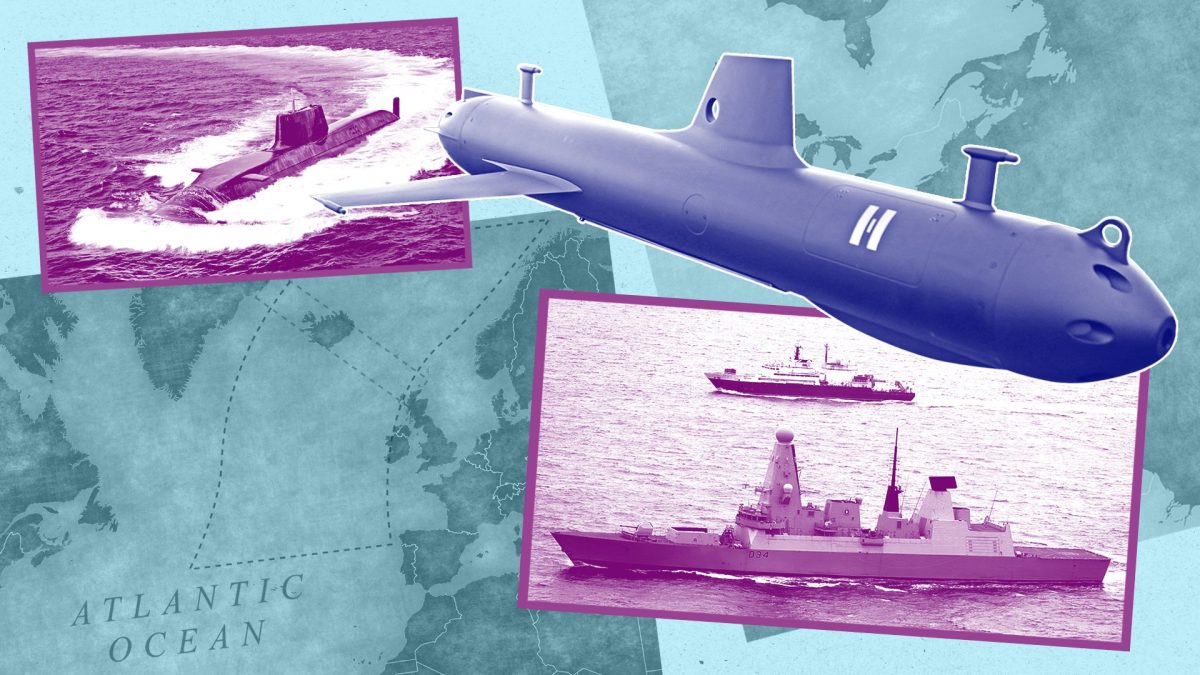
The Russian Navy maintains one of the most formidable submarine fleets in the world. Britain must step up or risk losing its advantage in the North Atlantic
Britain needs to urgently upgrade its defence capability including investing in anti-submarine warfare in the face of increasing Russian aggression in the North Atlantic, senior military figures and naval experts have said.
The head of Nato, Mark Rutte, said this week that Britain and other allies were Russia’s next target” and that we must prepare for a “scale of war our parents and great-grandparents endured”.
He added: “It is a terrible thought, but if we deliver on our commitments, this is a tragedy we can prevent.”
General Sir Gwyn Jenkins, the First Sea Lord and head of the Royal Navy, outlined plans this week for a new hybrid naval force, using AI and drones to counter the Russian threat.
However, he warned that the advantage Britain had held in the Atlantic since the end of the Second World War was at risk as Russia continues to invest billions in maritime capabilities.
“We are holding on, but not by much,” Jenkins told the International Sea Power Conference in London. “There is no room for complacency. Our would-be opponents are investing billions. We have to step up, or we will lose that advantage.”
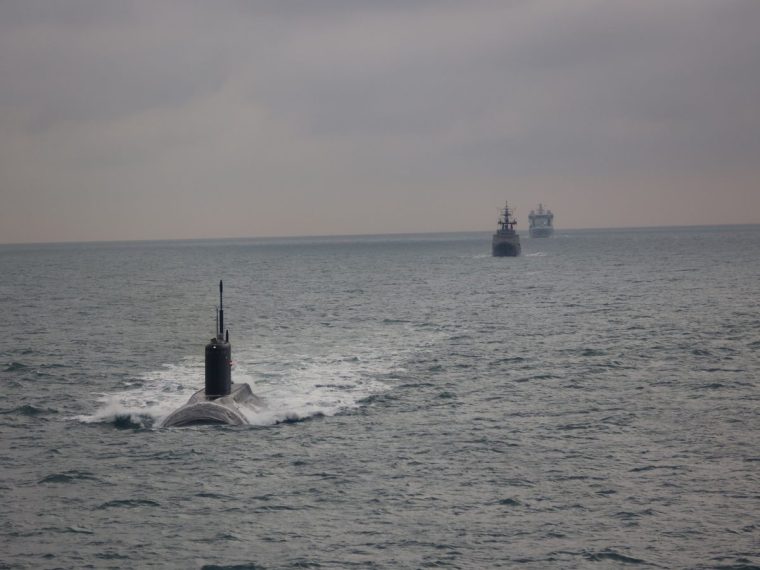 The Royal Navy shadowing a Russian submarine during a three-day operation in the English Channel (Photo: MoD Crown Copyright/PA)
Last month’s Budget reaffirmed a rise in defence spending to 2.5 per cent of GDP by 2027, but gave no indication of how this would be achieved.
Meanwhile, there has been a 30 per cent rise in Russian vessels encroaching on British waters in the past two years.
Only this week, the Royal Navy said it had tracked a Russian submarine, the Kilo-class Krasnodar, through the English Channel, while last month the Russian spy ship Yantar used lasers against RAF pilots tracking it. The Defence Secretary, John Healey, said he had changed the navy’s rules of engagement so warships could track Russian vessels.
Jenkins warned that while the Yantar was the most visible part of the Russian threat, it was only the tip of the iceberg. “It’s not the bit that worries me the most. It’s what’s going on under the waves that most concerns me,” he said.
The Russian threat is formidable – and growing
“The real threat is Russian submarines,” said John Foreman CBE, a retired Royal Navy officer and former UK defence attaché in Moscow.
As an island, Britain relies on its vast network of undersea cables and pipelines for essential supplies including electricity, with 99 per cent of our digital communications coming via fibreoptic cables. Furthermore, nearly all of our imports, including gas, come across the sea. This leaves us hugely vulnerable to sabotage.
In the event of a war, Russian submarines from its Northern Fleet’s base near Murmansk would seek to dominate the seas around Britain, particularly the strategic chokepoint of the Greenland-Iceland-UK (GIUK) Gap – cutting off transatlantic supply routes in much the same way the German U-boats attempted to during the First and Second World Wars.
Later, during the Cold War, the Gap became a front line in submarine warfare between Nato and the Soviet Union.
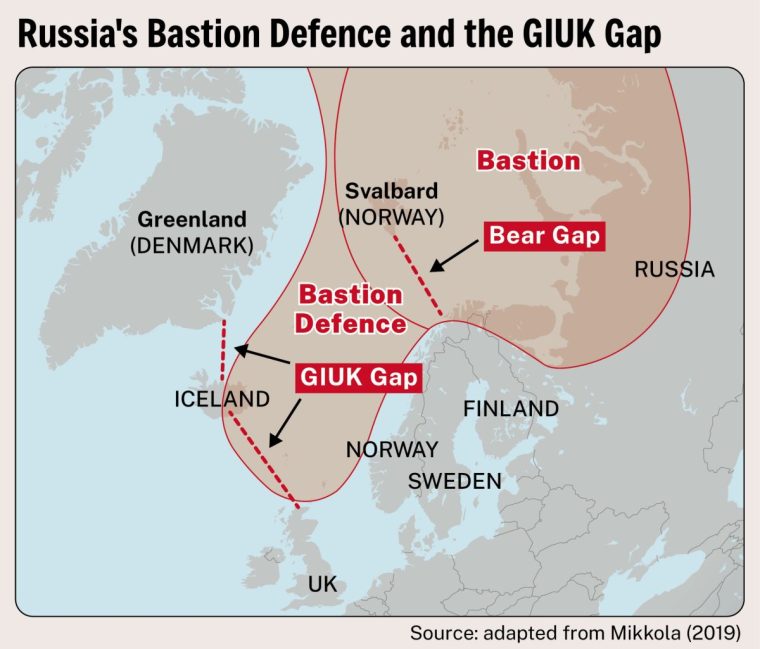 Russian submarines from its Northern Fleet’s base near Murmansk would seek to dominate the seas
Today, submarines are central to Russia’s deterrence strategy and power projection.
“Russia realises it has good, technologically advanced platforms. Their nuclear subs are getting quieter and quieter so we’ve got to think about how to interdict them,” said Foreman.
Some in the West may have lost sight of the strength of the Russian Navy given its performance in the Ukraine war, according to Emma Salisbury, an associate fellow at the Royal Navy Strategic Studies Centre.
Russia’s Black Sea Fleet has been significantly degraded by Ukraine, which has deployed drones to strike Russian naval targets.
But “the performance of the Russian Navy against Ukraine is not indicative of the Russian Navy’s potential performance against Nato,” Salisbury said. The Russian Navy maintains one of the most formidable and varied submarine fleets in the world, she said.
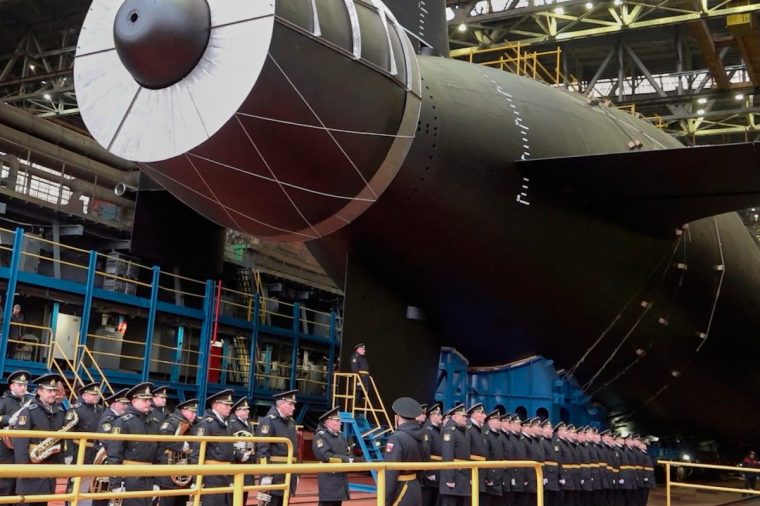 The Khabarovsk nuclear submarine at the Sevmash shipyard in Severodvinsk (Photo: Russian Defence Ministry Press Service via AP)
Russia’s Northern Fleet has around 10 large surface ships, 22 submarines, including its strategic ballistic missile submarines – an essential part of Russia’s nuclear triad and second-strike capability – as well as nuclear-powered attack submarines, which surveil and disrupt shipping.
It also has more specialised submarines like the Belgorod, designed to deploy the Poseidon nuclear-powered torpedo-drones.
How Britain is fighting back
The UK Government has announced details of its Atlantic Bastion, a “blueprint for the future of the Royal Navy”, according to Healy. The plan envisions a hybrid naval force comprised of warships, aircraft, uncrewed boats and drones. A vast network of sensors across surface, subsurface and air will enhance anti-submarine warfare and protect undersea cables and pipelines.
At the same time, new technologies will bolster the defence, include the SG-1 Fathom, an underwater glider, and Excalibur, the largest autonomous submarine ever trialled by the navy.
“Those kind of uncrewed, especially surface vessels, are a lot quicker to produce, they are a lot cheaper, and you can get mass more easily because you can build a lot of them,” said Salisbury. “I think drones are the answer to filling in some of our capability gaps more quickly.”
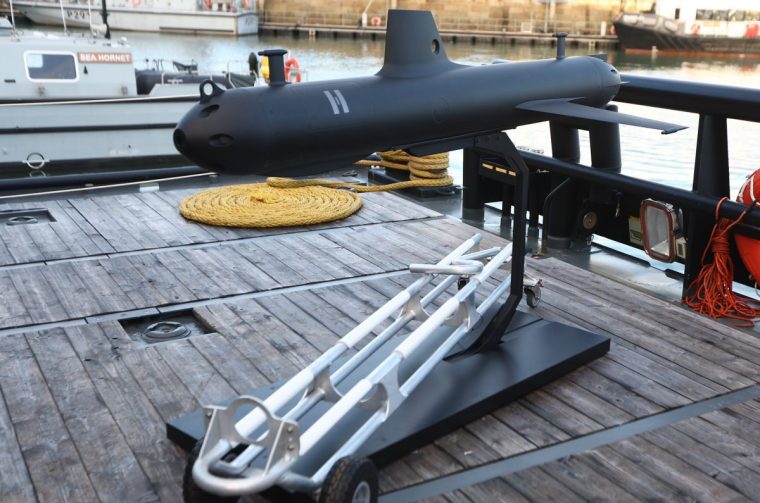 A life-size autonomous underwater glider called SG-1 Fathom at Portsmouth Naval Base (Photo: Peter Nicholls/PA)
Britain and Norway have also announced an extensive defence agreement under which they will operate an interchangeable fleet of British-built Type-26 anti-submarine warfare (ASW) frigates. Britain has traditionally been a leader in ASW.
Another crucial part of sea operations is the UK’s P-8 Poseidon maritime patrol aircraft, which can track and engage submarines via its sonar buoys, magnetic anomaly detectors and torpedoes. Some of these are based in Iceland, a key monitoring point for the GIUK Gap
Britain is falling behind
Britain is aiming to maintain its superiority in advanced submarines. It has committed £6bn to modernise facilities to build the new Aukus attack submarines, according to the Ministry of Defence.
However, senior military personnel have warned that it is far behind where it should be in terms of investment.
Since the end of the Cold War, the UK, along with other European Nato allies, has slashed defence spending, resulting in a sharp fall in the numbers of maritime patrol aircraft, ASW frigates and submarines.
Only this month, the Type 23 frigate HMS Lancaster retired, with no immediate replacement available.
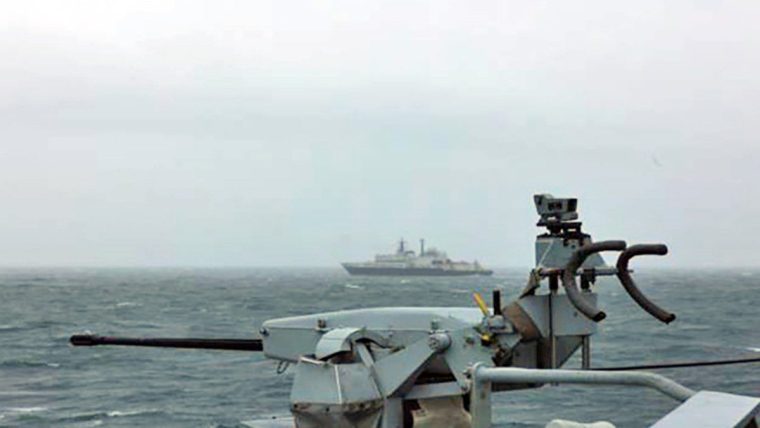 The Russian spy ship ‘Yantar’ has directed lasers at pilots of surveillance aircraft monitoring its activities on the edge of UK waters (Photo: Ministry of Defence/ PA)
One senior naval officer told the Sea Power Conference of Britain’s “diminishing advantage” in the North Atlantic, and highlighted challenges posed by the lack of investment in the Royal Navy.
While upcoming Type 31 frigates would address some issues, he warned that Britain needed to increase the speed of delivery.
“With the lack of investment in the Navy over the last decade or so, we’ve really seen a gap in capability,” said Salisbury. “We’re investing a lot in frigates and submarines but all of that is not going to actually be in service and useful for another four or five years.”
Foreman said that while Atlantic Bastion was a good plan, the question now was how we were going to fund it and utilise the money. “We’re having to deal with years of underfunding” he said. “I don’t think the tech is quite there yet to build the Bastion.”
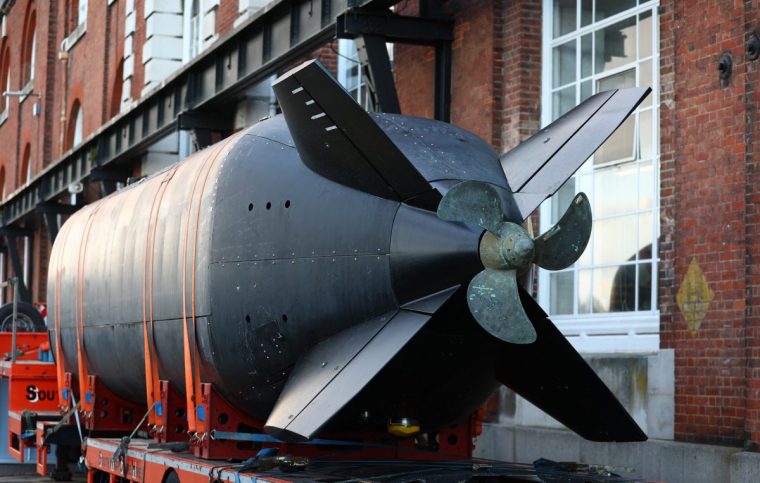 The Royal Navy’s experimental uncrewed underwater vehicle ‘Excalibur’ at Portsmouth Naval Base (Photo: Peter Nicholls/PA)
He added that uncrewed drones were insufficient for sensing Russian submarines.
“The Bastion plan is very passive: the drones will go out and listen for submarines, but they are so quiet, and we need both active and passive, transmitting sonar and listening to nuclear subs, integrated,” he said. “How do we get all this data into all these sensors, crewed and uncrewed, to find out where submarines are and deal with them?”
As part of Britain’s push to remilitarise, it must also increase investment in British manufacturing, to ensure a domestic supply base for drones, ships and other kit, said Salisbury.
“Having factories in UK that can do that is going to make that a lot easier. And now is the time to kind of build up that supply base, because once you’re in a hot war, it’s too late,” she said.
Your next read

Salisbury also said we need to be investing in infrastructure like shipyards, because we need to have the long-term yard space and investment to be able to meet our own needs, as well as those of allied navies.
The government’s long-delayed Defence Investment Plan is expected to be published by the end of the year, but Foreman said that while “we’ve been promised a defence and investment plan, it’s about time the government stopped issuing concepts and started acting.”
An MOD spokesperson said: “We’re responding directly to a resurgence in Russian submarine operations, including the recent Yantar activity, by rapidly accelerating the development and deployment of next-generation anti-submarine technology. The Royal Navy is pioneering the transformation of new hybrid navies, tapping into a £350 billion pound worldwide potential market.
“Atlantic Bastion is a major step-change in UK maritime defence – creating a hybrid force that links autonomous vessels, AI-enabled sensors, warships and aircraft to protect critical undersea infrastructure from this growing Russian activity backed by the largest sustained increase in defence spending since the end of the Cold War.”