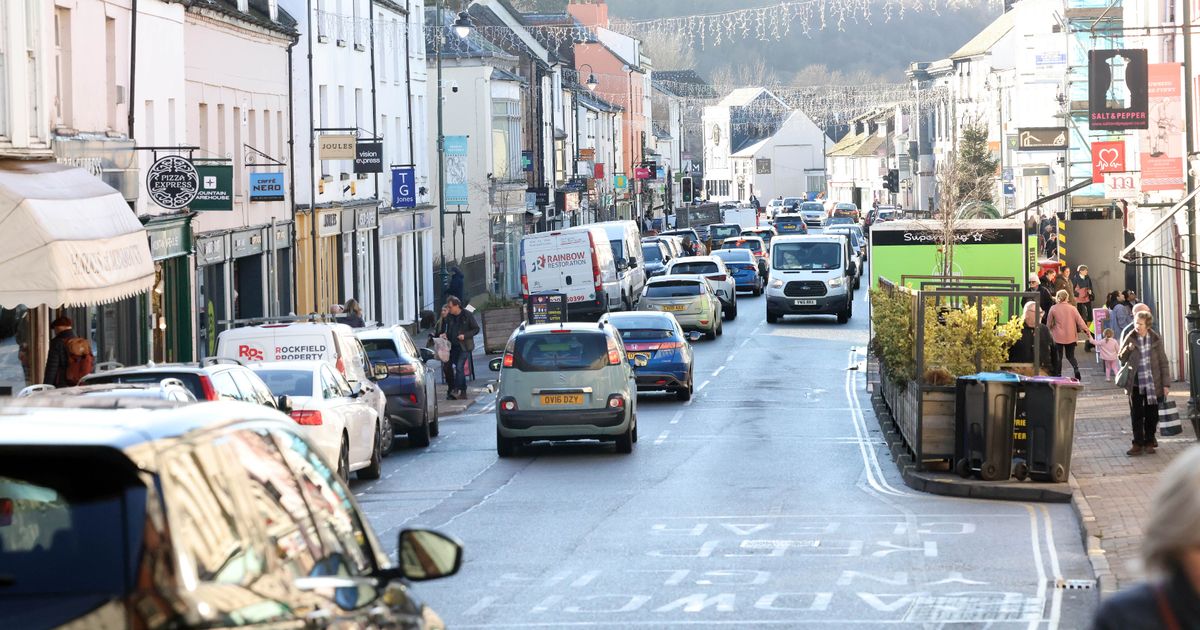
‘It was difficult to deal with at the start, but I think now it’s better to speak out – to support the community and try to protect people from this happening again.’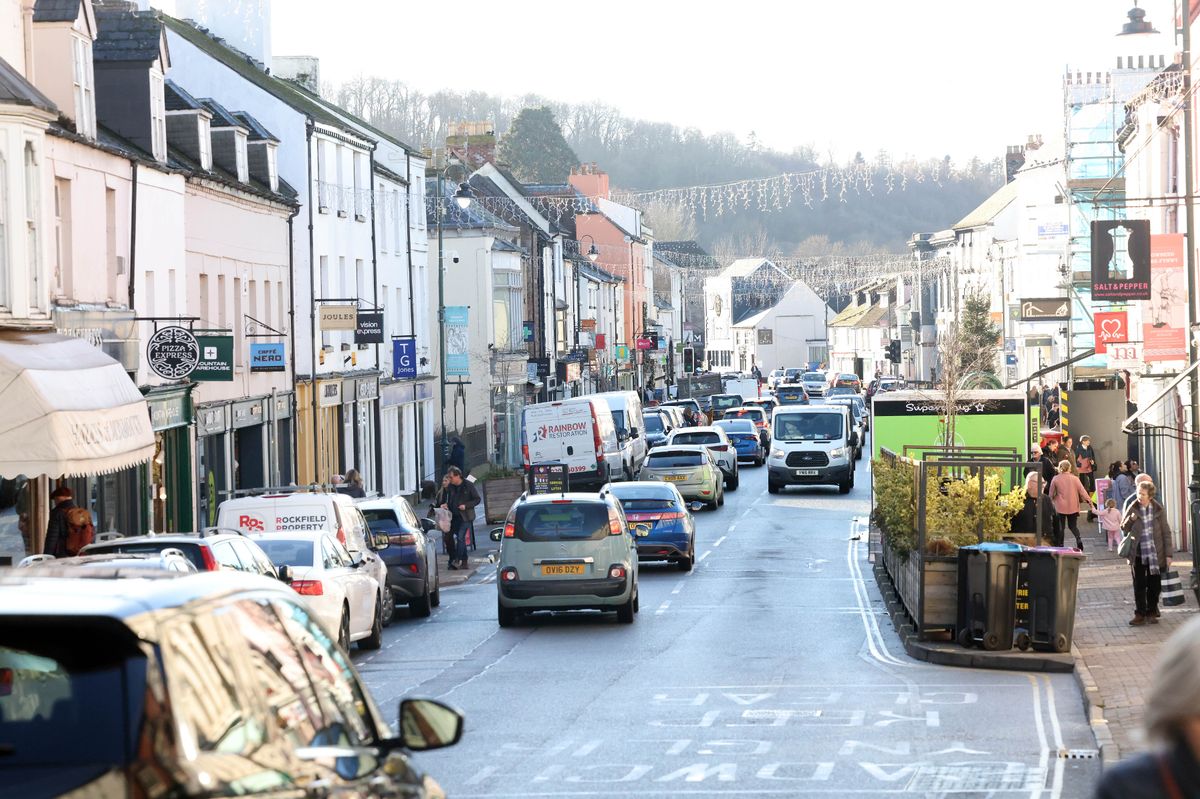 Weeks on from another devastating flood, Monmouth is finding its feet again(Image: WalesOnline/Rob Browne)
A month on from what has been described as one of the UK’s worst ever floods, a small Welsh town is refusing to be defined by disaster. In Monmouth Christmas lights are twinkling, shop doors are creaking back open, and the familiar hum of daily life is returning, not because the damage has been forgotten but because the community has willed itself forward.
In November Storm Claudia brought with it some of the most severe flooding Wales has seen in years. In a matter of hours swollen rivers and relentless rain tore through towns, villages and cities, leaving behind silt-stained walls, ruined stock and a deep sense of shock.
It should have been a time when this quaint little town popular with tourists was preparing for the festive season with excitement, yet they’re in recovery mode again in scenes reminiscent of when Storm Dennis also devastated the place in 2020. A town which comprises the Wye and Monnow rivers, folk here have become accustomed to rolling their sleeves up and getting on with it each time the two burst their banks. And so they’re doing again.
Monmouth was among the places many believed would escape the worst of the storm. It didn’t. Five inches of rain fell in just five hours on Friday, November 14 – an extraordinary deluge that overwhelmed defences and transformed familiar streets into fast-flowing channels.
But what followed was something altogether different. In the days after the flood the town pulled together in a show of resilience that was both quiet and extraordinary. People carried boxes, scrubbed floors and lifted waterlogged stock. They brewed tea for strangers, shared sandwiches on doorsteps, and returned the next morning to do it all again.
Teens spent days hauling debris from shops while more volunteers arrived from as far afield as Birmingham and Coleford armed with gloves, buckets and goodwill. Locals walked the length of the high street with flasks, tools, food or simply words of encouragement.
When we visited the town this week Monmouth was settling into a new rhythm shaped by recovery, cooperation and an unspoken determination to keep going. The scars are still visible but so too is the resolve in the town knocked back at a most crucial time of the year but which has chosen to stand up again.
At the Marches Delicatessen owner Tom Lewis said the flooding was “unlike anything” he had “ever seen before”. “There have been enough challenges already,” he said. “And this definitely wasn’t on the business plan, that’s for sure. I don’t think anyone thought this would happen. I don’t blame anyone for the lack of warning because I don’t think anyone knew we’d get something on this scale.”
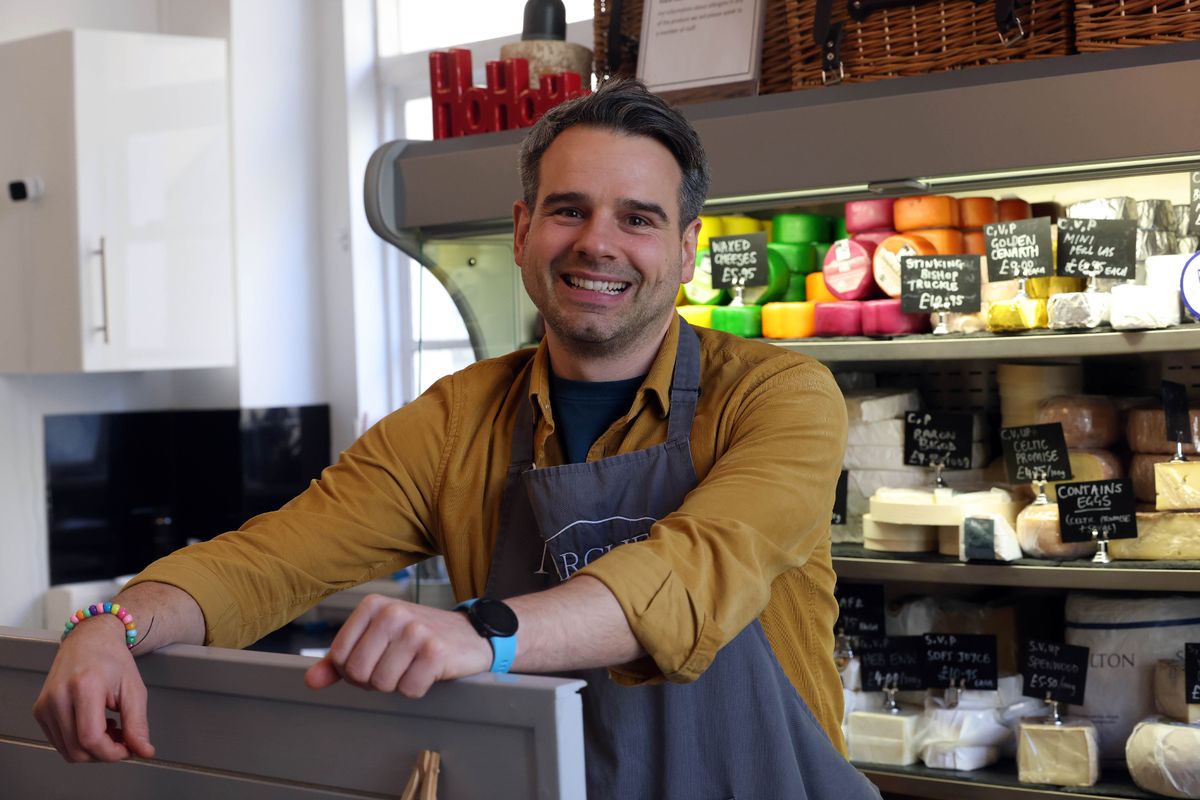 The Marches Delicatessen has been run by Tom Lewis for the last nine years(Image: WalesOnline/Rob Browne)
On the Friday before the storm the team shut early, Tom recalled. “Where I live – and where another member of staff lives – tends to flood,” he explained. “We were just trying to make sure we got home safe. We didn’t actually consider for one second that there would be issues on the high street. We just assumed we’d be coming in like normal on the Saturday.”
The next day Tom found himself stranded at home the lanes around him submerged. “I couldn’t get in until Sunday because of the flooding around me. But I was getting a lot of messages from people asking what was going on and if I was okay – and I couldn’t really give them an answer.”
He was fortunate, he said, that his parents lived locally. “They were able to come down when it was safe to – even though the water levels were still pretty high – and assess the damage. I came in on the Sunday and that’s when we really started stripping everything out.”
Trying to remain positive, Tom said the timing could have been worse. “It would have been far worse if the flooding had started now, because we’d have peak stock for Christmas.”
Even so, the losses were painful. “We lost the contents of our cheese fridge, which was gutting. Thankfully, because we’re slightly higher than most of the people affected, most of our stock was okay. What we really lost was the wooden flooring and wooden fittings – anything that couldn’t be cleaned.”
The deli side of the business was closed for two and a half weeks. The coffee shop remains shut and there is no way it can reopen until at least the end of January. “We were so desperate to get the deli side open for retail trade for Christmas that we prioritised that,” Tom said. “The coffee shop always goes a little quiet around this time of year, so we just focused on what was most important.”
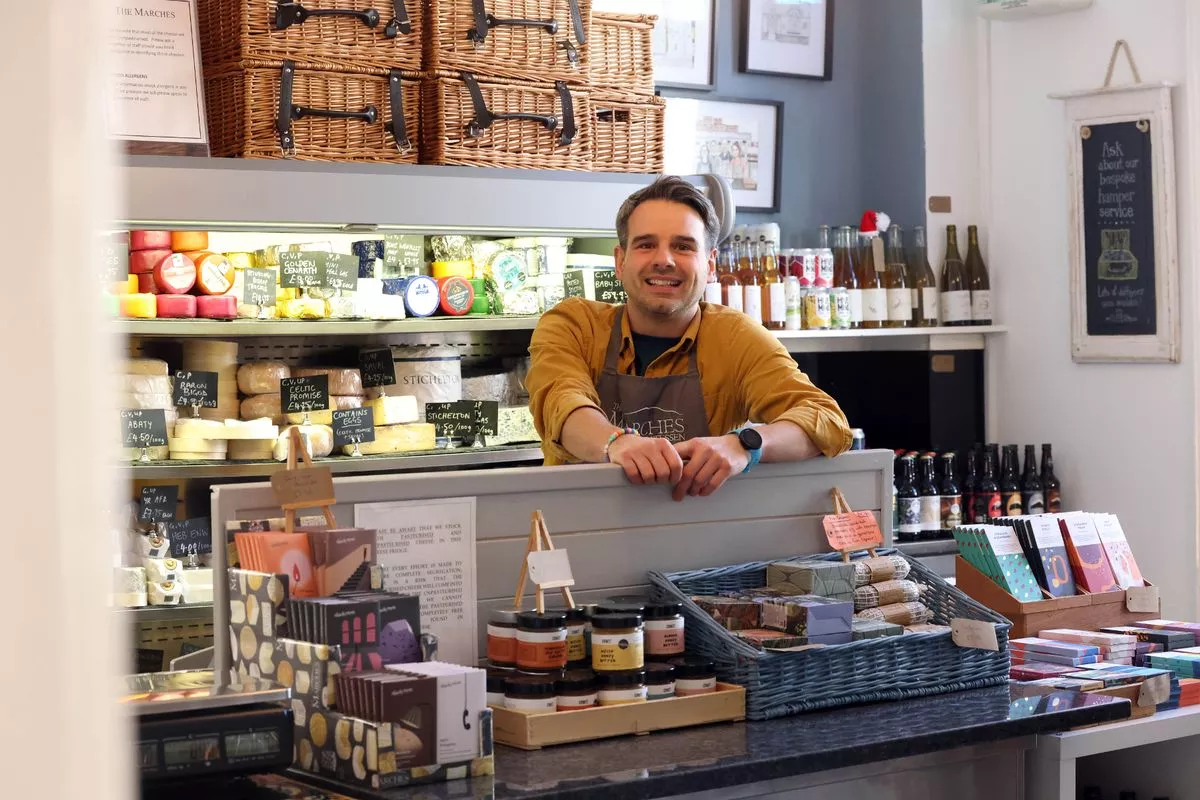 Tom has worked hard to reopen the deli after a particularly trying period (Image: WalesOnline/Rob Browne)
What has stayed with him most is the response. “The support from everybody; members of the public, customers, my staff, even the council… it’s been amazing. Completely humbling to see the level of kindness and generosity from random people who just want to do something to help. It makes you feel that even though there are bad things happening in the world, there are some good things that can come from it.”
Tom believes the flood has also reminded people of the importance of local businesses. “A lot of people are making the point of supporting their local independent stores. We’ve had a lot of new customers ourselves. I just think it’s reminded people of the importance of having a mixed balance on the high street alongside the bigger names and brands.”
On entering the new year he plans to take a short pause. “I might have a week off in January, just to have a rest. Beyond that, 2026 will be focused on getting everything back up and running – back to normal.”
“I genuinely want to thank people for helping me get my business back up and running. It’s been such a humbling experience. I feel very undeserving of it, I just want to welcome people back and say thank you.”
He is also keen to remind people that not everyone has been as fortunate. “Loads of other places haven’t been as lucky as us. Some aren’t up and running yet and won’t be for months. People need to remember that. And there are businesses that weren’t directly affected by the flooding but lost 90% of their footfall. Even though the water has gone the impact still lingers.”
At The Boat House recovery has been practical, urgent and driven by creativity. Jenny Chuter has worked tirelessly to get two of her stores back up and running just in time for the peak festive season. When I last saw her, only days after the flood first hit, she was rushing around the shop, set in a prime spot on the high street, trying to make sense of the damage left behind.
The Boat House is known for championing local artists: a vibrant, ever-changing space filled with quirky gifts, original artwork and handmade pieces from around 80 different makers. That identity – its creativity, its colour, its community of contributors – meant the flood didn’t just devastate Jenny’s business. It struck at the artists too, whose carefully crafted work ended up waterlogged, caked in mud and drifting through the shop like debris.
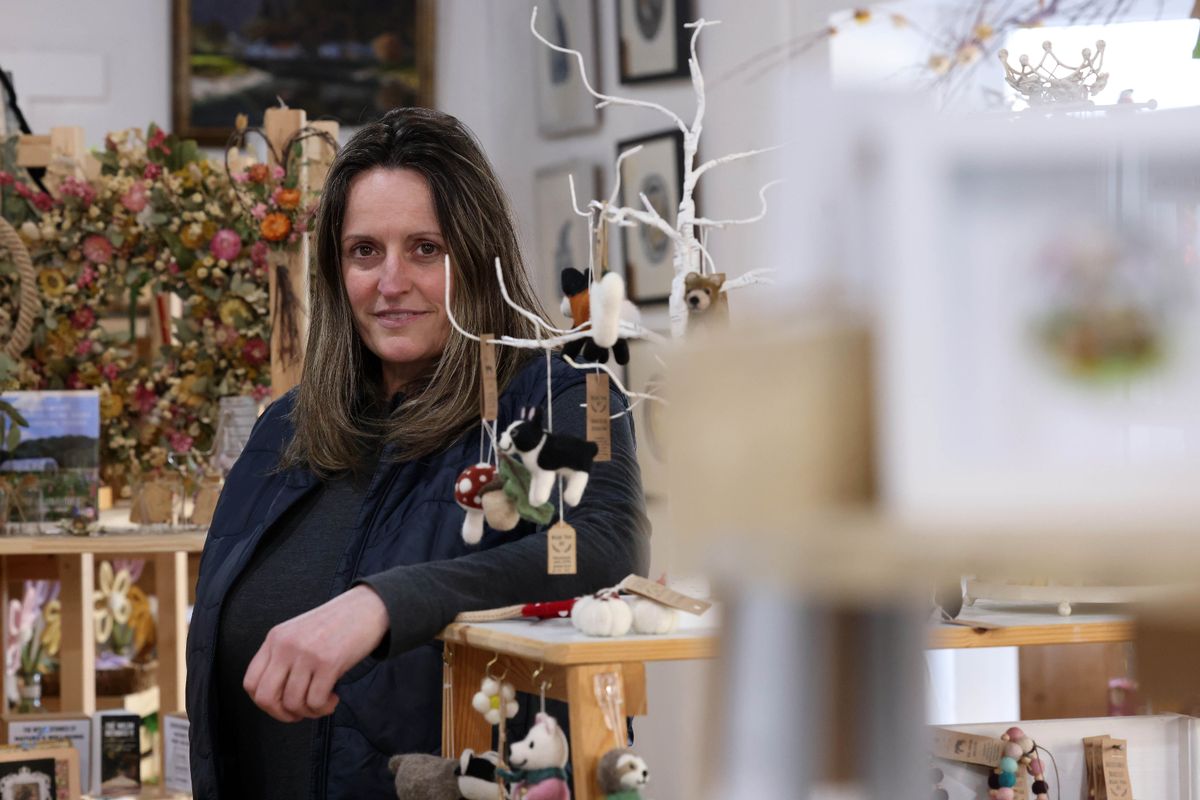 Jenny Chuter also managed to get her store up and running against the odds(Image: WalesOnline/Rob Browne)
But weeks on Jenny says business is doing well and that recovery has been driven by the people of Monmouth. “We’ve had a huge amount of support from our regular customers. They stayed away when the flood actually happened to let us recover.
“But in the weeks that have followed, people have come back into town and they’ve made pacts with their family, friends and colleagues to shop local, so this has been a really special time. We’ve had lots of people come in who have been directly impacted by the flood themselves, simply because we are all trying to support each other.”
Because The Boat House was able to reopen Jenny was determined to help others do the same. “We were lucky enough to get in, get sorted and open, so we wanted to help out other businesses. We’ve lent our office space to the Monmouthshire Beacon [newspaper].”
She has also taken in stock from another business still unable to reopen. “There’s a lovely clothes shop up the road called Shiraz who can’t open this side of Christmas,” she said. “So I’m selling her earrings for her, just to help some sort of income come in.”
Among the losses was a moment that has stayed with her. One of the artists she works with, Melissa Coultas, had been building confidence and momentum, creating what Jenny describes as “beautiful work”. “She had spent quite a lot of time on these wonderful painted settings, one of which was on the floor of my office, ready to hang the next day,” Jenny recalled. “Of course when we went in after the flood it was absolutely saturated. She broke down in tears.”
But when the mud was cleared and the painting was lifted from its frame something unexpected happened. “Do you know what? It had taken a whole new life. It looked fabulous.”
That transformation has become something tangible. “As of this weekend we’ve started a sealed-bid auction so people can come in and make a private, confidential bid,” Jenny explained. “On December 22 we’re going to open it up and the highest bidder will be able to purchase the painting. The money will then go towards the artists – to help those who have lost so much of their work during the flooding, things they’d been working on for months and months ahead of Christmas.”
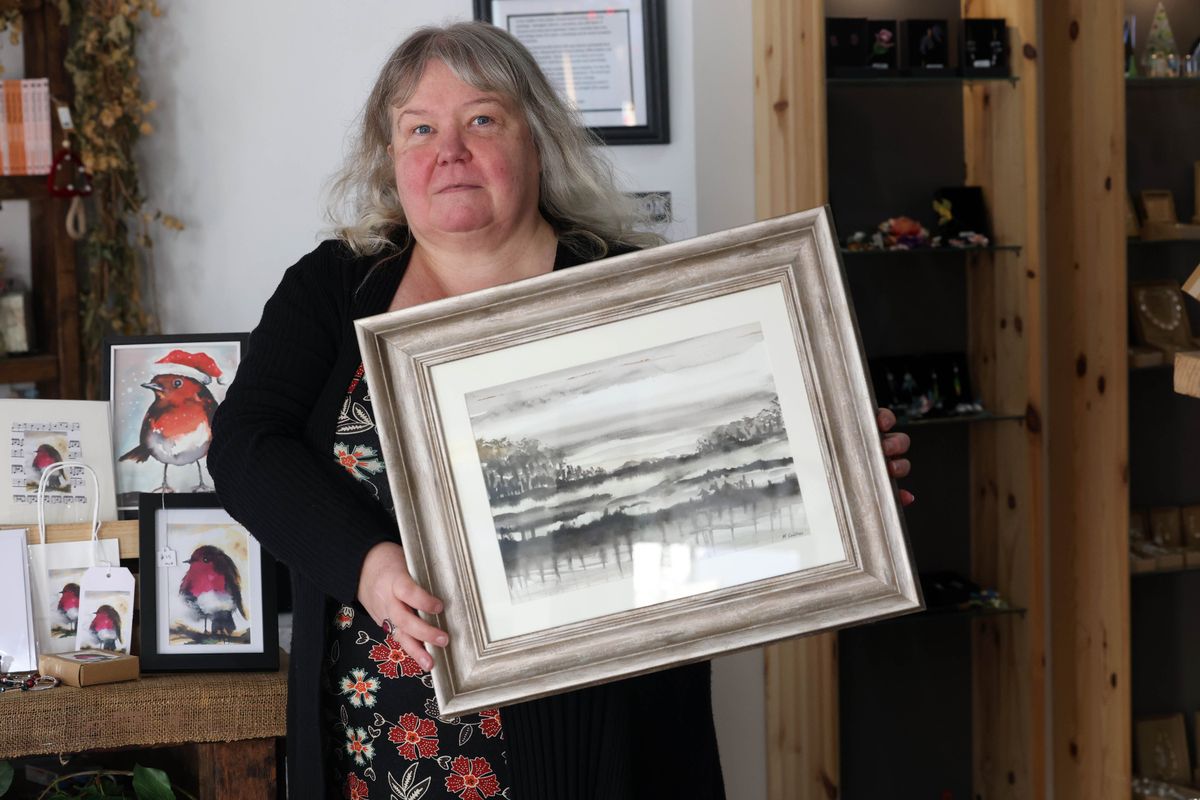 Artist, Melissa Coultas, with her painting that is being auctioned to help with the recovery(Image: WalesOnline/Rob Browne)
Since reopening the Boat House has been busy, Jenny said. “People have been coming from far and wide. They’ve told us they would normally go to Bristol or Cardiff for Christmas shopping, but instead they’re coming to Monmouth. It’s been lovely to see. They’re supporting everyone who’s been affected. It is really heartwarming.”
There have been moments of collective joy too. “We had the annual lantern parade and that brought a lot of people out. It was a really beautiful moment. Every year children come out with lanterns; usually there are hundreds and hundreds of people. Even though it rained and rained people were still lining the streets. It was really special to see because, while this awful thing has happened, it showed just how resilient the community is – how we’re going to carry on and support each other.”
Inside the shop, Jenny said the work continues at pace. “We’re frantically making work because almost everything was damaged “Every week something new is coming in. We’ll be back to business in 2026 and supporting other businesses who are aiming to open in the new year. After Christmas is usually a very quiet time anyway, so it will be about helping them get back on their feet.”
Another business still working its way back to full operation is Harts; a fixture on Monmouth’s high street since 1972 and run by the same family for more than five decades. Today it is managed by Carrie Francis whose connection to the shop runs deep. It was previously run by her grandmother and aunt and Carrie herself has been part of the business for more than 20 years. Harts sits close to Marks & Spencer and Waitrose, both of which were forced to close for a period due to the scale of the damage.
“I had to leave on the Friday to pick my children up from school because it was shutting,” Carrie recalled. “The staff were alerted at four o’clock to evacuate – and by that point, it was already too late to save anything. We eventually got in on the Saturday afternoon. We couldn’t get in any earlier because of where we are on the street, and there was still a lot of water around.”
When they did enter, the scale of the devastation became clear. “You could see the marks of how high the water had got – there had been at least three feet of water in there. The whole of the downstairs was just disgusting. All of the stock was affected.”
Some items could be salvaged, but only just. “Upstairs, there wasn’t very much damage. We removed what we could and washed anything that had only been slightly touched, and we were able to sell that in flood sales. We just had to get rid of it because we found out we weren’t actually insured for flooding.”
That discovery came as a shock. “My family have had this shop a long time – it flooded once before in 1979. But that was such a long time ago, we hadn’t really thought about it. Unfortunately, because we had wooden chipboard floors, when we pulled the flooring up we found a lot of rotten joists underneath. Now we’re pulling the plaster off the walls up to where the water reached, just to help it dry out properly. We had a lot of devastation in the window, which meant that although we were open, we had blacked-out windows. That’s only just been finished this week, so we can finally get our window displays back in and look open again.”
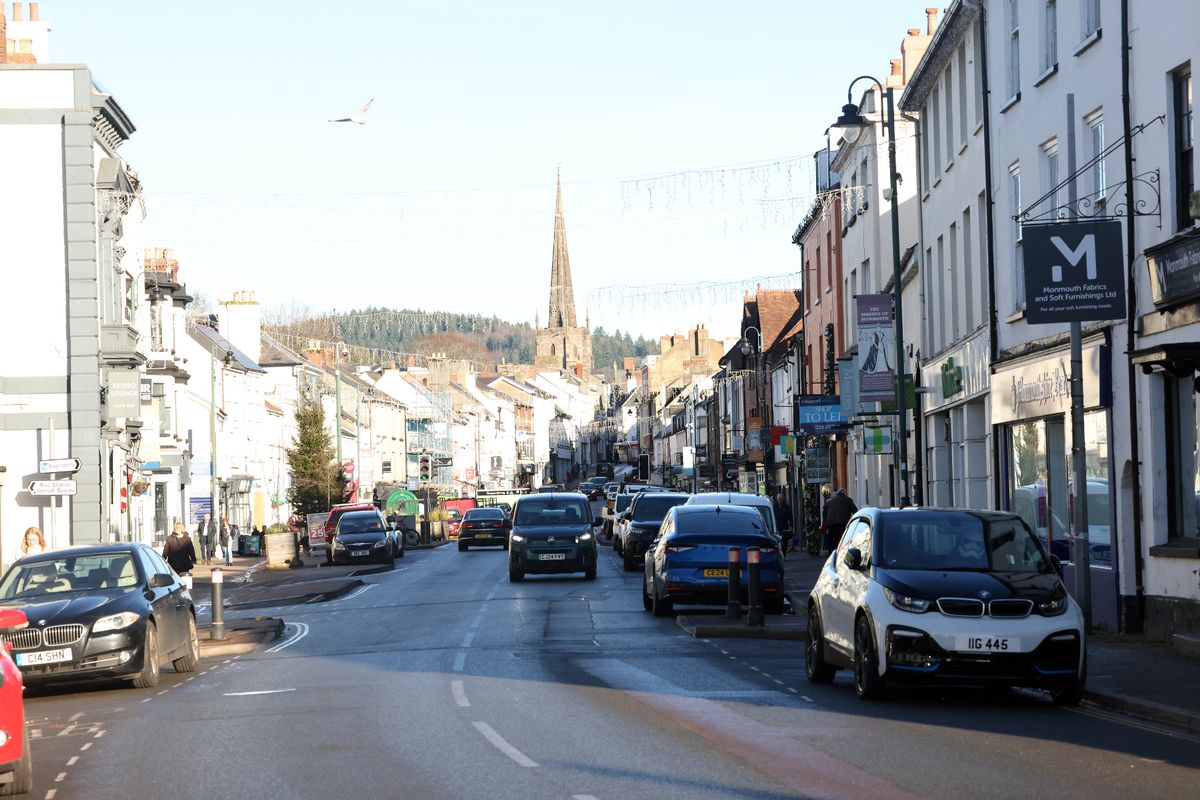 The community looks to be moving forwards following the devastation of the flood (Image: WalesOnline/Rob Browne)
Builders were brought in quickly, and despite the damage Harts was only fully closed for a week. “We were able to get the upstairs reopened after that – and we actually did quite well on that, really,” Carrie said.
The limitations create daily challenges. “We were fairly well stocked for Christmas, and losing 50% of the store is difficult. We’ve lost stock, we don’t know when downstairs will reopen, and we’ve got stock in the stockroom that we can’t put out because there isn’t enough room upstairs to display it.”
“It’s a juggling act. Looking after staff, making sure they’re still getting the work and the hours they need – because it’s Christmas for them too.”
What has made the difference, Carrie said, is the support. “People have been unbelievably supportive – the local community and our loyal customers. People just popping in with £20 for the staff to go out for coffees. Everyone was trying to help in whatever way they could.”
That support culminated in a fundraising fashion show held on Tuesday night at Bar 125. “The level of support was unbelievable. We were ramming people in everywhere – it was so busy – and we raised over £750 for Monmouth aid.”
Volunteers have been just as vital. “We’ve had incredible people helping us rip out wet materials, move stock and clean. The guy who owns JC Carpets and Beds keeps popping down to help wherever he can, people like that are really helping businesses like ours move forward.”
Carrie is acutely aware that the impact stretches far beyond her own shop. “It’s affected the whole town, not just the businesses that were flooded. Even those that weren’t affected saw their footfall drop while Waitrose and M&S were closed. The town felt eerie after the flood.”
Owning the building has shaped their response. “We hoped we were covered by insurance, but we had to just get on with it, salvage what we could and dry the building out as much as possible. We own the building, so we want to preserve it and reduce the damage. You can’t just shut the door and hope the problem goes away.”
That urgency is part of why reopening mattered. “Every day we’re open and bringing in a little bit of money, that’s money that goes straight towards paying the builders to make it usable again. In 2026 we’re looking to be fully back up and running – opening downstairs and getting back to where we were with stock holding.”
But the knock-on effects will linger. “The stock we lost means we haven’t taken money for it to pay for the next stock. We won’t have backup stock either – because we don’t sell every single item straight away. Normally things are put away and brought out again, but we won’t have that safety net. But we’ve been very lucky. The support from the community and our customers has blown us away.”
For The Robin Hood restaurant and pub, the focus is firmly on the new year. A relatively new addition to Monmouth’s high street – having opened just a year ago – the business has been hit hard by the flooding. When I spoke to landlord and landlady Mark and Clair Beard a few weeks after the storm, the shock was still close to the surface.
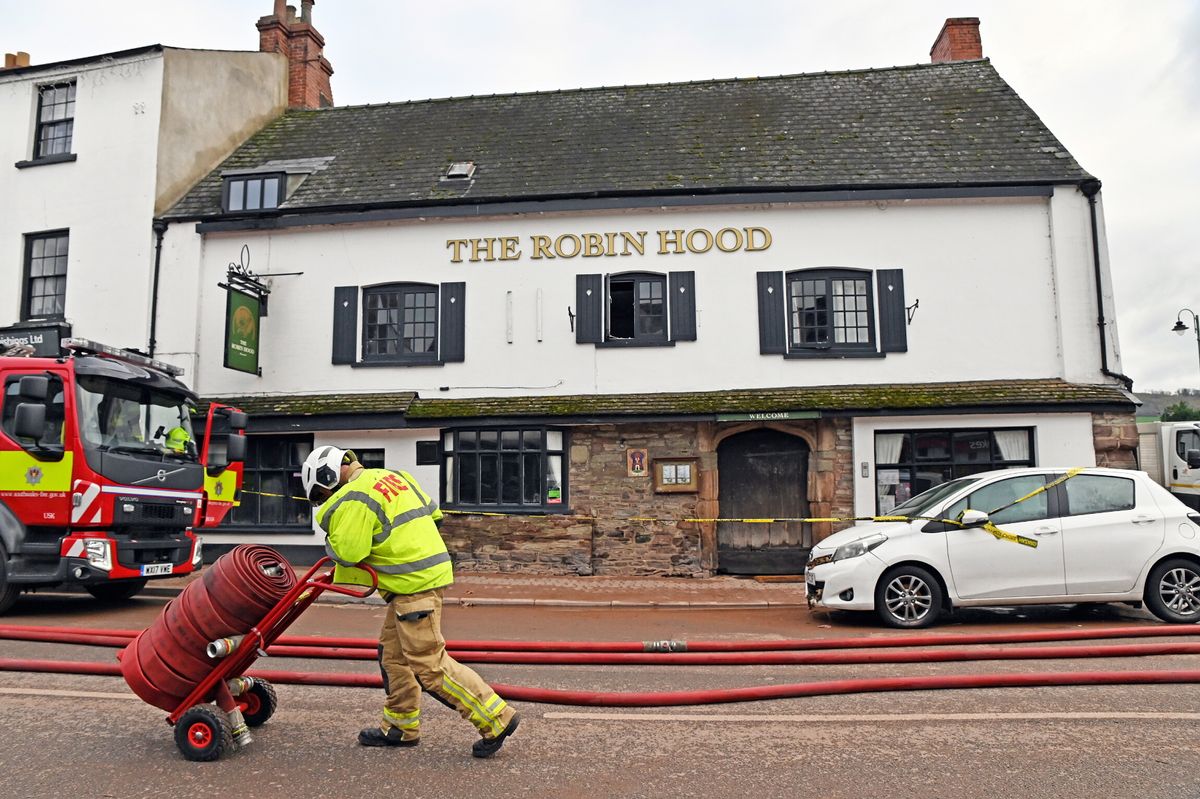 The Robin Hood pictured days after the flood(Image: Richard Swingler)
“By 1.15am, we were knee-deep in water,” Clair recalled. “At that point, we ran straight upstairs – and we were stuck there for 12 hours. We had no equipment, no food, no drink – nothing. We just sat there watching the water below us like a literal river. It was terrifying.”
Weeks on, the building shows no signs of reopening. “We had to rip everything out,” Clair explained. What was overwhelming in the early days has slowly shifted into something else. “It was difficult to deal with at the start, but I think now it’s better to speak out – to support the community and try to protect people from this happening again. It’s destroyed so much.” Despite the damage, she said the support has been extraordinary. “People have been amazing.”
The couple still cannot move back into their home because of the extent of the damage. “The Punch House – Vic and Tash – put us up for two weeks and were incredible. Maryhill, Stewart and Carla helped us the first night, and now Steve at The Malthouse has put us up for the past two weeks. I’m so grateful to all of them – amazing people.”
Financially, the situation has been just as difficult. “We’re not covered on insurance for this, which isn’t great, and neither are our own wages or our staff’s wages. That’s taken a huge hit, because our staff are precious to us.” There are further uncertainties too. “We may not be covered for the extra fixtures we put in since we took over either. It’s been hard, to be honest.”
For Clair, the wider impact of the flooding is impossible to ignore. She points to residents like Roslyn – one of many who have been affected repeatedly. “She’s lost everything again,” Clair says. “She’s now been flooded four years on the trot. It’s heartbreaking for them. Just so sad.”
As Monmouth looks towards recovery, places like The Robin Hood stand as a reminder that for some, the water may be gone – but the damage, uncertainty and loss remain very real.