Winter is a time when we see nature slowing down, with every animal and plant having a strategy to see themselves through to more bountiful times.
We often associate nature in winter with hibernation, but apart from our 17 species of bat, only the hedgehog and hazel dormouse hibernate in the UK.
What about common frogs, grass snakes, peacock butterflies – and all the other insects, amphibians and reptiles? Anyone with a pet tortoise will tell me they quite obviously hibernate!
Well, I’ll come to this matter shortly. Of course, there are mammals, such as badgers and red squirrels, which will spend prolonged periods of time hidden away, particularly during excessively harsh weather.
However, they are active during the winter, and even in semi-arctic conditions they do not hibernate.
Pipistrelle bat. (Image: Tom Marshall)
In scientific terms, hibernation is a specific biological function that is unique to mammals, although it is more common among insect-eating mammals in temperate climates.
It is a survival strategy for enduring harsh conditions such as extended periods of cold – and it is likely to be one of the reasons that some species of mammal survived the asteroid strike that wiped out dinosaurs 66 million years ago.
Hibernation is most common among bats, rodents, and of course bears, although all mammals have this potential ability.
There is even a species of primate that hibernates (a type of lemur), and a suggestion that Neanderthals may have had the capability too.
Despite popular belief, hibernation is not sleep. It is a hormone-controlled state activated by worsening environmental conditions.
Melatonin, which controls the sleep-wake cycle, adenosine, which inhibits the nervous system, and leptin, insulin and thyroid T3, which suppress the metabolic rate, combine in carefully measured doses.
This cocktail of hormones ensures the animal slowly drifts into hibernation.
The resulting physiological changes cause the animal’s body temperature, heart rate and breathing to significantly decrease.
Some bat species can reduce their heart rate from 100 beats a minute to just three or four.
Birds are, effectively, feathered flying dinosaurs.
Their survival of the asteroid is down to the fact that feathers are fantastic insulators, keeping them warm and dry.
Like mammals, they can regulate their body heat, but birds can run their body at far hotter temperatures and fly away to a more favourable location. Because of these attributes, birds haven’t required the ability to hibernate.
Anyone with a passing knowledge of British wildlife knows that our snakes and lizards, as well as frogs, toads and newts, ‘hibernate’.
They are all ectothermic, or ‘cold-blooded’, animals whose body temperature fluctuates with that of their surroundings.
Their strategy for winter survival is a state called brumation.
Unlike hibernating mammals, brumating herpetofauna (reptiles and amphibians) are not entirely dormant.
Colder temperatures send them into a torpor.
They limit their movement to conserve energy, but they will occasionally wake to drink, feed or change location.
Large snakes that can, for example, swallow a rat whole, will rarely eat whilst in and out of brumation.
With the digestive system slowed down, the food can rot in their stomachs causing life-threatening illness.
Insects can also enter a state of torpor in winter, with several species of UK butterflies overwintering as adults.
Hedgehog (Image: RSWT)
Wasps, and other colony-forming insects, will ‘produce’ females as winter approaches.
Their specific task is to survive until the spring when they can emerge to form a new colony.
Many insects enter a diapause phase in winter, which is a state of suspended activity and development.
As the name implies, this process temporarily pauses insects’ growth – as an egg, in the larval stage, or as a pupa.
There are remarkable examples of insects, in various stages, being frozen solid for extended periods, before thawing out and continuing development.
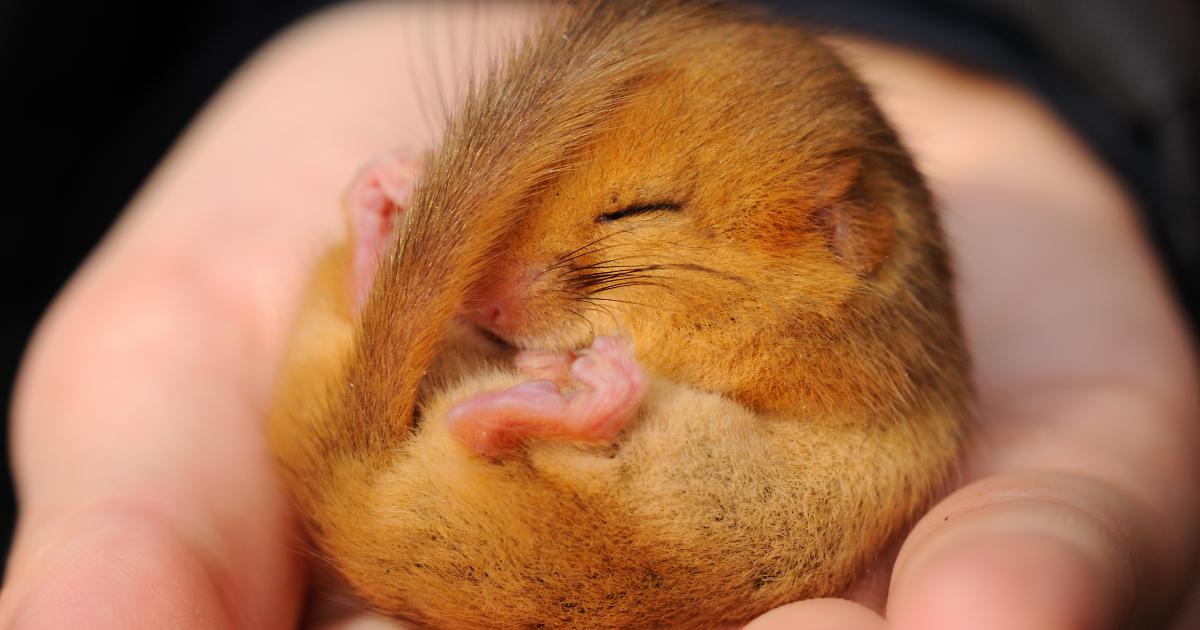
Without doubt, the hazel dormouse is the UK’s most famous hibernating creature, appearing as the sleepy teapot dweller in Alice’s Adventures in Wonderland.
Their reputation is justified, as they start finding somewhere to bed down in mid-autumn, and they are known for entering a very deep hibernation.
They do not reappear until there is sufficient food to eat in the spring.
Dormice are ‘successional feeders’ and change their diet as different food sources become available throughout the year.
Surprisingly, pollen is a particularly important source of food in the spring, so an early riser could be in trouble.
The increasingly mild winters in Britain are not favourable to dormice, as they seem to hibernate best in colder weather.
They tuck themselves up in a football-sized nest of hay and leaves in a tangle of brambles, or under tree roots. Hazel dormice have taken to using bird boxes in many of our woodlands.
However, they are susceptible to predation by grey squirrels which, whilst their poor victim is in hibernation, eat them alive.
It is worth noting that hazel dormice are found in Suffolk, but there is no record of them living wild in Norfolk.
Bats are also heavy sleepers. Fortunately, all bat roosts, both winter and summer, are protected by law, and this is for good reason, as bats are in serious decline.
Winter hibernation roosts can hold dozens of bats, even hundreds, and disturbance during this critical period can bring them out of hibernation.
Without the possibility to feed, they lose condition very quickly and die.
Hedgehogs are nap-takers in comparison, and due to our warming winters, they will often wake from hibernation during mild spells.
This can be a tricky strategy, particularly if the weather suddenly turns.
On two occasions I have found a hedgehog struggling about in several inches of snow.
Re-entering hibernation isn’t straightforward, and if they fail to find sufficient food to regain condition, to do so can be fatal.
The dilemma is that remaining active puts a hedgehog at the mercy of the weather’s whim.
The study of hibernation is becoming a well-funded branch of science, with medical applications being explored.
It sounds like something from a sci-fi novel, but NASA are looking into human hibernation as a way of sending astronauts across the vast expanse of the solar system.
Hibernation gives mammals the ability to occupy the most hostile environments on Earth, and it saved one small mammalian species from extinction 66 million years ago.
Without this incredible survival strategy, would we be here to marvel at the natural world, or look up and dream of travelling to the stars?
Call to action: Helping hedgehogs in winter
- If you find an underweight hedgehog or one that appears sick, contact a local hedgehog rescue centre for advice.
- Do not attempt to overwinter a hedgehog yourself unless advised by hedgehog rescue.