Seven of the UK’s top scientists in infectious diseases explain why the new H3N2 strain of flu is different this year – and what we can do to protect ourselves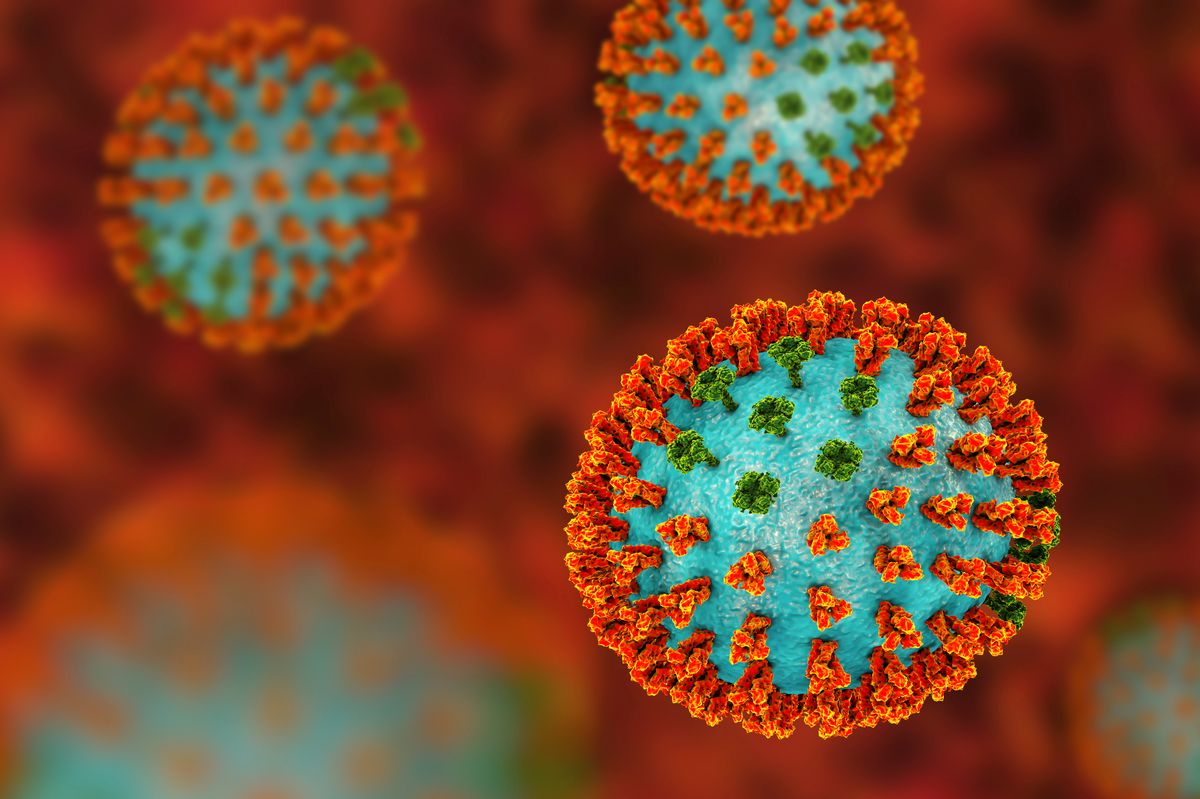 Flu has mutated and struck early this year(Image: Getty Images/Science Photo Library RF)
Britain is being hit by what is expected to be a record flu season as infections surge in children.
Doctors have warned H3N2 ‘can kill’ because it has mutated to be particularly aggressive and there are fears infection could move up through the age groups as people start mixing with family and friends indoors in the next few weeks. Vaccines still offer significant protection – and often prevent serious illness – but the virus is spreading much more than previous years.
The Royal College of Paediatrics and Child Health (RCPCH) has warned the new strain can kill otherwise healthy children in very rare cases, through complications such as sepsis.
Today the Mirror hears from seven top experts in infectious diseases who explain what is different about H3N2 and what we can do to protect ourselves.
READ MORE: NHS nurse who delivered world’s first Covid-19 vaccine warns ‘we’re getting complacent’READ MORE: Chris Whitty outlines how to avoid illness this Christmas in ‘crucial fortnight’ Professor Hutchinson says this year’s flu strain is able to infect more peopleEd Hutchinson – Professor of Molecular and Cellular Virology at the University of Glasgow’s Centre for Virus Research
“In temperate climates influenza is mainly a winter illness, caused by three types of influenza virus – H3N2, H1N1 and influenza B virus. They all continually acquire mutations which mean that our immunity against them goes out of date.
“At the end of this year’s flu season in the southern hemisphere (i.e. our summer) the H3N2 strain of the virus suddenly acquired seven new mutations. This is a lot more than normal, and it meant that when the flu season took off in the northern hemisphere we had less protection than normal against the H3N2 component of seasonal flu.
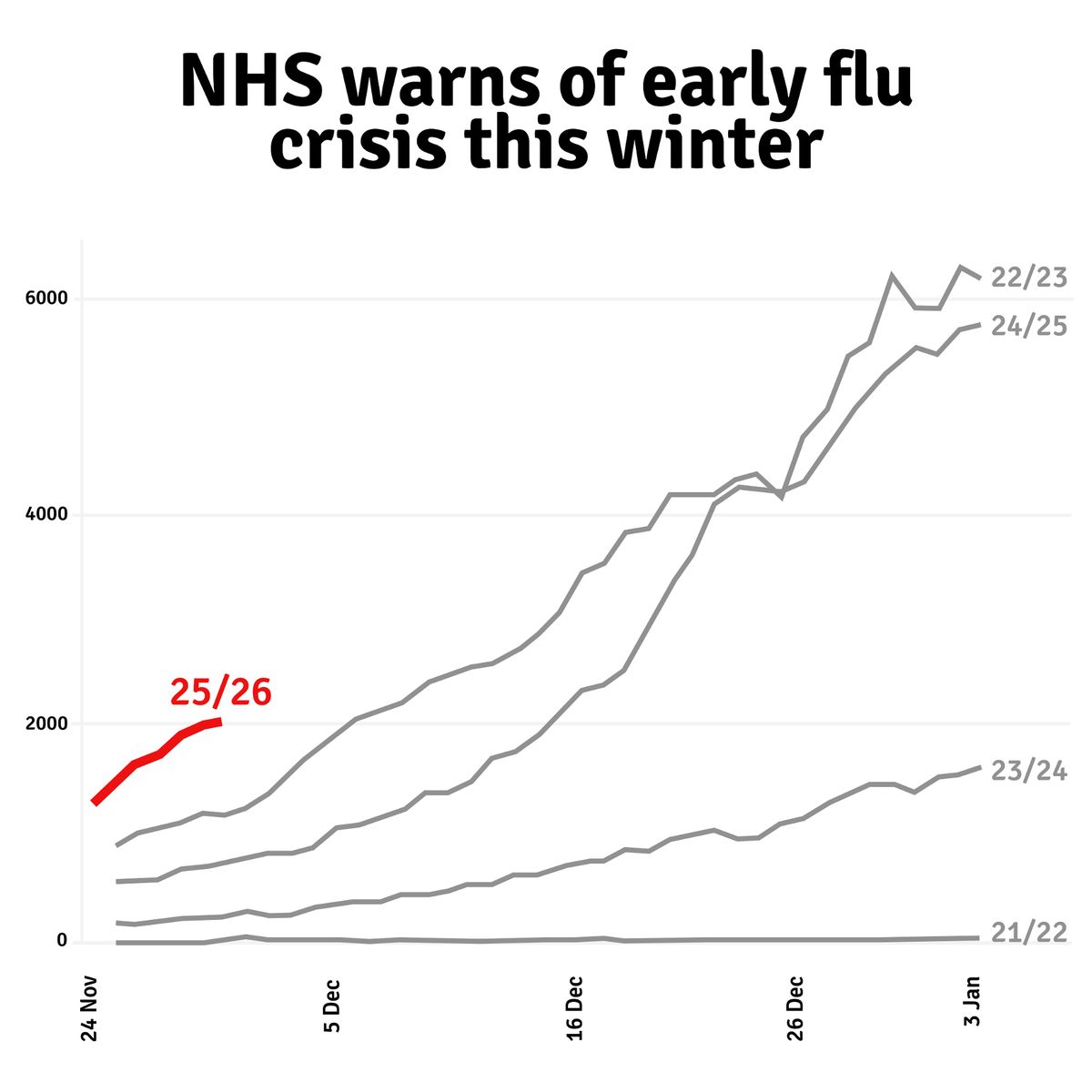 Flu started spreading early this year(Image: NHS)
“Because of this, the flu season in the UK started off more quickly than usual, and cases reached high levels sooner. They are continuing to rise, and it is not yet clear how long this will continue for.
“In general H3N2 influenza viruses can cause a bit more disease in the elderly than the other two seasonal influenza viruses, but so far there isn’t any evidence that this season’s H3N2 is more dangerous than it normally would be if you get it.
“It’s just that there are more cases than normal for this time of year, and the small proportion of people who become very unwell with influenza adds up when there are a lot of cases. Most cases of influenza are something you can recover from at home but they are not pleasant, so it’s to everyone’s benefit to try and avoid catching the disease.”
 Dr Peto says we need to learn from how we tackled Covid-19 to improve the treatment of flu
Dr Leon Peto – Consultant in Infectious Diseases and Microbiology at Oxford Population Health
“Today’s figures indicate this may be the worst flu season in the UK for over a decade, and finding better ways to treat people hospitalised with flu could save many lives as well as reducing health service pressures.
“One of the major successes in the UK’s response to Covid-19 was the speed with which research led to improvements in treatment. During the pandemic, tens of thousands of patients took part in trials of Covid-19 treatment, but we do not have similar evidence to guide treatment of flu.
“We need to make sure that research is built into the NHS response to flu epidemics, and this is the aim of the RECOVERY and REMAP-CAP clinical trials, which are evaluating flu treatments at NHS hospitals across the UK this winter.”
 Professor Lewis said there is a hope that this flu season could start to die down earlier than previous years
Prof Nicola Lewis – Director of the World Influenza Centre at the Francis Crick Institute
“The current influenza season in the UK started earlier than normal and whilst this is unusual, it is not necessarily worse. It’s impossible to predict whether it will be a longer season or if it will finish earlier than usual, so protection is still important and there is still time to get this year’s flu jab.
“Influenza viruses continually change genetically which is why we need to have a flu jab every year to ensure we are protected from the most up to date version of the virus that is circulating each winter.
“The subclade K viruses currently circulating are antigenically a bit different from previous strains, so if you’ve not had this year’s flu jab, you will be more likely to get flu and if you do, you can be more severely ill.”
 Professor Hussein says ‘no one should delay seeking care because they feel like a burden’
Shereen Hussein – Professor of Health and Social Care Policy at the London School of Hygiene & Tropical Medicine
“With flu circulating at unusually high levels, families can take simple but impactful steps: checking in more frequently with older relatives or neighbours, helping them arrange vaccination, and taking precautions such as staying away when unwell or wearing a mask during visits. These actions protect both individuals and the already stretched care workforce.
“This Christmas, safe connection should be the priority. Short but frequent visits, good ventilation, wearing a mask if you have mild symptoms or have been recently unwell, and using phone or video calls if an in-person visit is not safe.
“We can protect people from infection and from loneliness. Both are essential to health and dignity.
“Avoiding hospital where you can may help the stretched workforce, but it is absolutely crucial that no one should delay seeking care because they feel like a burden. If someone has severe breathlessness, chest pain, sudden confusion or is getting markedly worse, that requires urgent assessment.
“Vaccination for flu remains the most effective protection for high-risk groups. Alongside this, the familiar measures still matter. Staying home when unwell, hand and respiratory hygiene, improving ventilation in indoor spaces and wearing a mask in crowded places or when visiting someone vulnerable.”
 Dr Tobert says ‘vaccination is still providing a good level of protection’
Dr Vanessa Tobert – Infectious Diseases Registrar and Clinical Research Fellow at the University of Oxford
“The latest influenza statistics indicate that this flu season is very serious, with hospital admissions this week nearly double the rate last week and still rising.
“Fortunately, although the dominant circulating strain is antigenically diverse to that of the vaccine, the latest data show that vaccination is still providing a good level of protection, preventing hospital attendance at the same rate we would expect in any other year.
“Flu remains a serious illness that causes hospitalisation and death each year. Although this disease has been around for a very long time, we still don’t have good evidence to guide treatment.”
 Dr Broadbent says this year’s flu surge may be down to ‘waning immunity in the community’
Dr Lindsay Broadbent – Lecturer in Virology at the University of Surrey
“Our influenza season is being dominated by H3N2, which is further categorised into ‘clades’ and ‘subclades’ based on the genetic sequence of the virus. The H3N2 virus we are seeing mostly belong to subclade K.
“This information is important, because mutations in certain viral genes may give us information on how likely antiviral treatments are to work or if the vaccine efficacy may be impacted.
“The scale and severity of any influenza season result from several driving factors including how the virus has mutated or ‘drifted’ over time, vaccine efficacy and vaccine uptake, and the timing of the beginning of the flu season.
“It has been a few years since H3N2 was the dominant circulating strain in the UK, the last time was the 2021-2022 flu season. It is possible this has led to waning immunity in the community.
“We have also seen a very early start to the flu season, meaning a lot of people eligible for the vaccine, and most vulnerable to severe disease, may not yet have been vaccinated.”
 Professor Whittaker says ‘now is the time’ to get vaccinated in time for Christmas
Elizabeth Whittaker – Professor of Practice, Paediatric Infectious Diseases and Immunology at Imperial College London
“The flu statistics match what we are seeing in the emergency department and wards in our hospitals, it is very busy. This follows what was seen in Australia in their winter, and importantly, they saw lots of cases in children.
“The vaccine is a good match this year for protection, so now is the time for pregnant women and those children who missed their dose in school to get one to protect themselves for Christmas.
“The flu vaccine is free and recommended for all children aged between 2 to 17. As always, if a fever in a child doesn’t settle after 5 days, or settles and starts again, the advice is to contact NHS 111 or seek advice from a GP.”