Something that disappeared with Brexit – yet never quite became “news” – was the privileged access once enjoyed to the great universities that, until then, were located within the European Union. Cambridge, Oxford, LSE, UCL – some of the finest universities in Europe – now sit “outside the walls.” In their place, the EU has had to highlight its “own” academic institutions: those created over the long post-war history of European integration, expressly designed to serve the European project itself. Two of the most prominent are the College of Europe in Bruges and the European University Institute in Florence. Both, through their recent difficulties, reveal the EU’s internal challenges as well as the costs of relying on a “single, universal, top-down” funding model.
Although the two institutions differ significantly, they also complement each other. The College of Europe offers one-year master’s programs in European studies – primarily political science and law. The EUI, by contrast, offers exclusively doctoral programs in fields considered foundational to the European project: political science, sociology, law, history, and economics. Their funding is directly linked to the European Commission and the member-states; and despite their excellent international reputations, their fortunes remain closely bound to the fate and internal dynamics of the EU itself.
If Europe truly aims to claim a leading role on the international stage, it must support its universities as universities – not as adjuncts of its political bureaucracy.
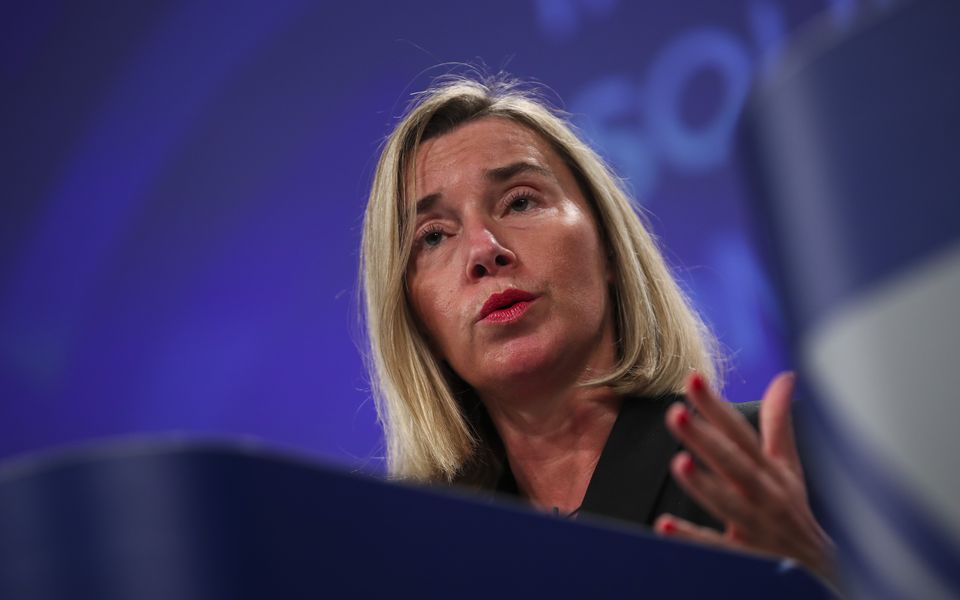
This is where the problems begin. Recent revelations involving a senior EU political figure, Federica Mogherini – accused of abusing her position and leveraging her dual role as both the EU’s top diplomat and rector of the College of Europe to secure the Diplomatic Academy, a nine-month training program for junior diplomats, awarded by the European External Action Service – have dealt a blow to the union’s credibility. The timing is particularly delicate, as Europe struggles to assert itself on the geopolitical stage – especially regarding Ukraine – and often finds itself navigating a precarious balance between US President Donald Trump and Russian President Vladimir Putin.
This case, however, recalls an earlier incident at the EUI. Around 15 years ago, guided by the same logic that a president “from within the system” would enjoy better access to decision-making centers, the institute selected – over a distinguished Greek historian – a non-academic candidate from the European institutions: Josep Borrell. Serious problems soon followed. Borrell was forced to resign after it emerged that he had failed to declare his parallel, highly paid membership on the board of the Spanish energy company Abengoa – a clear conflict of interest, especially given that he was the head of an institute engaged in energy and climate policy. That episode damaged the institute’s credibility then, just as the Mogherini affair threatens the reputation of the College of Europe today.
This leads to a broader, essential question. European universities do not operate within a traditional national funding framework: They are supported by multinational bodies that ultimately depend on national budgets. This naturally prompts the question: Why should member-states finance a university in which their own taxpayers participate only partially and inconsistently? Here lies the need for a more coherent narrative – a narrative that articulates clearly the role and value of these institutions within Europe’s institutional architecture.
For these institutions are not simply “alternative” universities. They are designed to reduce regional disparities and to spread excellence across the European periphery – not to behave like think tanks or lobby groups scrambling for funds. Their mission is to generate knowledge, strengthen democratic institutions, and create avenues for social mobility – not to depend on political bargaining or personal networks in Brussels.
If Europe truly aims to claim a leading role on the international stage, it must support its universities as universities – not as adjuncts of its political bureaucracy.
Elias Dinas holds the Swiss Chair in Federalism, Democracy, and International Governance at the European University Institute (EUI) in Florence, and is currently on leave from the University of Oxford.