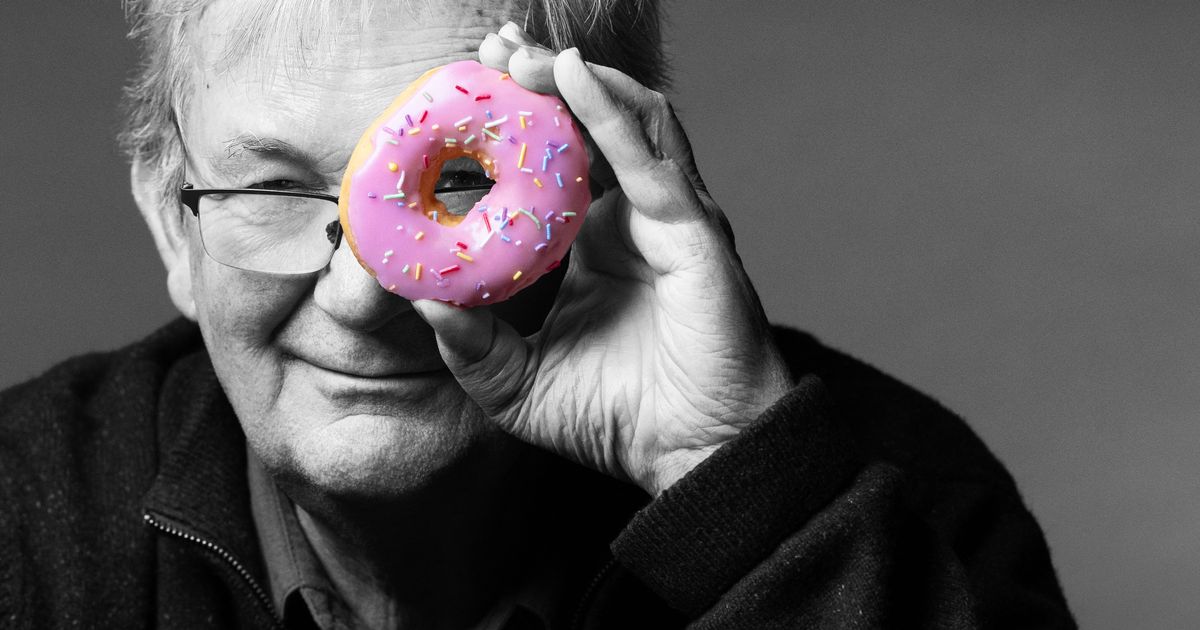
Renowned for his bold colour work and sharply observed portraits of ordinary life, Martin Parr became one of the most influential photographers of the post-war era. Lee Grimsditch reports.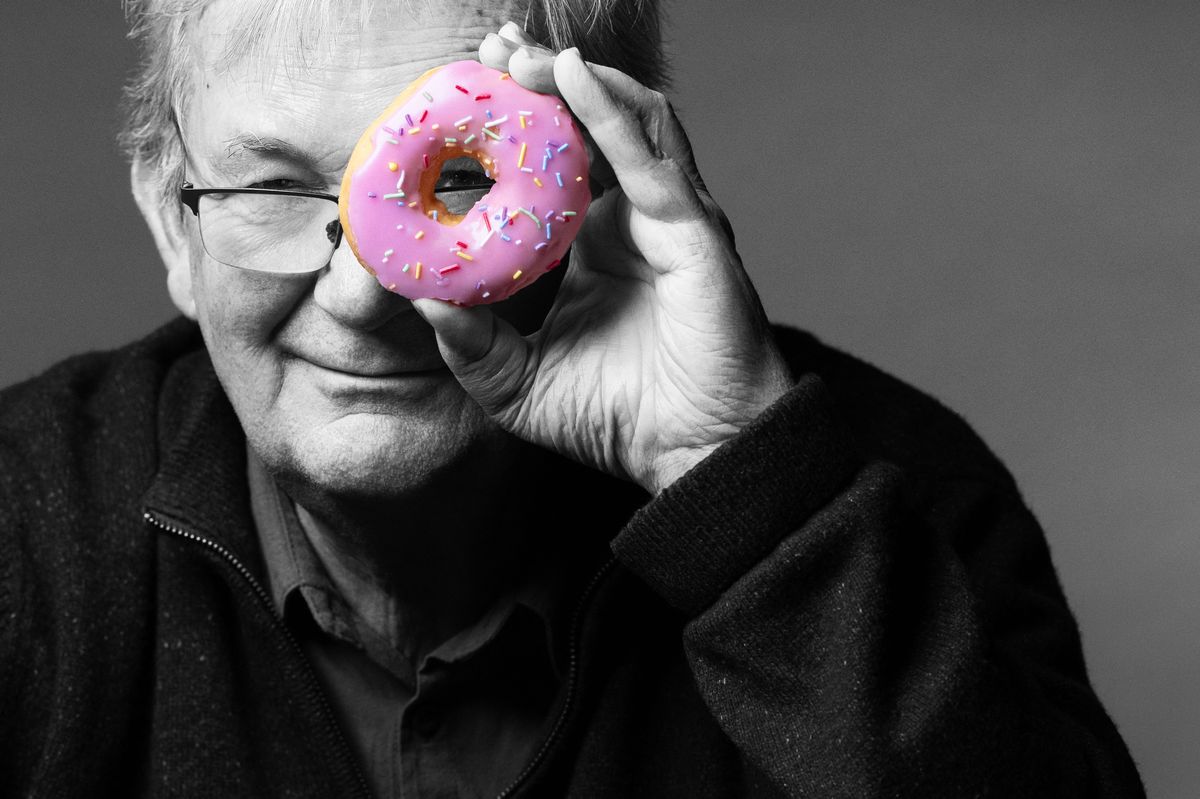 British documentary photographer, Martin Parr (1952 – 2025)
Martin Parr, the photographer who taught Britain to see itself with fresh, unflinching eyes, has died aged 73. With his sly humour, saturated colour and forensic attention to the rituals of everyday life, Parr transformed British documentary photography and became one of its most influential post-war figures.
Born in Epsom, Surrey, in 1952, he developed an interest in photography as a teenager, encouraged by his grandfather, George Parr, who was himself an amateur photographer.
As his career progressed, he became renowned for his innovative imagery, his sideways approach to social documentary, and his influence on photography in the UK and abroad. However, it was while studying photography at Manchester Polytechnic in the early 1970s (now Manchester Metropolitan University) that he began to develop his eye.
Studying at Manchester Poly from 1970 to 1973, his prodigious classmates included Daniel Meadows and renowned music photographer Brian Griffin.
Parr and Meadows would go on to collaborate on projects together, including stints as roving photographers at the holiday camp Butlins in the early 1970s. During this time, Parr was shooting in black and white almost exclusively, not the hyper-colourful images for which he later became renowned.
But while working at the resort as a ‘black and white walkie’, he discovered the colourful postcard photography of John Hinde, with Parr later admitting that the bright saturated colour “had a big impact” on him. Another huge influence on Parr’s photography was the English documentary photographer Tony Ray-Jones.
Parr confesses that it was while studying at Manchester Polytechnic that he began to tire of the technicalities of the craft and was determined to find his own path. He said: “In these days the idea of a college was to learn to be a photographer by becoming an assistant, so they taught us all the basic studio techniques and things like reciprocity failure.
“I quickly got fed up with this input and started working on my own projects. This meant I was having to justify my work and this, I guess, was good practice for fighting for what I believed in.”
In a later interview with Manchester Art Gallery, he spoke much more fondly of his time living and studying in Manchester.
“I remember so well arriving in Manchester in 1970, having travelled from the safety of suburban Surrey. It was exciting and felt very real,” he said.
“Having been a regular visitor to the Bradford area to stay with my grandparents, I had tasted the North and always liked the friendliness and sense of community that was so difficult to find in Surrey.”
‘He was compellingly strange’
The photographer Daniel Meadows spoke to the M.E.N about his and Martin Parr’s experiences as two “naïve” 18-year-old students living away from home for the first time. The two remained good friends ever since.
Daniel, who grew up in Suffolk, said: “We were still kind of boys and we were still sort of finding our way. Martin and I became friends mainly because the course there was intended to turn out commercial photographers really, and we were both interested in documentary.”
At the time, they both lived close to each other in Moss Side, and Daniel had set up a photography portrait studio in the area while they were both still studying at Manchester Polytechnic.
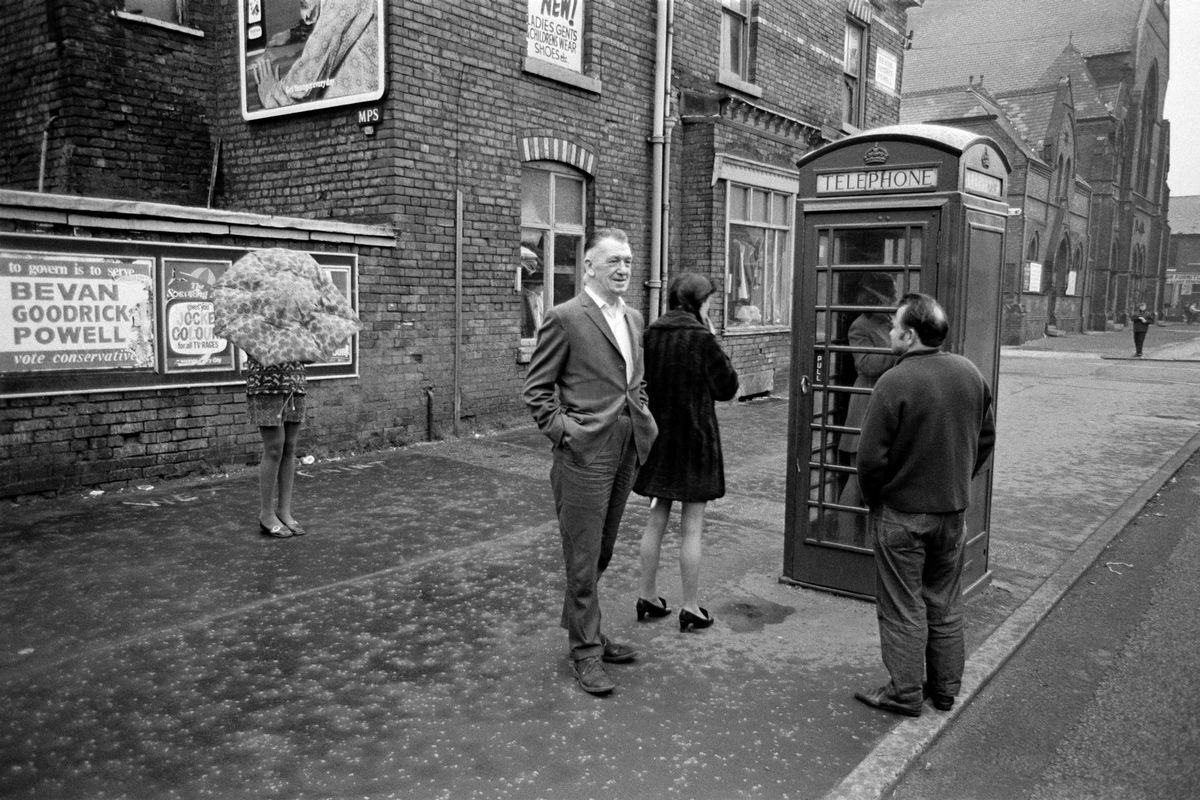 Manchester, Moss Side. This image won Martin Parr his first ever award. 1970(Image: © Martin Parr/MAGNUM PHOTOS)
“Martin and I were both interested in the way people were living in… in this massive city that was being so changed. There was so much demolition of people’s homes going on, and so much rebuilding going on.”
The pair had become friends and decided to team up on a project. “We were looking for a sort of classic Northern, cobbled street, terrace house kind of place that was still being lived in and cherished by the people who were there, ahead of its demolition. And we eventually settled on June Street in Salford,” Daniel said.
Adding: “That set of June Street pictures has been published, republished, exhibited over and over again in many major institutions and festivals and so on, largely because nobody else ever did it!”
Daniel describes Martin as “compellingly strange” with a love of comedy and “always taking the Mick out of everybody”. There was also a certain ability that Martin possessed as a photographer even from a young age, that Daniel says he and his fellow classmates admired.
“He had this extraordinary ability to watch people through the viewfinder,” he said. “And, you know, there might be three or four things going on in the scene, in the picture, and he’d catch all of them at the peak of the action.”
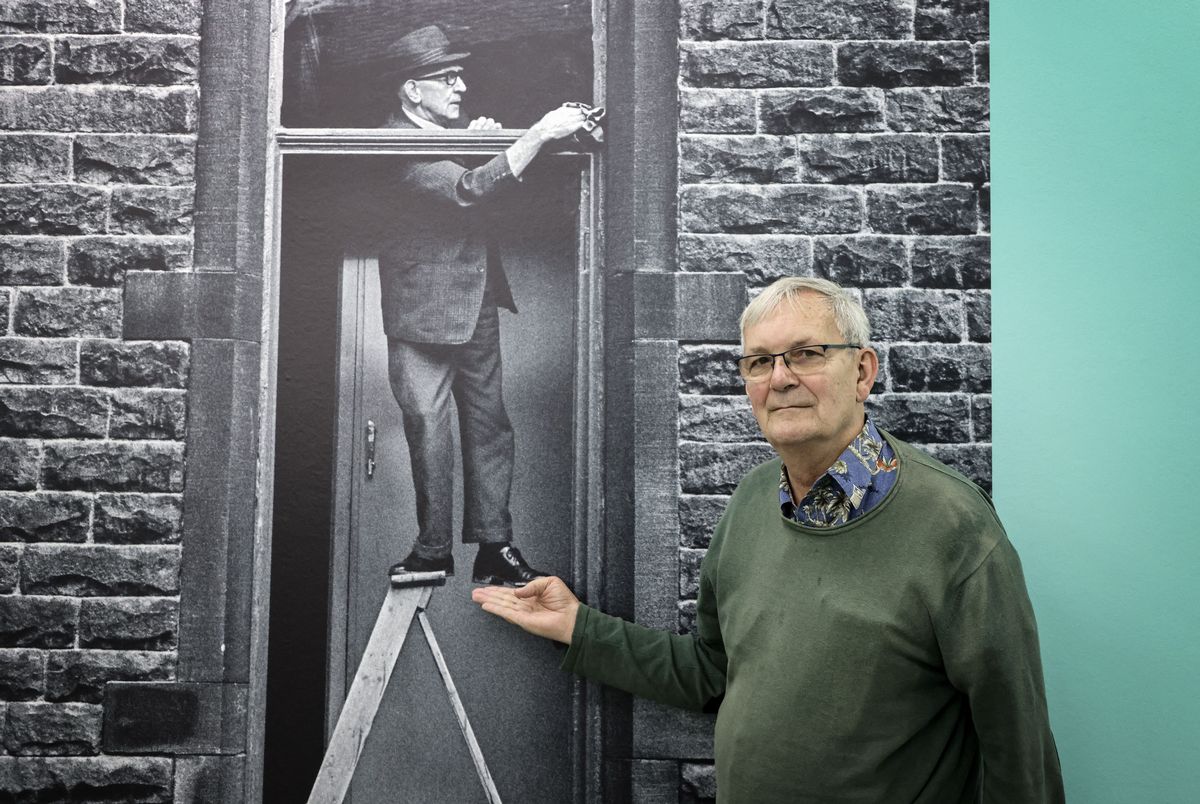 Photographer Martin Parr poses for a photo during the opening of his exhibition “Early Works”
Adding: “So you had this sort of mixture of this personality who was completely insensitive to embarrassment, an extraordinary sense of mischief, enjoyed everything about comedy, loved taking the Mick out of people. And at the same time had this extraordinary obsessive way of taking pictures where he was never content until he could see all of these elements coming together in the frame.”
Photography was also a way for the two young out-of-towners to become more involved in Manchester life and its people.
“Everyone has a mobile phone now, everyone takes pictures all the time,” Daniel said. “But at that time, walking around the streets of Manchester with a camera round your neck, you’d fall into conversation with people and it would be, ‘Oh take my picture mister!’ You know?”
Adding: “There was a generosity of spirit amongst the people that we mixed with. And at the same time we were just hugely curious about them. I bet we must have been like a bit of a freak show to everybody.
“Because… well, you know, we were southern, posh-speaking lads with long hair and people didn’t know whether we were hippie students… what were we?”
The North and its people continued to be a muse and fascination for Parr. He would continue to chronicle the everyday oddities and cultural nuances he discovered there throughout his career.
Parr’s other early photography projects in the region included a black-and-white account of life at Prestwich Mental Hospital in 1972. It was there that he spent three months capturing the daily lives of patients and staff.
In collaboration with his friend Daniel Meadows, he produced two other bodies of work. ‘Butlin’s by the Sea’ in 1971 was based on their days as resident photographers at the resort in Filey, North Yorkshire. While ‘June Street’ in 1972 focused on life on a row of terraced houses in Salford.
In 1975, Parr settled in the West Yorkshire mill town of Hebden Bridge before later moving to Ireland. He would return to the North of England in the 1980s, marking the beginning of an era when Parr’s vivid colour work gained greater national and international recognition.
Settling in New Brighton, Merseyside, he produced a collection of photographs of working-class holidaymakers in the decaying seaside resort in 1986. The work was controversial and criticised by some for being “cruel” and even voyeuristic.
However, it revolutionised British documentary photography and introduced colour to a genre previously dominated by black and white. It would go on to become Parr’s most famous and influential work.
Later, when asked if he thought his work was exploitative, Parr said: “I think that all photography involving people has an element of exploitation, and therefore I am no exception.”
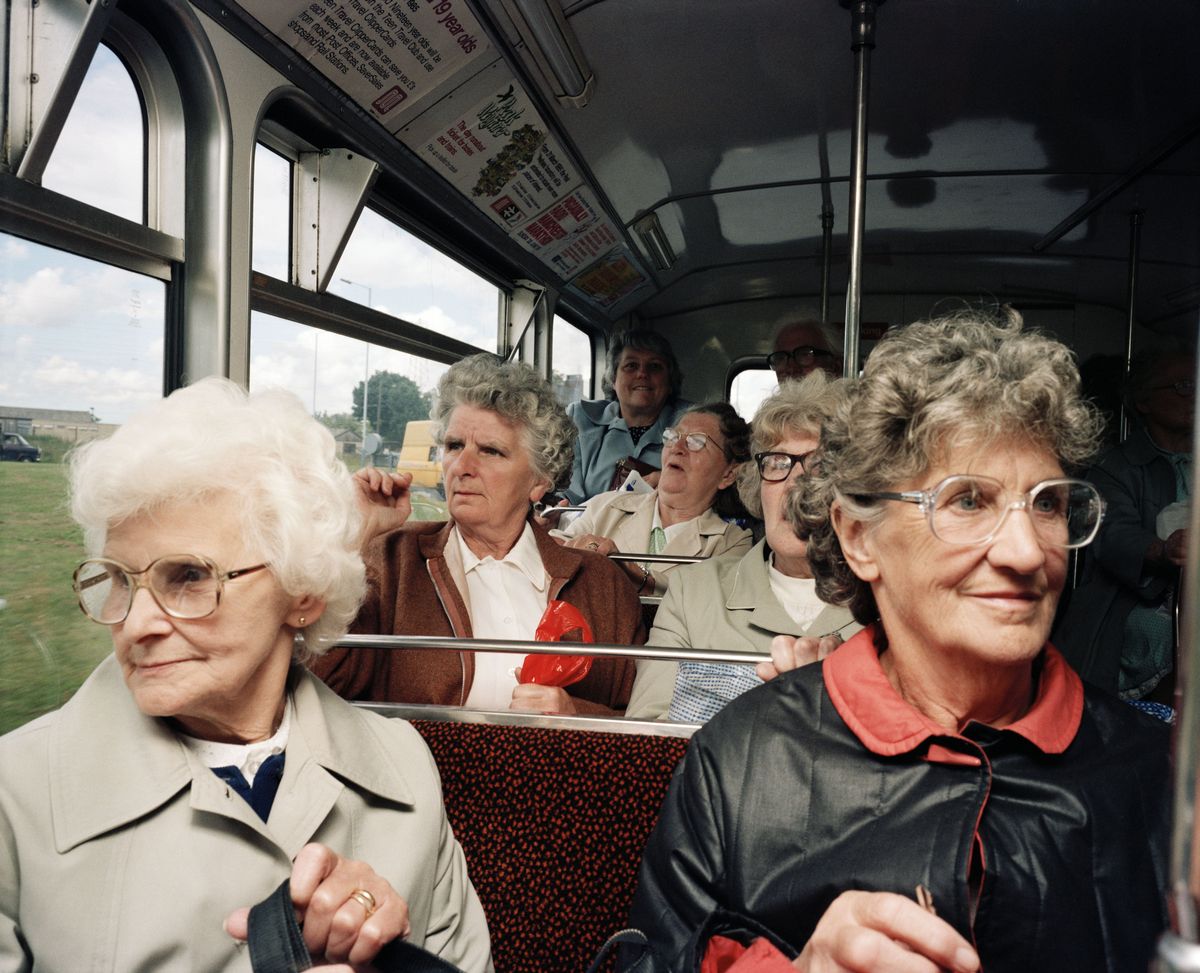 Martin Parr photograph, Salford, 1986(Image: © Martin Parr/MAGNUM PHOTOS)
Despite this, he said it would be a shame if photographers were not allowed to photograph in public places, adding: “I often think of what I photograph as a soap opera where I am waiting for the right cast to fall into place.”
A year earlier, he had also brought his focus back on Greater Manchester, this time with a collection of Point of Sale commissioned by the Documentary Photo Archive. Taking his camera to the shops and supermarkets of Salford, Parr documented the dramatic shift in British shopping habits during the mid-1980s.
Shoppers navigated the aisles of huge new stores (specifically Tesco and Kwik Save) among the frozen ready meals and aggressive in-store signage. There were also everyday scenes of department stores, Tupperware parties, chip shops, hairdressers and laundrettes.
Parr returned to Manchester over the years, hosting exhibitions of his work and lecturing back at his old university.
 Martin Parr’s photography on display at the Centro del Carmen on March 26, 2021 in Valencia, Spain
Throughout his career, he published over 140 books of his own work and edited an additional 30. In 2020, he was recognised in the Queen’s 2021 birthday honours with a CBE for services to photography.
Martin Parr died December 6, 2025, at home in Bristol. He had been diagnosed with cancer in May 2021. He is survived by his wife Susie, his daughter Ellen, his sister Vivien and his grandson George.
‘He changed the way we see ourselves’
Former Manchester Evening News photographer Martin O’Neill, who is known for his significant work in music and local press photography, particularly capturing Manchester’s vibrant scene from the late 1970s, has spoken about Parr’s influence on his photography.
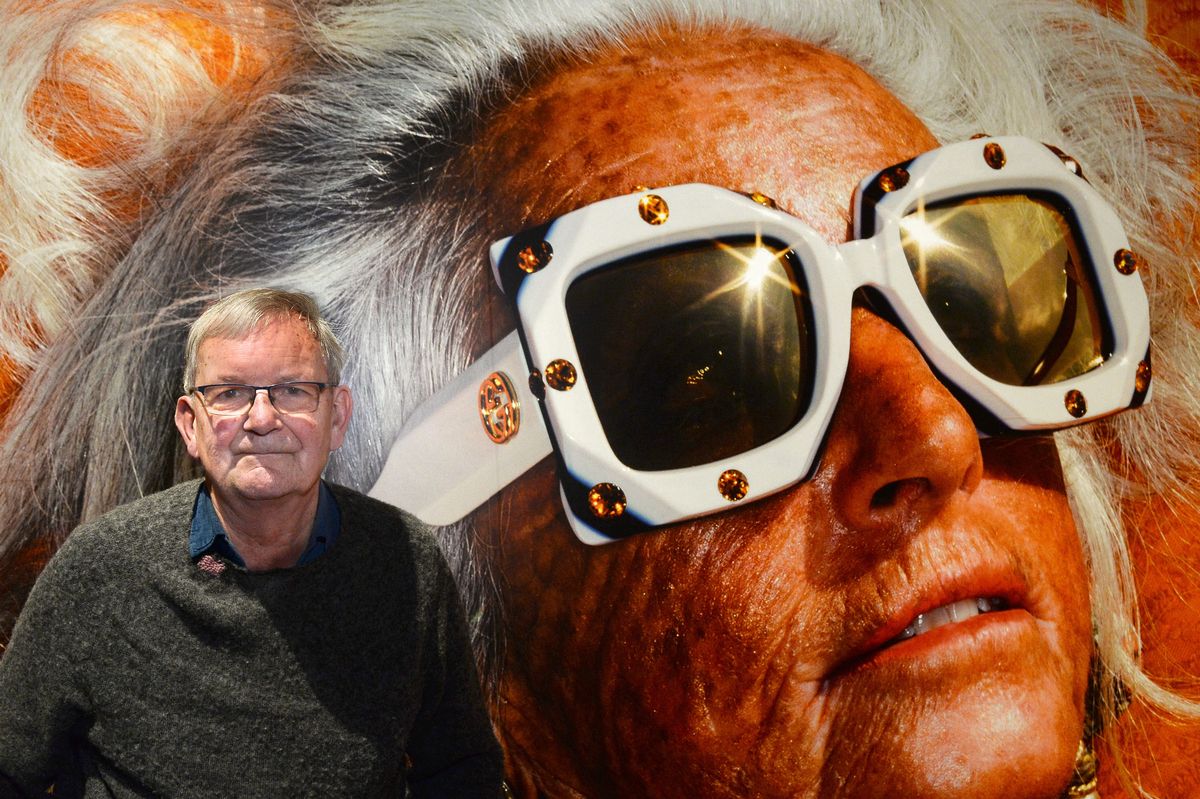 Martin Parr attends his exhibition “Short & Sweet” at Museo Civico Archeologico on December 07, 2024 in Bologna, Italy
He told the M.E.N: “To be honest, my interest in – and subsequent admiration of – Martin [Parr’s] work took a while to form. I didn’t ‘get’ him at first. Close-up shots of doughnuts and light switches, and working-class Scousers at some horrible seaside ‘resort’. What was all that about?
“But then his intelligent insight and cheeky humour began to sink into my thick head, and I started to really enjoy his work. His use of colour was sumptuous, his timing spot on, his mischievous eye always amusing.
“I was subsequently blown away when I discovered his earlier black and white work and started to collect everything of his I could get my hands on.”
He added: “I was lucky enough to meet him after he gave a talk in Manchester a long time ago. He’s certainly inspired and helped so many people with their photography and will be missed terribly across the entire world of photography.”
The last words perhaps on Martin Parr the photographer should go to his peer and childhood friend, Daniel Meadows. Daniel sees Parr as one of the great satirists of our time; an artistic form he says is more keenly celebrated in countries like France rather than present day Britain.
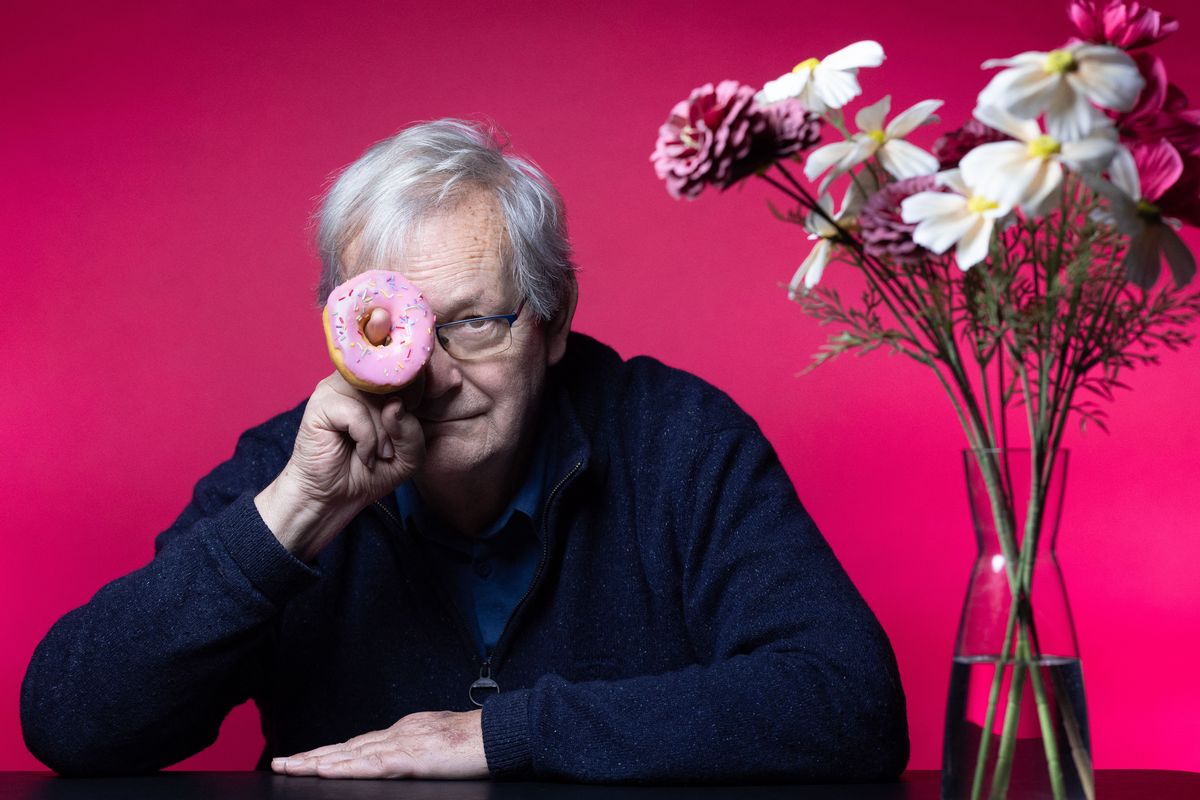 British documentary photographer Martin Parr, described by friend and photographer Daniel Meadows as one of the great satirists
“He was just brilliant at spotting the things that kind of defined you as being coming from this or that community in our class-divided society,” Daniel said. “And he made fun of it. And made very funny pictures.”
Adding: “He was as sharp a satirist as any Hogarth or Cruikshank. And in doing that, he changed the way we see ourselves. There’s absolutely no doubt about it, documentary photography was changed by Martin.
“In the same way that Picasso changed the way people painted. When Picasso started painting Cubist paintings, he was seeing a subject from ten different angles all at the same time and no one had done that before. And it made everybody see differently.
“Martin’s work as a photographer is just the same. Photography was changed, and the way we see ourselves was changed by him.
“He was a genius.”