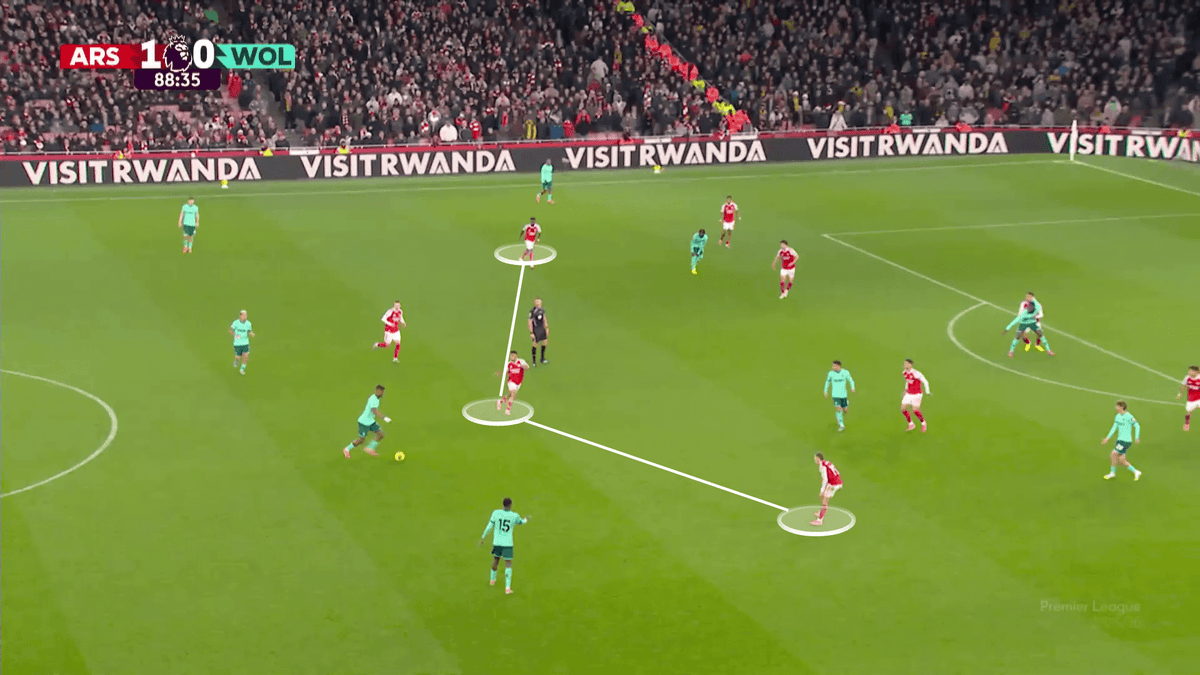
The Wolves equaliser had been coming.
That would have felt like a crazy thing to say when the clock ticked into the 83rd minute at the Emirates Stadium on Saturday night with Arsenal on the attack. Mikel Arteta’s side had enjoyed 84 per cent of possession in the second half and registered eight attempts on goal in that period to Wolves’ zero.
But chaos followed.
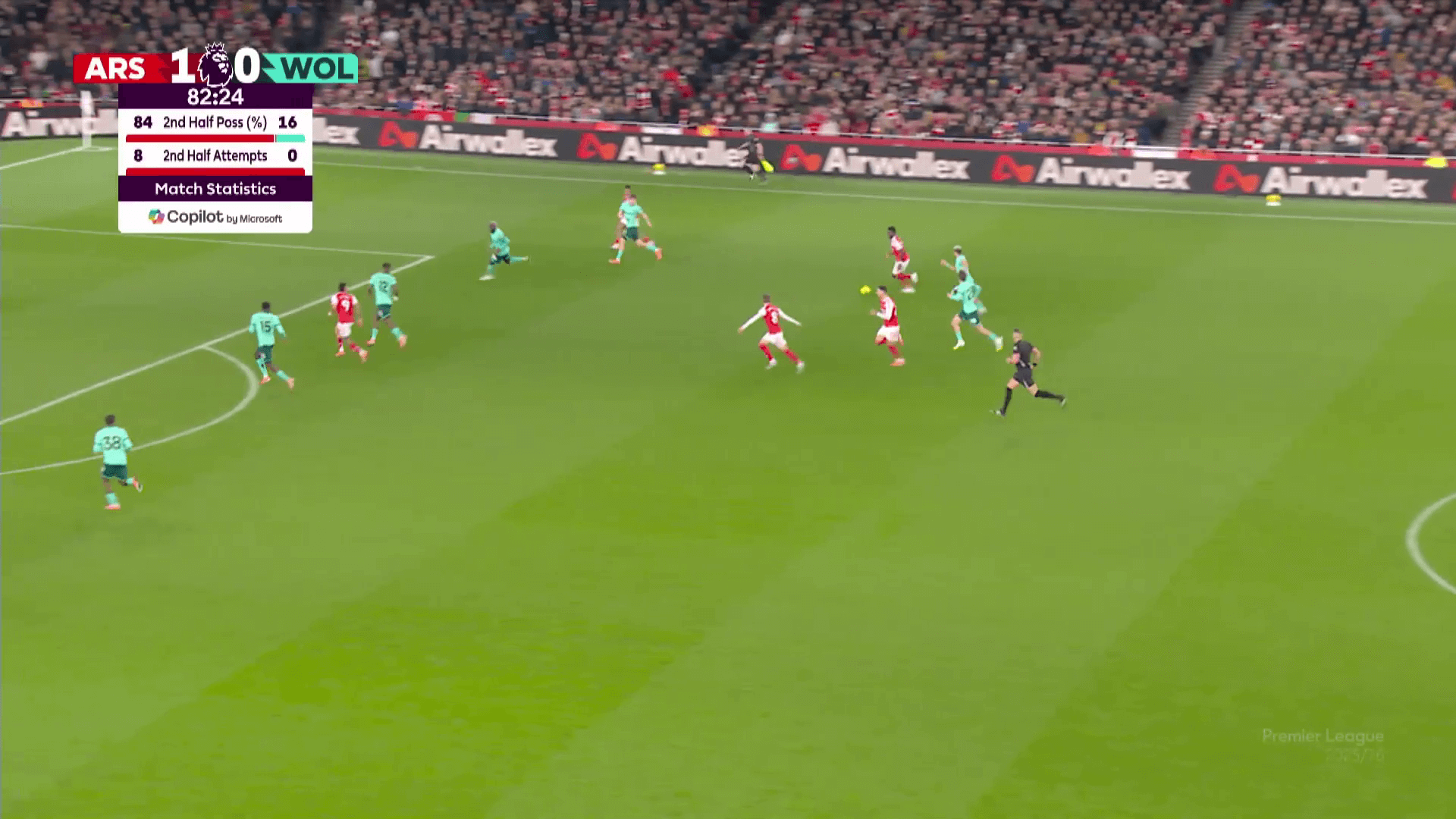
“We had a period of two or three minutes deep, totally passive, with horrible defensive habits, that is nowhere near the level that is required against a team that hasn’t had a single shot.”
Arteta felt his Arsenal players were their own worst enemies during a baffling six or seven minutes (it was certainly longer than two or three) at the end of normal time. Ultimately, they got out of jail, but it was worrying for Arteta, and alarming for the home supporters, to see the way in which Arsenal handed the initiative to Wolves in the closing stages. This followed late goals conceded against Sunderland and Aston Villa that could, in theory, have been playing on the minds of the players.
Between the 83rd and 90th minute, Arsenal’s longest passing sequence was three. Wolves, in contrast, went from barely touching the ball to dominating possession. They made more than 80 passes in that period, taking advantage of Arsenal retreating deeper and deeper.
Initially during that spell, Arsenal pressed aggressively, man-for-man.
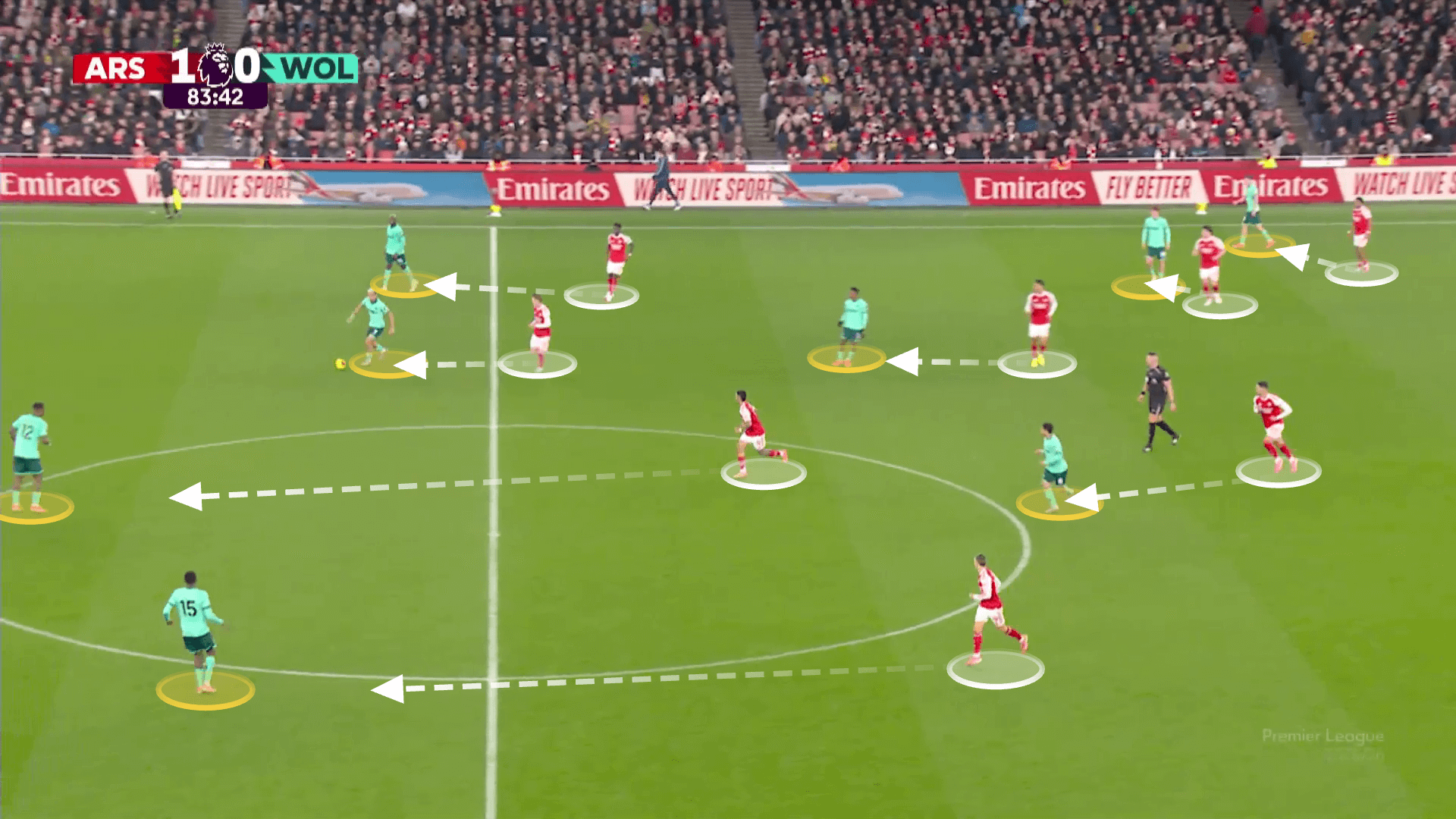
Arsenal’s press was coordinated at that point and led by the substitute Gabriel Jesus, who in the example below, denied the Wolves centre-back Emmanuel Agbadou time on the ball, forcing him into a longer pass that ran through to David Raya.
But that positive, front-foot approach soon disappeared and, on top of that, Arsenal stopped passing.
“We have the ball in the hands of the ‘keeper and we don’t play, we just kick it,” Arteta said.
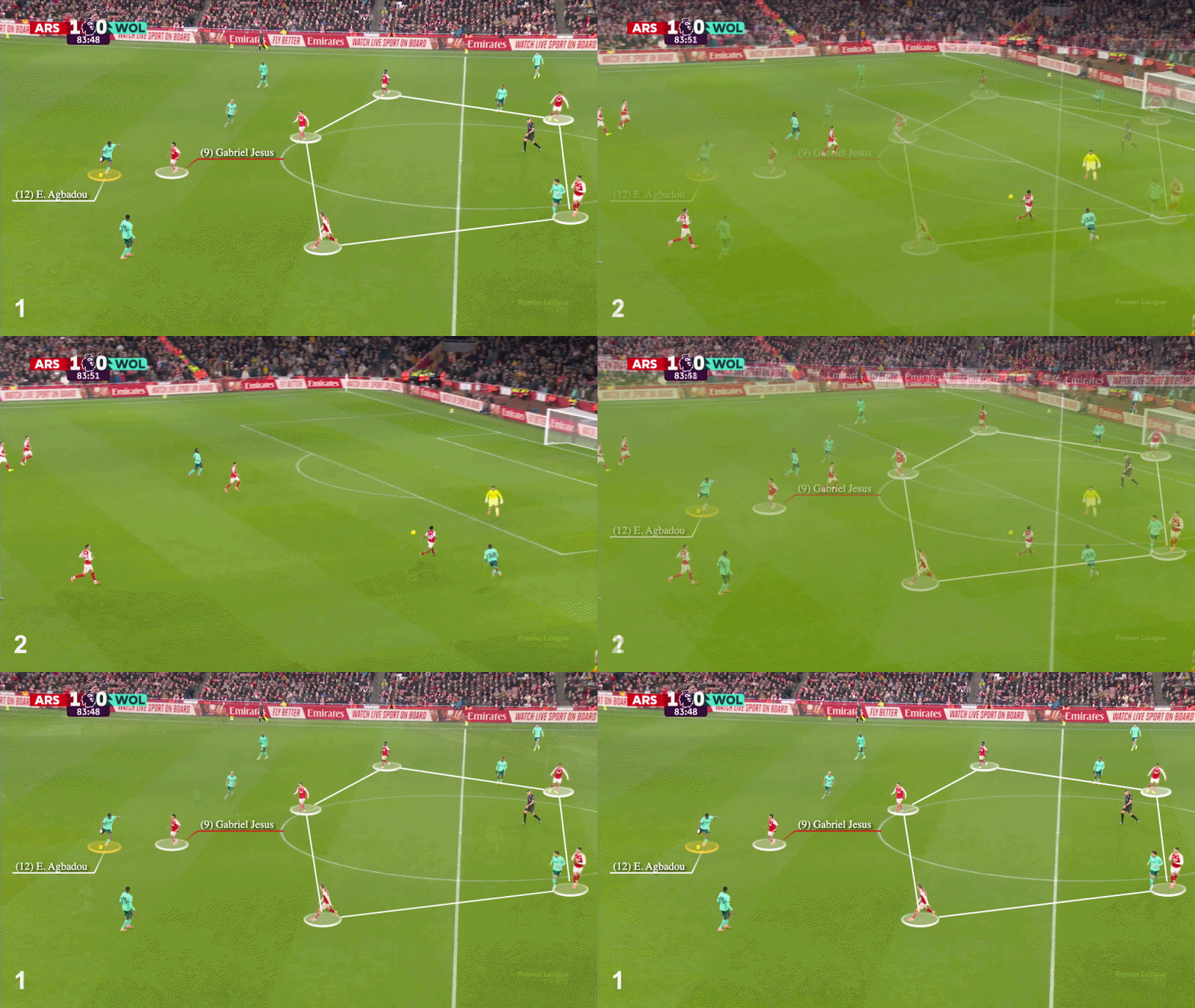
When William Saliba received from Raya after that overhit ball was gathered, there were few options for the Arsenal centre-back against the Wolves press. Saliba ended up guiding a ball into the feet of the retreating Bukayo Saka, whose lay-off to Martin Odegaard was typically good.
Odegaard, however, failed to find Jurrien Timber and Wolves were soon back in possession. Remarkably, that short passing sequence was as good as it got for Arsenal up until the Wolves goal more than five minutes later.

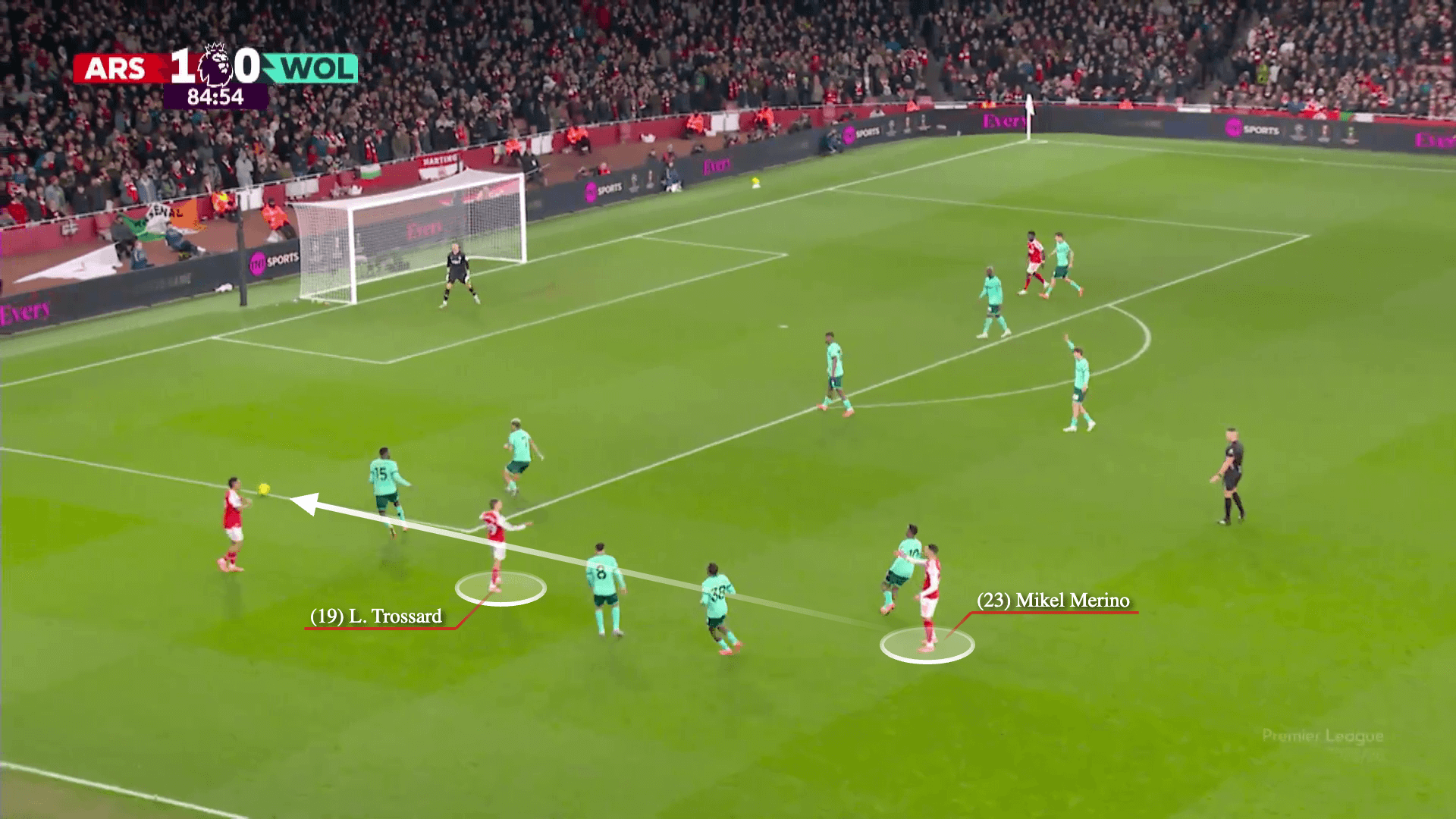
Arsenal were careless. Mikel Merino passed a ball straight out of play (below) following a misunderstanding with Leandro Trossard.
Trossard then sloppily lost possession, prompting Arteta, in the bottom of the picture in clip two below, to throw his arms in the air in dismay at what he was watching.
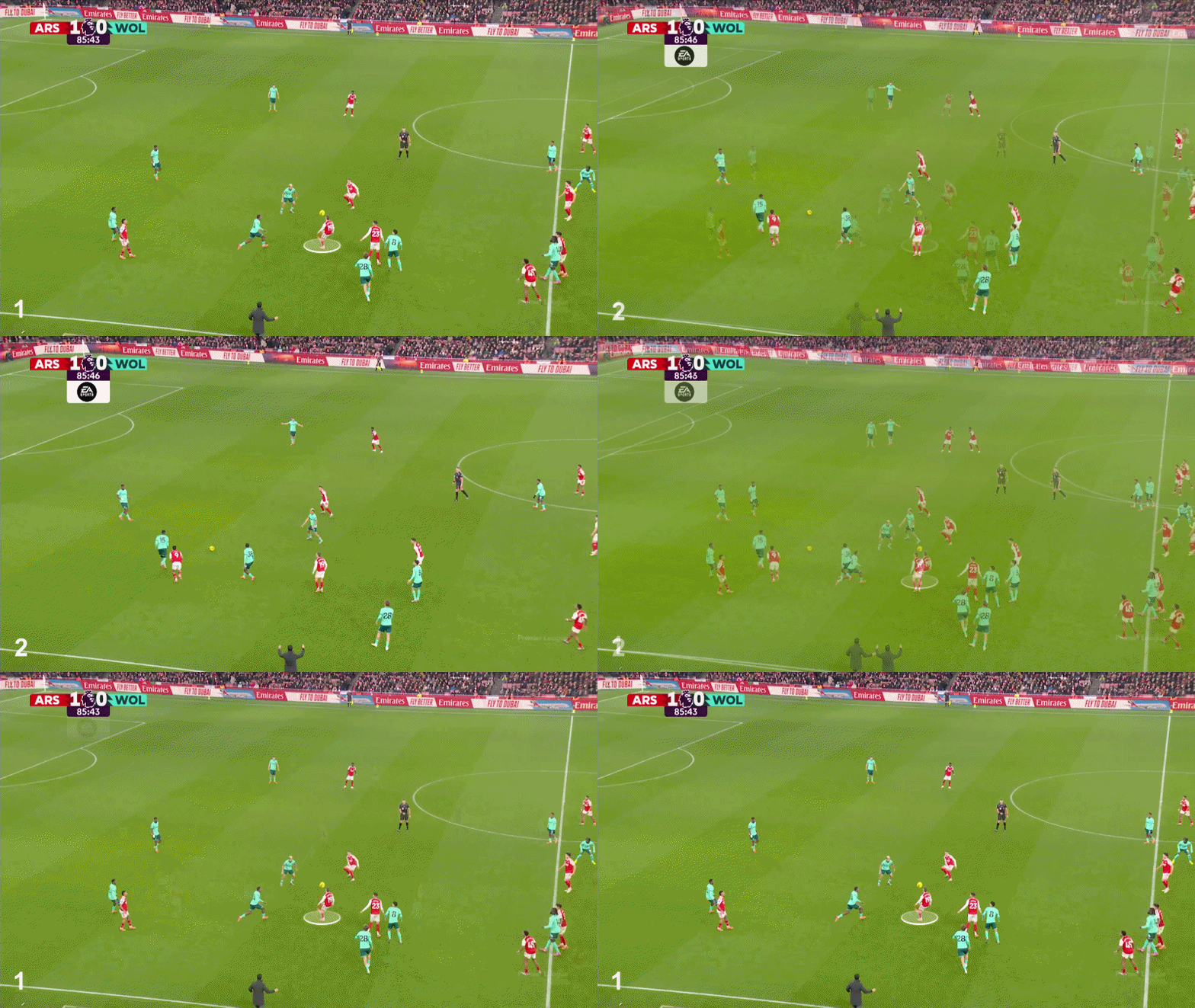
Arsenal looked panicked. Deep in his own half, Odegaard could have released Saka inside, as shown in the first clip below. Instead, Odegaard went back to Saliba, who was trapped against the touchline and had little choice but to, in Arteta’s words, “just kick it”. Yerson Mosquera promptly won his duel with Jesus and that was the cue for Wolves to string another 17 passes together.

By now — and this is something that frustrates fans of any team that is in the ascendancy — Arsenal started to drop deeper. Sometimes that can be down to the opposition exerting pressure, but it was hard to escape the feeling that Arsenal didn’t help themselves against Wolves.
Although every Arsenal player was behind the ball at times, there was rarely any pressure on the opponent in possession.
As Wolves moved the ball around, Arsenal looked more confused. Rice, unhappy with how Arsenal were set up in the passage of play below, held his arms in the air as he looked towards Saka.
Two seconds later, Saka was making a similar gesture.
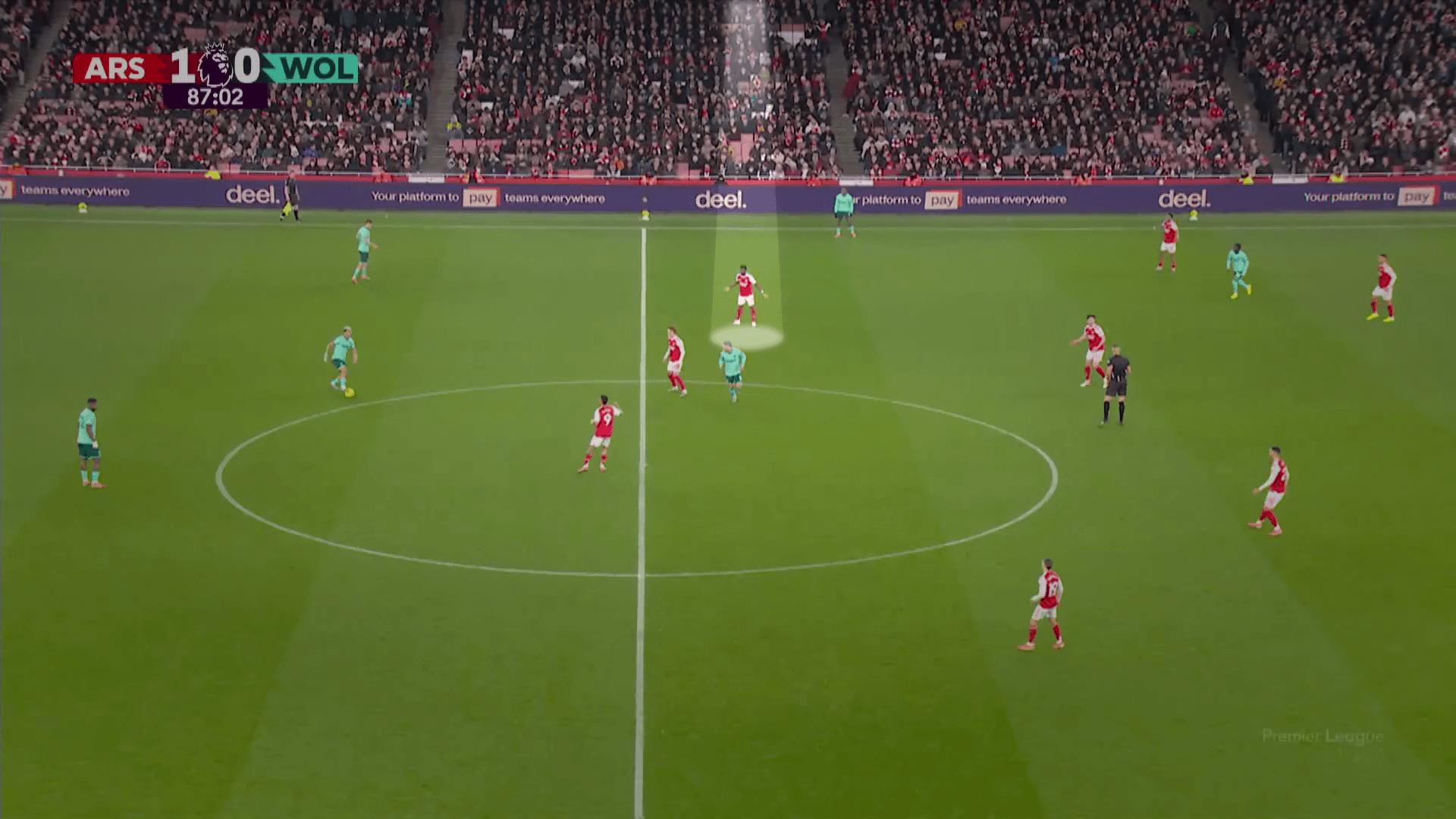
It felt as though Arsenal were so focused on being narrow, occupying zones and blocking longer passing lanes — this applied to the midfield in particular — that they neglected to pick up players, leaving them looking like mannequins in a training drill.
For example, it was far too easy for Wolves to find a way through Arsenal’s mid-block in the clip below, where nobody took responsibility for marking Joao Gomes, despite every Arsenal player being behind the ball, and five of their opponents still in their own half.
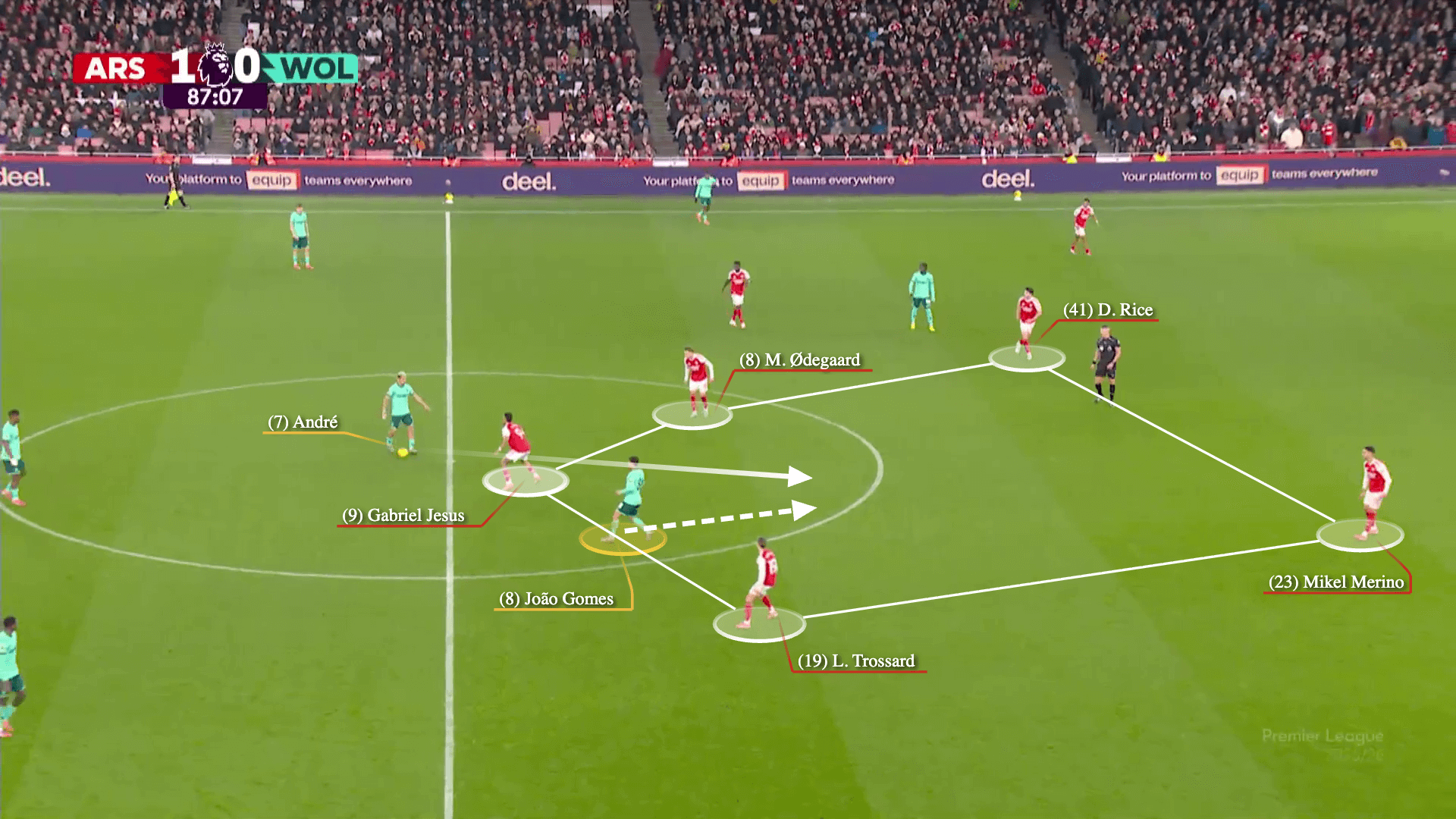
Caught in no man’s land, Merino jumped out to press Gomes but the Wolves midfielder got to the ball first and released Fer Lopez in space. With Arsenal stretched, Jackson Tchatchoua should have done better from a promising position on the right.

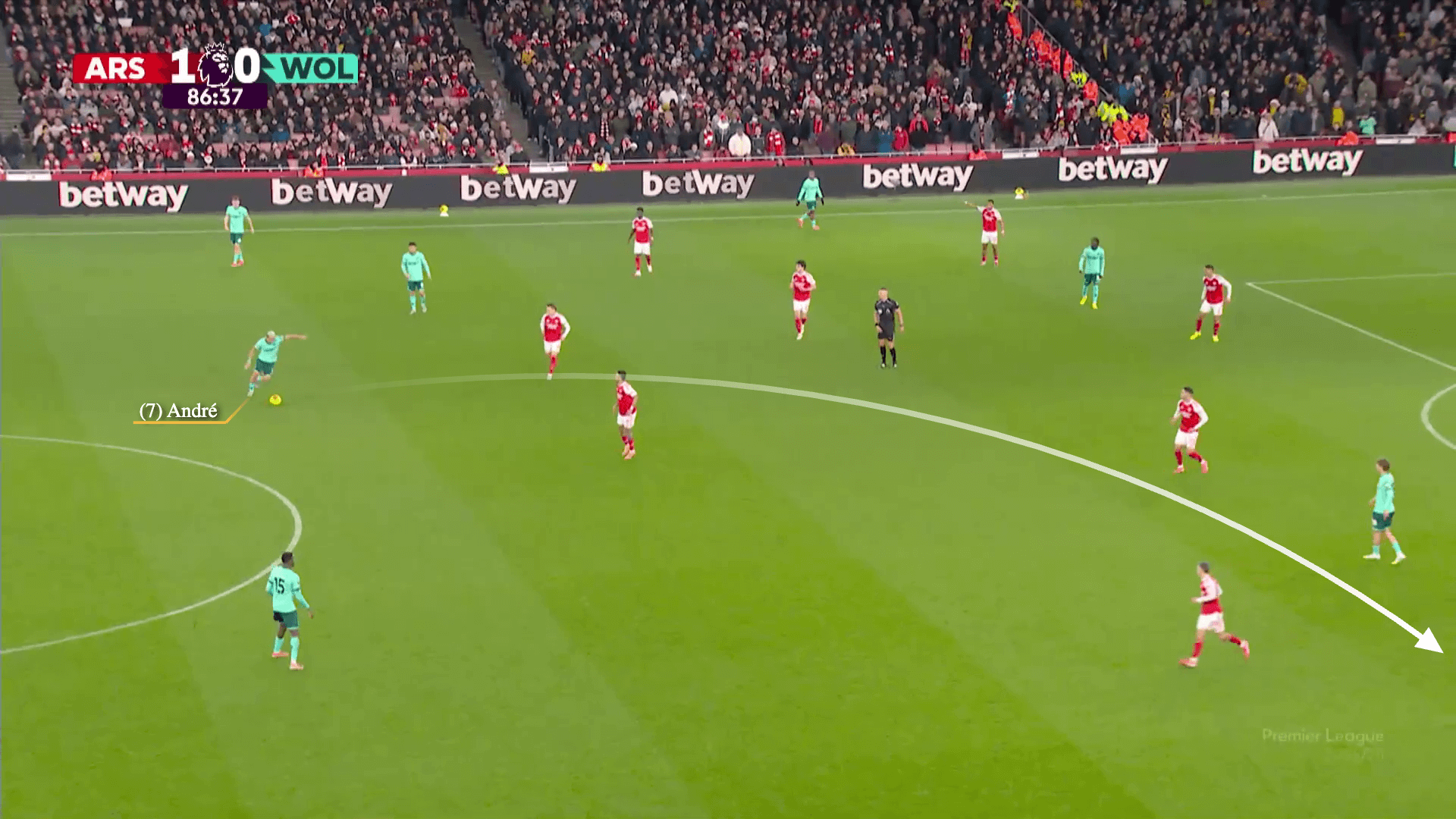
Anxiety was building in the stands and on the pitch. Inexplicably, Arsenal were playing backs-to-the-wall football. After Merino hacked the ball clear, Arteta (pictured below) urged his team to get up the pitch.
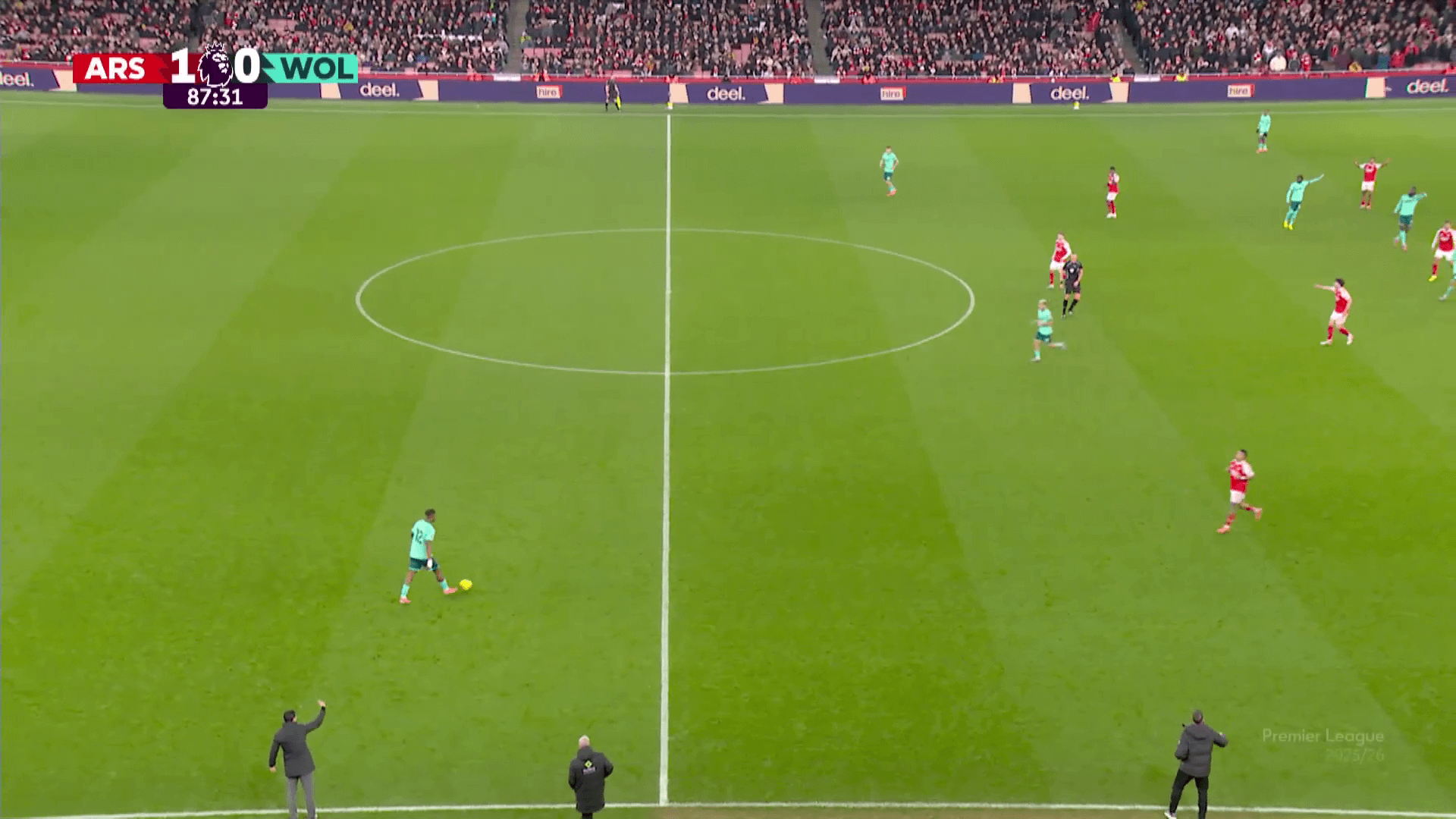
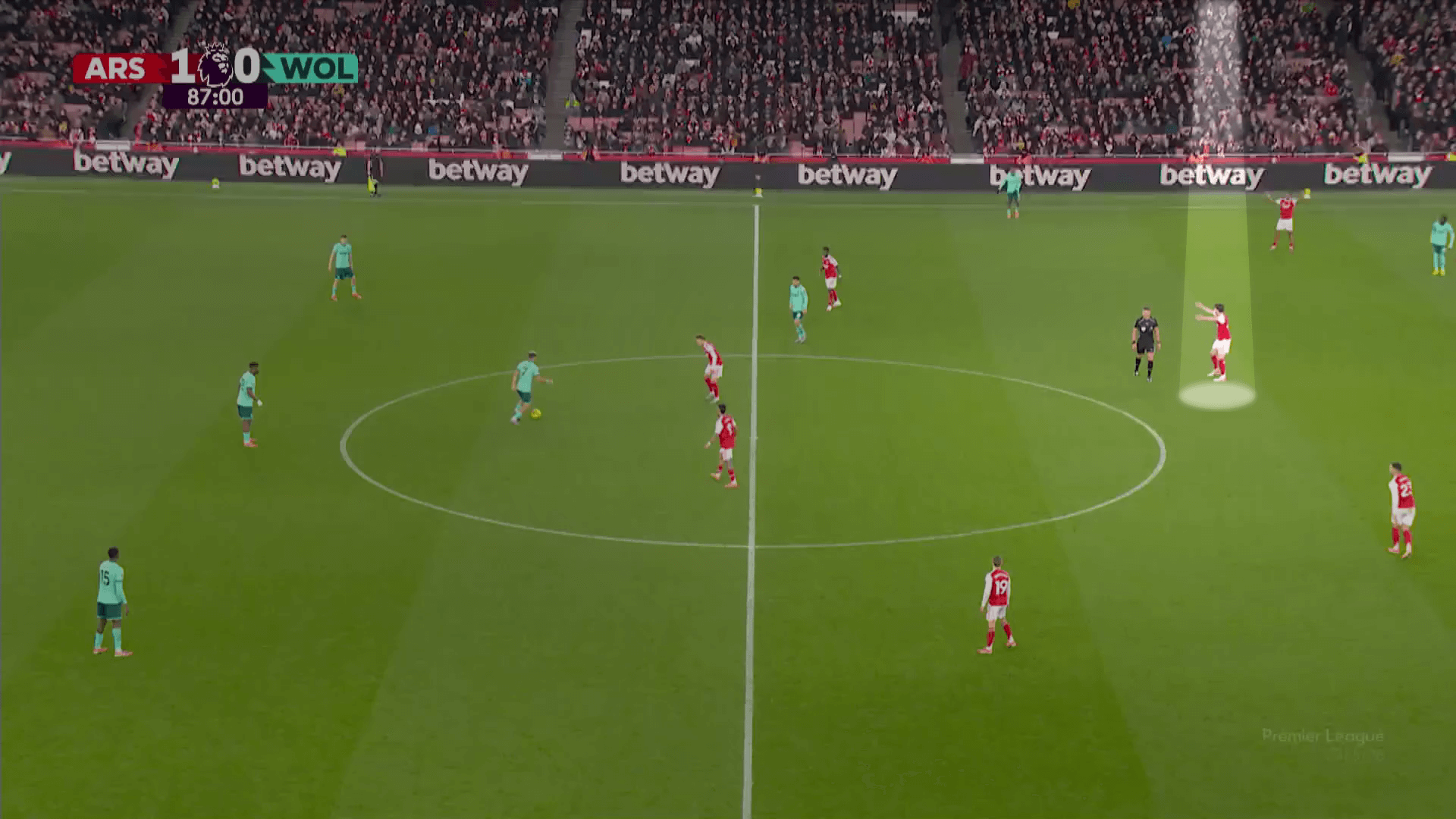
Except nobody seemed quite sure where to run and which player to pick up. Odegaard, Rice and Merino — Arsenal’s three-man midfield after Martin Zubimendi was withdrawn — all have their arms outstretched in frustration in the image below as Andre receives possession again.
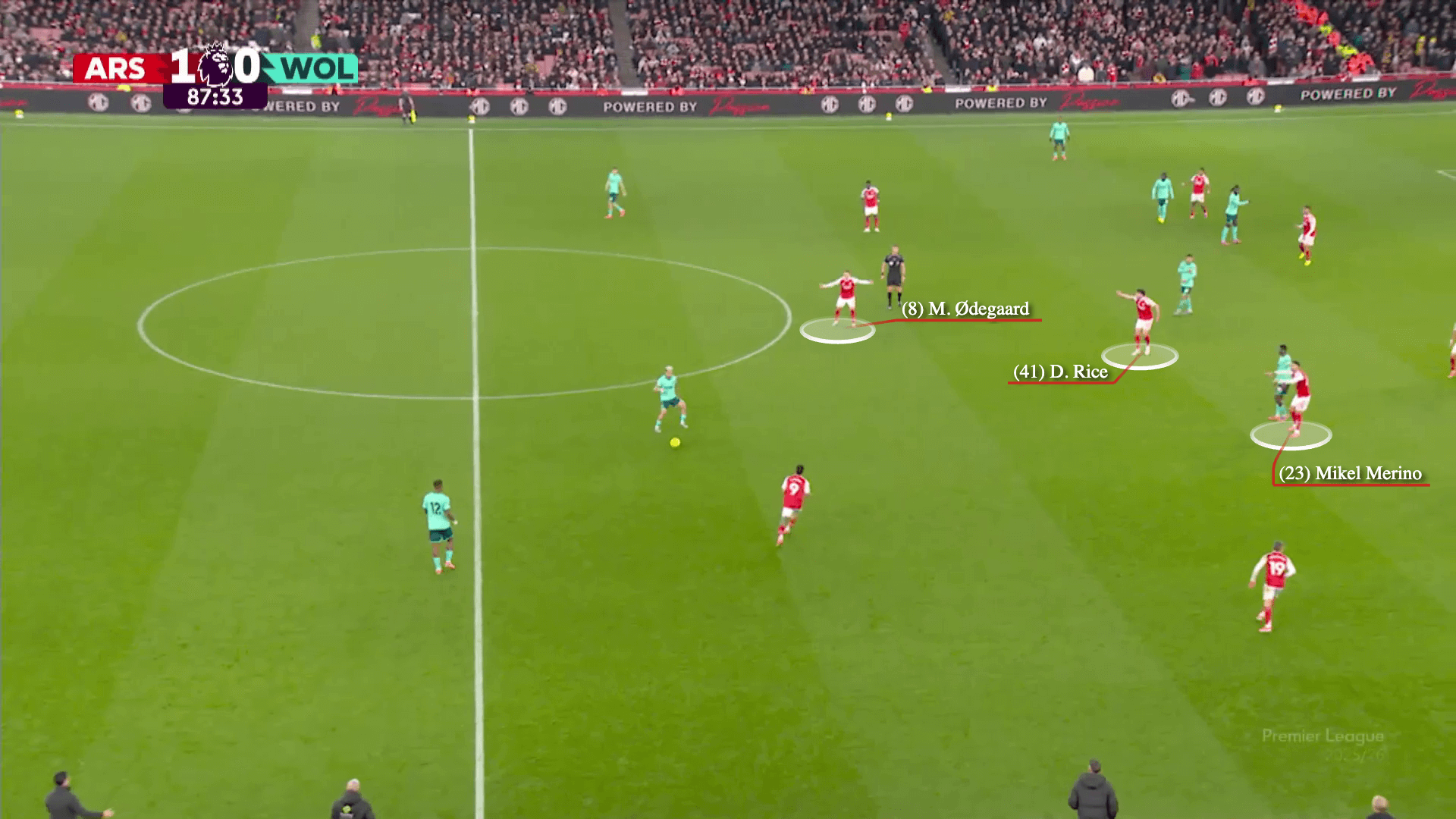
An excellent opportunity followed for Wolves and, once again, Arsenal were passive.
Unlike the earlier clip, Jesus was slow to press and that gave Mosquera time to thread a pass behind the Arsenal striker and into Gomes, who was stationed between Rice and Merino. Gomes then released Lopez — the same combination as a minute before, when Arsenal’s midfield were also marking space — and Tolu Arokodare should have ended up clean through on goal.
“There’s a moment that you cannot press them, that’s fine,” Arteta said. “But the level of activity in the block has to be very different to the one that we had.”
Fortunately for Arsenal, Arokodare’s run and Lopez’s pass were poorly timed, and Myles Lewis-Skelly got back to challenge.

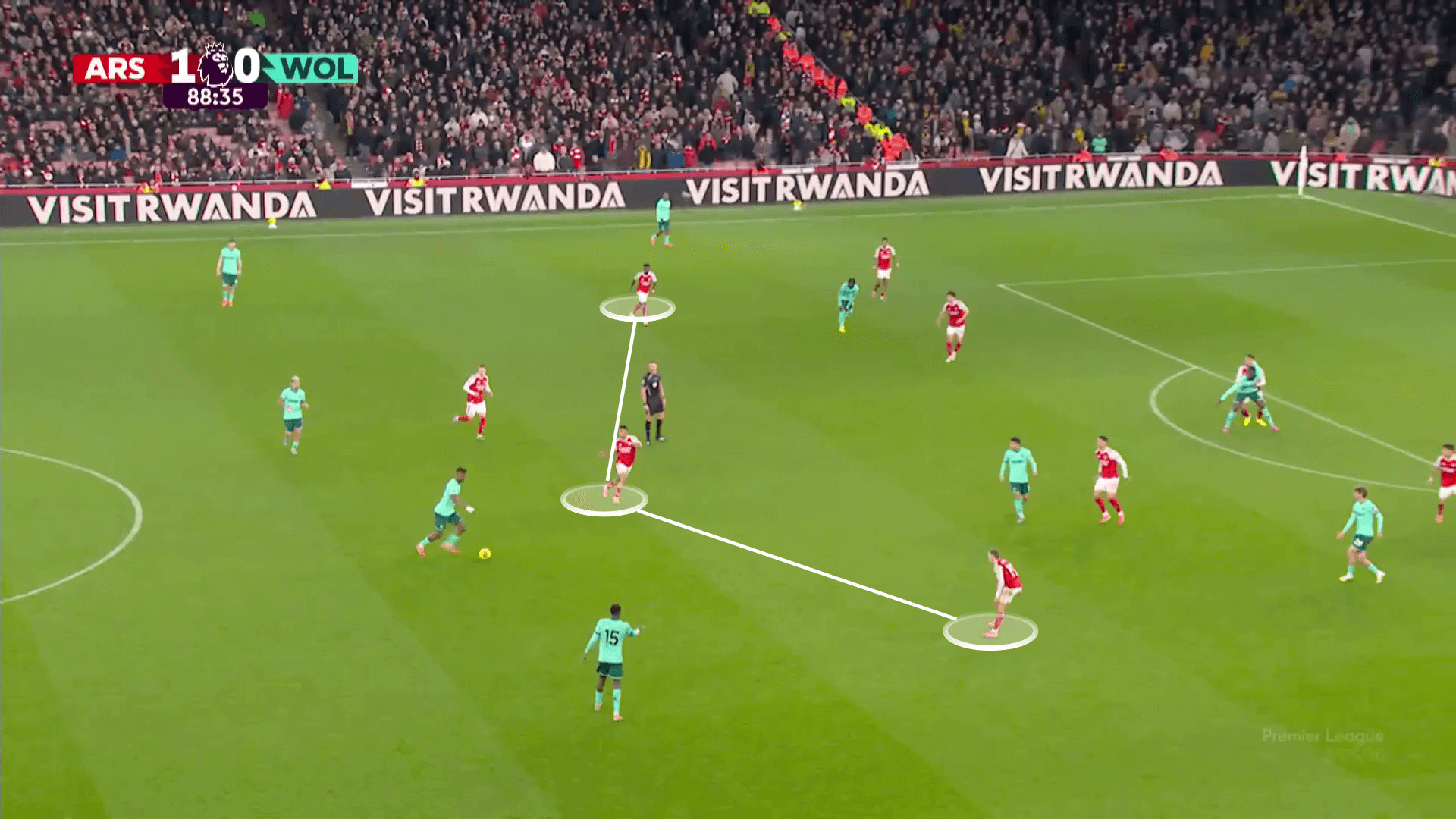
All the alarm bells should have been ringing for Arsenal by now. But nothing changed. Rice’s clearance led to another sustained period of Wolves possession — a 25-pass sequence that saw Arsenal, so desperate to protect the middle of the pitch, slip even deeper. Their front three are barely midway inside their half in the image below.
Another Merino clearance and another Wolves attack followed, only this time it yielded a reward. Six Arsenal players ended up being sucked to the ball, leaving them outnumbered at the back post, where Jhon Arias was unmarked to nod the ball down to Mateus Mane.
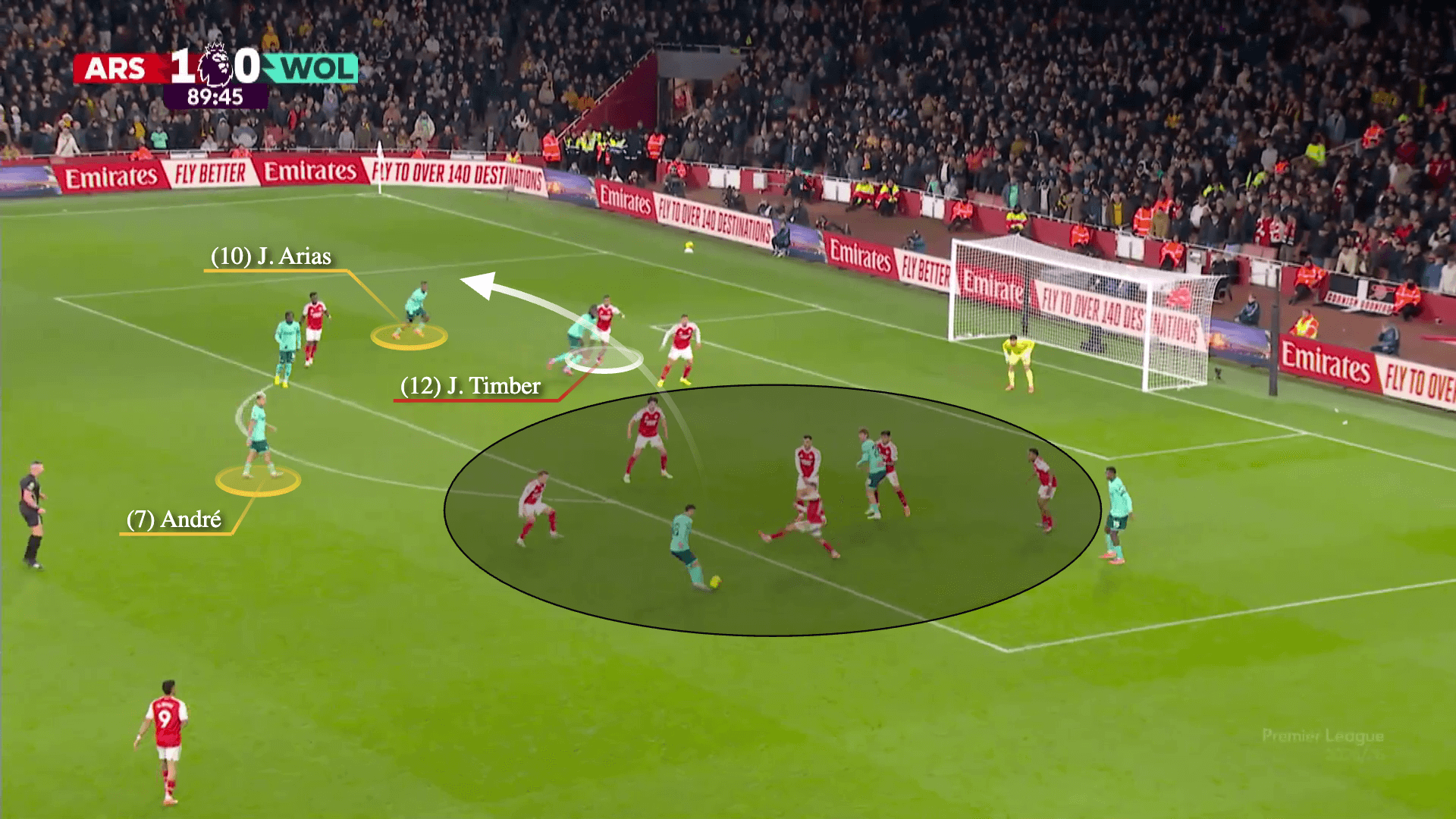
Even then, Arsenal were slow to react. Passive — that word that Arteta used — springs to mind again to describe how Arsenal stood off the Wolves substitute, leaving him free to whip a dangerous ball that Arokodare met with a glancing header.

Moments later, Arsenal were celebrating at the other end following Mosquera’s own goal, but Arteta and his players know that seeing out a game can never look like this again.
“Every time you win in the Premier League, you should be happy, and you should be conscious of the difficulty of it,” Arteta said afterwards. “But we made it even harder for ourselves today, and that’s the big lesson.”