It is a fateful week for the European Union.
By Friday, we should know whether EU countries will come together to back Ukraine’s continued fight by leveraging Russia’s frozen European assets for a ‘reparations loan’. We should also have clarity on whether the Mercosur trade deal, after a quarter-century of on-again-off-again negotiations, will finally go into effect.
While the collapse of either wouldn’t trigger an immediate implosion, both deals are crucial for Europe’s long-term future – the reparations loan for security and Mercosur for the economy.
Alas, not all capitals see things that way. Bridging the gap has proved fraught – in large part because what Europe needs most at this perilous moment is what it most lacks: leadership.
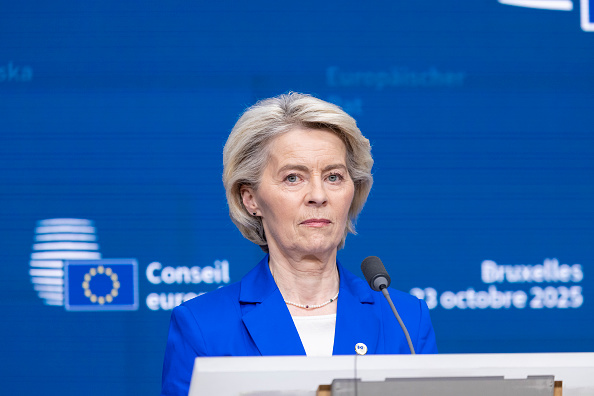
It’s no exaggeration to say that Commission President Ursula von der Leyen’s failure to lead Europe of late is the reason we now find ourselves at this do-or-die juncture.
By failing to take Belgium’s reservations over the reservation loan seriously and then failing to address them, she has left both Ukraine and Europe on a knife edge.
This column has been more than critical of the Commission president this year. Amid the continued erosion of Europe’s standing in the world in recent months, we see no reason to revise our opinion.
We say that not with schadenfreude, but with a healthy dose of foreboding.
Von der Leyen surely means well. Unfortunately, that’s not enough. At crucial moments, she has failed the leadership test, most disturbingly last week with her refusal to stand up to the Trump administration’s brazen attempt to undermine European democracy.
Instead of drawing a line in the sand, von der Leyen donned a ball gown for a gala to celebrate Trump’s declaration of himself as ‘The Man for Europe’.
When asked about Trump’s attacks on the EU, a smiling von der Leyen offered an explanation that bordered on delusion.
“Of course our relationship to the United States has changed. Why? Because we are changing,” she said.
In most families, such crazy talk would trigger an intervention.
Whatever happens this week, it’s high time for ‘Europe’ to have a serious chat about von der Leyen.
Roundup
Parliament’s legal affairs chair faces immunity test – The European Parliament announced a request to lift the immunity of Ilhan Kyuchyuk, the Renew lawmaker who chairs the Parliament’s legal affairs committee that oversees such cases. The move, first reported by Euractiv’s flagship newsletter Rapporteur, puts Kyuchyuk in the unusual position of explaining himself under the very procedure his committee is tasked with managing.
Using Russian assets for Ukraine loan ‘increasingly difficult’, says EU top diplomat – The EU’s plan to use frozen Russian sovereign assets to fund Ukraine’s war effort is facing growing challenges, the bloc’s top diplomat Kaja Kallas said on Monday. This comes just days after multiple countries supported Belgium’s calls for alternatives to the so-called ‘reparations loan’. While the loan remains the “most credible option,” she acknowledged progress is difficult ahead of Thursday’s crunch leaders’ summit. “We are not there yet, and it is increasingly difficult, but we’re doing the work.”
EU meets Ukraine ammunition target as overall aid plummets – An EU target to send two million rounds of large-calibre ammunition to Ukraine in 2025 has been fulfilled on time, Kallas also said today. But in a context of declining support from the US, experts warn European aid alone isn’t offsetting Washington’s withdrawal.
Across Europe
US-Ukraine peace talks leave territorial questions – Ukraine’s President Volodymyr Zelenskyy continued high-stakes talks with US President Donald Trump’s envoys in Berlin on Monday, but thorny territorial questions remained unresolved. Later tonight, several European heads of state and government will review the outcome of the talks, including Italy’s Giorgia Meloni, Poland’s Donald Tusk and France’s Emmanuel Macron, European Commission President Ursula von der Leyen and NATO chief Mark Rutte.
Athens warns of ‘agricultural Grexit’ – The Greek government has called on farmers to end their widespread protests and return to dialogue in a bid to find a solution in a furore over unpaid EU funds. Farmers and livestock breeders have now entered a third week of protests, blocking highways and ports across the country. More than 40,000 farmers are not receiving EU support due to a major scandal involving the national payment body.
‘Czechs First’ government sworn in – The new government of Czech billionaire Prime Minister Andrej Babiš was sworn in today, amid questions over its relationship with the EU and aid to war-ravaged Ukraine. President Petr Pavel swore in 15 ministers – 13 men and two women. Babiš’ ANO movement won a general election in October and has teamed up with two eurosceptic parties, the far-right SPD and right-wing Motorists, to form a cabinet.
(vib, jp)