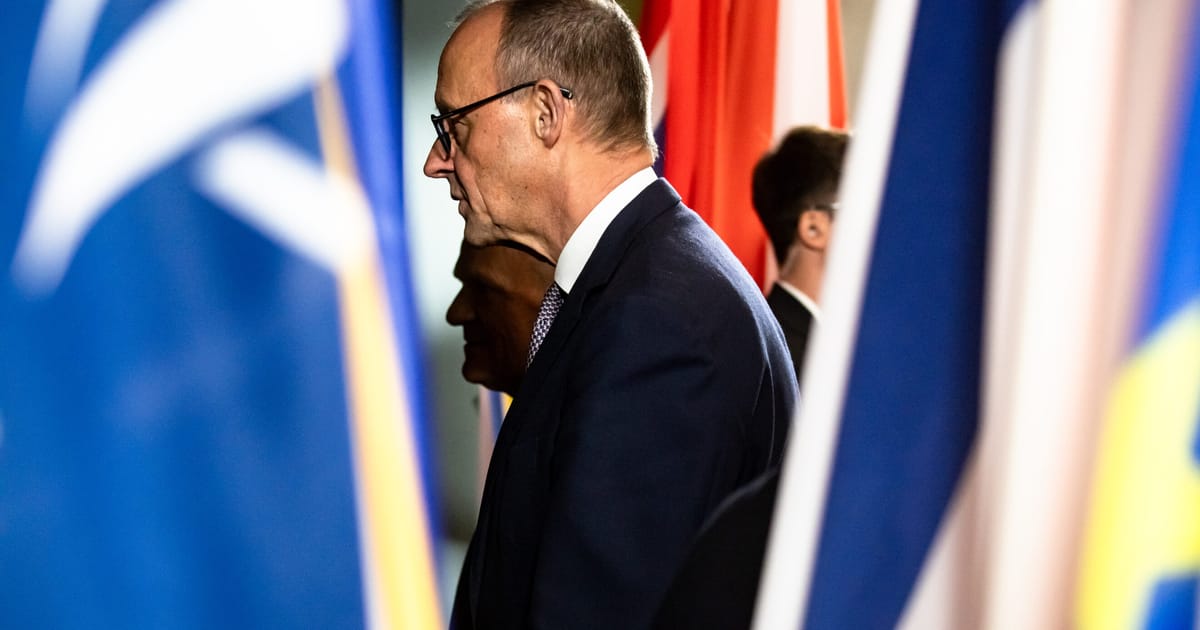
Ahead of a key meeting of European leaders on Thursday, Merz is depicting the looming decision on whether to leverage frozen Russian central bank assets in the EU as a test of whether Europe can still stand up for itself.
“Let us not deceive ourselves. If we do not succeed in this, the European Union’s ability to act will be severely damaged for years, if not for a longer period,” Merz said on Monday. “And we will show the world that, at such a crucial moment in our history, we are incapable of standing together and acting to defend our own political order on this European continent.”
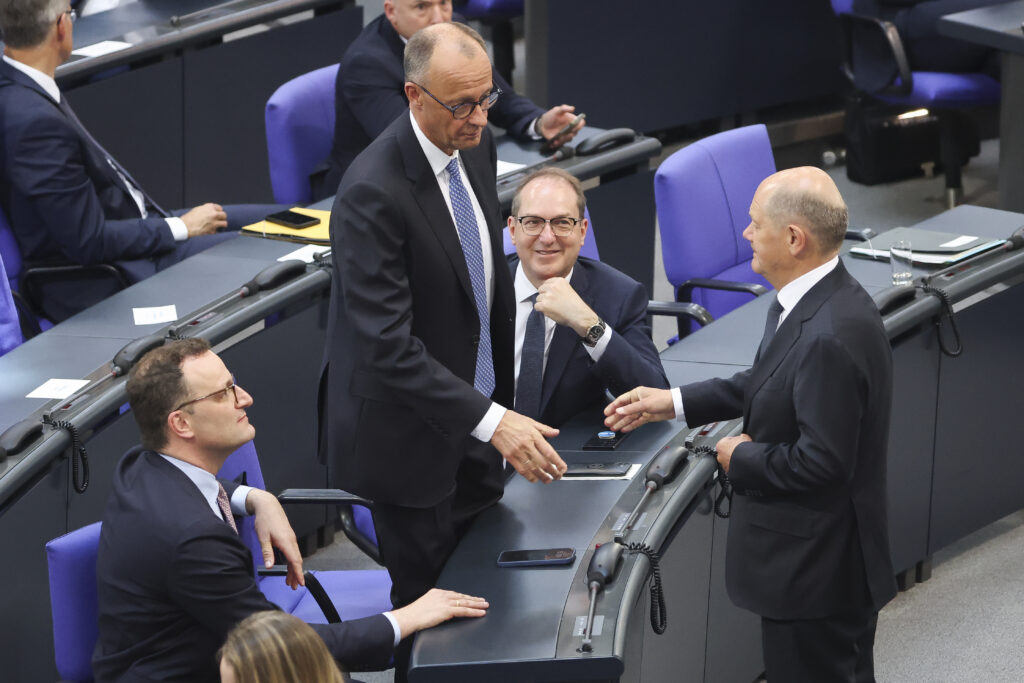 Friedrich Merz’s predecessors, Olaf Scholz and Angela Merkel, were reluctant to put the country in such an outspoken lead role internationally or within the EU. | Maja Hitij/Getty Images
In a reflection of his government’s new assertiveness, Merz has made Berlin a nexus of diplomacy over a potential peace deal. On Sunday and Monday he hosted Ukrainian President Volodymyr Zelenskyy and U.S. special envoys Steve Witkoff and Jared Kushner. On Monday evening, many of Europe’s most powerful leaders converged over dinner in Berlin to discuss the outlines of a possible deal.
“Berlin is now at the center of very important diplomatic talks and decisions,” Zelenskyy said Monday. “These talks are always complex, never easy, but they were very productive.”
Merz, too, standing alongside the Ukrainian leader, appeared to play up the role Germany has assumed in recent negotiations. “We have seen great diplomatic momentum — perhaps the greatest since the start of the war,” he said. “We now have the chance for a genuine peace process for Ukraine. This seedling is still small, but the opportunity is real.”
Merz oversteps
But Merz’s efforts to put Germany forward as a key EU leader on Ukraine and other matters, from defense to trade, are also replete with risk.