The proliferation of gambling establishments in our town centre should spark a change in the law, writes South Holland and the Deepings MP Sir John Hayes.
Gambling addiction breaks people and costs lives. As it devastates the lives of afflicted gamblers, it makes victims of all who surround them.
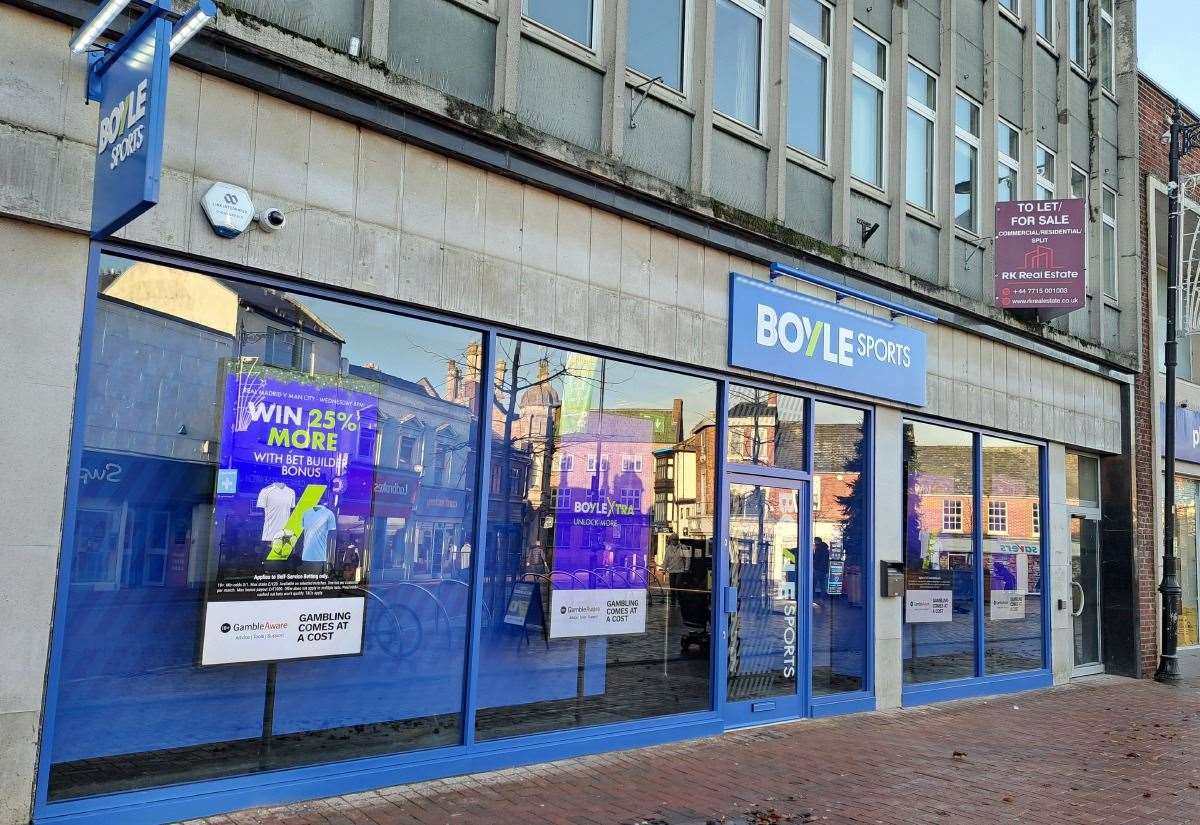
 Another bookies? You bet there is! Spalding’s former Barclays Bank is becoming a branch of BoyleSports. Photo: Iliffe Media
All this is a world apart from the inconsequential weekly football ‘pools’ coupon my father completed. Now, the accessibility of gambling through phones and the litter of shops across high streets has made it perilously easy to lose huge sums of money.
The scale of online gambling is immense: in June 2024, Britons logged over 56 million online slot sessions, which included more than 3.3 million lasting over an hour.
Against this backdrop, the green light to convert Spalding’s old Barclays Bank into yet another betting shop is very disappointing.
Sir John Hayes, MP for South Holland and The Deepings. Photo: UK Parliament
Having, alongside concerned residents and councillors, campaigned against planning permission for the nearby Merkur Slots Casino (which passed on appeal to the Planning Inspectorate), it is regrettable that another gambling den is to blight our town centre – the sixth within a few minutes of each other!
According to the Gambling Commission, there are now 1.4 million people in this country with severe gambling problems – ranging from the need to fund their addiction, by selling their possessions to huge unsustainable borrowing.
Disturbingly, banks have failed to protect these people, as too often problem gamblers can too easily secure ever more credit from them.
The Chancellor’s recent budget left very much to be desired, the measure to increase gambling duty from 21% to 40% was welcome. It won’t alone be enough, however.
Greedy corporations, with few scruples, are opening countless gambling shops all over the country. As the head of Ladbrokes openly admitting to a Parliamentary committee that ‘99% of our customers will lose’, those online gamblers who do dare to win regularly find their accounts restricted or banned outright.
Have no doubt, corporate gambling giants are not in business to reward their customers, and any pretence otherwise extends only until their huge profits are threatened.
Legislation must be introduced to limit the high concentration of betting shops. Spalding now has approximately one for every 5,000 of the population.
To address the national proliferation, planning authorities must be enabled to automatically reject proposed gambling institutions based on a per capita ratio. As well as this, tougher fines should be imposed on operators who fail to protect their customers, with revenue used to fund treatment for gambling addicts. Neither must banks continue to go under the radar, for the worst cases of problem gambling, more often than not, are exacerbated by negligent lending.
Though adults are free to make their own decisions in life, and modest gambling can be a harmless recreation, society should not turn its back on those who are exploited by globalist corporations.
Gambling operators that knowingly allow the most vulnerable to destroy their lives must be held to account. Last year in Parliament, I met a lovely couple whose son had taken his life after becoming a gambling addict.
Their tragedy inspired me to do my best to prevent this happening again by campaigning, alongside the organisation Gambling with Lives, to fight the proliferation of gambling outlets and restrict online gambling. We must prioritise what is good for the community, not what is good for a gambling corporation’s bottom line.