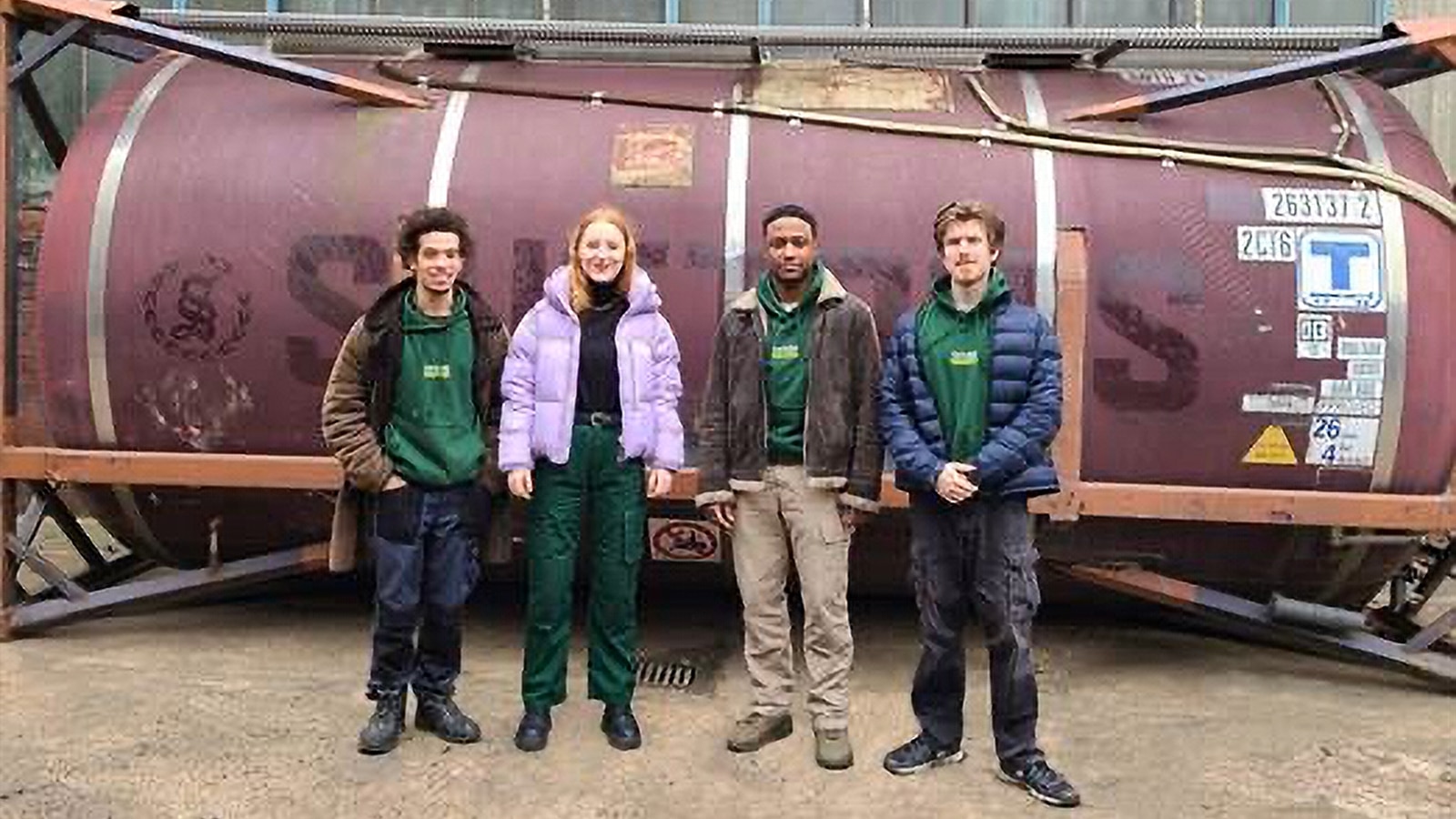
Future Greens, the Sheffield-based startup building bioreactors to convert unavoidable food and brewery waste into heat and power, has attracted £500,000 in fresh funding.
The combination of £340,000 equity and a £160,000 UK Government grant will be used to develop the company’s proprietary tenfold improvement to anaerobic digestion technology for brewery customers it has lined up. It will also enable Future Greens to expand its team with chemistry and biochemistry experts.
Investors include PXN Group, One Planet Capital, Baltic Ventures, Venture.Community and Lifted Ventures.
The company has attracted more than £800,000 in funding to date. It is also benefitting from additional £100,000 in non-dilutive support across regional collaborations with The Advanced Manufacturing Research Centre (AMRC) and South Yorkshire Innovation Programme (SYIP) with The University of Sheffield.
Future Greens’ proprietary system transforms organic waste into renewable power up to ten times faster than conventional anaerobic digestion, dramatically reducing energy and effluent costs while enabling compact, on-site reactors for food manufacturers.
Co-founder and CEO, David Dixon, said: “Our experience in food production highlighted waste and energy as two major operational costs faced not only by us, but across the entire food industry. Now, we’re on a mission to address both through our innovative waste to energy reactors.”
Co-founder and COO, Gabrielė Barteškaitė, added: “This funding allows us to accelerate delivery for customers already in the pipeline. We’re starting with breweries, where large volumes of spent grain, yeast, and wastewater create a clear opportunity to improve resilience through on-site renewable energy.”
Future Greens’ founding team met at The University of Sheffield and previously built and operated a vertical farm, where waste disposal and energy costs proved to be major operational challenges. To address this, the team developed their first bioreactor in-house and quickly recognised the potential to scale this solution across the wider food industry.
The modular, AI-driven anaerobic digesters operate ten times faster than conventional systems, enabling compact, high-performance reactors suitable for on-site deployment. By converting organic waste into biogas, the system reduces trade effluent and waste disposal costs while lowering CO₂ emissions and improving operational resilience. They’re preparing to deploy their first system on a brewery site in 2026.