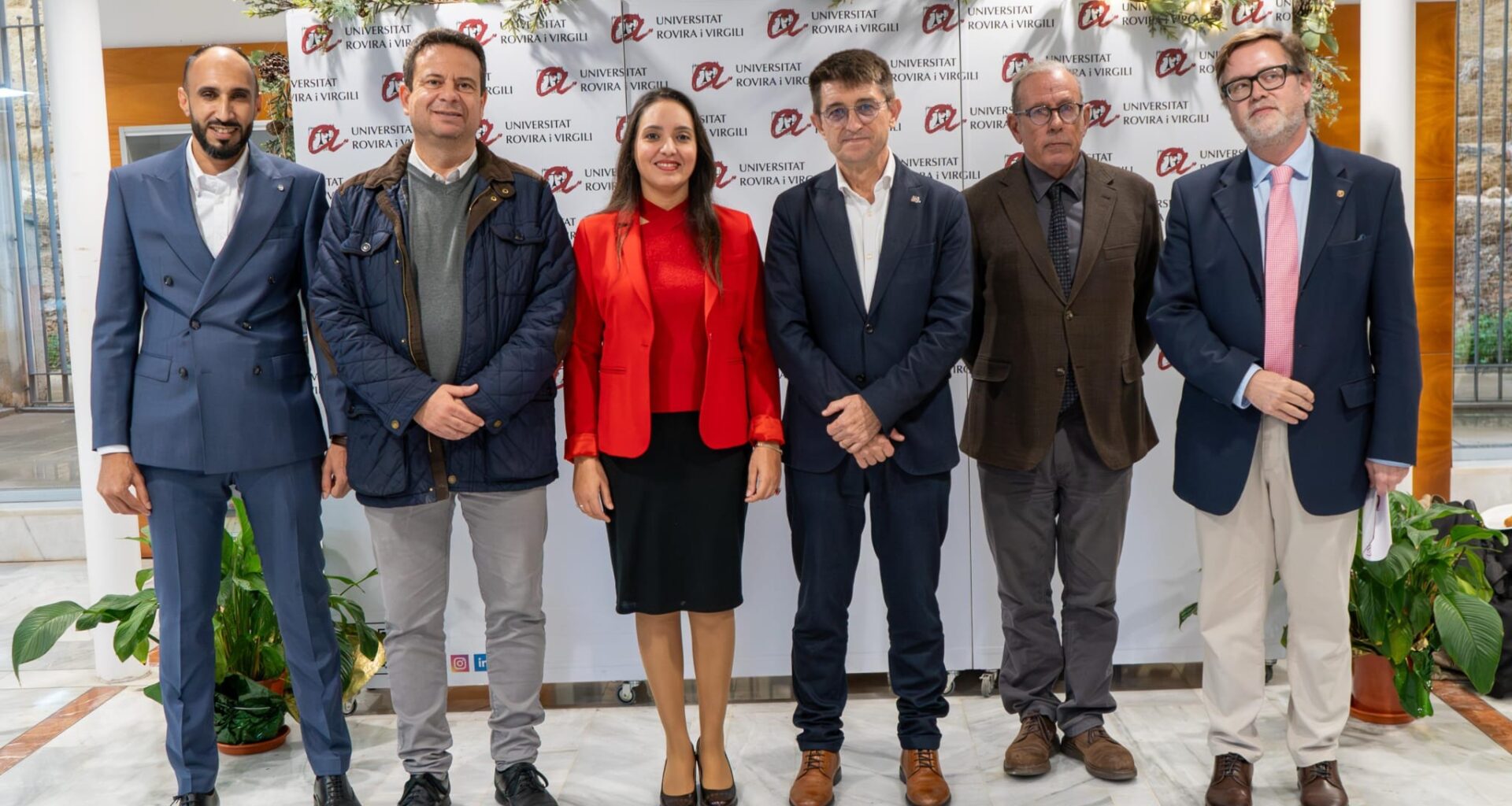
Marrakech – The Universitat Rovira i Virgili (URV) in Tarragona has launched Spain’s first Chair of Moroccan Studies aimed at deepening knowledge, research, and cooperation between Catalonia and Morocco.
The signing ceremony on Monday brought together key institutional stakeholders, reflecting the project’s multidimensional character. Santiago Castellà, President of the Port Authority of Tarragona, attended alongside Josep Pallarès, Rector of the Rovira i Virgili University.
Morocco’s Consul in Tarragona, Ikram Chahin, represented the Moroccan diplomatic mission, while Mohamed Kassid, on behalf of Kassid Training, finalized the institutional partnership.
The program, approved by the university’s governing council on October 30, is described by university officials as the first initiative of its kind not only in Catalonia but across Spain.
The chair was spearheaded by the Moroccan General Consulate in Tarragona, Lleida, and Aragón, with institutional backing from the Port Authority of Tarragona and Kassid Training Center. It is formally attached to URV’s Department of History and Art History and is directed by Professor Jordi À. Carbonell Pallarès, a chair holder in Art History.
The Chair of Moroccan Studies operates across three complementary pillars: research, education, and knowledge transfer.
Its research agenda focuses on shared historical trajectories between Catalonia and Morocco, with particular attention to migration dynamics, socioeconomic development, orientalism, memory policies, and the preservation of material and intangible heritage.
Archaeological and paleoanthropological research will also continue under the chair, notably through ongoing Catalan Institute of Human Paleoecology and Social Evolution (IPHES)-led excavations in Oujda, alongside institutional support for studies on orientalism in northern Morocco.
Education constitutes the second core axis of the program. URV plans to organize thematic seminars, participatory workshops, and academic encounters open to both university audiences and the wider public.
Student mobility initiatives with Moroccan universities are also planned, complemented by immersive study trips designed to support field research and firsthand academic engagement for students and researchers from an intercultural perspective.
The third pillar centers on knowledge transfer and public engagement. The chair will host conferences, symposiums, and lecture series, while producing academic publications and educational materials.
Community outreach activities are intended to bridge academic research with local societies, reinforcing dialogue between institutions and populations on both shores of the Mediterranean.
Moroccan community placed at the center
A key priority of the initiative is the Moroccan community in Catalonia. University officials stressed that the chair seeks to provide visibility, academic representation, and institutional support to Moroccan residents, positioning the program as a tool for integration, cultural dialogue, and social cohesion.
Each institutional partner contributes distinct resources and expertise. The Moroccan Consulate offers diplomatic channels and cultural networks, the Port Authority of Tarragona provides logistical and economic support, and Kassid Training Center contributes educational expertise and community outreach capabilities.
Beyond these partners, the chair will collaborate with public administrations, museums, archives, and research centers, while developing development-cooperation and cultural diplomacy projects in coordination with Moroccan institutions.
Research priorities also include the digitization and preservation of Moroccan heritage, comparative Mediterranean studies, and broader Euro-Mediterranean cooperation projects.
URV officials framed the initiative as a response to contemporary regional dynamics shaped by human mobility, cultural diversity, and economic exchange, stressing the need for structured academic frameworks linking Europe and North Africa.
University representatives further noted that the chair aims to challenge stereotypes surrounding Morocco through rigorous academic research, producing what they described as “balanced narratives” grounded in critical analysis.
By building on longstanding political, social, cultural, and economic ties between Catalonia and Morocco, the Chair of Moroccan Studies positions URV as a leading academic hub for Euro-Moroccan research and dialogue in Spain.
Read also: University of Cordoba Launches ‘Fatima Al-Fihri Chair’ to Foster Morocco-Spain Ties