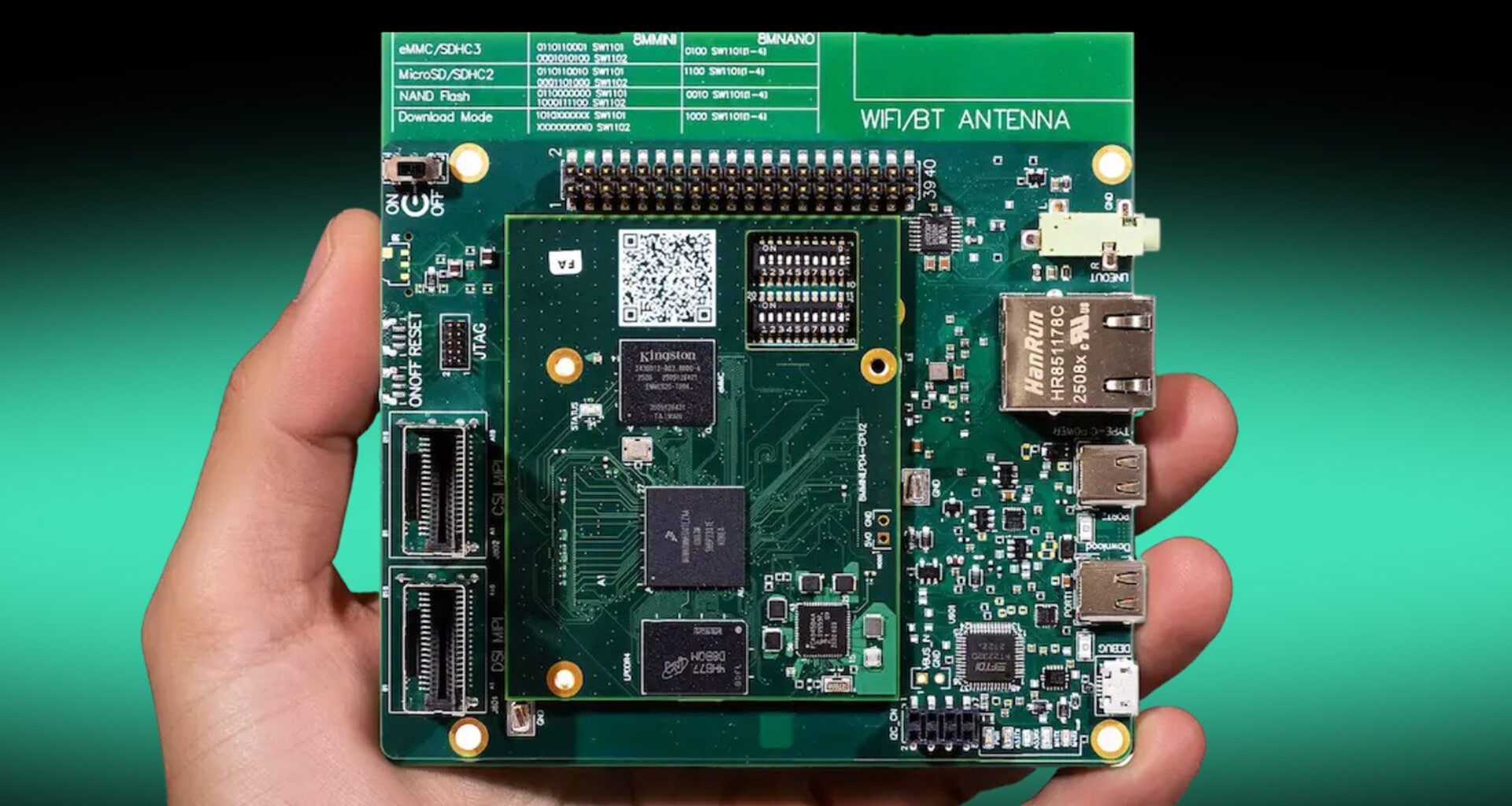
LA-based startup Quilter has outlined Project Speedrun, which marks a milestone in computer design by AI. The headlining claims are that Quilter’s AI facilitated the design of a new Linux SBC, using 843 parts and dual-PCBs, taking just one week to finish, then successfully booting Debian the first time it was powered up. The Quilter team reckon that the AI-enhanced process it demonstrated could unlock a new generation of computer hardware makers.
The great attraction of AI-enhanced PCB design is that it offers the promise of removing a consistent bottleneck from computer system design. With just one week of AI-powered processing, augmented by 38.5 hours of human expert assistance, the Project Speedrun computer was completed. Normally, this kind of project would require approximately three months for a skilled human engineer (approximately 430 hours of work).
Quilter claims that prior expert human-based workflows would face a serious bottleneck to iterate a three-step process of setup, execution, and cleanup.
You may like
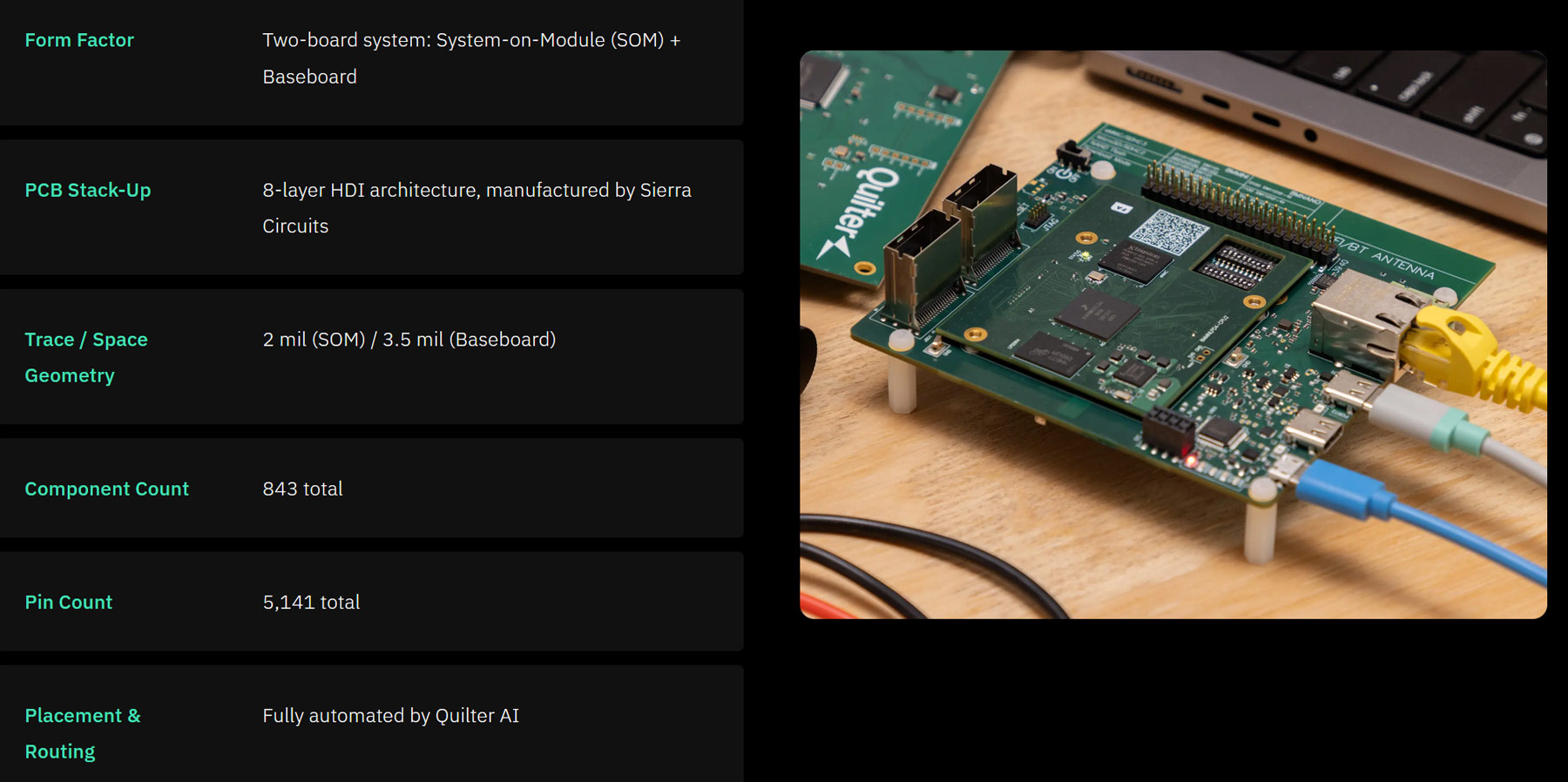
(Image credit: Quilter AI )Before and after Quilter AI
Previously, humans would shepherd a design through all three of these key stages. However, with Quilter’s AI on hand, they can instead focus on the creative setup and refinement at the cleanup stage, leaving the donkey work of the execution to AI. The Quilter team indicates its AI can handle all three stages, if you wish, though.
Streamlining the time-consuming execution stage using AI is very canny, for the reasons mentioned above – thus unlocking creativity, allowing engineers to try more designs, and/or get faster to market. Moreover, human execution of the design/setup can often have errors, meaning even more time needs to be focused on this middle step, holding up the entire project.
How this AI was trained
Venture Beat’s coverage contrasts Quilter AI against LLMs like GPT-5 and Claude. Indeed, circuit board design isn’t a language task or problem. Thus, the AI behind this tool is basically trained by playing an optimization game against the laws of physics.
Surprisingly, there were no earlier stages where Quilter AI was trained on human-designed sample boards. This decision was made because humans frequently make mistakes in board design, and to make sure Quilter AI’s capabilities weren’t somehow capped at human-level.
With Project Speedrun’s success, if it wasn’t a fluke, this philosophy seems to have paid off, with one engineer obviously surprised at the first-boot success, exclaiming, “Holy crap, it’s working.”
As we have hinted at above, the longer-term goal of Quilter’s AI is to end up with a PCB design system that doesn’t just match humans but can “come up with better designs for circuit boards than humans have ever tried to do,” Sergiy Nesterenko, Quilter’s CEO and former SpaceX engineer, said.
Importantly, the abilities of Quilter are not only touted as time, iteration, effort, and human creativity savers. The startup heralds its project’s potential to unlock a new generation of hardware startups, as it removes a significant barrier to entry.

Follow Tom’s Hardware on Google News, or add us as a preferred source, to get our latest news, analysis, & reviews in your feeds.