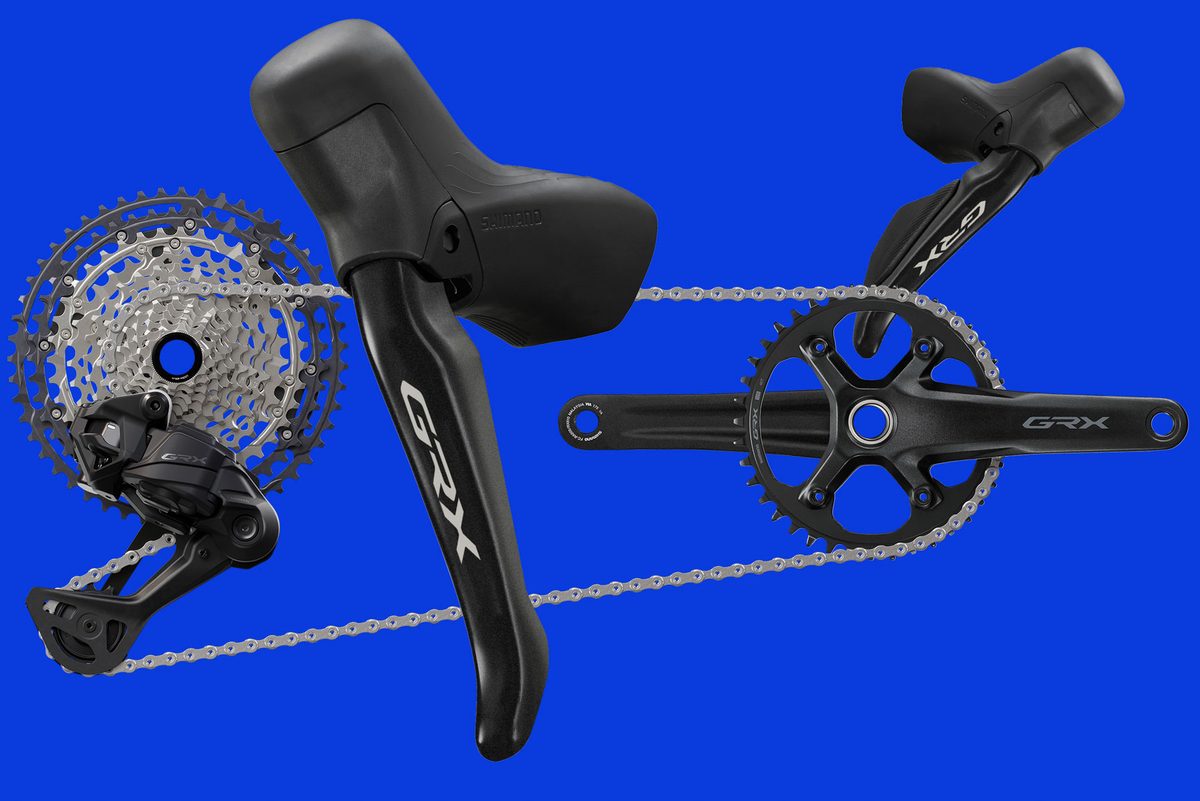
Shimano has launched the new, more affordable GRX RX717 fully wireless range of gravel components, which will finally see the Japanese brand compete with SRAM’s Rival AXS XPLR.
It follows Shimano’s entry into the wireless 1x groupset space with the release of new premium-priced RX827 components in June.
The new fully featured Di2 RX717 rear derailleur features the same compact removable battery as found in the GRX RX827, XTR M9250, Deore XT M8250 and Deore M6250 units.
Like RX827, it shares the same design as Shimano’s mountain bike counterparts. That means the same low-profile (Shadow) design, skid plate, protected battery and Automatic Impact Recovery function.
Where RX827 sits alongside Shimano’s Ultegra Di2-level components, RX717 is aligned with 105 Di2. That should mean we’ll see Shimano compete with SRAM’s gravel offerings at more affordable price points.
Shimano’s 1x Di2 brings a wide range of compatibility. That means you can mix and match RX717 components with all Shimano 12-speed wireless shifters (GRX, Dura-Ace, Ultegra and 105 Di2 drop-bar options, as well as XTR, Deore XT and Deore flat-bar Di2 models).
GRX RX717 parts line-up
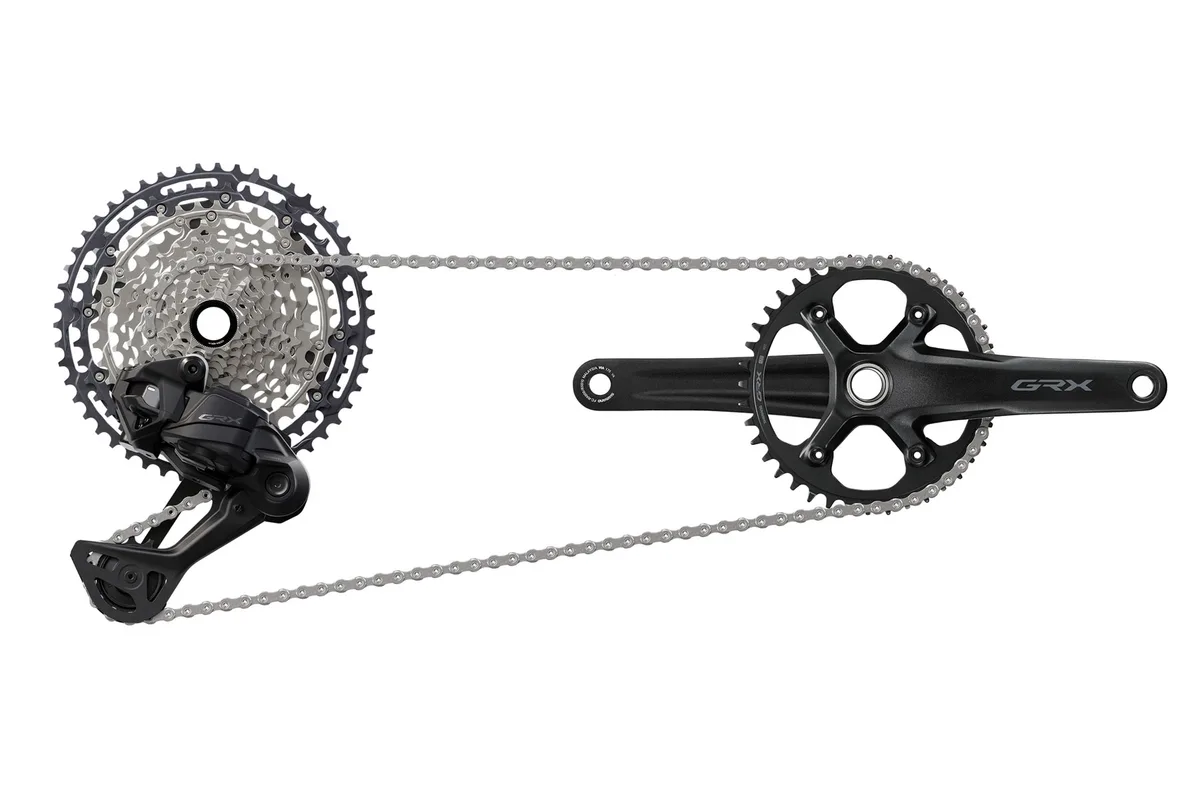 Shimano GRX RX717 mixes with existing GRX 12-speed components. Shimano
Like the existing GRX components, which now comprise mechanical, 2x Di2 and 1x wireless Di2, the GRX family offers a mix-and-match approach, even including 12-speed mountain bike components.
That means rather than a complete groupset, RX717 consists of shifter/brake-lever options and a new rear derailleur that can be combined with a 10-51 12-speed cassette.
GRX RX717 right-hand lever
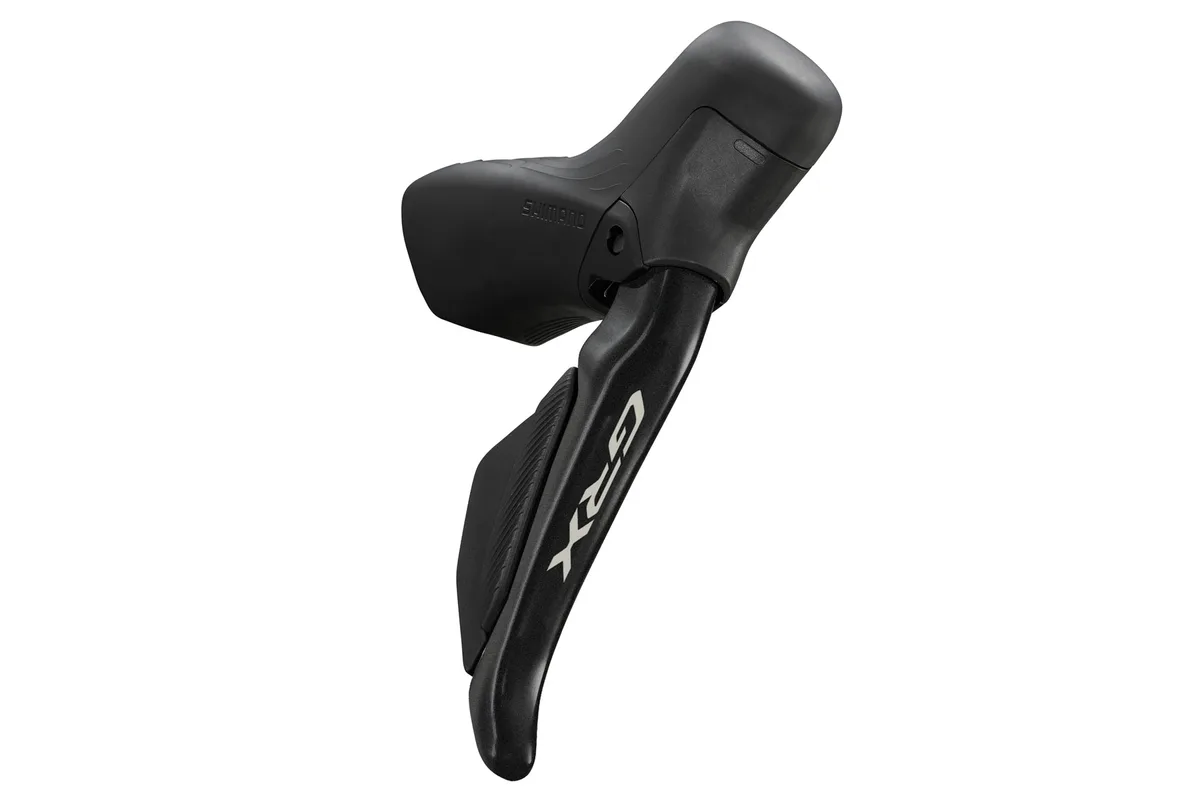 The right-hand lever has the gear controls. Shimano
The GRX 12-speed ST-RX715-R Di2 hydraulic disc brake dual-control lever is a more affordable option. It’s still fully featured with reach adjustment and has compatibility with the E-Tube Project app, enabling you to custom-configure the controls.
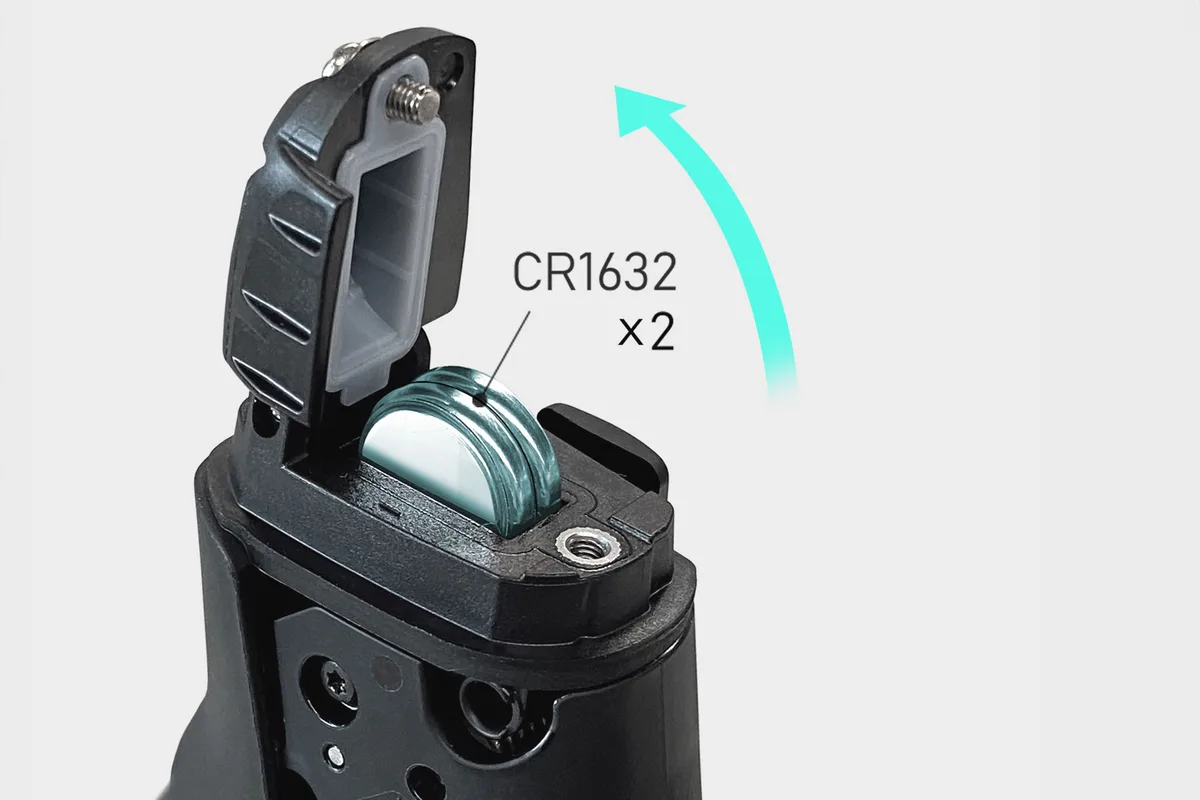 Shimano claims the twin batteries in a GRX shifter are good for four years of use. Shimano
Like the existing wireless levers, it uses two CR1632 batteries for power, stowed in a port at the top of the hood. Shimano claims up to four years of use for the twin-battery setup.
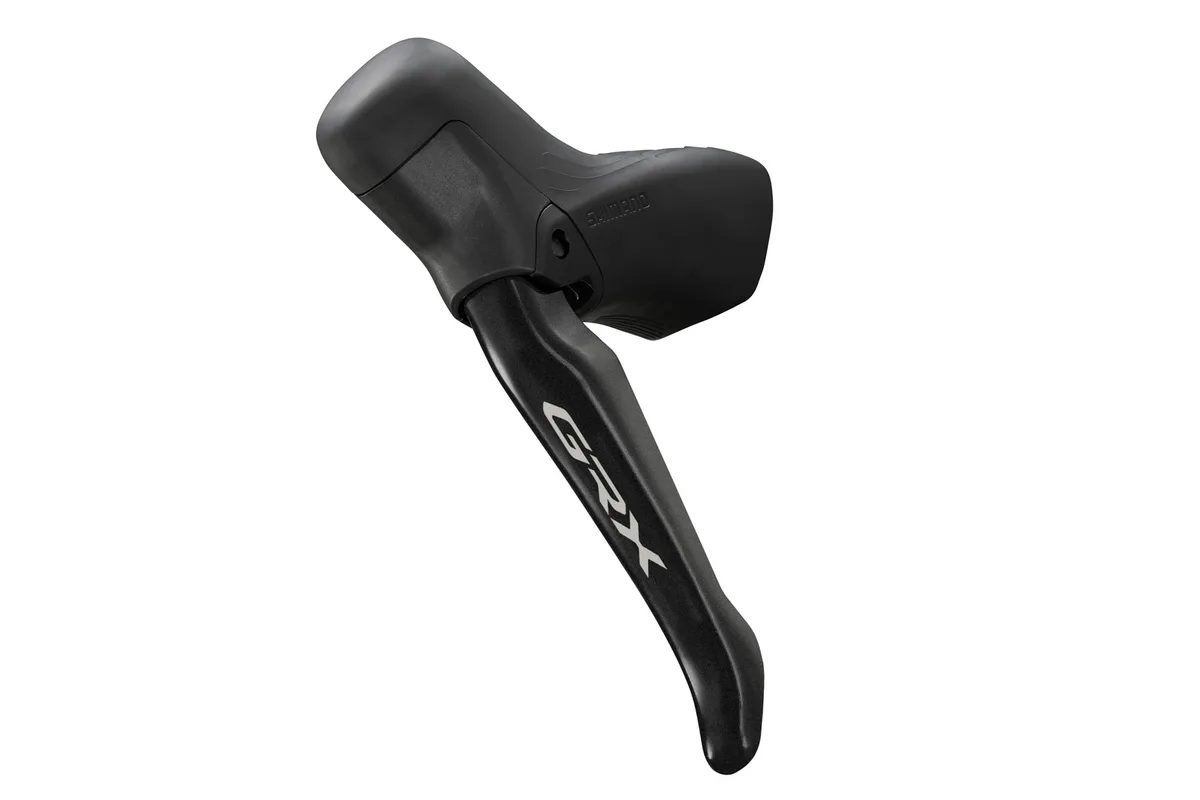 The standard GRX left-hand brake lever. Shimano
GRX RX717 left-hand lever
 The levers have 16.4mm of reach adjustment. Shimano
The left-hand lever is a brake only, using the same hood shape, ergonomics and adjustability. It comes without the Di2 button assembly behind the brake lever.
It’s available in two versions – one with GRX branding and one with a Shimano logo.
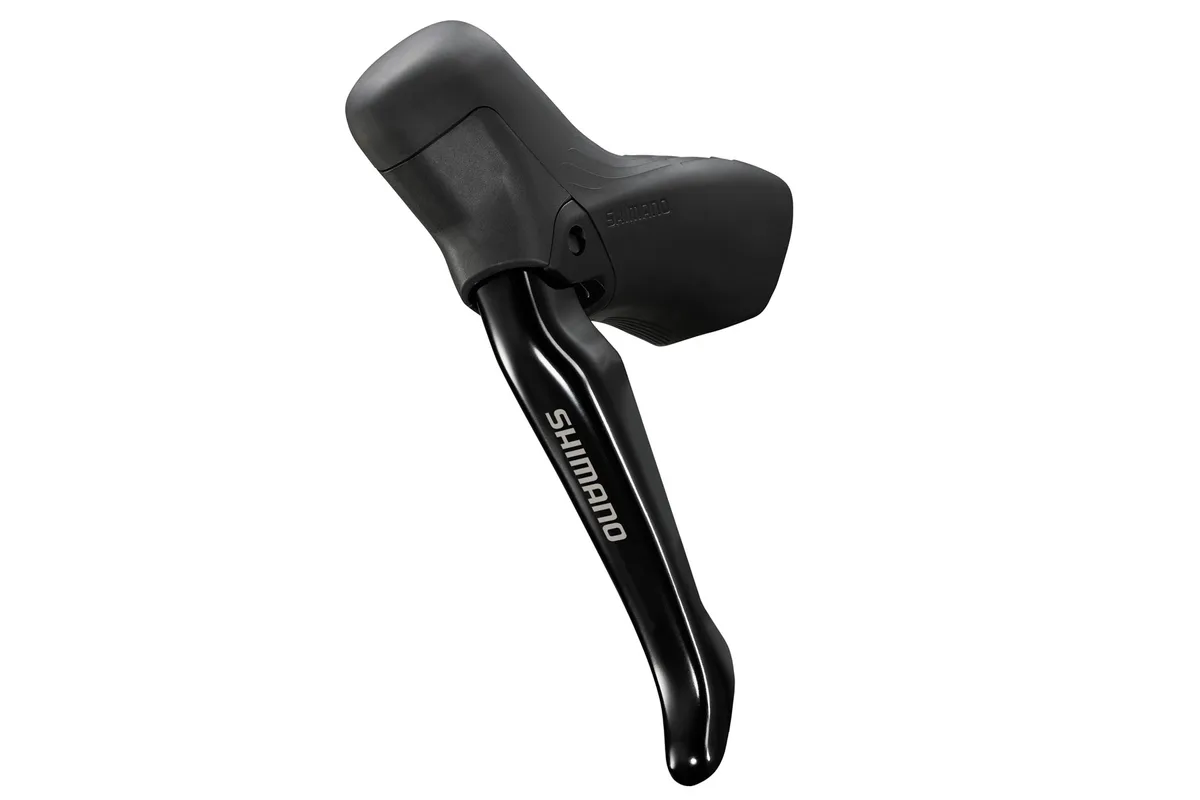 The left-hand brake lever with Shimano branding. Shimano
GRX RX717 rear derailleur
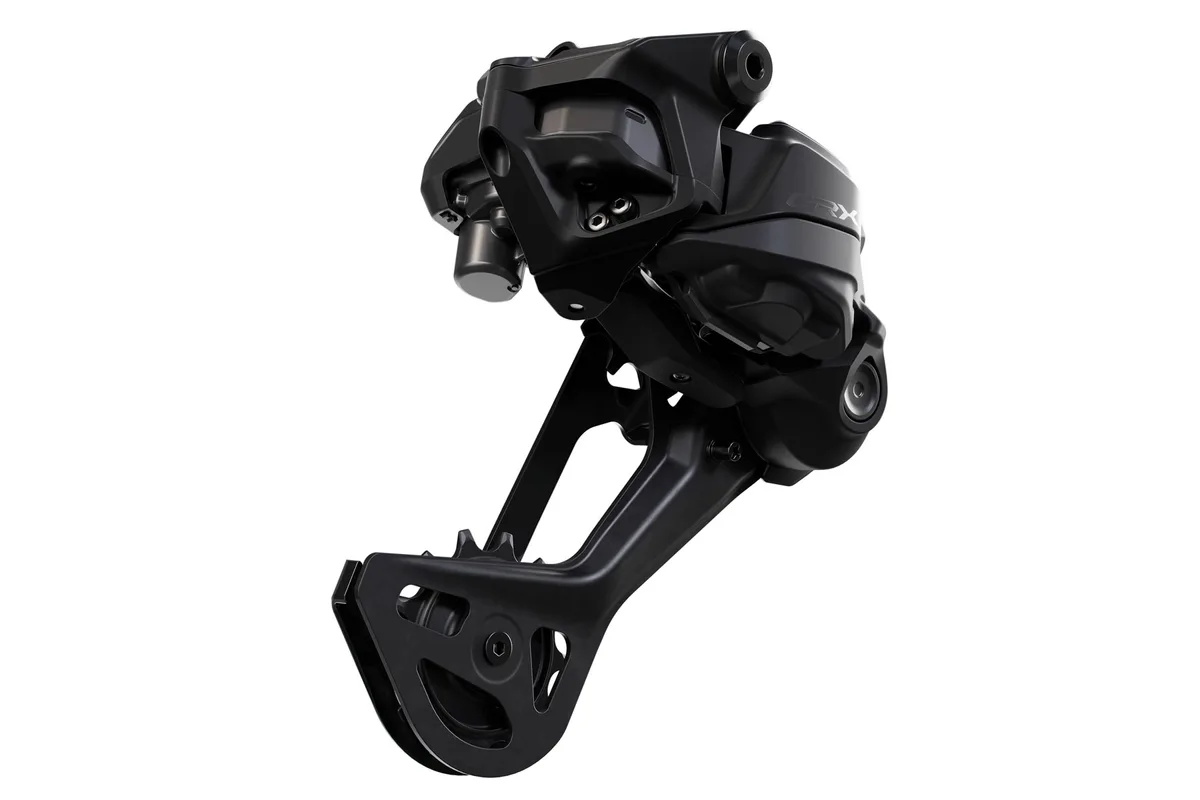 The battery is well hidden inside the body of the derailleur. Shimano
Just as the premium RX827 derailleur is based on Shimano’s XT unit, the RX717 uses the Deore derailleur as inspiration.
The derailleur features everything found on the premium model.
- Automatic Impact Recovery: this returns the derailleur instantly to its original position after an impact.
- Wide link structure and skid plate: the wide links provide added strength and the skid plate helps protect the derailleurs’ internals if the bike is dropped.
- Shadow ES technology: the lower-profile, wedge-shaped design increases ground clearance and frontal area. The derailleur also features a chain-stabilising clutch to reduce bounce and chain slap.
- Protected battery housing: keeps the battery tucked away and out of harm, while providing easy access for charging.
The derailleur uses the same battery as GRX RX827, XTR M9250, Deore XT M8250 and Deore M6250, so spares shouldn’t be an issue to source, and you can, of course, share batteries between your gravel and mountain bikes.
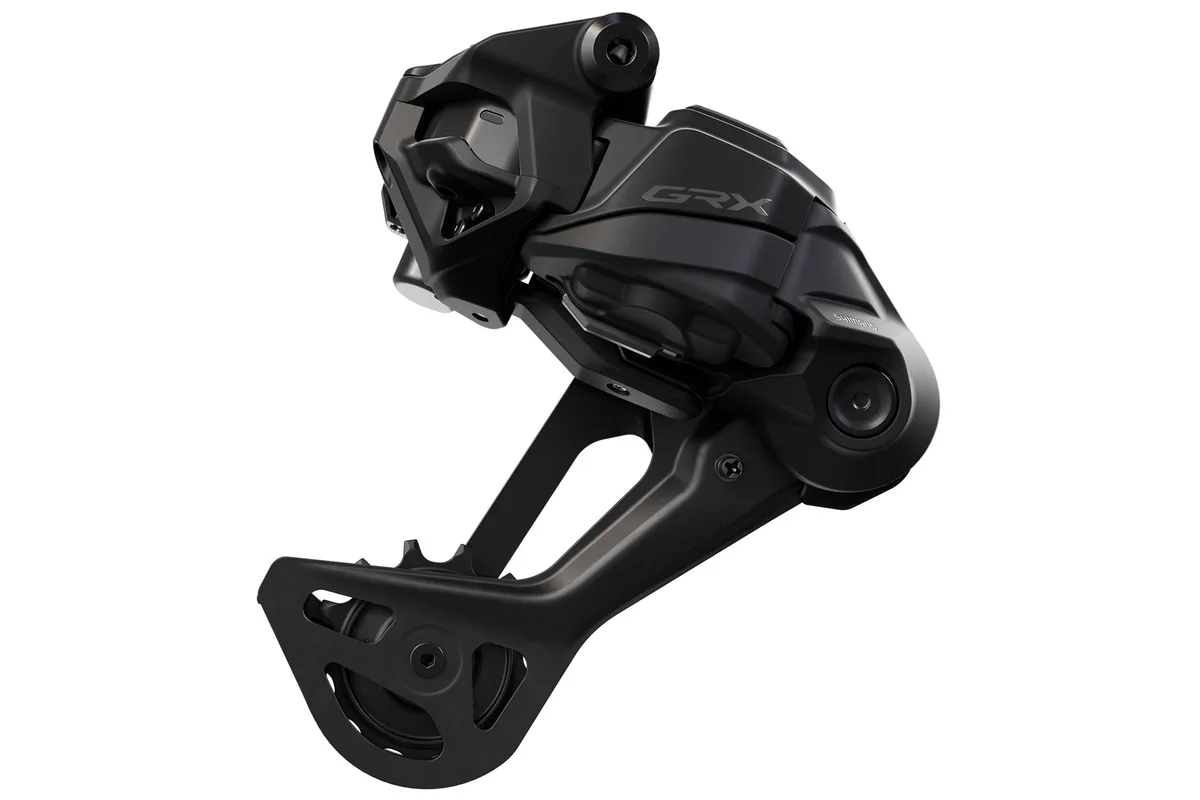 The RX717 shares lots of tech with Shimano’s Deore Di2 mountain bike derailleur. Shimano
Shimano GRX RX717 vs SRAM Rival AXS XPLR
GRX RX717 is placed in direct competition with SRAM’s latest Rival AXS XPLR components. SRAM’s 13-speed wireless gravel group uses technology trickled down from RED AXS XPLR and Force AXS XPLR.
That means 13-speed and derailleur architecture only compatible with UDH frames.
For the derailleur, Shimano claims a weight of 494g, compared to SRAM’s 435g. Shimano’s derailleur is priced at £379.99, against SRAM’s £315.
Weight comparisons on the shifters are more difficult to make because Shimano hasn’t given weights for the complete assembly (levers, hoses and brake calipers), but it claims 212g for the right hand and 188g for the left lever only.
SRAM states 746g a pair for Rival shifter/brake assemblies, with some reports suggesting the levers themselves weigh in at around 244g each.
Shimano’s lever/brake assemblies are priced at £299.99 for the right-hand and £279.99 for the left. SRAM’s Rival duo is priced at £247.30 for the rear and £229.99 for the front.
So, much like Force and Rival AXS on the road, it looks as if SRAM maintains an aftermarket price advantage over Shimano when it comes to wireless gravel.
However, I’d expect complete bike prices to be much, much more competitive due to Shimano’s strength in the OEM (original equipment market).
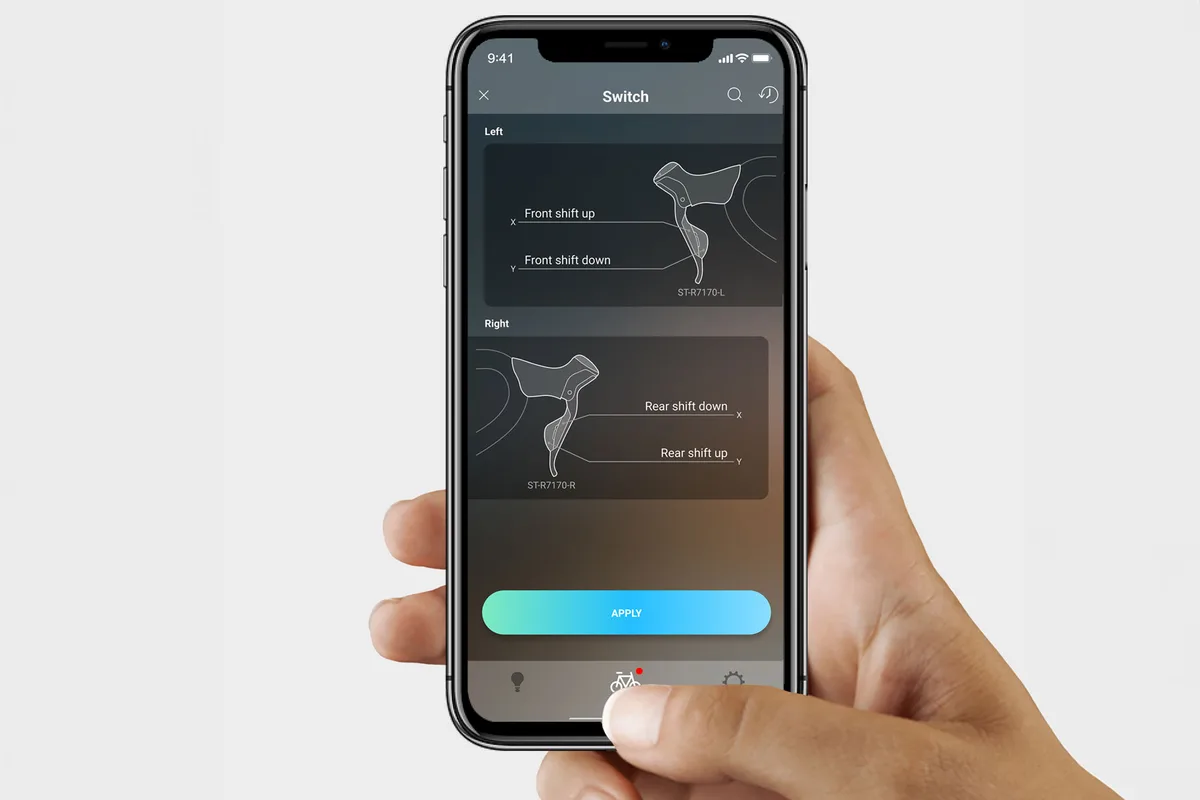 The E-Tube Project app can be used to customise shifter settings. Shimano
RX717 prices