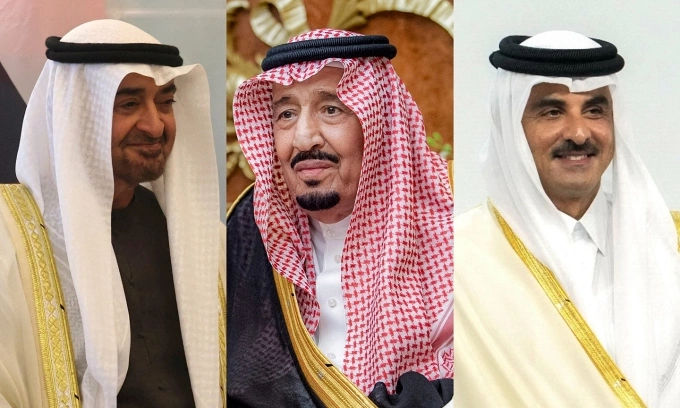
This year, Bloomberg ranking found that the collective fortune of the 25 richest families in the world surged by $358.7 billion to $2.9 trillion as of Dec. 9, driven by rising stock prices and demand for goods like metals and pet food, as well as the clout and experience they’ve accrued over decades.
That means the top five alone made up nearly half of the entire list’s combined wealth.
1. Walton (U.S.) – $513.4 billion
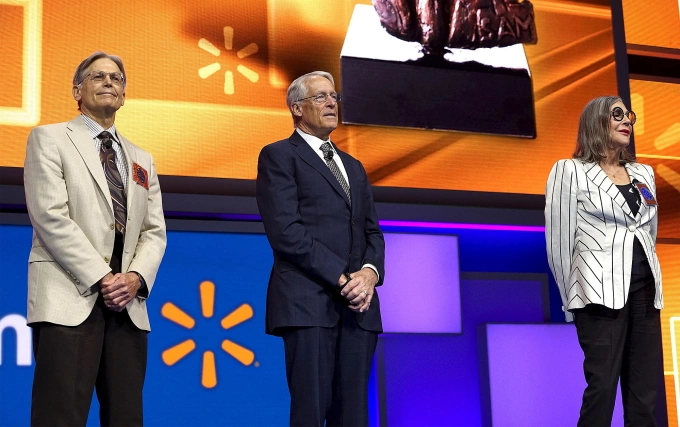
Walton family members (L to R) Jim, Rob and Alice Walton speak onstage at the Wal-Mart annual meeting in Fayetteville, Arkansas, June 5, 2015. Photo by Reuters
The Waltons are descendants of Sam Walton, the founder of the world’s largest retailer Walmart.
The company operates more than 10,750 stores globally and reaches an estimated 270 million customers each week through its physical locations and online platforms, generating revenues of $681 billion in the latest fiscal year.
Shares of the retailer have soared by 25% so far this year, pushing it toward a $1 trillion market cap and boosting the wealth of the Walton family, who together own roughly 44% of Walmart.
One family member sits on the firm’s board and an in-law serves as its chair, while other children and grandchildren of the founder do not work directly for Walmart, according to CNBC.
The Waltons maintained their top ranking this year after regaining the spot in 2024 from the next richest family.
2. Al Nahyan (UAE) – $335.9 billion
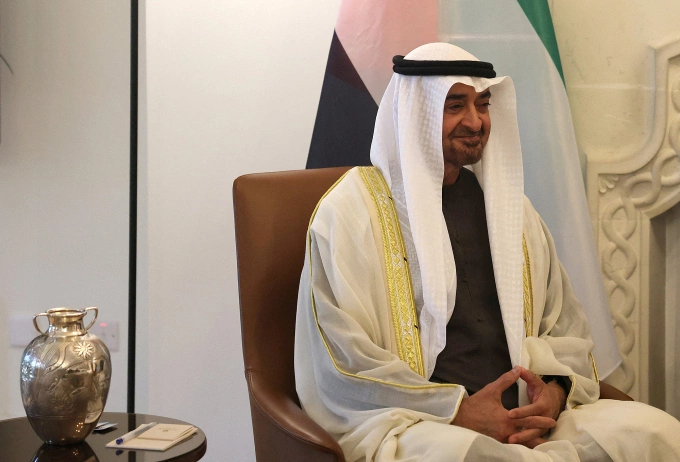
Sheikh Mohamed bin Zayed Al Nahyan, President of the United Arab Emirates meets with Cyprus’ President Nikos Christodoulides at the Presidential Palace in Nicosia, Cyprus, Dec. 14, 2025. Photo by Reuters.
The Al Nahyan family first debuted on the list in 2023, when it overtook the Waltons to claim the top spot.
The House of Nahyan is the ruling royal family of Abu Dhabi, United Arab Emirates’ wealthiest emirate and home to most of its oil reserves. The family is headed by Sheikh Mohamed bin Zayed Al Nahyan, who also serves as the UAE’s president.
Several other members hold influential positions across government and business, such as National Security Adviser Sheikh Tahnoun, who oversees two Abu Dhabi sovereign wealth funds with combined assets estimated at $1.4 trillion, alongside a vast personal fortune, according to The Wall Street Journal.
In August, Sheikh Tahnoun was also named among the 100 most influential people in artificial intelligence by TIME magazine.
3. Al Saud (Saudi Arabia) – $213.6 billion
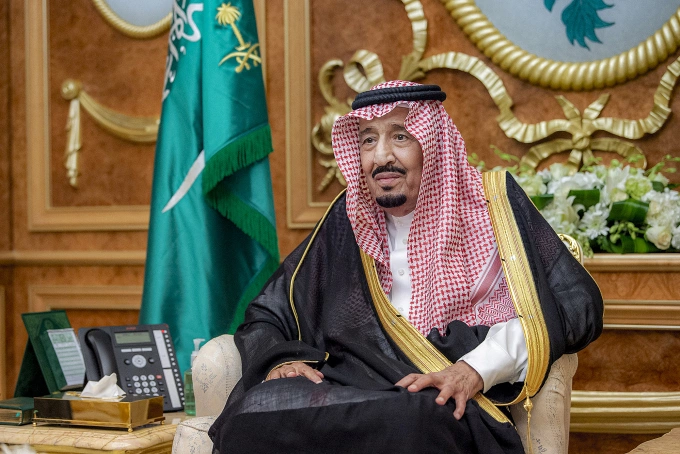
This handout picture released by the Saudi Royal Palace shows Saudi Arabia’s King Salman bin Abdulaziz al-Saud attending his son the crown prince’s oath-taking ceremony to appointing the latter as the country’s new prime minister, at al-Salam Royal Palace in the Red Sea coastal city of Jeddah on Sep. 27, 2022. Photo by Saudi Royal Palace via AFP
The Saudi royal family’s vast fortune is rooted in the kingdom’s enormous oil wealth, which has underpinned the monarchy for more than nine decades.
The House of Saud traces its lineage to Ibn Saud, who founded the Kingdom of Saudi Arabia in 1932. The family is currently led by King Salman bin Abdulaziz Al Saud, who ascended the throne in 2015.
His son, Crown Prince Mohammed bin Salman, personally controls over $1 billion in personal holdings, as estimated by Bloomberg.
While the family’s collective wealth is estimated at $213.6 billion, the true figure is likely far higher when accounting for the roughly 15,000 extended members of its lineage, many of whom have accumulated wealth through government contracts, land transactions and businesses that provide services to state firms. The kingdom’s sovereign wealth fund PIF holds assets valued at around $1 trillion.
4. Al Thani (Qatar) – $199.5 billion
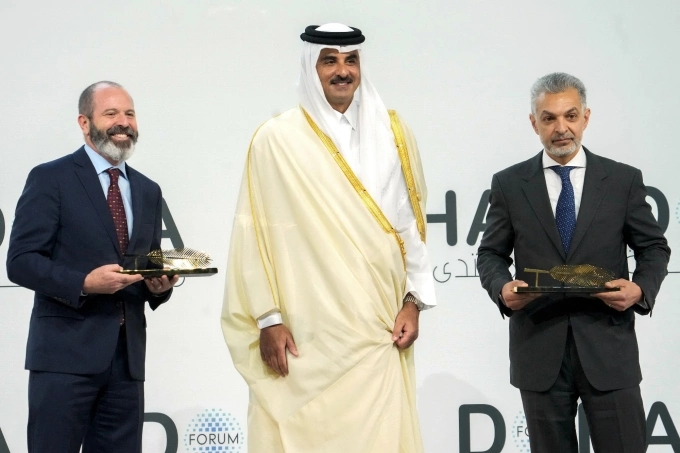
Qatar’s Emir Sheikh Tamim bin Hamad Al-Thani (C) on the opening day of the Doha Forum Award in Doha on Dec. 6, 2025. Photo by AFP
The Al Thani is Qatar’s ruling royal family, having governed the country since its founding in the mid-19th century.
The family is led by Sheikh Tamim bin Hamad Al Thani, the Emir of Qatar, whose personal holdings are said to include an opulent golden palace in Doha valued at about $1 billion, a $400 million superyacht, a private airline and an expensive collection of luxury vehicles, according to NDTV.
Beyond Qatar, the family controls a portfolio of high-value overseas assets, ranging from prime properties in London to stud farms, private banking interests and the Italian fashion house Valentino.
Earlier this year, Qatar’s ruler also made headlines after offering the Trump administration a luxury jumbo Boeing jet, valued at roughly $400 million, for use as a temporary Air Force One.
5. Hermes (France) – $184.5 billion
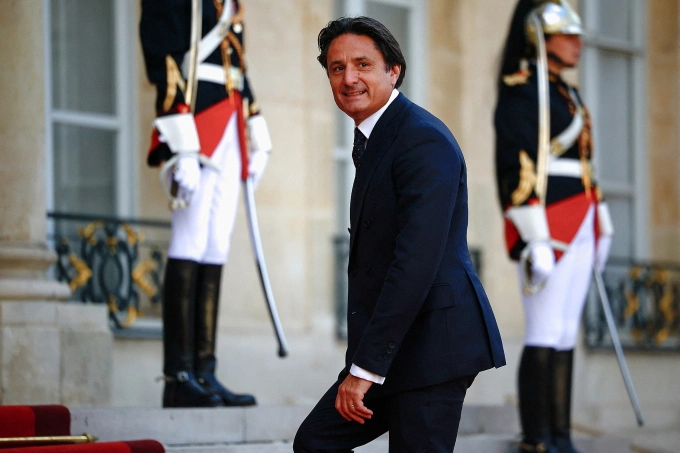
French luxury group Hermes Executive Chairman Axel Dumas arrives to attend a state dinner in honor of U.S. President Joe Biden and first lady Jill Biden at the Elysee Palace in Paris, France, June 8, 2024. Photo by Reuters
The Hermès family traces its roots to Thierry Hermès, a nineteenth-century harness and saddle maker whose workshop grew into one of the world’s most exclusive luxury houses, famed today for its Birkin and Kelly bags.
Like many luxury peers, Hermès has remained firmly under family control despite being publicly listed, with about 65% of the company still owned by the founding family.
The clan is divided into three main branches, with the Dumas holding the most influence and senior leadership roles, including chief executive Axel Dumas. They are known to keep a low profile. The Puechs share a similar reserve but is largely removed from day-to-day operations, and the third branch is the Guerrands, according to The Economist.
Fifth-generation heir Nicolas Puech earlier this month made headlines after he filed a civil lawsuit against Bernard Arnault, Arnault’s luxury group LVMH and Puech’s former wealth manager Eric Freymond. Puech, once one of Hermès’ largest individual shareholders, alleges he was deprived of company shares now worth billions of euros.