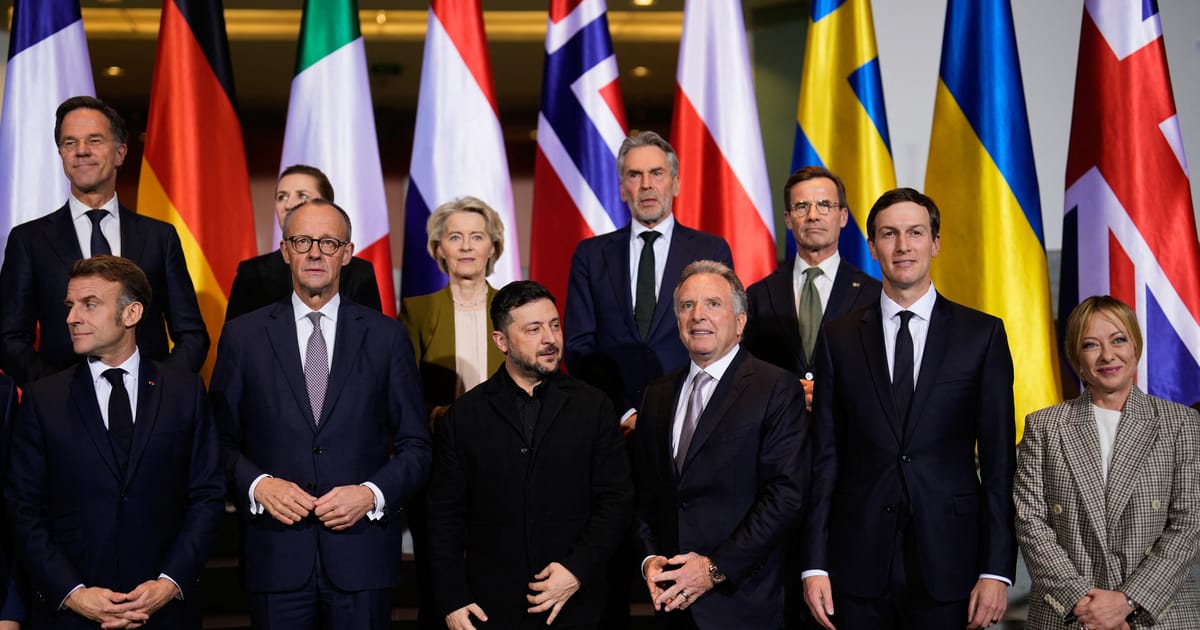
Thursday’s summit is crucial for Europe and for Ukraine, and the most pressing, unresolved issue is whether to grant Ukraine access to frozen Russian assets to bankroll its war efforts. Belgium, where the majority of those assets are held, is holding out against using them, fearing it would be on the hook to repay the full amount if Russia attempted to claw back the money. Other countries, Italy included, have also expressed doubts about using the frozen Russian assets.
Meloni made it clear Wednesday that Italy has not made a decision on whether to support the use of frozen assets.
Italy had “decided not to withhold its support for the regulation establishing the
immobilization of Russian assets — though I want to underline clearly that we have not yet endorsed any decision on how to use them,” she said. “We did so despite not agreeing with the method used, to avoid any doubt about Italy’s consistent line of support for Ukraine.”
Meloni made it clear that “decisions of such legal, financial and institutional magnitude — including any potential use of frozen assets — must be taken by leaders.”
“We believe that if this path [using the frozen Russian assets] is taken, it would be shortsighted to focus attention on a single entity holding frozen Russian sovereign assets — namely Euroclear [which is based in Belgium] — when other partner nations also have immobilized assets in their financial systems.”
The Italian prime minister also said she intended to “request clarity on the possible risks linked to the proposal to use the liquidity generated by the immobilization of assets — particularly reputational risks, risks of retaliation, or risks of imposing new burdens on national budgets.”