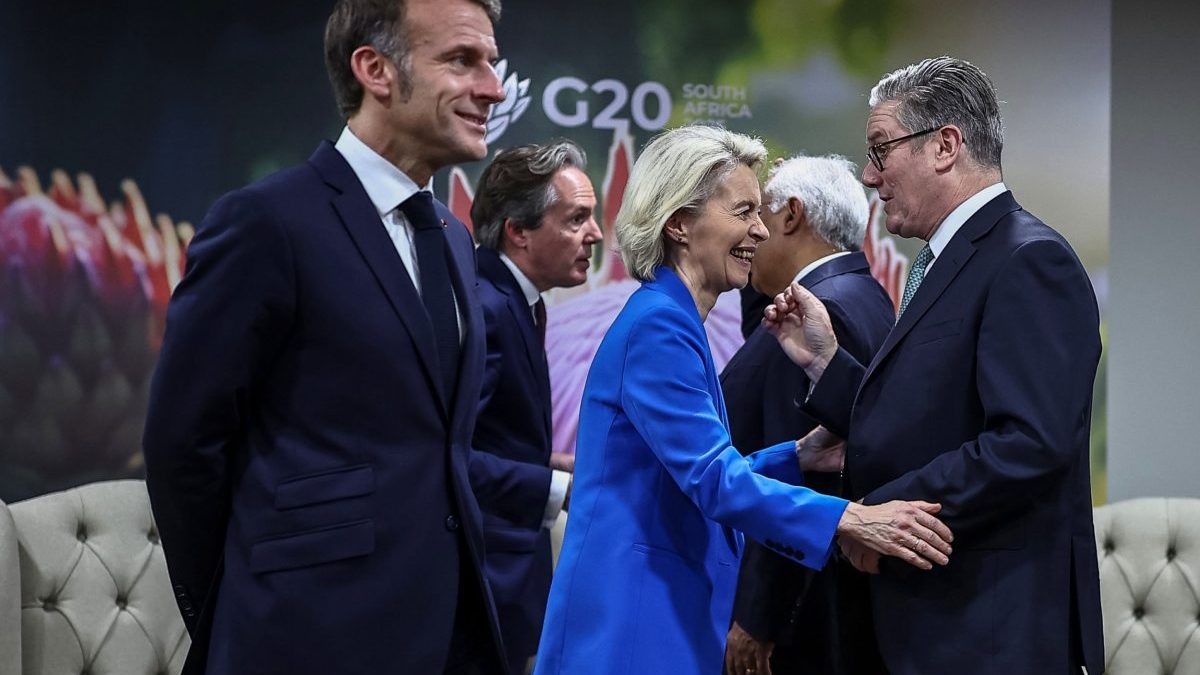
Sir Keir Starmer’s “Brexit reset” has been big on warm words and handshakes, but less successful so far in achieving concrete results.
The early months of 2026 will involve frantic negotiations with Brussels to try to turn previous agreements, such as to align food standards, into reality as soon as possible.
So it is a relief for the Prime Minister that 2025 is now ending with at least one real achievement: the UK will rejoin the Erasmus+ scheme for students and other young people to travel abroad for university or training.
This move is, in one small sense, a reversal of Brexit. After all, the reason Britain was not part of Erasmus was solely because we left the EU in 2020.
But this reversal will be hard for the Conservatives and Reform to caricature as a Brexit betrayal. It gives opportunities to the young people who have suffered most from the sluggish economy in recent years, and has been met with a rapturous response from universities, colleges and schools.
Labour has struggled in office to make the argument that its decisions in Westminster are having a direct, positive effect on citizens’ lives; for the tens of thousands of young people who will benefit from Erasmus, that argument will be won.
Starmer’s case is that there is more to come: he says that deals to eliminate safety checks on food and tie UK and EU energy markets together will lower the cost of living, while closer working on immigration will help to stop the flow of small boats crossing the English Channel.
Cries of “selling out Brexit” are no longer the lethal weapon for the right they once were. With polls showing that voters are more likely to support rejoining the EU than staying out in a hypothetical referendum rerun, there may be little political capital for Reform and the Tories in the issue.
But it does not take much scratching below the surface of the Labour celebrations to see one big problem. Starmer is coming off the worse in his negotiations with Brussels, time and time again.
It was at a summit in May where the Prime Minister struck the agreements on food standards (known in the jargon as “SPS”), energy, and a youth mobility scheme which will allow young workers to spend time in another country for a limited period.
But those deals were only concluded after Starmer caved on the EU’s demands, driven by the French government, to give its fishermen extended access to British waters. And he had initially tried to resist the youth mobility scheme altogether, fearful that it would drive up net migration figures to the UK.
Now it comes to the business of actually implementing these agreements, Brussels is again getting its way. The EU’s priority was sealing a deal on Erasmus, while the SPS deal was most important to Starmer.
Rather than tying one to the other, so that both sides would come away with a win, he allowed the European Commission to have what it wanted most, without insisting that he get a breakthrough on his top priority in return.
What is more, the UK’s discount on the Erasmus entry fee – to take account of the fact that more EU than British students are likely to use the scheme – will be just 30 per cent, when the Prime Minister had asked for 50 per cent.
Worst of all was the failure of the UK Government to gain access to the EU’s new defence fund, known as Security Action for Europe (Safe), which should have been a simple win-win for both sides given that it would have boosted the pool of firms involved in the big job of rearming Europe.
Talks collapsed in late November after the EU insisted on Britain paying £5bn to take part and Starmer was unable to convince his counterparts to budge.
The Prime Minister seems to have assumed that being “not the Tories” would be enough to get favours out of Brussels. While the Erasmus deal looks like good news for the Government, it may be hiding the flaws in a failing negotiation strategy which will give the EU a lot more than the UK.