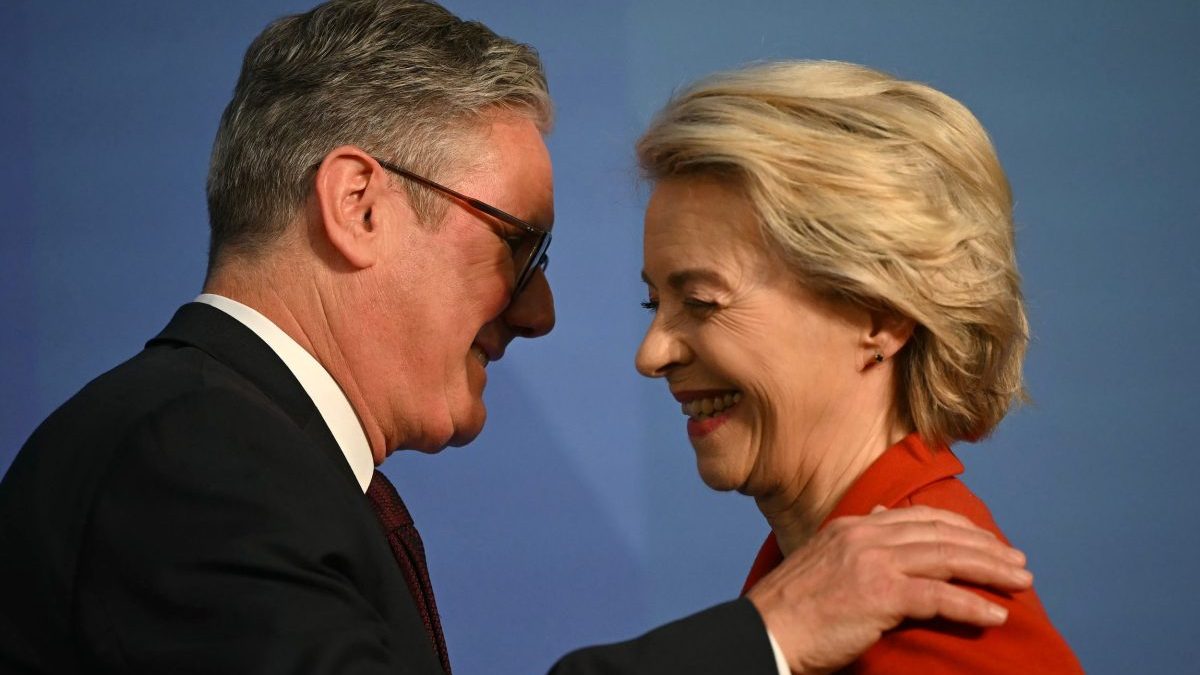
A £570m deal for the UK to rejoin the EU’s Erasmus student exchange scheme has raised hopes for Sir Keir Starmer’s wider Brexit reset, including a new under-30s visa scheme.
The two sides announced the agreement to end Britain’s six-year Brexit-triggered exile from Erasmus on Wednesday, confirming The i Paper’s reporting last week.
It is the first concrete deal signed after the Prime Minister agreed a headline package to reset relations with the EU in May, and reversed a decision by Boris Johnson to quit Erasmus due to concerns it did not offer value for money.
New FeatureIn ShortQuick Stories. Same trusted journalism.
Erasmus provides funding for students to study abroad for between two and 12 months. They pay the fees due to their home universities or institutions, with help given for living costs.
Erasmus could benefit 100,000 people in UK
Ministers said more than 100,000 people in the UK could benefit from Erasmus from January 2027, with funding provided for studying, training and work experience abroad for people of all ages. People from the EU will be able to benefit in the same way by accessing programmes in the UK.
They also stressed that much of the £570m, covering one year of the scheme in 2027, would come back to the UK via funding for those taking part in the scheme or in grants and pointed to a review mechanism to ensure a “fair balance” of British and EU participation.
However, The i Paper understands the financial commitment is so far unfunded, meaning Chancellor Rachel Reeves will have to find the cash to pay for it in her next Budget, while No 10 refused to deny that British negotiators had tried to secure a bigger discount than the 30 per cent agreed by the two sides.
Officials and experts nevertheless suggested the agreement could also strengthen Britain’s hands in wider Brexit reset negotiations, which are designed to boost the economy.
The two sides on Tuesday also committed to completing talks on a so-called “youth experience” visa scheme for under-30s, a food trade deal, and linking carbon markets next year.
The youth experience scheme – initially resisted by Starmer amid political pressure on migration – could prove the trickiest to negotiate.
Under-30s deal sticking point over university fees
It differs to Erasmus in that young people would be able to come from the EU to the UK, or the other way, for up to two years in order to study, work or travel.
One of the sticking point in negotiations is UK demands that EU students pay international fees, while the EU wants its students to pay UK domestic fees.
But UK officials believe the Erasmus deal can strengthen their argument in rebuffing demands for EU citizens to be charged lower domestic university fees in Britain, rather than the much higher international fees they currently face, as there is an alternative study route.
The Government argues it would be financially unsustainable for cash-strapped universities to lower fees for EU students.
But Brussels has made lowering fees a central demand in the talks.
A Whitehall source meanwhile told The i Paper the Government was beginning to argue with the EU that the youth experience scheme should be more like the UK’s mobility deal with Australia, which is focused on work, rather than study.
One senior British official suggested that opening up UK universities via Erasmus could help negotiators resist the EU demands for lower fees.
“By doing the Erasmus scheme, it shows that we are very committed to mobility across the university sector, but only in ways that kind of make financial sense,” the official said.
“A youth mobility scheme will allow people to go and have broader experiences in the country. In other words, it’s not just about students. It’s about being able to work. It’s about being able to travel around. It’s about being able to kind of balance work with study.”
Erasmus a ‘down payment of goodwill’
Former UK trade official David Henig said Starmer and his team could argue that Erasmus is “the down payment of goodwill needed to make the [wider] negotiations a success”, adding there are “suggestions that the EU is starting to walk back on tuition fees, knowing that won’t be possible”.
However an EU source made it clear Brussels’ position on fees “remains strong”.
Brexit Reset Minister Nick Thomas-Symonds described the Erasmus deal as a “huge win for our young people” as he attempted to fend off criticism over its £570m cost.
Thomas-Symonds and No 10 pointed out that much of the money will come back to the UK to be distributed to those taking part in the scheme, while Britain will also be able to compete for a share of £1bn in EU grants.
There will also be a review after 10 months to ensure there is a “fair balance” in the number of UK students going abroad and EU students coming to the UK, he told the Commons.
As well as university-based study exchanges, Erasmus+ will allow further education students and apprentices to take up work placements in European firms.
There will be exchange opportunities for adult learners, school groups and sports coaches – and job shadowing and training abroad will be available to education staff.
Ministers aim to maximise take-up, particularly among disadvantaged groups, by working with institutions and young people.
Your next read
A UK national agency will be set up to run the programme.
The Government also hailed an agreement to start talks on the UK participating in the EU’s internal electricity market, which it says could lower electricity costs at home.
Shadow Foreign Secretary Dame Priti Patel accused ministers of “throwing away billions of pounds of hard-pressed taxpayers’ money on rejoining Erasmus” as they “continue to betray Brexit”.