 Despite Starmer supposedly securing a widely-trumpeted exception back in May, those tariffs still remain in place. | Pool Photo by Alastair Grant via Getty Images
“We’re not exempting anyone,” European Commissioner for Climate Wopke Hoekstra told a press conference Wednesday. “But the moment we will be fully linking those [carbon markets], it is likely that there will be an exemption.”
Hoekstra added that “the price that [the U.K.] will be paying is actually minimal” and that that was “just one of the realities of how the system works.” While the scheme technically starts from Jan. 1, declarations of the carbon embedded in imports — and the associated fees — won’t be due until September 2027.
Adam Berman, director of policy and advocacy at trade body Energy UK, told a briefing of journalists ahead of the announcement: “I understand the position of the European Commission, which is that they will inevitably be concerned that any exemption that they might offer on an ad hoc basis to a country like the U.K. would then lead to countries like China and India — which are the main targets of the CBAM — turning around and saying: ‘Why don’t you give us equal treatment?’”
One EU official, granted anonymity to speak candidly, told POLITICO: “The companies, or the sectors that are actually concerned when it comes to the U.K., are very limited. So there will be an impact, but it will be very, very limited. And it will be also limited in time, because once the ETS agreement is in place it won’t be a question anymore.”
A U.K. government official said: “ETS linkage will remove CBAM. In the interim, we’ve always told businesses they need to prepare for January.”
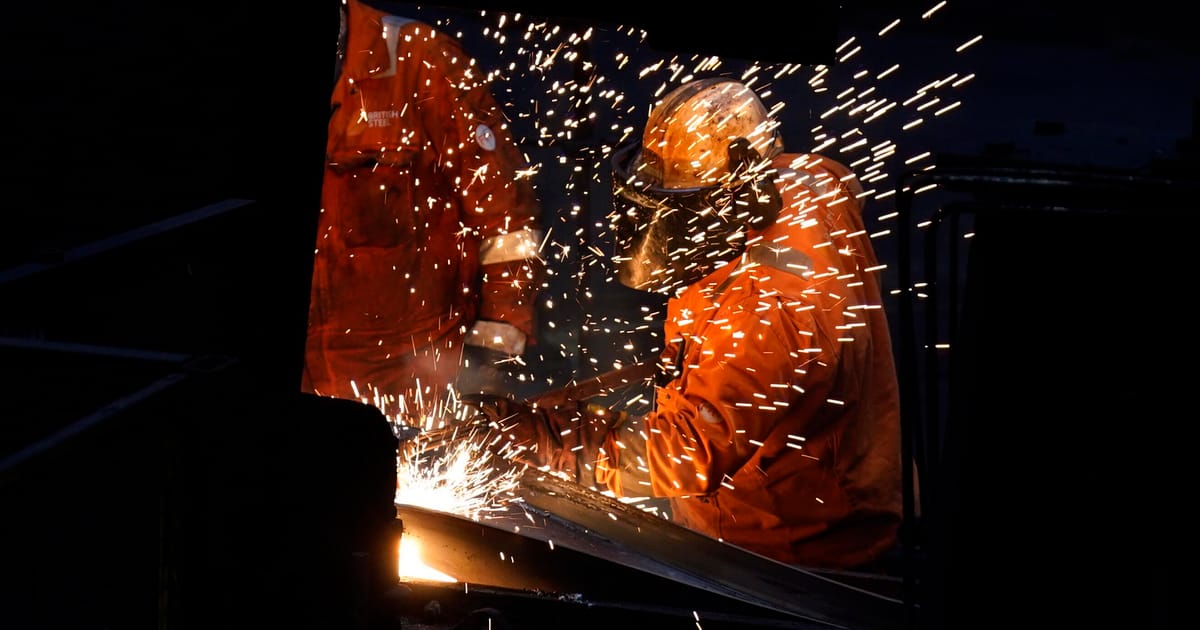
The carbon levy is just the latest challenge for the industry, which sells 78 percent of its exported steel to the EU — totalling 1.9 million tons in 2024.