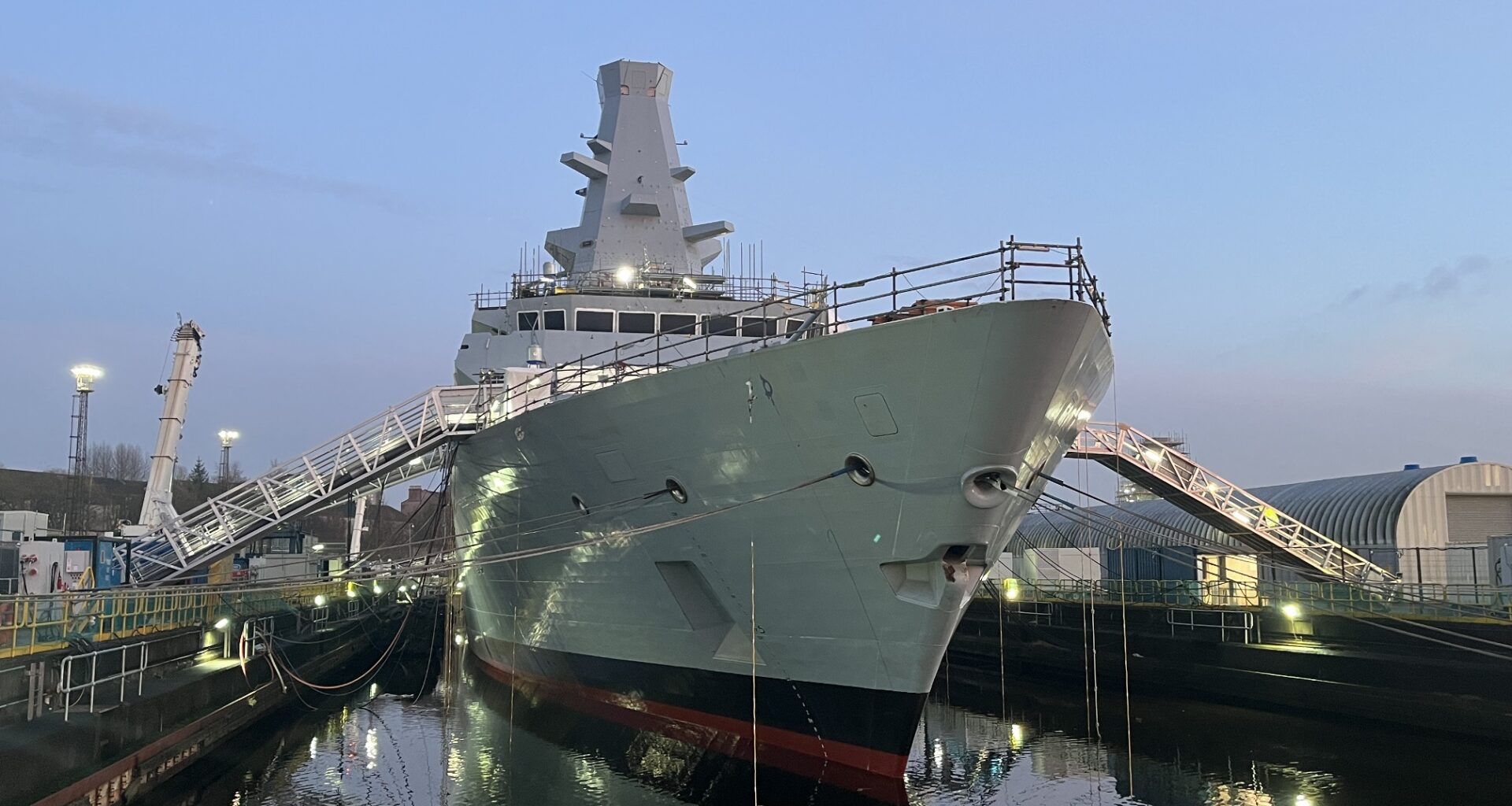
The first Type 26 frigate, HMS Glasgow, has achieved a significant milestone as her diesel generators have been started for the first time, marking a crucial step towards the ship becoming operational.
This means HMS Glasgow is now generating her own power as she continues her build at BAE Systems’ Glasgow shipyard. As part of a hybrid propulsion system, the diesel generators provide reliable power to propel the ship quietly through the water whilst powering all her equipment – a crucial capability for the vessel’s primary anti-submarine warfare role.
When complete, the Type 26 frigates will be the backbone of the Royal Navy’s surface presence. They will replace Type 23 anti-submarine frigates and are designed to support joint and multinational operations across the full spectrum of maritime operations, including counter-piracy, humanitarian assistance and disaster relief.
Pat Browning, DE&S Type 26 Team Leader, said: “This is a significant achievement for the Type 26 programme and testament to the outstanding efforts of everyone involved. I want to thank the entire team whose hard work and dedication have made this milestone possible. HMS Glasgow is taking shape as a formidable capability for the Royal Navy, and moments like this demonstrate the real progress being made.”
These ships will provide critical protection for the UK’s Continuous At-Sea Deterrent and Carrier Strike Group with unparalleled anti-submarine warfare capabilities. When operational, the 149-metre-long 8,000-tonne frigates and 149-metre frigates will be the backbone of the Royal Navy’s surface flotilla.
The Type 26 programme represents a £7.9 billion investment in British shipbuilding. It directly supports 2,000 jobs in Scotland, including apprenticeships, at BAE Systems’ Govan and Scotstoun shipyards in Glasgow, with a further 4,000 roles sustained across the wider UK supply chain until 2035.
More than 120 UK suppliers have been contracted for the programme, with BAE Systems committing to invest £1.2 billion in UK manufacturing through sub-contracts.
The eight ships are expected to enter service between 2028 and 2035 and will be based at HMNB Devonport in Plymouth.