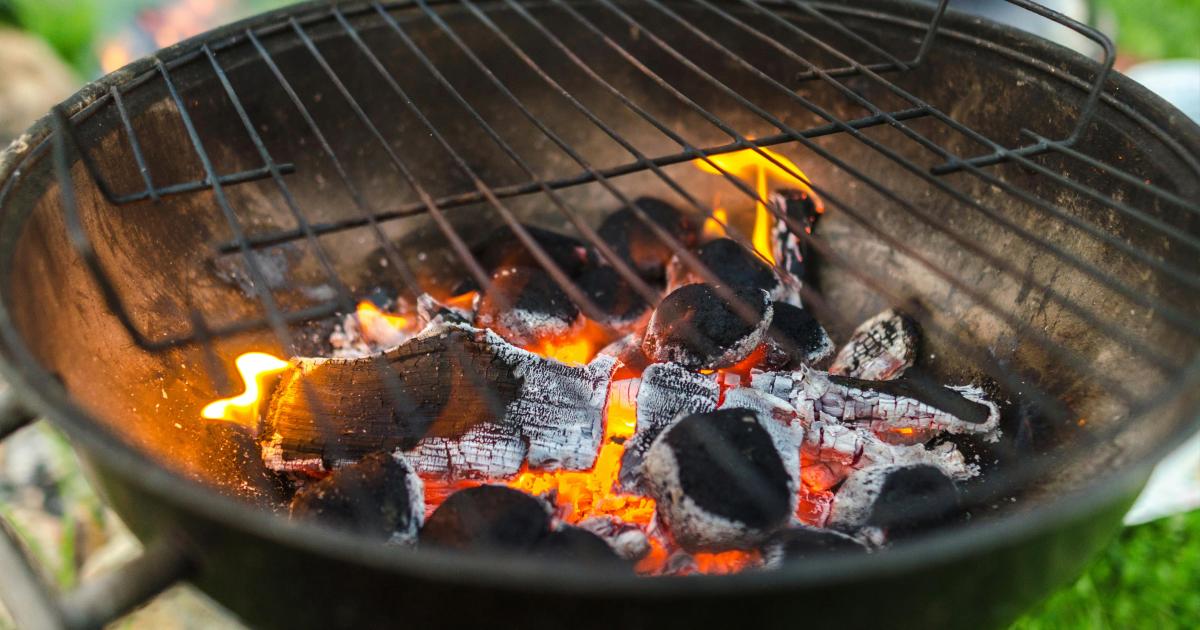
Charcoal is a popular fuel for grilling or barbecuing across Europe and globally, in the form of lumps or briquettes. However, burning charcoal can release harmful pollutants such as carbon monoxide, nitrogen oxides, volatile organic compounds (such as formaldehyde and benzene) and particulate matter (very small airborne particles) into the air, some of which are known to negatively impact human health in both the short term (eye irritation, coughing) and long term (increased cancer risk, respiratory illness).
Lump charcoal is produced directly from hardwood, while briquettes are produced by compacting charcoal dust with binding materials, often with other substances added to increase bulk or improve performance. Given their differing methods of production, lumps are expected to have a higher fixed carbon content (75%) than briquettes (60%) and a lower ash content (8% versus 18%).
The EU standard for charcoal (EN 1860-2) specifies various requirements, some relating to product composition. These include the maximum concentrations of ash and moisture content by weight, and the minimum proportion of fixed carbon (representing the carbon content available for combustion). However, studies have found that many products available in the EU do not meet these standards.
While research has explored various aspects of charcoal and briquette composition and combustion emissions, the relationship between the two has not been fully investigated. With support from the EU’s NextGenerationEU programme through the CN Agritech project, which promotes sustainable and resilient agricultural innovation in Italy, researchers have now investigated this in greater detail. They examined samples from 15 lump charcoal and eight briquette products acquired in Italy from a range of sources. Three of the samples originated from Italy, nine from elsewhere in Europe, nine from the Americas, and one each from Africa and Asia.
The results show distinct differences between lumps and briquettes in both composition and emissions. Lump charcoal samples tended to have more fixed carbon with less ash, moisture, and volatile compounds (for which the EU standards do not set any requirements). They also tended to produce lower levels of pollutants, particularly carbon monoxide, sulphur dioxide, and volatile organic compounds.
Several samples did not meet one or more of the EU standards’ requirements. One sample of lump charcoal exceeded the limit for moisture content, despite lumps generally having lower moisture content than briquettes. Seven samples (three lump, four briquette) exceeded their respective limits for ash content. Over half of the samples (five lump, seven briquette) failed to meet their respective requirements for fixed carbon content.
The researchers found strong correlations across all the samples between the composition of the charcoal, which is currently subject to EU regulation, and the combustion emissions, which represent an environmental and human health concern. Higher moisture content was strongly associated with higher emissions of all the major pollutant types. The researchers highlight that suitable packaging and storage are essential to maintain low moisture content in commercial charcoal products.
Higher levels of ash and volatile material were also generally associated with increased pollutant emissions, while higher fixed carbon content was associated with lower emissions. The researchers note that ash content can contribute to a layer of ash forming on the charcoal as it burns, which can restrict the flow of oxygen to areas undergoing combustion and promote the production of carbon monoxide.
A further analysis of the relationship between composition and emissions confirmed that lumps and briquettes each form a distinct cluster, with briquettes typically displaying higher levels of ash, moisture and volatile matter and less fixed carbon than lumps. Briquettes also tended to burn at lower temperatures, a factor that is closely related to fixed carbon content as it is primarily the combustion of carbon that produces heat. Higher combustion temperature is also known to promote cleaner burning with lower pollution emissions.
The researchers note that there are no standards or regulations regarding the pollutant emissions levels of charcoal products. Based on this study, they highlight that lump charcoal is typically preferable to briquettes, with lower production of airborne pollutants that could impact the environment and human health. They recommend that existing standards and policies relating to the quality of consumer charcoal products should be reviewed and strengthened, with quality thresholds made more stringent and applied more comprehensively.
The researchers recognise that this study only used locally available samples and so does not represent the full range of charcoal products available across the EU. They also note that the EU standards include additional analyses that were not conducted in this study. Nonetheless, the findings highlight a need for tighter quality control of commercially available products to ensure consistent quality for consumers and to minimise potential emissions of pollutants that could jeopardise both environmental integrity and human health. Further research could provide valuable insights to inform future policy and regulation in this area.
Source:
Mencarelli, A., Greco, R. and Grigolato, S. (2025) Grilling and air pollution: how charcoal quality affects emissions. Air Qual Atmos Health 18, 1757–1770. https://doi.org/10.1007/s11869-025-01737-0
To cite this article/service:
“Science for Environment Policy”: European Commission DG Environment News Alert Service, edited by the Science Communication Unit, The University of the West of England, Bristol.
Notes on content:
The contents and views included in Science for Environment Policy are based on independent, peer reviewed research and do not necessarily reflect the position of the European Commission. Please note that this article is a summary of only one study. Other studies may come to other conclusions.