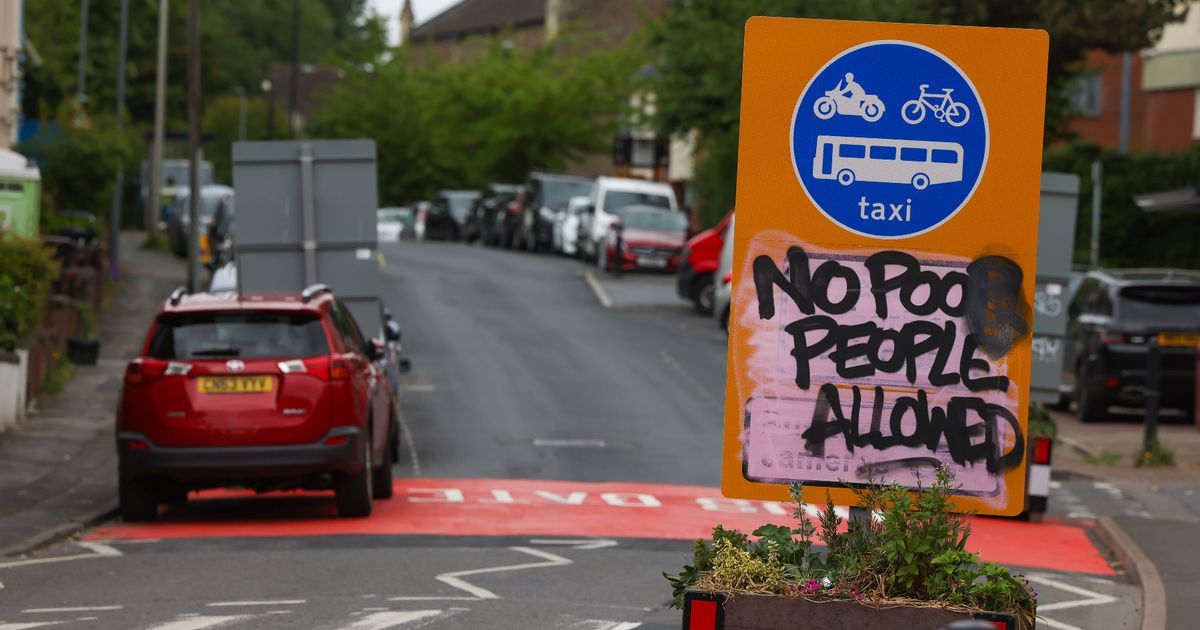
Less than a year after an overnight police operation to install them, the Barton Hill bus gates are being moved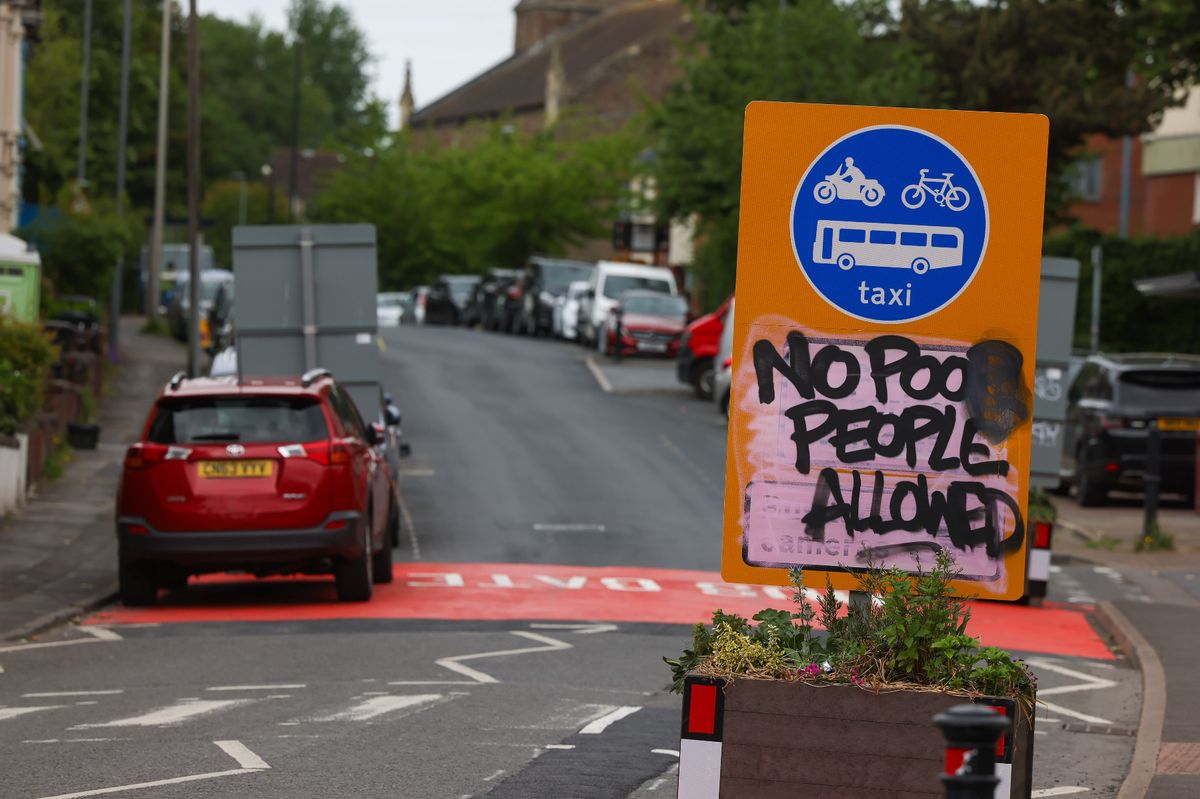 Sgns for the new bus gate on Avonvale Road have already been vandalised(Image: PAUL GILLIS / Reach PLC)
Some of the key aspects of the controversial East Bristol Liveable Neighbourhood are being scrapped but the scheme remains in place.
Bristol City Council has announced some of the bus gates, bollards and ‘modal filter’ planters around Barton Hill will be removed after a huge backlash from local residents and traders in the area. But the scheme itself has not been stopped completely and most of the road blocks will remain in place.
The council has confirmed it will be removing and moving a series of bus gates just nine months after the council installed them in the middle of the night with the help of scores of police officers in an operation that later saw Avon & Somerset police chiefs apologise to the residents of Barton Hill.
City council chiefs said further changes would be made ‘if the decision is made to make the scheme permanent’ – indicating that it is still running as a trial – and councillors in the Green Party-led administration said they had listened to concerns from residents, local businesses, emergency services and Bristol Waste, to make the changes.
Bristol Live has reported incidents which have seen all three emergency services vehicle drivers become delayed trying to navigate around the East Bristol Liveable Neighbourhood, particularly in the narrow streets of Redfield and Barton Hill.
What changes are proposed?
The biggest single change will be to the bus gates on Marsh Lane and Avonvale Road, around the junction in Barton Hill most famous as the location of the Valentine’s Day Banksy artwork.
This was one of the most controversial aspects of the East Bristol Liveable Neighbourhood, and the spot where council contractors came with scores of police officers to install the gates in the middle of the night back in March.
The bus gate on Marsh Lane will be removed completely, and the one on Avonvale Road to the west side of the Marsh Lane crossroads will be moved to the other side of the crossroads.
That means drivers will once again be able to turn left at the top of Marsh Lane into Avonvale Road and vice versa – opening up access to and from the Feeder Road to the heart of Barton Hill for drivers.
READ MORE: Police car on emergency call blocked by East Bristol Liveable Neighbourhood plantersREAD MORE: ‘Class cleansing’ or safer streets – we visit Bristol’s new ‘liveable neighbourhood’
Businesses along Avonvale Road and Marsh Lane have long complained the bus gates stifled passing traffic and trade, with some scathing about the council’s offer of compensation in the form of grants.
The council said there would still be a bus gate on Avonvale Road, albeit on the east side of the Marsh Lane junction, to continue to stop drivers connecting this part of Barton Hill with Church Road along the rest of Avonvale Road.
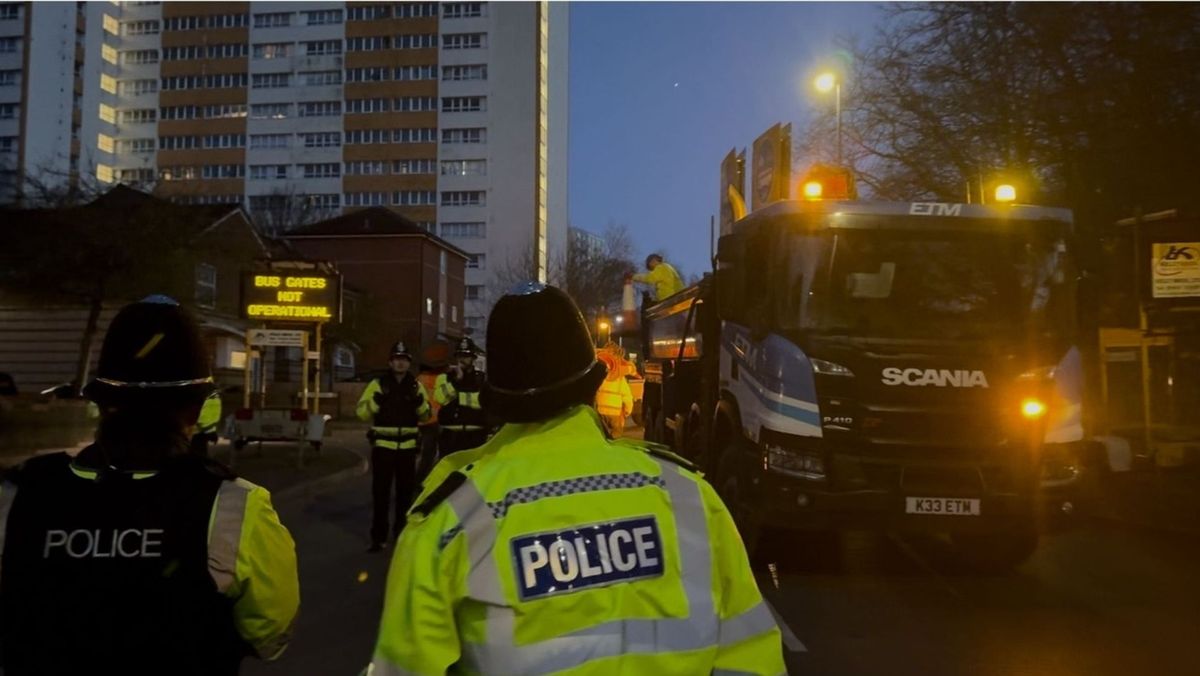 Work to install the controversial East Bristol Liveable Neighbourhood scheme in Barton Hill was completed – almost – in a huge police and council operation in the early hours of Thursday, March 13. A handful of protesters succeeded in stopping only the completion of one of the bus gates, on Avonvale Road(Image: Bristol Post)
The council said they would be removing or moving the bus gates they installed with a middle-of-the-night major police operation to ‘improve access between Feeder Road, Barton Hill and St Phillip’s Causeway and support businesses in the area’.
Ducie Road
A bollard on the bridge over the railway line at Ducie Road stopped all vehicles reaching the heart of Barton Hill via Lawrence Hill and Church Road, and was much criticised by local residents – especially when firefighters had to stop and use a passcode to drop it and continue on their way to emergency incidents.
Bristol Live revealed last month that more than half the emergency incidents Avon Fire and Rescue attended within the EBLN area saw fire crews report delays getting to the scene.
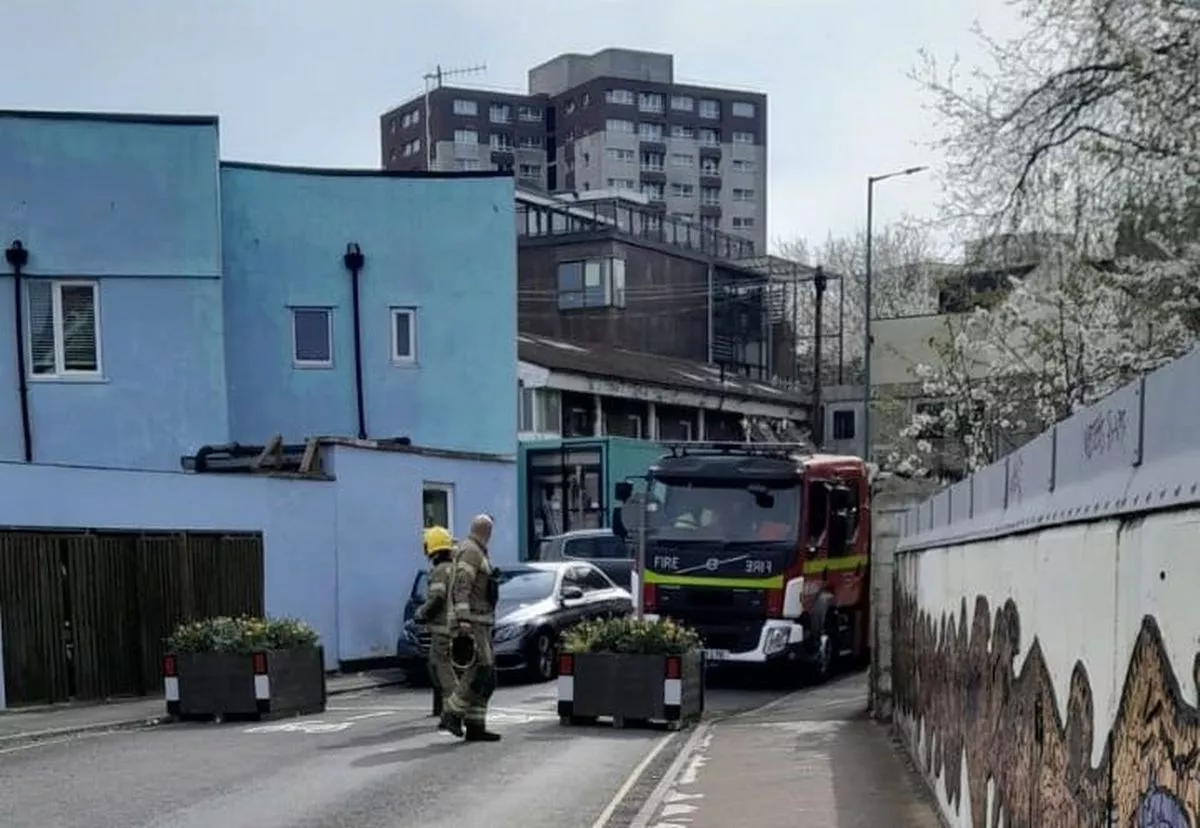 Fire crews try to drop a recently-installed bollard at a new modal filter on Ducie Road in Barton Hill, days after the installation of the East Bristol Liveable Neighbourhood there(Image: Samira Musse)READ MORE: Fire crews delayed reaching emergencies within East Bristol Liveable NeighbourhoodREAD MORE: Fire engine gets stuck behind east Bristol LTN bollard
Now, Bristol City Council has announced it will be replacing that bollard – and a similar one on The Avenue at the far eastern end of the EBLN zone in St George – with enforcement cameras instead.
The council said it was doing this ‘to make it quicker for emergency services to access properties across the area and enable drivers with EBLN bus gate exemptions, such as taxi drivers and Blue Badge holders, to use these routes’.
Victoria Avenue
Planters on Victoria Avenue, a key residential road in Redfield, were placed between its junctions with Byron Street and Morse Road, to create ‘modal filters’ that only allow two wheeled traffic and pedestrians through, not cars, vans or lorries.
But Bristol Live reported this summer that this also blocked the road for Bristol Waste’s bins and recycling collection lorries. Residents living at the other end of Victoria Avenue told Bristol Live that they had not had their recycling collected for months, creating a huge health and environment hazard.
READ MORE: Residents can’t open windows because of the smell after food waste not collected for four monthsREAD MORE: Liveable neighbourhood overnight work needed to stop people ‘putting themselves in danger’
Bristol City Council’s proposed changes will see those planters removed completely, allowing better – but still not clear – access into Victoria Avenue. It will still be blocked at the eastern end.
Bristol’s council chiefs said the EBLN overall was working well and doing what it was supposed to do – reducing the levels of motorised traffic in the area.
What do council chiefs say?
“The data shows that the trial is broadly meeting its objectives, to reduce traffic cutting through the Liveable Neighbourhood, boost active travel and public transport use, and to not significantly impact nearby roads,” a council spokesperson said.
“Feedback to the engagement exercise, which included surveying and polling residents in and around the area, was more varied with some people welcoming safer and quieter streets, but many highlighting issues on local roads.
“Local emergency services were also heavily engaged with during the design and evaluation process so their experiences of accessing the trial area could be used to help identify changes. These regular discussions with emergency services will continue so the experiences of crews and emergency responders can keep on being fed into the monitoring of the scheme,” he added.
READ MORE: Green Party leader defends Bristol council chiefs and challenges ReformREAD MORE: Bitter war of words erupts over controversial Liveable Neighbourhood scheme
The council chiefs responsible for implementing the EBLN and the new changes defended the scheme.
“We have reviewed the data carefully and listened to what people have told us, including key stakeholders such as the emergency services,” said deputy council leader Cllr Heather Mack.
“While the East Bristol Liveable Neighbourhood trial is generally achieving its aims, we know that’s not the whole story. For many residents and businesses, some of the measures haven’t worked and have caused frustration.
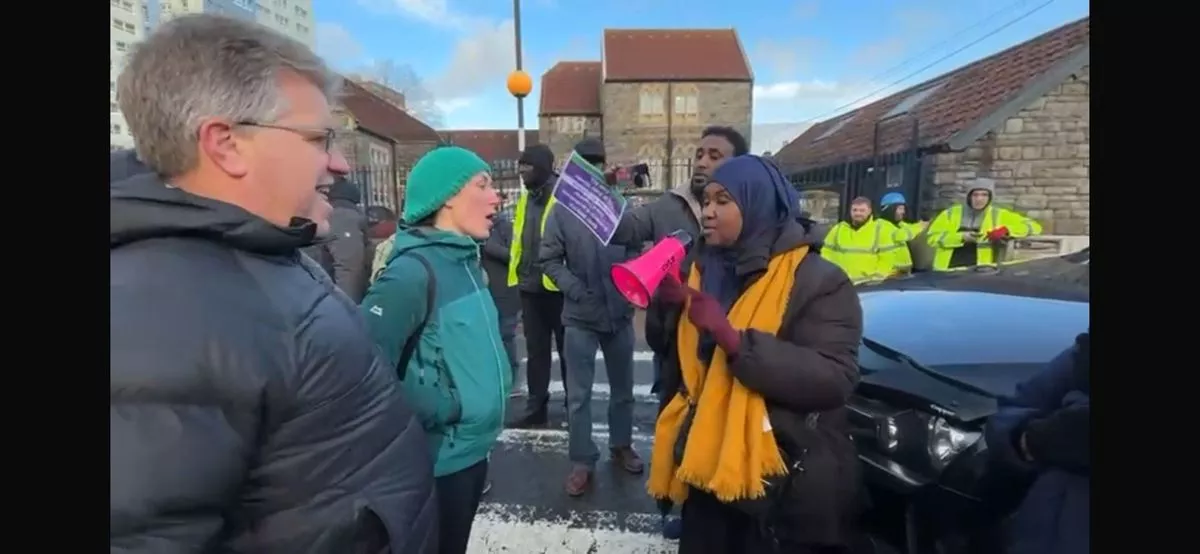 Bristol City Council executive director John Smith and deputy council leader Cllr Heather Mack are confronted by angry Barton Hill residents as local community tries to stop the implementation of the East Bristol Liveable Neighbourhood in Avonvale Road(Image: Paul Gillis/Bristol Post)
“That’s why we’re aiming to make significant changes in the short-term, ahead of a decision next year on whether to go ahead with the permanent scheme. These adjustments are designed to improve access for everyone, including supporting access to businesses, while keeping the benefits of the Liveable Neighbourhood,” she added.
“We want to show that we care and that we are listening, as we will continue to do. Your feedback is helping to shape this pilot project, and we are committed to getting it right for east Bristol communities,” she added.
The man in charge of transport – or at least, the chair of the council’s ‘transport and connectivity committee’, is Cllr Ed Plowden (Green, Windmill Hill). He said the EBLN was showing ‘good progress’ in just six months.
“I would like to thank everyone again for getting involved in this latest round of engagement,” he said. “I am encouraged that the results show good progress in just six months, given that this sort of approach is usually measured at around 18 months to two years. However, it is clear from the survey and polling that there are differing views about the trial, with many people highlighting increases to their journey times.
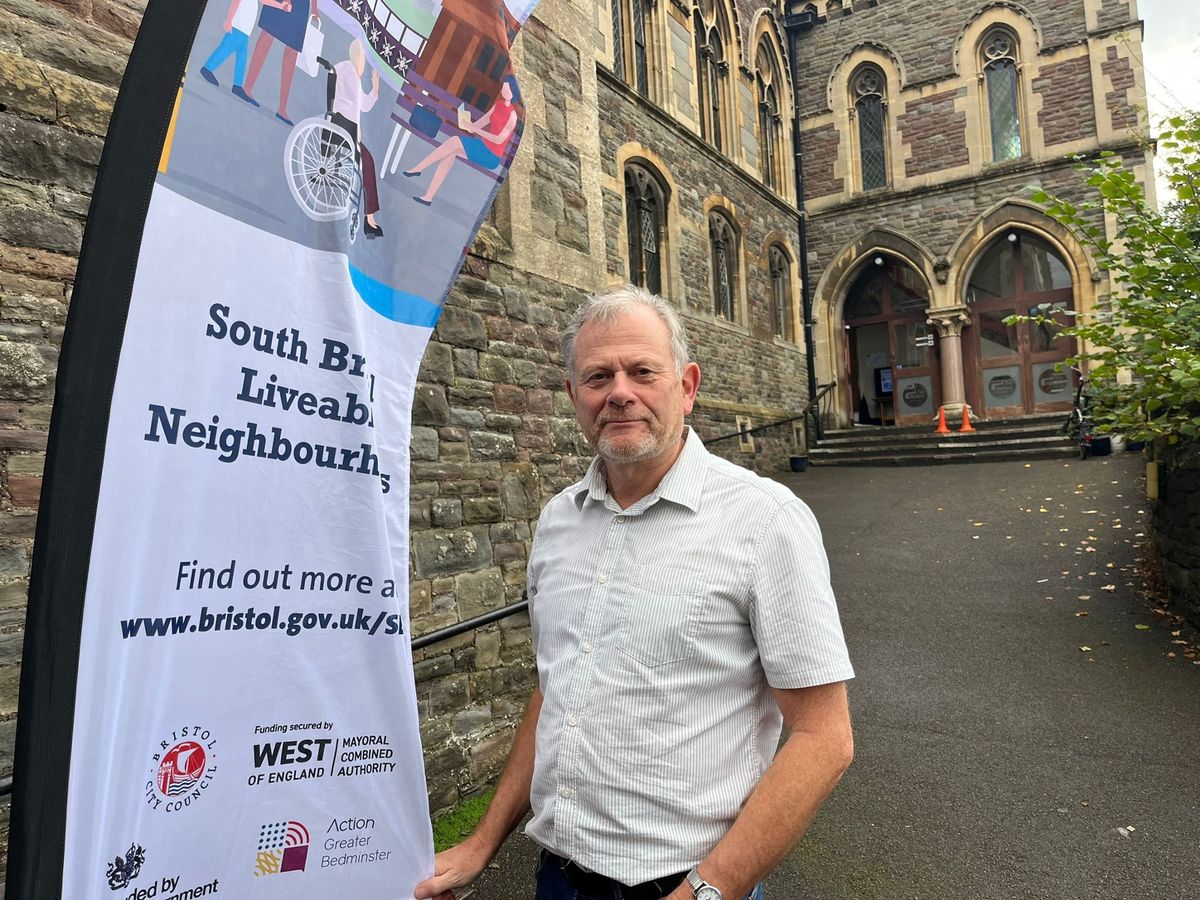 Cllr Ed Plowden (Green, Windmill Hill) the chair of the city council’s transport committee, outside the South Bristol Liveable Neighbourhood consultation event in Totterdown(Image: Bristol Post)
“I want to reassure everyone that we’re taking these views on board and meeting regularly with local emergency services to listen to their feedback and respond. With all this input in hand, we’re working to improve the Liveable Neighbourhood, including making some key changes as quickly as possible.
“It is important that we get this right, but changing the scheme, to respond to these immediate concerns, will mean it will take us longer to put together the full business case outlining proposals for the long-term future of the Liveable Neighbourhood. As a result, the date for the Transport and Connectivity Committee to decide on the permanent scheme will be later in 2026 than we had planned,” he added.
The future of the EBLN
The project continues with the changes in place, and the council has indicated more could follow, including changes to the Church Road-Blackswarth Road junction.
“Further changes will also be proposed if the decision is made to make the scheme permanent,” a council spokesperson said.
“This includes improving Church Road’s junction with Blackswarth Road, to allow a left turn onto Church Road and a right turn from Church Road onto Blackswarth Road. The traffic islands would also be removed, to create single stage crossings for pedestrians, making it easier to cross the road and increase the vehicle capacity of the junction.
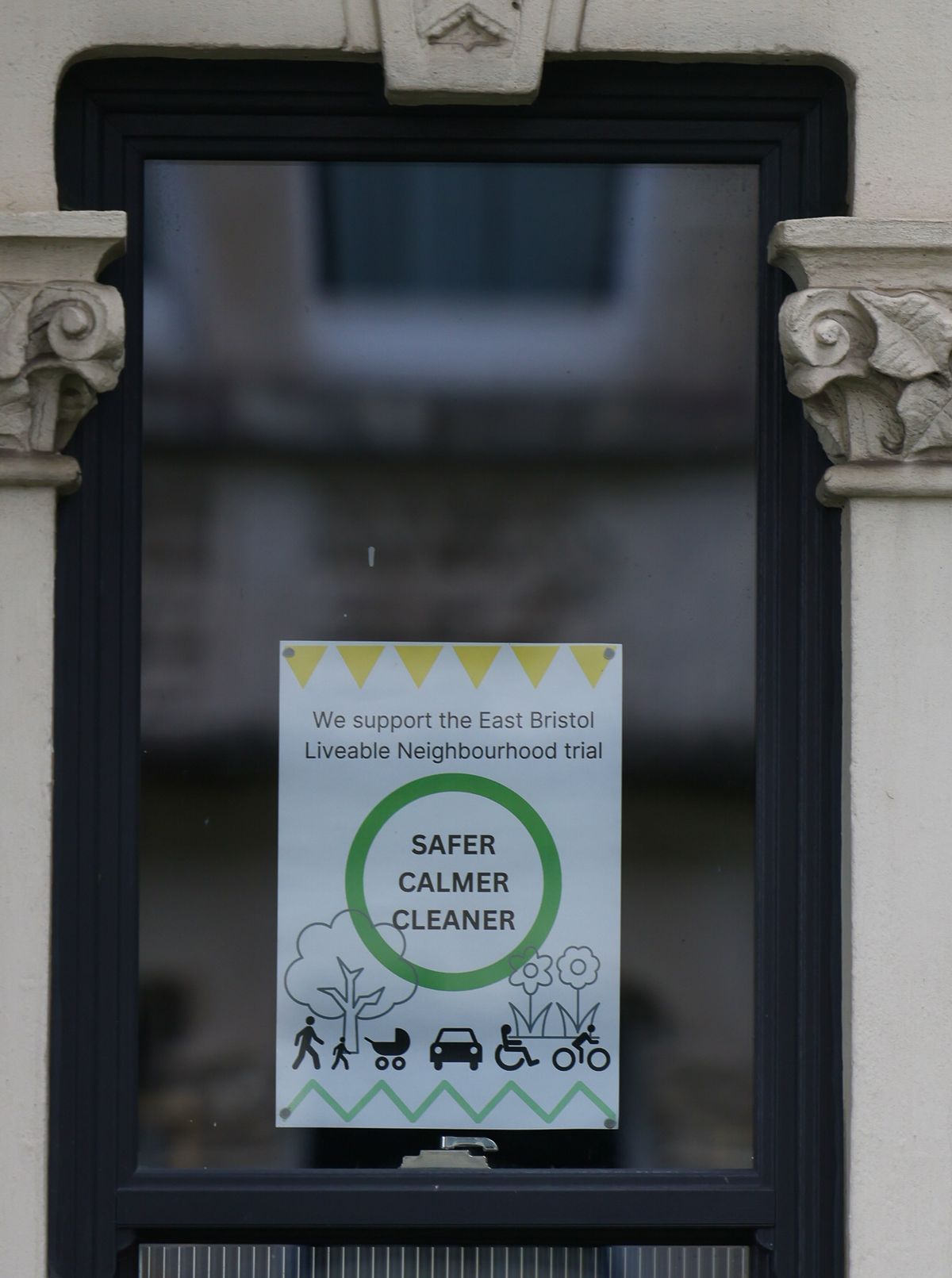 “Safer, Calmer, Cleaner” – posters in windows of homes in Redfield and St George where people support the East Bristol Liveable Neighbourhood trial(Image: PAUL GILLIS / Reach PLC)
“If the decision is made to make the Liveable Neighbourhood permanent, a full business case will be submitted to the West of England Mayoral Combined Authority to request the funding needed.
“The council will work to change the range of selected measures in the coming months, to improve access to and within the Liveable Neighbourhood. Meanwhile, the remaining trial scheme measures will stay in place until a final decision is made about the future of the East Bristol Liveable Neighbourhood,” he added.
The West of England metro mayor, Helen Godwin, welcomed the changes. “It’s clear that lessons are being learned and these proposed changes seem to be a step in the right direction,” the West of England Mayor said.
“Alongside this analysis, we have commissioned a fully independent review of the East Bristol Liveable Neighbourhood trial – with all the data – ahead of considering any bids for further regional funding,” she added.